Fabaceae
Bird's-Foot Trefoil: Complete Care Guide
Lotus
An easy, low-maintenance perennial for sunny outdoor spaces. Plant in well-draining soil in full sun. Water sparingly once established — it tolerates dry periods well. Fertilize lightly every 2 months during the growing season. Cut back in autumn after flowering ends.
Every 7 days
Direct sun
5° - 25°C
40% - 70%
Categories
What is Bird's-Foot Trefoil?
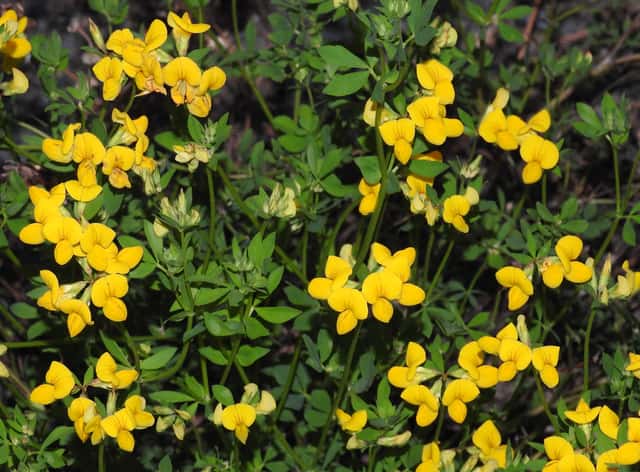
Bird's-Foot Trefoil (Lotus) is a easy-care plant from the Fabaceae family. Bird's-Foot Trefoil (Lotus) is a low-growing perennial wildflower in the pea family (Fabaceae), native to temperate Eurasia and North Africa. It forms spreading mats of bright yellow-orange flowers from late spring through summer, attracting bumblebees and butterflies. Exceptionally drought-tolerant...
Bird's-Foot Trefoil grows up to 30cm, spread of 50cm, watering every 7 days, 5°C – 25°C, 40–70% humidity. It is not suitable for indoor environments and not safe for pets.
Unlike many tropical plants, Bird's-Foot Trefoil tolerates watering mistakes. Best for beginners. Without precautions, ingestion can cause irritation in pets. Keep out of reach of cats and dogs.
How to Care for Bird's-Foot Trefoil?
TLDR: Bird's-Foot Trefoil needs Direct sun, watering every 7 days, and temperatures between 5-25°C with 40-70% humidity.
How Often Should You Water Bird's-Foot Trefoil?
Water every 7 days during establishment; reduce to every 10–14 days once established. Allow soil to dry between waterings — this plant is very sensitive to waterlogging and root rot.
How Much Light Does Bird's-Foot Trefoil Need?
Plant in full sun with at least 6–8 hours of direct sunlight daily. It cannot tolerate shade — insufficient light leads to leggy growth and reduced flowering.
What Is the Best Soil for Bird's-Foot Trefoil?
Thrives in light, well-draining loamy soil. Tolerates poor, sandy, or alkaline conditions. Avoid heavy clay or waterlogged substrates. Ideal pH is 6.5–7.5.
What Pot Should You Use for Bird's-Foot Trefoil?
Outdoors: rock gardens, border edges, meadow mixes, or ground cover in sunny beds. No pot recommended — performs best in open ground.
Care Schedule
Fertilize
Every 60 days
What Is Bird's-Foot Trefoil and Where Does It Come From?
Bird's-Foot Trefoil (Lotus) is a low-growing perennial wildflower in the pea family (Fabaceae), native to temperate Eurasia and North Africa. It forms spreading mats of bright yellow-orange flowers from late spring through summer, attracting bumblebees and butterflies. Exceptionally drought-tolerant, it thrives in poor soils and can fix atmospheric nitrogen through root symbionts, making it valuable for meadow restoration and erosion control.
How to Propagate Bird's-Foot Trefoil?
Seed sowing
Scarify seeds lightly before soaking to improve germination rates. Autumn sowing also works well in mild climates.
- 1 Soak seeds in water for 24 hours before sowing.
- 2 Sow seeds on the surface of damp, well-draining compost.
- 3 Press seeds lightly into the soil without covering deeply.
- 4 Keep moist at 15°C until germination (2–4 weeks).
- 5 Thin seedlings to 15 cm apart once established.
Materials needed:
Stem cutting
Use clean, sharp tools to prevent disease. Keep the propagation medium consistently moist but not waterlogged.
- 1 Take 8–10 cm cuttings from healthy stems in spring.
- 2 Dip the cut end in rooting hormone powder.
- 3 Insert into damp propagation mix.
- 4 Keep in a warm spot with indirect light until rooted.
Materials needed:
How Big Does Bird's-Foot Trefoil Grow?
TLDR: Bird's-Foot Trefoil can reach up to 30cm tall with Medium growth rate.
Max height
30cm
Spread
50cm
Growth rate
Medium
Foliage
Deciduous
Warning: Toxic Plant
This plant can be toxic if ingested. Keep out of reach of:
Plant Uses
Ornamental
Great for decoration
Edible
Can be consumed
Medicinal
Medicinal properties
Ground Cover
Soil coverage
Medicinal Uses
- Flowers used in traditional Italian medicine as a calming, antispasmodic infusion for anxiety and exhaustion
- Contains condensed tannins with antioxidant properties
Culinary Uses
- Young seedpods may be nibbled with caution — contains very low levels of cyanogenic glycosides that dissipate when cooked
Is your plant showing symptoms?
Click on the symptom to discover possible causes:
What Diseases Commonly Affect Bird's-Foot Trefoil?
TLDR: Bird's-Foot Trefoil is susceptible to 5 known diseases. Monitor regularly for early detection.
Aphids
Aphids are small, soft-bodied, pear-shaped insects (1/16 to 1/8 inch long) that feed by sucking nutrient-rich sap from plants. They reproduce rapidly and can quickly weaken plants, causing distorted growth and transmitting plant viruses. Aphids come in various colors including green, black, red, yellow, brown, and gray. They secrete honeydew, a sticky substance that attracts ants and encourages sooty mold growth.
Root Rot
Root rot is a serious fungal disease that affects the root system of plants, causing them to decay and die. It is primarily caused by overwatering, poor drainage, or soil-borne fungi such as Pythium, Phytophthora, Rhizoctonia, and Fusarium. The disease thrives in waterlogged conditions where roots are deprived of oxygen, making them susceptible to fungal infection.
Powdery Mildew
Powdery mildew is a common fungal disease caused by various fungi species including Erysiphe, Podosphaera, Oïdium, and Leveillula. It affects over 10,000 plant species worldwide. The disease thrives in warm, dry climates with high humidity and appears as a distinctive white powdery coating on plant surfaces.
Slugs and Snails
Slugs and snails are mollusks that feed on plant tissue, causing irregular holes in leaves and damage to young seedlings. They are most active at night and in moist conditions, leaving characteristic silvery slime trails. These pests can quickly devastate gardens, especially during wet seasons.
Meaning & Symbolism
In European wildflower tradition, Bird's-Foot Trefoil symbolizes resilience and good fortune. Its whimsical common name "eggs and bacon" reflects the cheerful yellow-and-red flower colors cherished in British countryside folklore.
Fun Facts
Bird's-Foot Trefoil gets its name from the shape of its seed pods, which resemble a bird's clawed foot.
It is an important host plant for several butterfly species, including the six-spot burnet moth and the wood white butterfly.
Unlike many legumes, Bird's-Foot Trefoil does not cause bloat in grazing livestock, making it a valuable forage crop.
The flowers were nicknamed "eggs and bacon" in rural England for their yellow and red color combination.
Frequently asked questions
How often should I water Bird's-Foot Trefoil?
Is Bird's-Foot Trefoil toxic to cats?
Can I grow Bird's-Foot Trefoil indoors?
When does Bird's-Foot Trefoil bloom?
Does Bird's-Foot Trefoil improve soil?
Compare with similar plants
| Attribute | Difficulty | Light | Watering | Pet Safe |
|---|---|---|---|---|
| Field Maple | Easy | Bright indirect | 14d | ✓ |
| Silver Birch | Easy | Direct sun | 14d | ✓ |
| Common Blanketflower | Easy | Direct sun | 10d | ✓ |
| Cushion Bush | Easy | Direct sun | 14d | ✓ |





