Complete Plant Guide
Explore plants by difficulty, season and more. Find the perfect plant for you.
Difficulty
Categories
Plants by City
🗺️ Plants by City3768 plants found
Showing 1081-1116 of 3768
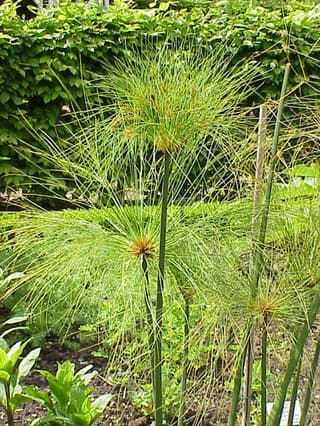
Egyptian Papyrus
Cyperus papyrus
Cyperus papyrus, commonly known as Egyptian Papyrus or Paper Reed, is a majestic semi-aquatic plant native to the banks of the Nile River in northeastern Africa. Its tall, triangular stems can reach up to 16 feet (5 meters) in height, topped with feathery, umbrella-like clusters of thread-fine rays. One of the most historically significant plants in human civilization, it was the source of the world's first paper. Today it thrives in water gardens, ponds, and large containers.
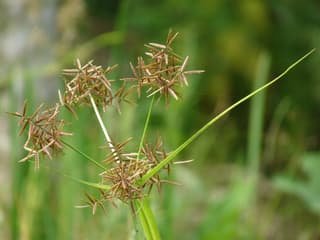
Purple Nutsedge
Cyperus rotundus
Cyperus rotundus, purple nutsedge, is a fast-spreading perennial sedge with glossy, grass-like leaves and triangular stems topped by reddish-brown flower spikes. It grows from chains of small underground tubers, which make it one of the world's most persistent weeds but also the source of the aromatic tuber known as nagarmotha or musta in traditional medicine.
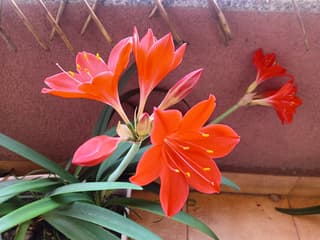
Scarborough lily
Cyrtanthus elatus
Cyrtanthus elatus, popularly known as the Scarborough lily, is a perennial bulb in the Amaryllidaceae family, native to the mountainous coastal slopes of the Cape in southern South Africa (between Mossel Bay and Humansdorp). It produces upright flower stalks up to 65 cm tall with up to nine trumpet-shaped flowers in shades of scarlet red, pink, or, rarely, white, which bloom from late spring to autumn. Cultivated as an ornamental container plant for nearly 250 years, it earned its common name after naturalizing on the coastal cliffs of Scarborough, England, in the 19th century.
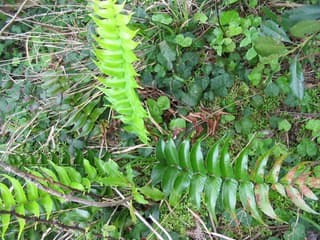
Japanese Holly Fern
Cyrtomium falcatum
Cyrtomium falcatum is an elegant evergreen fern native to East Asia, prized for its glossy, dark green, leathery fronds that resemble holly leaves. It forms dense, vase-shaped clumps and is one of the most adaptable and resilient ferns for both indoor and outdoor cultivation. Its sickle-shaped pinnae give it a bold, architectural appearance that stands out among other ferns.
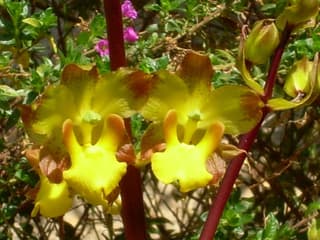
Cowhorn orchid
Cyrtopodium
Cyrtopodium is a genus of terrestrial, epiphytic, or lithophytic orchids native to the tropical and subtropical Americas, from southern Florida to Argentina, with a strong presence in Brazil. Recognized for its large, spindle-shaped, and wrinkled pseudobulbs resembling cigars or horns, the genus produces tall flower spikes covered in dozens of yellow flowers with brown spots. The plicate leaves drop before flowering, in a cycle marked by a period of vigorous growth followed by dormancy.
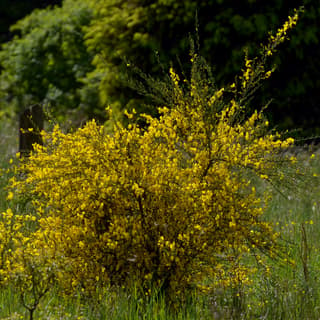
Scotch broom
Cytisus scoparius
Scotch broom (Cytisus scoparius) is a deciduous shrub in the legume family (Fabaceae) that grows 50–250 cm tall. Its green, five-angled, slender branches continue to photosynthesize even in winter; its small, quickly shedding leaves are undivided at the top and trifoliate at the bottom. In May and June, bright golden-yellow, pea-like flowers appear, forming dense, fragrant clusters along the stems. The flattened seed pods that develop from the flowers turn black upon ripening. Native to Western and Central Europe, it thrives in sunny habitats with dry, sandy, acidic soil—such as hillsides and sand dunes. Due to its hardiness and rapid growth, it has naturalized in many areas and is considered invasive in several regions.
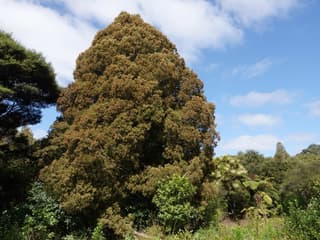
Kahikatea
Dacrycarpus dacrydioides
Kahikatea (Dacrycarpus dacrydioides) is New Zealand's tallest native tree and one of the world's most ancient conifer lineages, tracing back to Gondwanan forests. A slow-growing, evergreen podocarp, it naturally dominates swamp forests and floodplain terraces, sending up a slender, conical crown on a tall, often buttressed trunk that can exceed 50 m in the wild. Unlike flowering plants, it reproduces via small cones rather than true flowers; the female cone matures into a swollen, succulent red receptacle (koroi) that was historically a prized Māori food source. In cultivation it is an impressive specimen or shelter tree for large, permanently damp gardens, parks, and wetland restoration plantings, but it is not suited to small sections, pots, or dry soils.
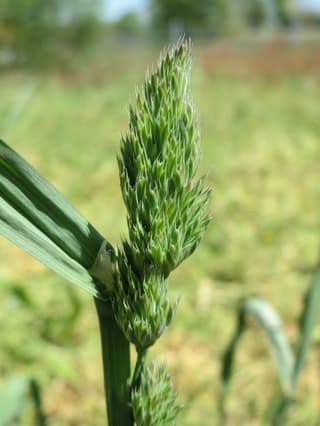
Orchard Grass
Dactylis glomerata
Orchard grass (Dactylis glomerata) is a perennial, clump-forming cool-season grass native to Europe, temperate Asia and North Africa, now naturalized across much of the world. It is one of the most important forage grasses used in pastures and hay production, valued for tolerating both drought and partial shade far better than most pasture grasses.
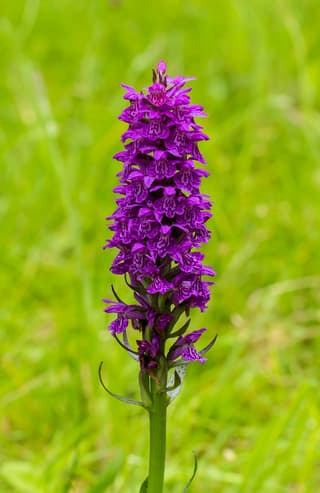
Heath Spotted Orchid
Dactylorhiza maculata
Dactylorhiza maculata, the heath spotted orchid, is a terrestrial tuberous perennial orchid native to Europe. It thrives in heathlands, damp meadows, bogs, and marshes, producing dense spikes of pale pink to deep purple flowers with characteristic dark markings on the labellum. Its leaves are distinctively spotted.
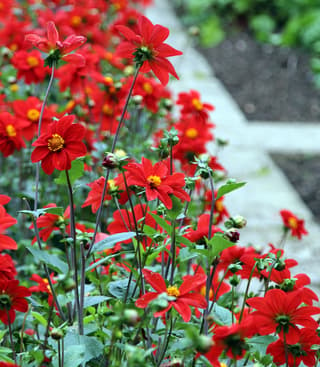
Dahlia
Dahlia
Dahlia is a genus of tuberous herbaceous perennial plants native to the mountains of Mexico and Central America, belonging to the family Asteraceae. With over 42 accepted species and thousands of cultivars, dahlias are celebrated for their spectacular blooms in an extraordinary range of colors, sizes, and flower forms — from tiny pompons to enormous dinner-plate varieties measuring over 30 cm across. They bloom from mid-summer through the first autumn frost, making them a showstopper in gardens worldwide.

Scarlet Dahlia
Dahlia coccinea
Dahlia coccinea, the scarlet dahlia, is a tuberous perennial native to the mountainous regions of Mexico and Central America. Prized for its vivid single blooms in shades of red, orange, and yellow with a golden center, it is considered one of the wild ancestors of modern garden dahlia hybrids and is celebrated as a symbol of Mexican botanical heritage.
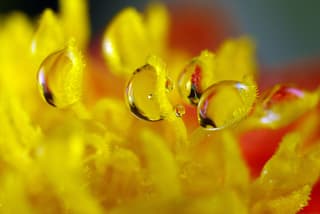
Garden dahlia
Dahlia hortensis
Garden dahlia is a vibrantly flowering tuberous perennial native to Mexico and Central America, prized for its showy, multi-petaled blooms that appear in nearly every color except true blue. Grown from underground tubers, it produces lush green (sometimes dark mahogany) foliage and rewards gardeners with prolific late-summer and autumn flowers that last until the first hard frost.
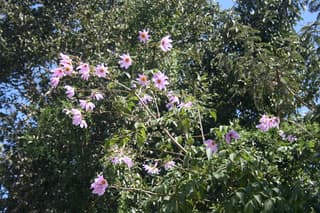
Tree Dahlia
Dahlia imperialis
Dahlia imperialis, known as the Tree Dahlia or Bell Tree Dahlia, is a towering perennial native to Mexico and Central America. It can reach over 6 meters tall with hollow bamboo-like stems, large pinnate leaves, and nodding bell-shaped flowers in shades of pink, lilac, or white with yellow centers. It blooms in fall and winter, making it a showstopper when most garden plants are dormant.
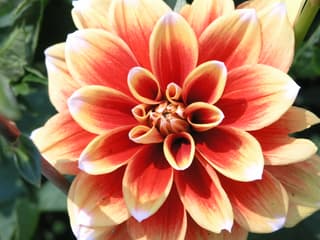
Garden Dahlia
Dahlia pinnata
Dahlia pinnata, commonly known as the garden dahlia, is a tuberous herbaceous perennial native to Mexico, where it serves as the national flower. Belonging to the Asteraceae family, it is celebrated for its large, showy blooms in an extraordinary range of colors including red, pink, orange, yellow, white, purple, and lavender. Dahlias flower from midsummer through the first autumn frosts, making them one of the most prized ornamental plants for gardens worldwide.
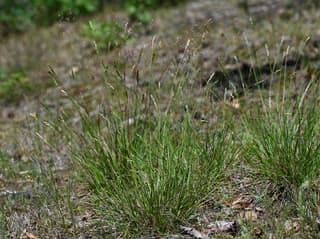
Heath-grass
Danthonia decumbens
Danthonia decumbens, commonly known as heath-grass, is a low-growing perennial grass native to European heathlands and acid grasslands. It forms dense, compact tufts of narrow bright-green leaves with a characteristic decumbent (sprawling) habit, with tips turned upward. In summer it produces small panicles of silvery-green to purplish spikelets, many of which self-pollinate while still enclosed. It is a specialist of nutrient-poor, acid soils and is considered an indicator of ancient, undisturbed grassland habitats.
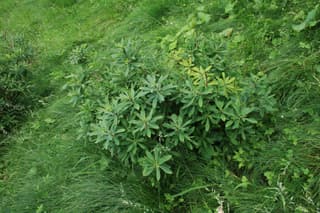
Daphne
Daphne
Daphne is a genus of 70 to 95 evergreen, semi-evergreen, and deciduous shrubs in the family Thymelaeaceae, native to Europe, Asia, and North Africa. Prized for their intensely fragrant flowers that often bloom in late winter or early spring, Daphnes are compact, slow-growing shrubs popular in rock gardens and mixed borders. Every part of the plant is highly toxic if ingested, so it should be sited away from children and pets.
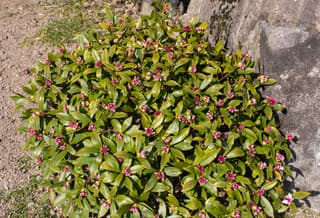
Winter daphne
Daphne odora
Winter daphne is a compact, slow-growing evergreen shrub prized for the intensely fragrant, reddish-purple flowers (white inside) it produces in dense terminal clusters during late winter and early spring. Native to China and Japan, it has glossy, leathery dark-green leaves and forms a rounded mound roughly 3-4 ft (about 1.2 m) tall and wide. It is a classic sheltered-garden and courtyard shrub, valued more for its perfume than its looks, but every part of the plant is poisonous if eaten.
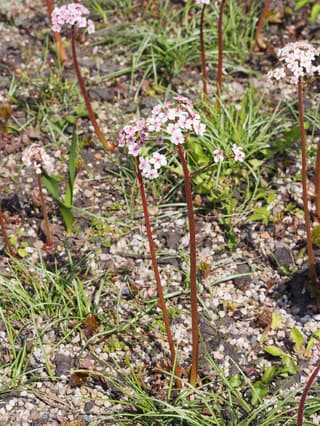
Indian rhubarb
Darmera peltata
Indian rhubarb (Darmera peltata) is a bold, clump-forming perennial of the saxifrage family, native to streamsides in northern California and southern Oregon. In spring, tall leafless stems carry domed clusters of pale pink to white starry flowers before the foliage appears. The rounded, glossy, umbrella-like leaves then expand up to about 45 cm across and turn red in autumn. It spreads slowly by creeping rhizomes, reaching 1 to 1.5 m tall. Hardy through the UK and northern Europe, it holds the RHS Award of Garden Merit and suits pond margins, bog gardens and damp borders.
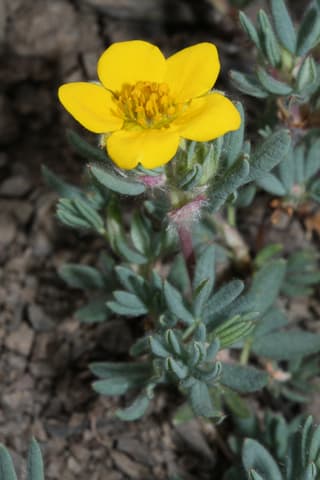
Shrubby Cinquefoil
Dasiphora fruticosa
Shrubby Cinquefoil (Dasiphora fruticosa, syn. Potentilla fruticosa) is a deciduous shrub in the rose family (Rosaceae), native to the cold and subarctic regions of the Northern Hemisphere, where it often grows in high-altitude alpine areas. It grows to a height of approximately 0.5–1.2 m, featuring small, pinnately compound leaves with a gray-green to dark green color, and blooms with small, saucer-shaped flowers from spring until the first frosts. It is exceptionally resistant to both frost and drought, making it one of the most low-maintenance ornamental woody plants for gardens and parks.
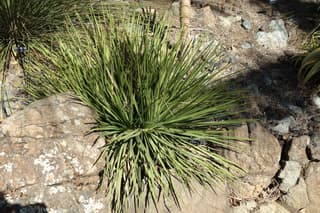
Mexican Grass Tree
Dasylirion longissimum
Dasylirion longissimum, commonly known as the Mexican Grass Tree or Toothless Desert Spoon, is a xerophytic perennial plant in the Asparagaceae family, native to the Chihuahuan Desert and arid regions of northeastern Mexico (Tamaulipas, San Luis Potosí, and Nuevo León). It forms a dense, symmetrical rosette of cylindrical, thin, flexible, blue-green leaves over a meter long, emerging from a thick, woody trunk. It is very slow-growing—taking over a decade to develop a visible trunk—and is extremely tolerant of drought and moderate frosts (down to about -9 °C / 15 °F). In summer, it produces long flower spikes with small cream or white flowers, which later form attractive clusters of reddish seeds. It is primarily cultivated as an architectural ornamental plant in xeriscapes, rock gardens, and low-maintenance landscapes.
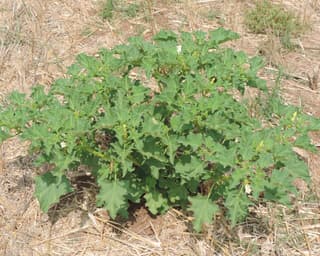
Fierce Thornapple
Datura ferox
Datura ferox, known as the fierce thornapple or long-spined thorn apple, is a fast-growing annual weed in the nightshade family (Solanaceae), native to the Americas and now naturalized as an aggressive weed across warm regions worldwide. It is easily recognized by its funnel-shaped, yellowish-white flowers and its spiny, egg-shaped seed capsules covered in 40-60 stout thorns up to 1.5 cm long -- the source of its Latin name "ferox" (fierce). WARNING: EVERY PART OF THIS PLANT IS SEVERELY TOXIC. Datura ferox contains extremely high concentrations of tropane alkaloids, especially scopolamine, along with hyoscyamine and atropine. Ingesting even small amounts of leaves, seeds, or flowers can cause hallucinations, delirium, rapid heartbeat, seizures, coma, and death in humans, cats, dogs, and livestock. This species should never be grown where children or pets have access, and no part of it should ever be ingested, brewed, or smoked.
Jimsonweed
Datura stramonium
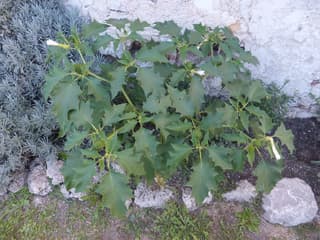
Jimsonweed (Datura stramonium) is a coarse annual herb in the nightshade family (Solanaceae), native to the Americas and now naturalized on every inhabited continent. It produces large, trumpet-shaped white or pale-purple flowers that open at dusk and emit a heavy fragrance, followed by distinctive spiny egg-shaped seed capsules. Despite its dramatic ornamental appeal, every part of the plant is dangerously toxic — containing tropane alkaloids (atropine, scopolamine, hyoscyamine) capable of causing delirium, hallucinations, and death. Cultivation requires strict caution and should never occur in spaces accessible to children or pets.
Wild Carrot
Daucus
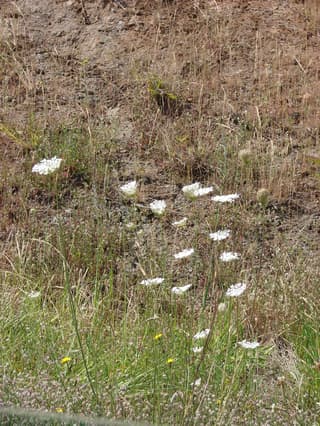
Daucus is a genus of flowering plants in the family Apiaceae, best known for Daucus carota (wild carrot), the ancestor of the cultivated carrot. Native to temperate regions of Europe, northern Africa, and Asia, wild carrot produces delicate, lacy white umbels of flowers and a slender, pale taproot. It thrives in meadows, roadsides, and disturbed ground, and has naturalized across much of North America and Australia.
Carrot
Daucus carota
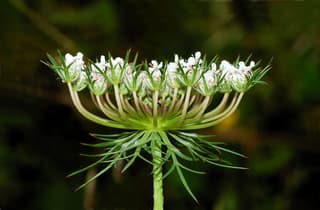
Daucus carota, commonly known as the carrot, is a biennial herbaceous plant. While the wild form is often called Queen Anne's Lace, the domesticated subspecies is one of the world's most important root vegetables. It features finely divided, fern-like foliage and produces a large, fleshy taproot that is typically orange, though purple, yellow, and white varieties exist. In its second year, it produces an umbrella-shaped cluster of small white flowers.
Garden Carrot
Daucus carota subsp. sativus
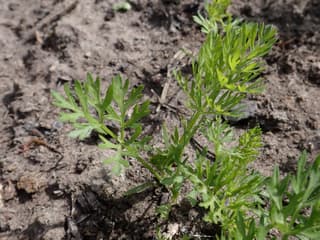
The garden carrot (Daucus carota subsp. sativus) is one of the world's most widely grown root vegetables, descended from the wild Eurasian carrot. Belonging to the Apiaceae family, it is prized for its sweet, nutrient-dense taproot rich in beta-carotene. A biennial grown as an annual, it produces feathery foliage and white umbel flowers in its second year.
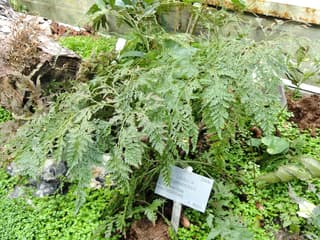
Hare's-foot Fern
Davallia canariensis
Davallia canariensis, commonly known as the Hare's-foot Fern or Deer's-foot Fern, is a captivating epiphytic fern native to the Canary Islands and the Iberian Peninsula. Its most distinctive feature is the thick, furry rhizomes covered in reddish-brown scales that creep over the edge of the pot, resembling the fuzzy feet of a hare. The finely divided, triangular fronds create a lush, cascading display, making it an exceptional choice for hanging baskets and decorative arrangements.
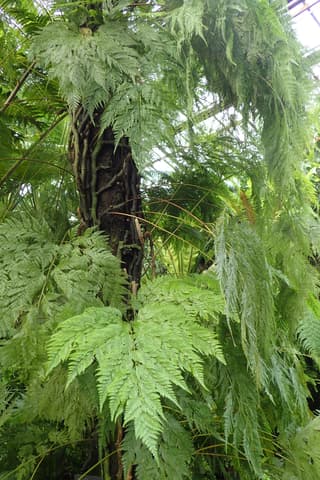
Rabbit's Foot Fern
Davallia fejeensis
An enchanting epiphytic fern from Fiji, the Rabbit's Foot Fern is beloved for its delicate, lace-like fronds and distinctive furry rhizomes that creep over the edges of pots. These soft, brown-scaled rhizomes resemble a rabbit's foot, giving the plant its charming common name. It thrives in bright indirect light and appreciates consistent humidity, making it an excellent choice for hanging baskets or elevated planters where its creeping rhizomes can cascade gracefully.
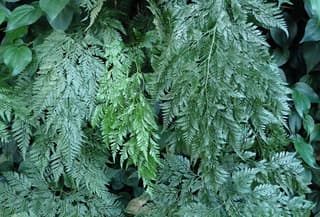
White Rabbit's Foot Fern
Davallia griffithiana
Davallia griffithiana is an epiphytic fern native to China and Southeast Asia, prized for its long, creeping white furry rhizomes that resemble a rabbit's foot. The delicate, finely cut bright-green fronds create a lush, cascading display perfect for hanging baskets. It is non-toxic and well-suited as an indoor houseplant in humid, warm environments.
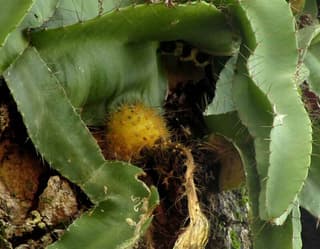
Dog-tail Cactus
Deamia testudo
Deamia testudo, known as the Dog-tail Cactus, is an epiphytic and climbing cactus native to the tropical forests of Central America and northern South America, from Mexico to Colombia and Venezuela. It grows by attaching itself to tree trunks and rocks using aerial roots, displaying angular and flattened stems that resemble a tortoise shell. In summer and early fall, it produces large, fragrant, nocturnal white flowers, followed by spiny spherical fruits.
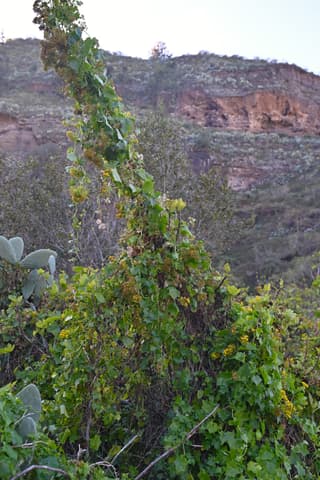
Cape ivy
Delairea odorata
Delairea odorata (synonym Senecio mikanioides), commonly known as Cape ivy or German ivy, is a perennial climbing plant from the Asteraceae family, native to the moist mountainous regions of South Africa. It has flexible, twining stems that cling to supports or trail as ground cover, and glossy, slightly fleshy leaves with 5-7 pointed lobes. In autumn and winter, it produces small, sweet-smelling yellow inflorescences. It is a very fast-growing species, considered invasive in many regions with mild climates, where it smothers native vegetation. All parts of the plant contain toxic pyrrolizidine alkaloids, dangerous to humans, pets, and farm animals.
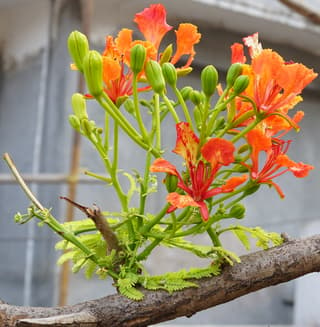
Royal Poinciana
Delonix regia
The Royal Poinciana is considered one of the most beautiful trees in the world. Native to Madagascar, it stands out for its massive umbrella-shaped canopy and its exuberant flowering in shades of red and orange. Its leaves are finely pinnate, giving the tree a light texture even when not in bloom.
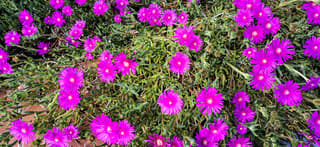
Ice Plant
Delosperma
Delosperma, commonly called ice plant, is a genus of low-growing, mat-forming succulents from South Africa prized for their dazzling daisy-like flowers and glistening, ice-crystal-like leaf surfaces. Hardy species such as D. cooperi and D. nubigenum form dense evergreen carpets that thrive in full sun and lean, well-drained soil, making them a favorite for rock gardens, slopes, and xeriscapes.
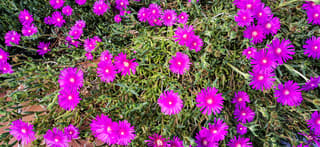
Hardy Ice Plant
Delosperma cooperi
Delosperma cooperi, the hardy ice plant, is a low, mat-forming succulent native to the arid grasslands of South Africa. Its fleshy, cylindrical leaves are dusted with tiny glistening papillae that resemble ice crystals, and from early summer through fall the foliage all but disappears beneath a blanket of vivid magenta-pink, daisy-like flowers. Remarkably drought-tolerant and cold-hardy down to USDA zone 6a, it is a favorite groundcover for rock gardens, slopes, and xeriscapes.
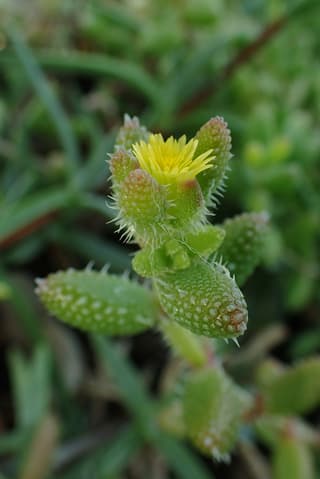
Hedgehog Sheepfig
Delosperma echinatum
Delosperma echinatum, commonly known as the Pickle Plant, is a unique succulent shrublet native to South Africa. It is characterized by its small, barrel-shaped green leaves covered in soft, white, hair-like bristles that resemble a hedgehog or a pickle. It produces delicate, daisy-like flowers in shades of yellow or white during the warmer months.
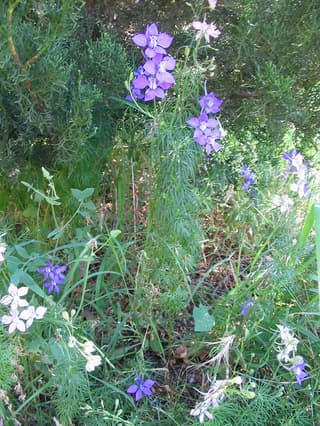
Rocket Larkspur
Delphinium ajacis
Rocket Larkspur (Delphinium ajacis, syn. Consolida ajacis) is an annual flowering plant in the buttercup family (Ranunculaceae), native to the Mediterranean and Eurasia. It reaches a height of up to 130 cm and forms slender, upright stems with deeply divided leaves. During summer, it produces dense racemes of flowers in shades of blue, purple, pink, and white. It is a classic garden plant suitable for flower beds, borders, and cut flowers. WARNING: All parts of the plant are poisonous — they contain diterpene alkaloids, including the highly toxic methyllycaconitine, which is dangerous to humans, cats, and dogs.

Garden Mum
Dendranthema grandiflorum
The garden mum (Dendranthema grandiflorum, synonym Chrysanthemum morifolium) is a herbaceous perennial in the Asteraceae family, native to China where it has been cultivated for over two thousand years. It is one of the world's most popular ornamental flowers, prized for its dense, colorful blooms that appear in fall. In East Asia it symbolizes longevity and nobility, while in many Western countries it is closely tied to remembrance and cemetery flowers.
Find the Perfect Plant
Our plant guide helps you find ideal species for your experience level and time of year.
Browse by Difficulty, Season & More
Use the filters below to narrow this catalog by care difficulty, season, environment, or search directly by name. Each filter leads to a focused list tailored to your specific growing conditions.