Complete Plant Guide
Explore plants by difficulty, season and more. Find the perfect plant for you.
Difficulty
Categories
Plants by City
🗺️ Plants by City3765 plants found
Showing 793-828 of 3765

Cape Thatching Reed
Chondropetalum tectorum
Chondropetalum tectorum, commonly called the Cape thatching reed, is an evergreen, rush-like perennial in the Restionaceae family, native to marshes and damp, sandy seeps in South Africa's Western and Eastern Cape. It forms dense, upright clumps of slender, jointed, blue-green stems that sway gracefully in the wind, tipped in autumn with clusters of small, papery, dark brown flower spikes. Historically harvested by Cape settlers for roof thatching, broom-making, and basketry, it is now prized worldwide as a low-maintenance, architectural accent for water-wise and coastal gardens.
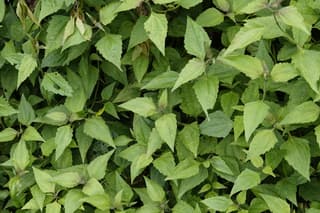
Siam Weed
Chromolaena odorata
Chromolaena odorata, commonly called Siam weed, is a fast-growing, multi-stemmed shrub in the daisy family (Asteraceae), native to Central and South America and now widely naturalized as one of the world's most aggressive invasive species across tropical Africa, Asia, and the Pacific. It forms dense, tangled thickets 2-2.5 m tall in open ground (climbing several meters higher when scrambling over other vegetation), with diamond-shaped, pungent-smelling leaves and clusters of pale lilac-to-white flowers. The species spreads rapidly via wind-dispersed seed and resprouts vigorously after fire or cutting, allowing it to outcompete pastures, crops, and native vegetation wherever it establishes. Despite its status as a noxious weed and its toxicity to grazing livestock, communities across its introduced range have long used its leaves in traditional wound-healing and antimicrobial remedies.
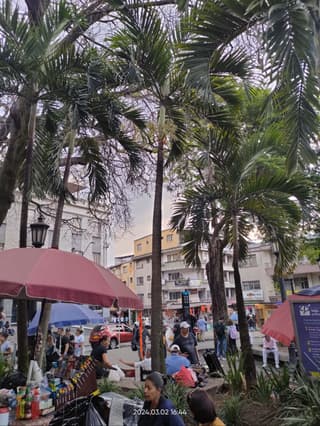
Areca palm
Chrysalidocarpus lutescens
The Areca palm (Chrysalidocarpus lutescens, formerly Dypsis lutescens) is a clustering palm from the Arecaceae family native to Madagascar. It produces clusters of slender, cane-like stems with yellowish-green sheaths and arching pinnate fronds, which have earned it nicknames such as the 'golden cane palm' or 'butterfly palm.' In the wild, it grows up to 8 m tall, but as a houseplant, it remains significantly smaller and is among the most popular indoor palms due to its low maintenance and ability to naturally purify and humidify indoor air.
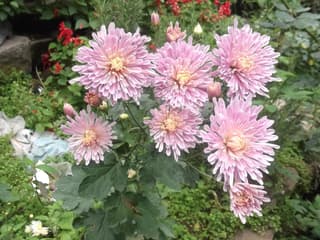
Chrysanthemum / Mum
Chrysanthemum
Chrysanthemum is a genus of flowering perennials in the daisy family (Asteraceae), prized worldwide as garden and florist plants. Native to Asia and northeastern Europe, mums are the quintessential fall bloomer, producing dense mounds of daisy-like or pom-pom flowers in shades of yellow, white, red, purple, pink, orange, and bronze.
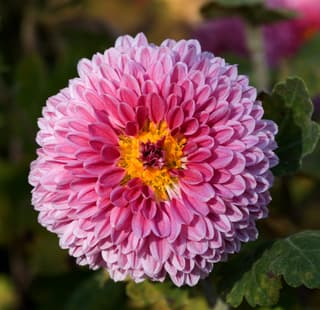
Florist's Chrysanthemum
Chrysanthemum × morifolium
The Florist's Chrysanthemum (Chrysanthemum × morifolium) is one of the world's most popular ornamental flowering plants, developed through centuries of hybridization originating in ancient China. Known for its spectacular fall blooms in shades of white, yellow, pink, red, purple, and orange, it is widely used as a cut flower, potted plant, and garden border perennial. It thrives in full sun with well-drained soil and moderate watering.
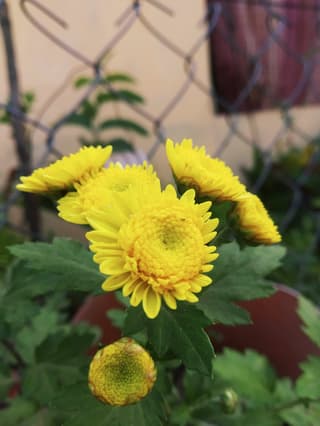
Chrysanthemum
Chrysanthemum indicum
Chrysanthemum indicum, commonly known as Chrysanthemum or Mum, is a perennial herbaceous plant native to East Asia. It is widely cultivated for its dense, colorful blooms that symbolize the arrival of autumn. Beyond its ornamental value, it holds significant cultural importance in China and Japan, where it is used in teas and traditional medicine.
Star Apple
Chrysophyllum
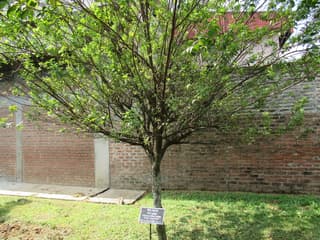
Chrysophyllum is a genus of approximately 37 species of tropical trees in the family Sapotaceae, native primarily to the tropical Americas from Mexico to northern Argentina and the Caribbean. The genus name derives from the Greek chrysos (gold) and phyllon (leaf), referring to the characteristic golden sheen on the underside of the leaves. These fast-growing trees can reach 10 to 30 meters in height, with glossy evergreen foliage, small purplish-white flowers, and highly prized edible fruits. The best-known species is Chrysophyllum cainito, the star apple, celebrated for its sweet, star-patterned pulp.
Vetiver
Chrysopogon zizanioides
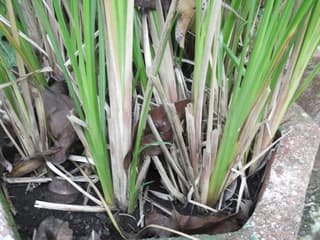
Vetiver (Chrysopogon zizanioides) is a robust perennial grass native to India, widely cultivated across tropical and subtropical regions worldwide. It forms dense clumps with long, stiff, aromatic leaves and a unique deep root system that grows vertically 3–4 meters into the ground. One of the world's most versatile plants, it controls erosion, purifies water, yields a precious essential oil used in perfumery, and has a millennia-long medicinal tradition.
Sunset bells
Chrysothemis pulchella
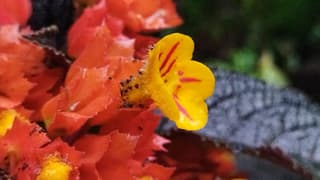
Chrysothemis pulchella is a tropical perennial plant from the Gesneriaceae family, related to African violets and gloxinias. It is known for its velvety copper-toned foliage and its tubular yellow flowers with red stripes or spots, surrounded by a very showy and long-lasting orange-red calyx, although each corolla lasts only a few days. It grows from tubers, so it may lose leaves and stems during cold seasons and sprout again when the heat returns. It reaches about 12-18 inches in height when grown indoors.
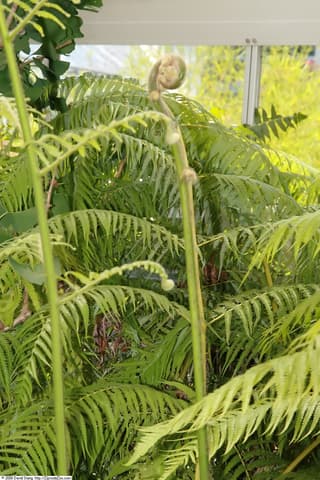
Mexican Tree Fern
Cibotium schiedei
Cibotium schiedei, commonly known as the Mexican Tree Fern, is an extremely slow-growing tree fern native to the cloud forests of Mexico. Its fibrous trunk, covered in soft reddish-gold hairs, supports silky light-green fronds that can reach 8–11 feet in length, forming an arched and sculptural canopy. Evergreen and without a dormancy period, it is a highly valued species in tropical gardens and as an indoor architectural plant, though it requires patience: it takes several years just to form a visible trunk.
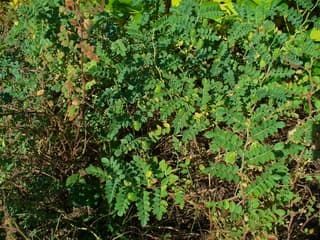
Chickpea
Cicer arietinum
Cicer arietinum, commonly known as the chickpea, is an annual herbaceous legume native to the Middle East, cultivated for over 7,500 years and currently one of the most important food crops in the world. It reaches between 20 and 60 cm in height, with branched stems covered in glandular hairs, pinnate compound leaves, and white, pink, or violet flowers that give way to short, inflated pods containing one or two seeds. Like all legumes, it fixes atmospheric nitrogen through symbiosis with Rhizobium bacteria, improving the fertility of the soil where it is grown.
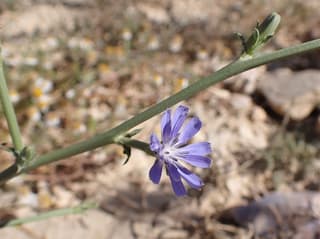
Endive
Cichorium endivia
Endive (Cichorium endivia) is an annual or biennial herbaceous plant in the Asteraceae family, native to the Mediterranean region. It produces rosettes of broad or curly green leaves with a characteristic mildly bitter flavor. Widely cultivated as a leafy vegetable, it is enjoyed both raw in salads and cooked in soups and sautéed dishes. It can develop pale blue to violet flowers on tall stems that tower above the foliage.

Chicory
Cichorium intybus
Chicory (Cichorium intybus) is a hardy herbaceous perennial in the daisy family, prized for its sky-blue, dandelion-like flowers that open at dawn and close by early afternoon. Native to Europe, western Asia and North Africa, it now grows wild across temperate regions worldwide. The plant forms a basal rosette of jagged leaves in its first year, then sends up tall, branching flower stalks up to 1.5 m. Both the bitter leaves and the long taproot are edible, and the roasted root has long served as a coffee substitute.
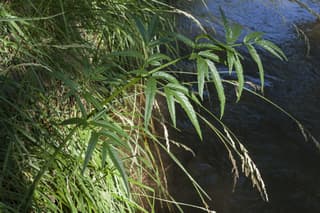
Water Hemlock
Cicuta
Cicuta is a small genus of about four herbaceous perennial (often behaving as biennial) species in the carrot family (Apiaceae), native to wet meadows, marshes, streambanks and ditches across temperate North America and Europe. Plants form stout, hollow, branching stems that reach up to 2.5 m tall, topped with umbrella-shaped clusters (umbels) of small white flowers in summer. The chambered, tuberous rootstock exudes a yellowish oily sap with a smell resembling raw parsnip when cut. Cicuta is widely regarded as one of the most acutely toxic plants native to North America and Europe: every part of the plant contains cicutoxin, a violent convulsant most concentrated in the roots in early spring. This genus is a wild wetland species, not a cultivated ornamental or houseplant, and is documented here strictly for identification and safety reference.
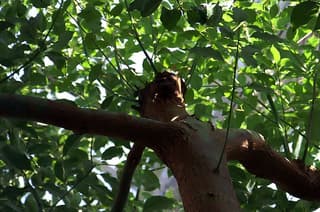
Camphor tree
Cinnamomum camphora
The Camphor tree is a majestic evergreen tree, native to East Asia, famous for its aromatic wood and the production of camphor. Its leaves are leathery, glossy, and release a characteristic fragrance when crushed. In spring, it produces small clusters of white or cream flowers, followed by small black fruits. Although it reaches large proportions in the wild, it can be grown in large pots or as a bonsai in its early years.
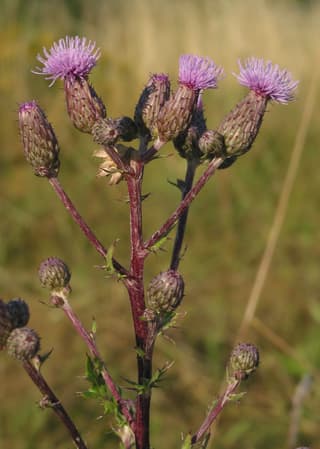
Creeping Thistle
Cirsium arvense
Creeping Thistle (Cirsium arvense) is a perennial herbaceous plant known as one of the world's most persistent weed species. It forms dense colonies thanks to a deep and widely branched underground root system that can reach several meters into the soil. The stems are upright, 30–150 cm tall, and bear deeply lobed, heavily spiny leaves. During the summer months, abundant, fragrant flower heads in purple to pink shades are produced, providing an important nectar source for bees, butterflies, and other pollinators — indeed, one of the most nectar-producing wild herbs in the UK. Despite its status as a troublesome agricultural weed, creeping thistle has a long tradition in folk medicine and is edible.
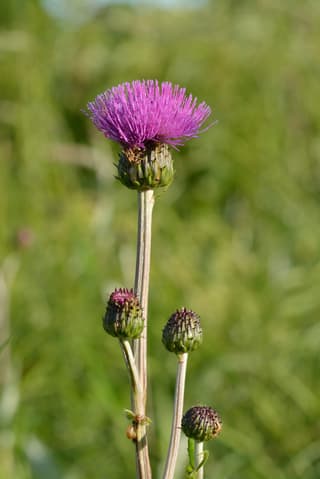
Melancholy thistle
Cirsium heterophyllum
The melancholy thistle (Cirsium heterophyllum) is a spineless, mountain perennial from the Asteraceae family, reaching 50–150 cm in height. The unwinged stem bears lanceolate leaves that are green and smooth on top, while the underside is covered with a dense, white tomentum—hence the name "heterophyllum" (different leaves). It blooms from June to August, producing solitary, spherical flower heads of a purple-red color, reaching 3–5 cm in diameter. It naturally occurs in mountain meadows, tall-herb communities, and forest edges across northern and central Europe and Siberia, extending as far as the Altai Mountains.
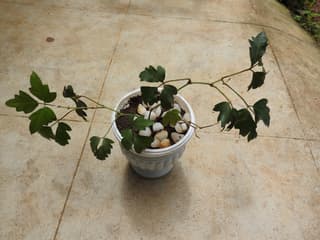
Cissus / Grape Ivy (genus)
Cissus
Cissus is a large genus of climbing and trailing vines in the family Vitaceae, native to tropical and subtropical regions worldwide. It includes popular houseplants such as Cissus rhombifolia (grape ivy), Cissus discolor (rex begonia vine), and Cissus quadrangularis. These versatile plants thrive indoors and outdoors, offering lush foliage and vigorous, fast-paced growth.
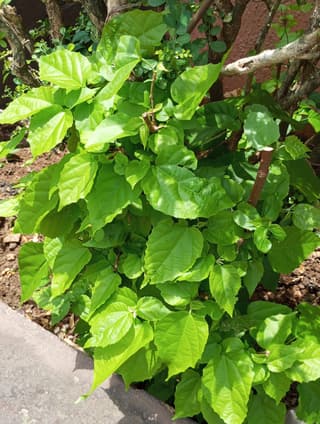
Kangaroo Vine
Cissus antarctica
Cissus antarctica, commonly known as the Kangaroo Vine, is a fast-growing evergreen climber native to eastern Australia. Prized for its glossy, toothed, dark green leaves and tendril-climbing habit, it is one of the toughest and most forgiving vines for indoor hanging baskets, trellises, or ground cover in warm climates. It adapts to a wide range of light conditions, from bright indirect light to deep shade, making it a reliable choice for offices and low-light rooms.
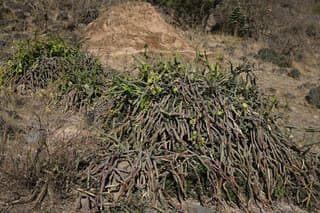
Veldt Grape
Cissus quadrangularis
Cissus quadrangularis is a fast-growing succulent vine in the grape family (Vitaceae), native to tropical Africa, the Arabian Peninsula, and the Indian subcontinent. Its most distinctive feature is a thick, four-angled (quadrangular), jointed stem that resembles a chain of fleshy green segments, letting the plant climb by tendril or trail attractively from a hanging basket. Small three-lobed leaves appear at the nodes and often drop in dry conditions, leaving the sculptural stems as the main ornamental feature. In Ayurvedic medicine it is known as Hadjod or Asthisamharaka ("bone-setter") for its long history of use in supporting bone and joint health.
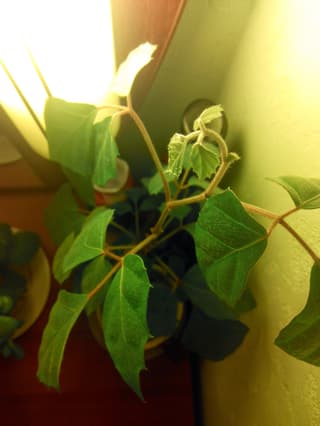
Grape Ivy
Cissus rhombifolia
Cissus rhombifolia, commonly known as Grape Ivy, is a vigorous tropical climbing plant from the Vitaceae family, native to Central and South America. Its trifoliate, deep-green glossy leaves with rust-colored hairs on the undersides make it one of the most attractive indoor vining plants. It thrives in hanging baskets, trained on trellises, or allowed to cascade from shelves. A naturally resilient plant, it adapts well to typical indoor conditions with minimal care.
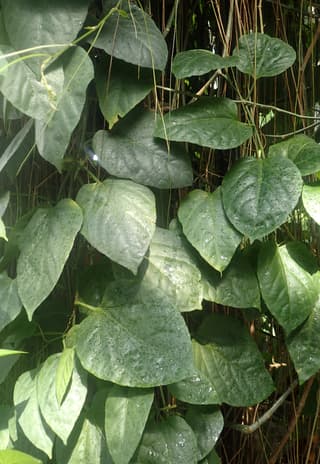
Seasonvine
Cissus verticillata
Cissus verticillata, popularly known as the Insulin Plant, is a vigorous perennial vine native to the Americas. Its leaves are green, oval, and glossy, but its most striking feature is the long, reddish aerial roots that descend from its branches, creating a natural curtain effect. It is an extremely resilient plant, capable of quickly covering fences, pergolas, and walls, and is also highly valued in traditional medicine.
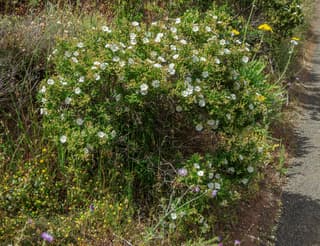
Montpellier rockrose
Cistus monspeliensis
The Montpellier rockrose is a low, bushy, evergreen Mediterranean shrub (50 to 120 cm) typical of garrigue and maquis landscapes. Its lanceolate, sticky, and highly fragrant leaves release a characteristic resinous scent in hot weather. From May to June, it is covered in numerous small white flowers with yellow centers, which are very attractive to bees. Extremely hardy and drought-tolerant, it readily colonizes poor, calcareous, or siliceous soils and plays an important role in preventing soil erosion in Mediterranean areas degraded by fire.
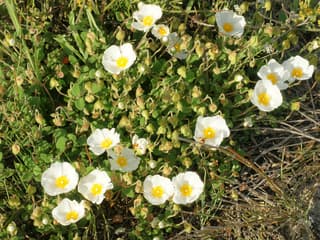
Sage-leaved rockrose
Cistus salviifolius
Cistus salviifolius, or sage-leaved rockrose, is a small evergreen shrub typical of the Mediterranean scrub, reaching heights of about 24 inches with a prostrate-spreading habit. The oval, wrinkled leaves resemble those of sage and are covered in a light grey-green down. Between spring and early summer, it produces numerous white five-petaled flowers, often featuring a small yellow spot at the base, which open in the morning and drop within a single day. It is a pioneer species, capable of rapidly colonizing poor, arid soils and regenerating after wildfires.
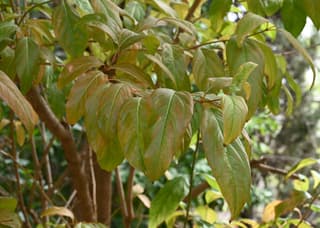
Fiddlewood
Citharexylum spinosum
Citharexylum spinosum, known as fiddlewood, is a fast-growing evergreen to semi-deciduous shrub or small tree, native to South Florida, the Caribbean islands, and from northern South America to Central America. It colonizes dry coastal strands, dunes, and subtropical maritime forests. It can reach 10-16 m (33-52 ft) in height, although in gardens it typically forms multi-stemmed specimens of 4-10 m (13-33 ft). It is notable for its dark green, glossy, spatulate leaves with characteristic arched venation, and for its fragrant, tubular white flowers gathered in terminal racemes, which bloom year-round, peaking in spring. It is dioecious: female trees produce fleshy drupes that ripen from orange to almost black, highly favored by birds. Its hard, reddish wood was once used in the manufacture of musical instruments, which is the origin of its popular name, fiddlewood.
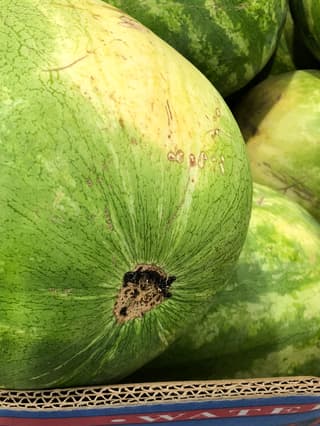
Watermelon
Citrullus lanatus
Watermelon (Citrullus lanatus) is an annual creeping plant of the cucurbit family, native to Africa. It is widely cultivated for its large, juicy fruit, which has a high water content (about 92%) and is rich in vitamins A, C, and lycopene. Its vines can extend for several meters, featuring lobed leaves and yellow flowers that give rise to fruits with green rinds and typically red flesh.
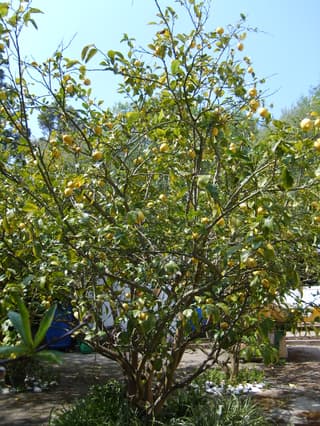
Citrus
Citrus
The genus Citrus comprises evergreen trees and shrubs - including oranges, lemons, limes, and mandarins - native to Southeast Asia and belonging to the Rutaceae family. Prized for their fragrant white flowers and edible fruit, citrus plants feature glossy, aromatic dark-green foliage and are grown in orchards, gardens, and containers throughout subtropical and tropical climates worldwide.
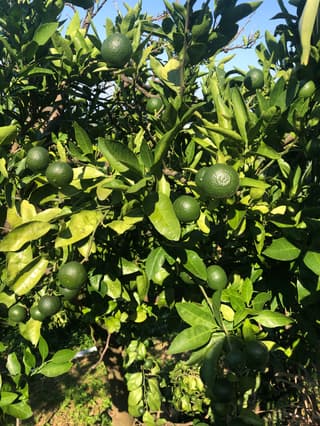
Key Lime
Citrus × aurantiifolia
Key lime (Citrus × aurantiifolia) is an evergreen citrus tree native to Southeast Asia, now widely grown across tropical and subtropical regions worldwide. Prized for its small, intensely aromatic fruits, it is a cornerstone of tropical cuisine — most famously in Key lime pie — as well as cocktails, marinades, and desserts. The tree bears fragrant white flowers with purplish tinges and glossy, dark green leaves. It is the most cold-sensitive of all commercial citrus, thriving in warm, sunny climates.
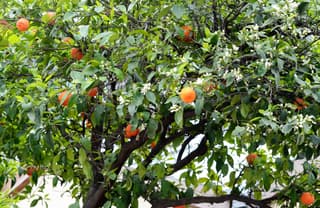
Bitter Orange
Citrus × aurantium
Bitter Orange (Citrus × aurantium) is an evergreen citrus tree originating from a natural hybrid between C. maxima and C. reticulata. Cultivated for centuries across the Mediterranean and Asia, it produces intensely fragrant white flowers and aromatic but bitter fruits. It is widely used in perfumery (neroli oil), liqueur production, traditional medicine, and as an ornamental tree in subtropical gardens.
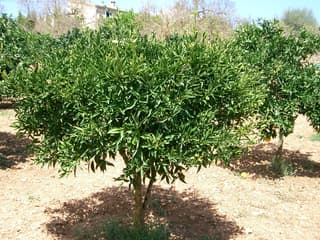
Willowleaf Mandarin
Citrus × aurantium f. deliciosa
The willowleaf mandarin is a compact evergreen citrus tree native to the Mediterranean basin, first documented in Italy in the early 1800s. It gets its name from its narrow, willow-like leaves and produces small, intensely fragrant white flowers followed by sweet, easy-peel orange fruit with a distinctive aromatic rind.
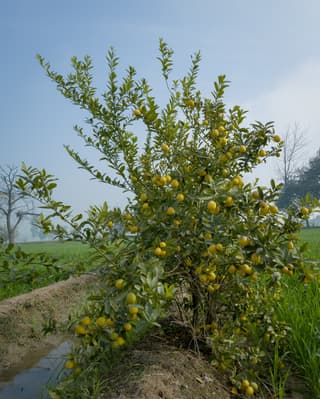
Lemon Tree
Citrus × limon
The lemon tree (Citrus × limon) is an evergreen fruit tree in the Rutaceae family, originating as a natural hybrid between the citron (Citrus medica) and bitter orange (Citrus aurantium), likely in Asia. It is one of the most widely cultivated citrus species worldwide, prized for its tart vitamin C-rich fruits, fragrant white blossoms, and year-round ornamental value. It thrives in subtropical and Mediterranean climates.
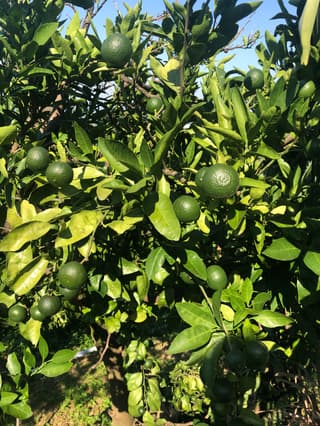
Key Lime
Citrus aurantiifolia
Key Lime (Citrus aurantiifolia) is a small, thorny citrus tree native to the Malesian region of Southeast Asia. It produces small, round, intensely aromatic and acidic fruits widely prized in culinary traditions from the Americas to Southeast Asia. The tree features glossy evergreen foliage and fragrant white flowers that bloom year-round in warm climates.
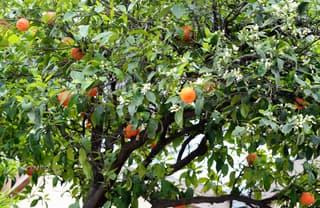
Bitter Orange
Citrus aurantium
Citrus aurantium, commonly known as Bitter Orange or Seville Orange, is an evergreen citrus tree native to Southeast Asia and widely naturalized across the Mediterranean, Middle East, and South America. It produces glossy dark-green foliage, intensely fragrant white blossoms, and round orange fruits that are too acidic for fresh consumption but prized for their culinary, medicinal, and aromatic applications. The peel yields neroli essential oil from the flowers and petit grain oil from leaves and twigs — both cornerstones of classical perfumery. As one of the most economically versatile citrus species, Bitter Orange underpins the production of liqueurs, marmalades, dietary supplements, and fine fragrances worldwide.
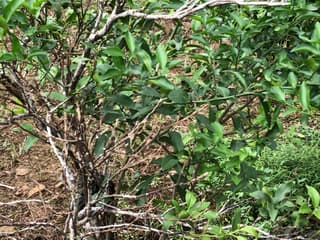
Kumquat
Citrus japonica
The kumquat (Citrus japonica) is a small evergreen citrus shrub or tree native to China, prized for its bite-sized orange fruit that is eaten whole, peel and all, offering a sweet rind and tart flesh. Compact and slow-growing, it is popular as a container and ornamental garden plant, and is one of the few citrus resistant to citrus canker.
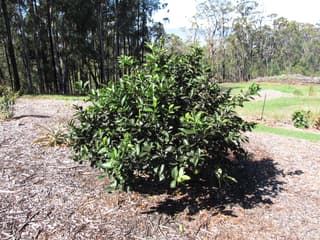
Persian Lime
Citrus latifolia
Citrus latifolia, the Persian lime or Tahiti lime, is a citrus fruit hybrid widely cultivated for its seedless, juicy fruits. It is an evergreen tree reaching up to 5 meters, bearing fragrant white flowers and producing fruit year-round in warm climates.
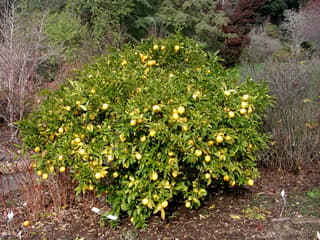
Lemon
Citrus limon
The lemon (Citrus limon) is a small evergreen tree in the Rutaceae family, native to the subtropical regions of South Asia. Recognized for its aromatic yellow oval fruits, pinkish-white flowers, and bright green foliage, it is one of the most widely cultivated citrus fruits in the world. It produces fruit with high vitamin C and citric acid content, being extensively used in cooking, folk medicine, and perfumery.
Find the Perfect Plant
Our plant guide helps you find ideal species for your experience level and time of year.
Browse by Difficulty, Season & More
Use the filters below to narrow this catalog by care difficulty, season, environment, or search directly by name. Each filter leads to a focused list tailored to your specific growing conditions.