Sapotaceae
Spanish Cherry: Aromatic Plant
Mimusops elengi
Prefers full sun but tolerates partial shade once established. It requires fertile, rich, and well-drained soil, preferably loamy, with a pH between 6 and 7.5. Water regularly while young; once established, it becomes drought-tolerant. It thrives in humid tropical climates but can withstand light frosts. Regular pruning helps remove dry or diseased branches and maintains the tree's vitality.
Every 14 days
Bright indirect
10° - 38°C
50% - 90%
Categories
What is Spanish Cherry?
Spanish Cherry (Mimusops elengi) is a medium-care plant from the Sapotaceae family. Mimusops elengi, commonly known as the Spanish cherry, is a medium to large evergreen tree native to the tropical forests of South and Southeast Asia. Belonging to the Sapotaceae family, it can reach heights of 15 to 30 meters, featuring a dense, rounded canopy. Its leaves are glossy, dark green, an...
Spanish Cherry grows up to 30.0m, spread of 1600cm, watering every 14 days, 10°C – 38°C, 50–90% humidity. It is not suitable for indoor environments and safe for pets.
Unlike many popular species, Spanish Cherry is safe to keep around pets.
How to Care for Spanish Cherry?
TLDR: Spanish Cherry needs Bright indirect, watering every 14 days, and temperatures between 10-38°C with 50-90% humidity.
How Often Should You Water Spanish Cherry?
Water every 10-14 days, keeping the soil slightly moist without waterlogging. Young saplings need more frequent watering, while established specimens can tolerate dry periods.
How Much Light Does Spanish Cherry Need?
Grow in full sun for abundant flowering; it tolerates partial shade, but growth and flowering are reduced in heavily shaded areas.
What Is the Best Soil for Spanish Cherry?
Use soil rich in organic matter and well-drained, such as a loamy type. It adapts to sandy, clayey, or slightly saline soils, provided they do not remain waterlogged for long periods.
What Pot Should You Use for Spanish Cherry?
As it is a large tree, it is best suited for direct planting in the ground in gardens and large areas. When young, it can be grown in a large, deep pot with good drainage until its final transplant.
What Is Spanish Cherry and Where Does It Come From?
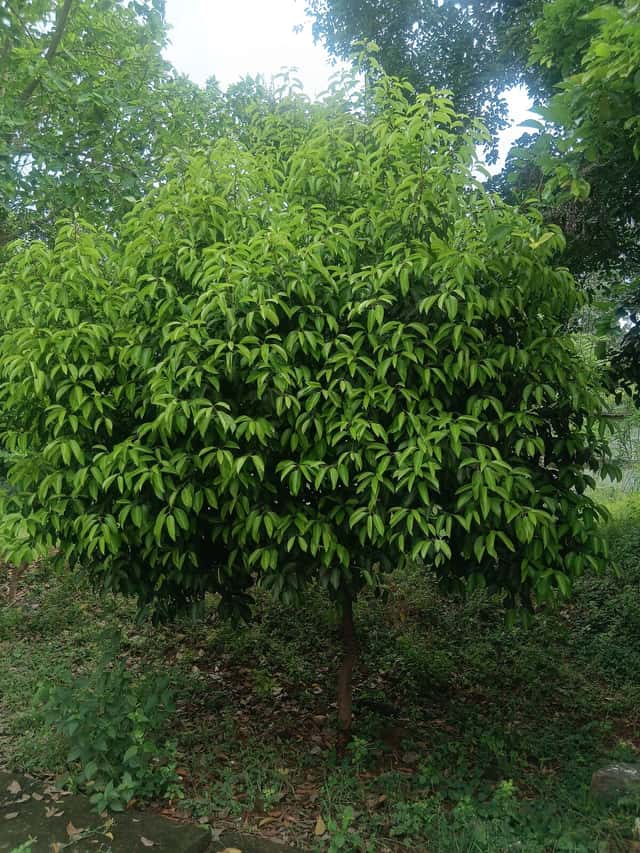
Mimusops elengi, commonly known as the Spanish cherry, is a medium to large evergreen tree native to the tropical forests of South and Southeast Asia. Belonging to the Sapotaceae family, it can reach heights of 15 to 30 meters, featuring a dense, rounded canopy. Its leaves are glossy, dark green, and oval-shaped, while its small, cream-colored flowers are extremely fragrant, retaining their scent even after drying. The fruits, which turn orange-red when ripe, have a sweet and edible pulp. It is widely cultivated as a shade and ornamental tree in gardens, parks, and temples due to its fragrance and religious symbolism.
How to Propagate Spanish Cherry?
Seeds
Seeds can be stored for up to 9 months before planting; soaking them in water before sowing accelerates germination.
- 1 Harvest ripe fruits and remove the pulp to extract the seeds
- 2 Sow in individual containers with light substrate in a shaded area
- 3 Keep the substrate moist until germination occurs
- 4 Transplant the seedlings when they are large enough to handle
Materials needed:
Cuttings
Use semi-hardwood cuttings taken from healthy branches; rooting hormone can improve results.
- 1 Cut 10-15 cm semi-hardwood branch cuttings
- 2 Remove lower leaves and treat the base with rooting hormone
- 3 Plant in a light, well-drained substrate, maintaining high humidity
- 4 Keep in a shaded environment until rooted
Materials needed:
How Big Does Spanish Cherry Grow?
TLDR: Spanish Cherry can reach up to 30.0m tall with Medium growth rate.
Max height
30.0m
Spread
16.0m
Growth rate
Medium
Foliage
Evergreen
Plant Uses
Ornamental
Great for decoration
Edible
Can be consumed
Medicinal
Medicinal properties
Aromatic
Pleasant fragrance
Medicinal Uses
- Bark used in decoctions to treat diarrhea and dysentery
- Leaves applied topically for headaches and wounds
- Flowers used to treat diarrhea
- Macerated seeds used as a laxative
Culinary Uses
- Ripe fruits consumed fresh, featuring a sweet and astringent flavor
- Oil extracted from seeds used for cooking
- Dried flowers used in aromatic infusions and teas
Is your plant showing symptoms?
Click on the symptom to discover possible causes:
What Diseases Commonly Affect Spanish Cherry?
TLDR: Spanish Cherry is susceptible to 2 known diseases. Monitor regularly for early detection.
Colletotrichum gloeosporioides
Colletotrichum gloeosporioides is a fungus that causes anthracnose. It thrives in warm, humid weather and spreads primarily through water splashes and dense vegetation. You typically see small, dark brown to black spots with lighter margins on leaves, stems, flowers, or fruits. The spots can become sunken, and in humid weather, orange-pink spore masses may appear. In domestic settings, it is particularly common on citrus and avocado (as houseplants), chili/peppers, strawberries, and various ornamental plants.
Crown Rot
Crown rot is a serious fungal disease that attacks the crown (base) of the plant where the stem meets the soil. It is caused by various fungal pathogens including Phytophthora, Fusarium, and Rhizoctonia. The disease thrives in waterlogged conditions and can quickly spread to kill the entire plant if not addressed promptly.
Meaning & Symbolism
In Hindu and Buddhist cultures, its fragrant flowers symbolize purity and spirituality, often used in garlands offered at temples and during wedding ceremonies. In Malay culture, the tree represents elegance and virtue.
Compare with similar plants
| Attribute | Difficulty | Light | Watering | Pet Safe |
|---|---|---|---|---|
| Dark Fieldcap | Medium | Low light | 2d | ⚠️ |
| Azalea | Medium | Partial shade | 3d | ⚠️ |
| Muriel's Bamboo | Medium | Partial shade | 3d | ✓ |
| Bougainvillea | Medium | Direct sun | 7d | ⚠️ |




