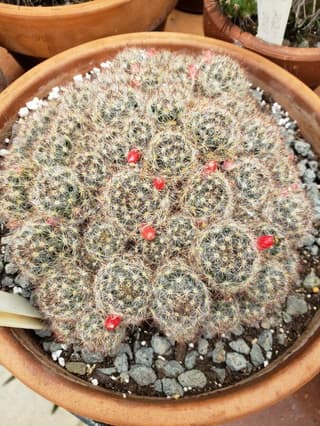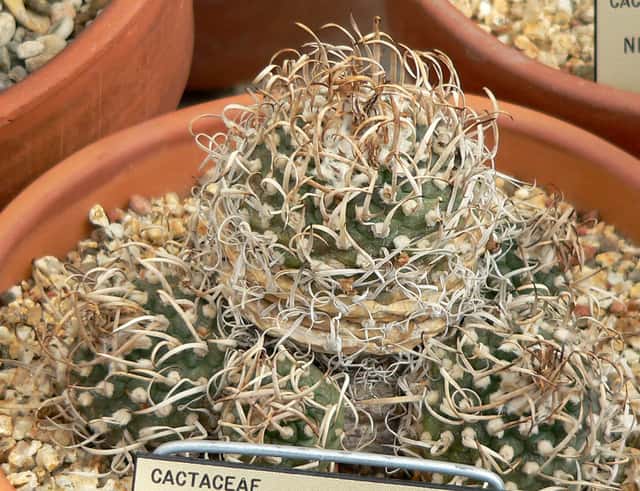
Cactaceae
Schmiedicke's Turbinicarpus: Full Sun Plant
Turbinicarpus schmiedickeanus
This tiny cactus needs full sun, minimal watering, and a near-mineral, fast-draining soil to stay compact and healthy. Its thick taproot rots quickly if kept wet or planted in organic-rich mixes, so growers let the soil dry out completely between waterings and keep it almost dry through winter dormancy.
Every 7-10 days
Direct sun
7° - 27°C
% - %
Categories
What is Schmiedicke's Turbinicarpus?
Schmiedicke's Turbinicarpus (Turbinicarpus schmiedickeanus) is a hard-care plant from the Cactaceae family. Turbinicarpus schmiedickeanus is a small, slow-growing cactus endemic to the arid deserts of Nuevo Leon, San Luis Potosi and Tamaulipas in northeastern Mexico. Its solitary, spherical to slightly depressed green stem barely reaches 5 cm tall and 4 cm wide, covered in pyramidal tubercles tipped with...
Schmiedicke's Turbinicarpus grows up to 5cm, spread of 4cm, 7°C – 27°C. It is suitable for indoor environments and safe for pets.
Unlike easy-care plants, Schmiedicke's Turbinicarpus demands constant attention to humidity and light. Not recommended for beginners. Unlike many popular species, Schmiedicke's Turbinicarpus is safe to keep around pets.
How to Care for Schmiedicke's Turbinicarpus?
TLDR: Schmiedicke's Turbinicarpus needs Direct sun, watering every 7 days, and temperatures between 7-27°C with 40-70% humidity.
How Often Should You Water Schmiedicke's Turbinicarpus?
Water sparingly and only once the soil is fully dry; withhold water almost entirely in winter, since the taproot rots easily from overwatering or humid, organic-rich substrates.
How Much Light Does Schmiedicke's Turbinicarpus Need?
Give it full sun to very bright light; it needs strong light to stay compact, though harsh, intense midday sun in extreme climates can occasionally scorch the epidermis.
What Is the Best Soil for Schmiedicke's Turbinicarpus?
Use a gritty, mineral, well-draining cactus mix, such as potting soil blended with coarse sand and pumice or perlite in roughly equal parts, to protect the taproot from rot.
What Pot Should You Use for Schmiedicke's Turbinicarpus?
A shallow, unglazed terracotta pot with drainage holes, deep enough to accommodate the taproot, helps excess moisture evaporate quickly.
What Is Schmiedicke's Turbinicarpus and Where Does It Come From?
Turbinicarpus schmiedickeanus is a small, slow-growing cactus endemic to the arid deserts of Nuevo Leon, San Luis Potosi and Tamaulipas in northeastern Mexico. Its solitary, spherical to slightly depressed green stem barely reaches 5 cm tall and 4 cm wide, covered in pyramidal tubercles tipped with woolly areoles and a handful of slender spines. In summer it produces delicate white flowers from the woolly crown. The species is listed as Near Threatened by the IUCN and protected under CITES Appendix I due to habitat loss and over-collection.
How to Propagate Schmiedicke's Turbinicarpus?
Seed propagation
- 1 Sow fresh seed on a moist, gritty, sterile cactus mix in spring or early summer.
- 2 Keep the seed tray in bright, indirect light at around 21-27C with high humidity (cover with plastic or glass).
- 3 Mist lightly to keep the surface barely moist; avoid waterlogging.
- 4 Once seedlings are large enough to handle, gradually reduce humidity and increase light over several weeks.
- 5 Transplant into gritty cactus mix once seedlings are a few centimeters across.
Materials needed:
How Big Does Schmiedicke's Turbinicarpus Grow?
TLDR: Schmiedicke's Turbinicarpus can reach up to 5cm tall with Slow growth rate.
Max height
5cm
Spread
4cm
Growth rate
Slow
Foliage
Evergreen
Plant Uses
Ornamental
Great for decoration
Is your plant showing symptoms?
Click on the symptom to discover possible causes:
What Diseases Commonly Affect Schmiedicke's Turbinicarpus?
TLDR: Schmiedicke's Turbinicarpus is susceptible to 4 known diseases. Monitor regularly for early detection.
Root Rot
Root rot is a serious fungal disease that affects the root system of plants, causing them to decay and die. It is primarily caused by overwatering, poor drainage, or soil-borne fungi such as Pythium, Phytophthora, Rhizoctonia, and Fusarium. The disease thrives in waterlogged conditions where roots are deprived of oxygen, making them susceptible to fungal infection.
Mealybugs
Mealybugs are small, soft-bodied insects covered with a white, waxy, cottony material. They are common pests of houseplants and outdoor plants in mild climates. These sap-sucking insects feed on plant tissue, causing damage, stunted growth, and can lead to plant death if left untreated. They produce sticky honeydew which attracts sooty mold.
Spider Mites
Spider mites are tiny arachnids (less than 1/20 inch long) related to spiders and ticks that feed on plant sap. They thrive in hot, dry conditions and can cause significant damage to ornamental and vegetable plants. During severe infestations, crop losses can reach 14% or higher as these pests disrupt vital plant processes including photosynthesis, carbon dioxide absorption, and transpiration.
Aphids
Aphids are small, soft-bodied, pear-shaped insects (1/16 to 1/8 inch long) that feed by sucking nutrient-rich sap from plants. They reproduce rapidly and can quickly weaken plants, causing distorted growth and transmitting plant viruses. Aphids come in various colors including green, black, red, yellow, brown, and gray. They secrete honeydew, a sticky substance that attracts ants and encourages sooty mold growth.
Meaning & Symbolism
Represents endurance and adaptation to harsh, arid environments.
Compare with similar plants
| Attribute | Difficulty | Light | Watering | Pet Safe |
|---|---|---|---|---|
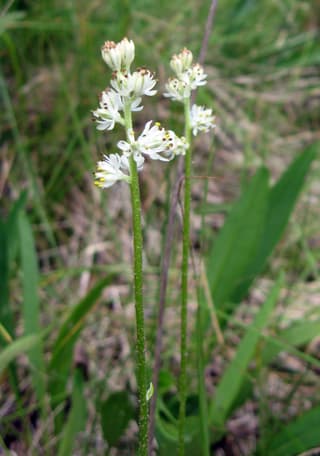
| Sticky false asphodel | Hard | Bright indirect | 1d | ✓ |
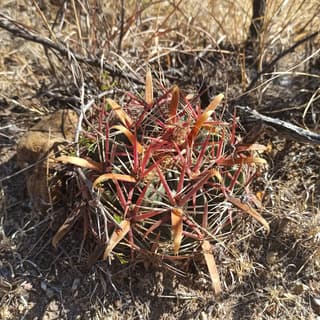
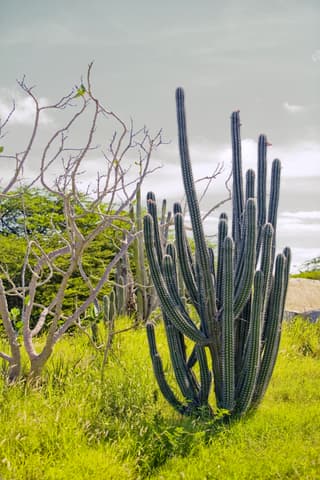
| Chilean Cacti | Easy | Direct sun | 14d | ✓ |
| Devils Tongue Cactus | Easy | Direct sun | 21d | ✓ |
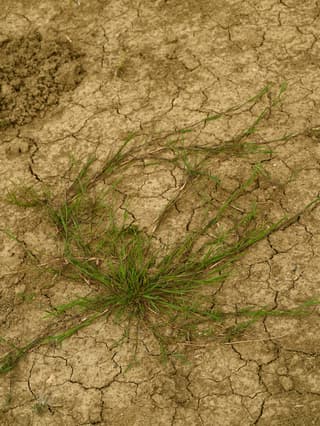
| Creeping bentgrass | Hard | Direct sun | 3d | ✓ |