68 Medium Air Purifying | 2026 Guide - Page 2
Find 68 medium air purifying. Complete guide for your garden.
68 Air Purifying with medium level
Showing 37-68 of 68
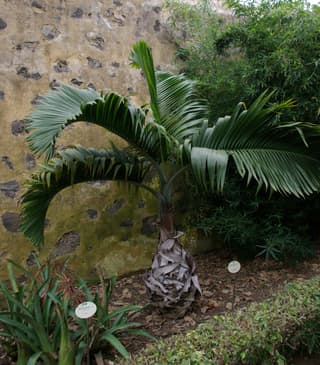
Bottle palm
Hyophorbe lagenicaulis
The bottle palm (Hyophorbe lagenicaulis) is a solitary palm from the Arecaceae family, endemic to Round Island in the Mascarene Islands (Mauritius). It is famous for its smooth, grayish trunk, which is swollen in a bottle shape at the base and tapers toward the crown, supporting a small canopy of 4 to 8 deep green pinnate leaves (young plants often show reddish or orange tones). A slow-growing species, fewer than 10 adult specimens remain in the wild, making it critically endangered, although its ornamental cultivation is widespread in tropical and subtropical climates worldwide.
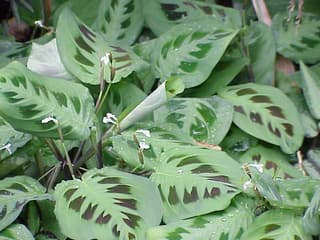
Prayer Plant
Maranta leuconeura
Maranta leuconeura is a tropical plant native to Brazilian rainforests, prized for its decorative leaves with unique colorful vein patterns. Its common name "Prayer Plant" comes from the nyctinastic movement of its leaves, which fold upward at night like hands in prayer and open during the day to absorb light.
Hooker's monerereba
Monerereba hookeri
Monerereba hookeri, commonly known as Hooker's Monerereba, is a tropical climbing epiphyte native to the rainforests of Central and South America. It is characterized by its glossy, deep green leaves that develop elegant fenestrations and pinnate lobes as the plant matures. It utilizes aerial roots to climb trees in its natural habitat, making it an excellent candidate for moss poles in indoor settings.
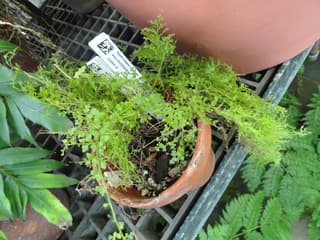
Boston Fern
Nephrolepis exaltata
The Boston Fern is a lush, elegant houseplant known for its gracefully arching fronds and excellent air-purifying qualities. Native to tropical regions of the Americas including Florida, Central America, South America, and the West Indies, this evergreen fern has been a popular indoor plant since Victorian times. Its feathery, bright green fronds can grow up to 90 cm long, creating a dramatic cascading effect perfect for hanging baskets or elevated displays.
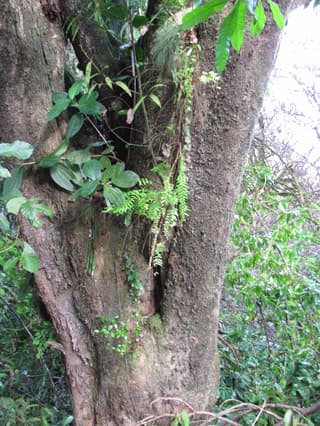
Fishtail Fern
Nephrolepis falcata
Nephrolepis falcata, commonly known as the fishtail fern, is an epiphytic fern native to Southeast Asia and the Pacific Islands, belonging to the family Nephrolepidaceae. Its long, arching fronds have forked, tail-like tips that resemble a fish tail, giving the plant its common name. A moderate-growing perennial, it is popular in hanging baskets and shaded gardens for its lush, textured foliage.
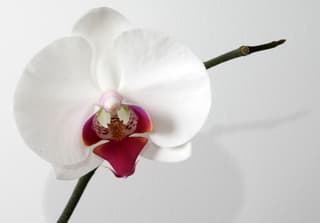
Orchid
Orchidaceae
Orchidaceae is one of the largest families of flowering plants, with over 25,000 species of mostly epiphytic and terrestrial perennials prized for their intricate, long-lasting blooms. The Phalaenopsis, or moth orchid, is the most widely grown houseplant representative of the family, valued for its arching sprays of waxy flowers that can stay open for months. Most cultivated orchids are epiphytes native to tropical and subtropical forests, where they cling to tree bark and absorb moisture and nutrients through thick, exposed aerial roots rather than soil.
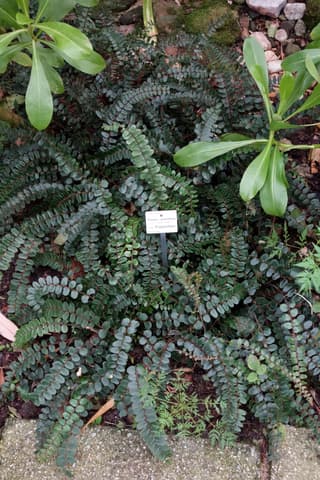
Button Fern
Pellaea rotundifolia
Pellaea rotundifolia is a compact, evergreen fern native to New Zealand and Australia, prized for its distinctive round, button-like leaflets arranged along dark, wiry stems. Unlike many ferns, it tolerates lower humidity and is remarkably drought-resistant, making it an excellent low-maintenance houseplant. It received the Royal Horticultural Society Award of Garden Merit.
White Princess Philodendron
Philodendron 'White Princess'
Philodendron 'White Princess' is a striking variegated cultivar of Philodendron erubescens, prized by collectors for its dark green, burgundy-backed leaves splashed with cream-white and occasional pink sectors. Like all variegated aroids, its patterning is unstable and driven by chimeric tissue, so leaf variegation can vary from cutting to cutting and even leaf to leaf on the same plant. It is a climbing vine in the Araceae family that produces aerial roots and benefits from a moss pole or trellis for support as it matures.
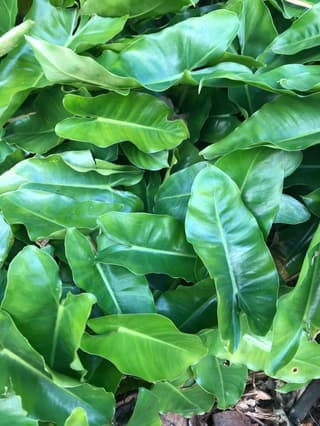
Burle Marx Philodendron
Philodendron burle-marxii
Philodendron burle-marxii is a fast-growing tropical aroid native to the rainforests of Brazil, Colombia, and Ecuador. Named in honor of Roberto Burle Marx, the legendary Brazilian landscape architect, it features glossy dark green lance-shaped leaves with a prominent central vein. This versatile plant thrives both as a climber with support or as a trailing plant in hanging baskets, making it one of the most sought-after aroids among houseplant collectors.
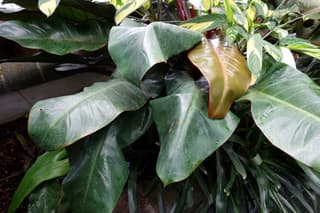
Blushing Philodendron
Philodendron erubescens
Philodendron erubescens is a climbing tropical plant native to the rainforests of Colombia. It stands out for its large heart-shaped leaves with green and reddish tones, and intensely red stems. It is a perennial plant ideal for indoors that can reach up to 90cm in height when grown at home.
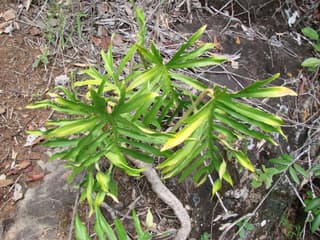
Mayo's Philodendron
Philodendron mayoi
Philodendron mayoi is a tropical climbing species native to Brazil's Atlantic Forest, prized for its deeply lobed, fern-like leaves. A medium-growing houseplant, it thrives in bright indirect light and high humidity, making it a striking addition to any indoor space.
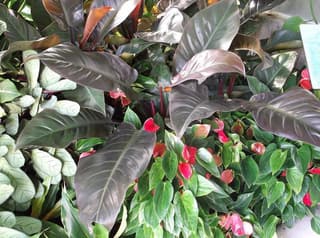
Congo Philodendron
Philodendron tatei
Philodendron tatei, commonly known as Congo Philodendron, is a tropical plant from the Araceae family, native to the wet tropical rainforests of northern Brazil, Guyana, Peru, and Venezuela. Admired for its large, glossy, deep-green leaves (reddish-bronze in cultivated varieties), this species is a popular indoor ornamental plant. Unlike many climbing philodendrons, it has a compact, self-heading growth habit, making it an excellent statement plant for interior spaces.
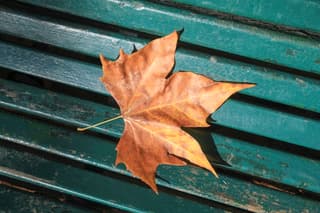
London plane
Platanus × hispanica
The London plane (Platanus × hispanica) is a large deciduous hybrid tree, a cross between the Oriental plane (P. orientalis) and the American sycamore (P. occidentalis). It is instantly recognizable by its distinctive bark that peels away in patches to reveal cream, olive, and grey mottled patterns beneath, and by its large maple-like leaves. One of the most widely planted urban trees in the world, it is prized for its exceptional tolerance of air pollution, compacted soils, and drought once established.
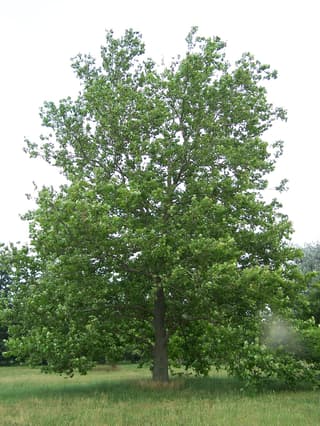
American Sycamore
Platanus occidentalis
The American sycamore is one of the largest native hardwood trees in eastern North America, commonly reaching 75-100 ft (23-30 m) tall with a broad, spreading crown. It is best known for its distinctive exfoliating bark, which sheds in irregular gray-brown plates to reveal smooth, creamy-white inner bark. Native to riverbanks, floodplains and bottomlands, it tolerates wet soils as well as periods of drought once established. Small monoecious flowers appear in early spring (green male clusters, burgundy-red female clusters), followed by distinctive ball-shaped seed heads that persist through winter.
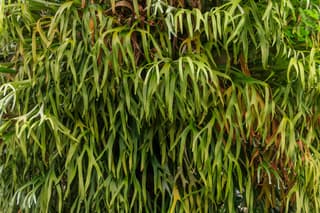
Staghorn Fern
Platycerium bifurcatum
Platycerium bifurcatum is a striking epiphytic fern native to the rainforests of Australia, Java, and New Guinea. Known for its unique antler-shaped fronds, this plant naturally grows on trees and rocks, absorbing nutrients and moisture from the air. It produces two types of fronds: sterile shield fronds that anchor the plant and fertile fronds that resemble deer antlers. With proper care, staghorn ferns can live for over 50 years and become impressive living sculptures.
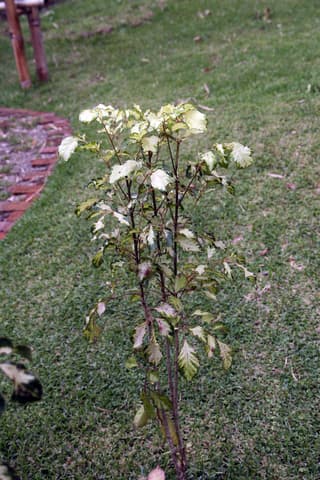
Geranium Aralia
Polyscias guilfoylei
Polyscias guilfoylei, commonly known as Geranium Aralia or Wild Coffee, is an elegant tropical evergreen shrub native to the Pacific Islands. It features compound leaves with 7-9 leaflets that display lush green or variegated white and yellow margins, giving it a lacy, decorative appearance. A classic choice for both indoor and tropical outdoor landscapes, this slow-growing plant rewards patient gardeners with striking year-round foliage.
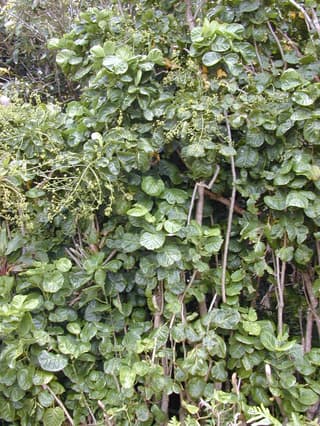
Shield Aralia
Polyscias scutellaria
Shield aralia is a compact tropical shrub from the Southwest Pacific islands, prized for its glossy, rounded, bowl-shaped leaves that grow in clusters at the branch tips. Indoors it stays fairly compact and slow-growing, making it a popular choice as a structured accent or bonsai-style specimen. In its native range it can reach several meters as an understory shrub, but potted specimens are easily kept small with light pruning.
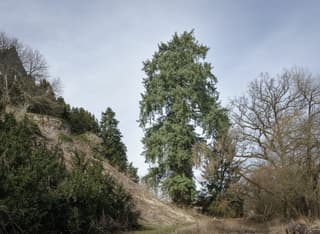
Douglas Fir
Pseudotsuga menziesii
Douglas fir (Pseudotsuga menziesii) is a large, fast-growing evergreen conifer native to western North America, ranging from the Rocky Mountains to the Pacific coast. Despite its common name, it is not a true fir (Abies) but belongs to its own genus, Pseudotsuga. It has a conical, pyramidal form with soft, flat, blue-green to dark-green needles arranged spirally around the twig, and distinctive pendant cones with three-pointed, snake-tongue-like bracts protruding between the scales. In its native range it is among the tallest trees in the world, historically reaching over 90 m (300 ft); in cultivated landscapes it more typically grows 12-24 m (40-80 ft) tall with a 4-6 m spread. Douglas fir is the backbone of the Pacific Northwest timber industry and is Oregon's official state tree, and its fragrant foliage makes it one of the most popular Christmas trees in North America.
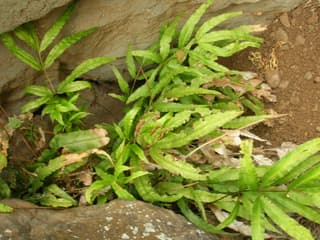
Cretan Brake Fern
Pteris cretica
Pteris cretica, commonly known as the Cretan Brake Fern, is an elegant evergreen fern native to the Mediterranean region. With its graceful, pinnate fronds that can display beautiful variegation, it has become a popular houseplant prized for its delicate appearance and air-purifying properties. This slow-growing fern thrives in humid, shaded environments and is well-suited to terrariums, bathrooms, and indoor collections.
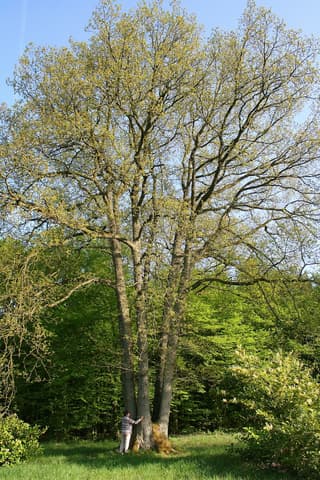
Sessile Oak
Quercus petraea
The sessile oak (Quercus petraea) is a large deciduous tree native to the temperate forests of Europe. It can live for several centuries and reach up to 40 meters in height, forming a broad, rounded crown. Its lobed leaves and stalkless (sessile) acorns distinguish it from the closely related pedunculate oak (Quercus robur).
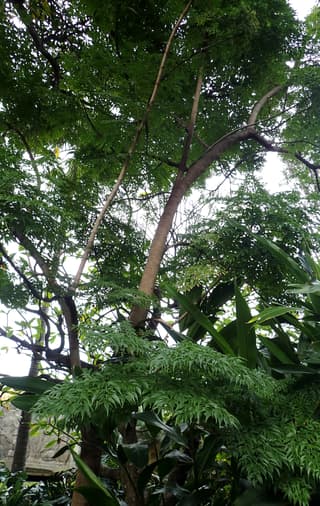
China Doll Plant
Radermachera sinica
The China Doll Plant (Radermachera sinica) is an elegant evergreen tree from the Bignoniaceae family, native to southern China and Taiwan. It features glossy, finely divided bipinnate leaves that give it a delicate, lacy appearance. While it can reach up to 30 meters in its natural habitat, as a houseplant it typically grows to 1.2-1.8 meters. It is prized for its ornamental foliage and air-purifying qualities, effectively removing toxins like benzene and formaldehyde from indoor air.
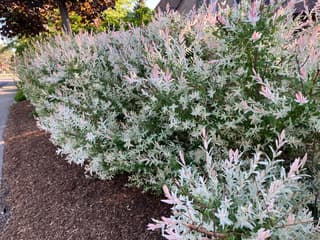
Dappled Willow 'Hakuro Nishiki'
Salix integra 'Hakuro Nishiki'
The Dappled Willow 'Hakuro Nishiki' (Salix integra) is an ornamental deciduous shrub from the Salicaceae family, renowned for its striking variegated foliage in shades of pink, white, and green. These colors are most vibrant on new growth during spring and early summer. In spring, it produces small, inconspicuous yellow-green catkins. It is a fast-growing plant, often pruned into a low shrub or grafted onto a trunk to create a 'standard' or 'lollipop' form. It is popular in gardens as a specimen plant or in mixed borders, particularly near water features, as it thrives in moist conditions.
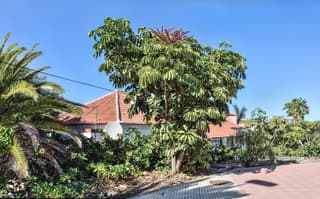
Queensland Umbrella Tree
Schefflera actinophylla
Schefflera actinophylla, commonly known as the Queensland Umbrella Tree or Australian Umbrella Tree, is a fast-growing tropical tree native to the rainforests of northern Queensland, Australia, New Guinea, and Java. Its large, glossy palmate leaves radiate from a central point like an umbrella, making it one of the most popular ornamental plants for both indoor and outdoor tropical landscapes.
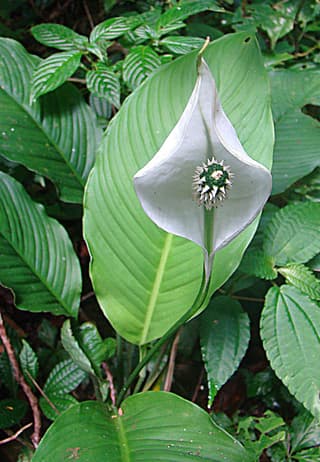
Peace Lily
Spathiphyllum wendlandii
Spathiphyllum wendlandii, commonly known as the Peace Lily, is a tropical evergreen perennial native to Central America — Costa Rica, Honduras, and Panama. With its lush dark-green leaves and graceful white spathe flowers, it is one of the most beloved indoor plants worldwide. It is also NASA-certified as an effective air purifier, removing benzene, formaldehyde, and trichloroethylene from indoor environments.
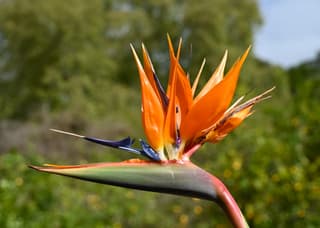
Bird of Paradise
Strelitzia reginae
Strelitzia reginae, commonly known as Bird of Paradise or Crane Flower, is a striking tropical plant native to South Africa. Famous for its spectacular orange and blue flowers that resemble an exotic bird in flight, it has become the official flower of the City of Los Angeles. This evergreen perennial forms clumps of banana-like grey-green leaves and produces long-lasting cut flowers that can survive up to 2 weeks in a vase.
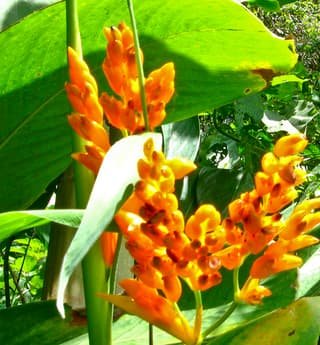
Stromanthe
Stromanthe
Stromanthe is a genus of approximately 13 tropical plant species in the family Marantaceae, native to the rainforests of South America, particularly Brazil. Celebrated for their stunning variegated foliage in shades of green, white, pink, and red, they are among the most visually spectacular houseplants available. The most famous species is Stromanthe sanguinea 'Triostar', whose tricolored leaves make it a standout specimen. Like other prayer plants, Stromanthe leaves move throughout the day in response to light.
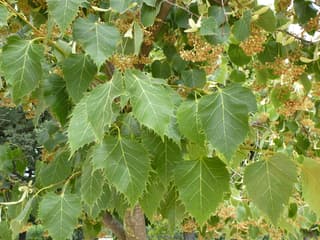
Henry's lime
Tilia henryana
Henry's lime (Tilia henryana) is a deciduous tree native to the mountain forests of central China (Anhui, Hubei, Hunan, Shaanxi, Zhejiang...), introduced to the West by Ernest Wilson in 1901. More compact than the common lime, it reaches 30 to 50 ft in height in cultivation (up to 80 ft in its native habitat), with a rounded, spreading habit and pale gray bark that fissures with age. Its heart-shaped leaves, coppery when budding then glossy green, are distinguished by a ciliate margin of long silky bristles reminiscent of a carnivorous plant's eyelashes, before turning golden yellow in autumn. The late flowering (late August-September) produces abundant clusters of highly fragrant, nectar-rich creamy white flowers, among the last of the Tilia genus to open.
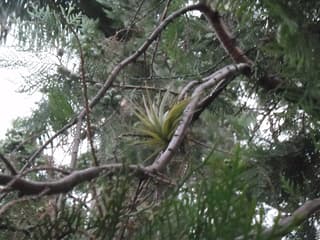
Blushing Bride
Tillandsia brachycaulos
Tillandsia brachycaulos is a small epiphytic air plant native to Mexico and Central America, prized for its dense rosette of narrow, silvery-green leaves that dramatically flush deep red to scarlet in the weeks before flowering, the trait behind its common name, "Blushing Bride." It thrives without soil, drawing water and nutrients through specialized leaf scales called trichomes, and produces violet-to-purple tubular flowers rising from red or orange bracts.
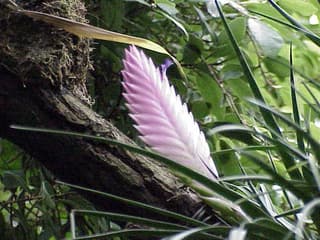
Pink Quill
Tillandsia cyanea
Tillandsia cyanea, known as the Pink Quill, is an epiphytic air plant native to Ecuador prized for its long-lasting bright pink flattened bract that rises from a rosette of narrow, arching green leaves. Unlike soil-grown houseplants, it has no true roots for absorbing nutrients -- instead it draws water and nutrients through specialized trichomes on its leaves. Small tubular violet-blue flowers emerge one at a time from the pink bract, which itself can stay colorful for two to three months.
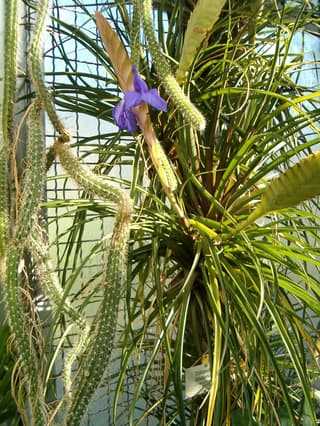
Blue-flowered Torch
Tillandsia lindenii
Tillandsia lindenii, commonly called the Blue-flowered Torch, is an eye-catching epiphytic bromeliad native to the cloud forests of Ecuador and Peru. It forms a compact rosette of arching, dark green, strap-like leaves from which rises a flattened, sword-shaped bract in shades of green, pink, or rose. From this striking bract emerge a succession of large, deep violet-blue flowers with white throats, each lasting only a few days while the colorful bract itself persists for months. Grown as a houseplant, it thrives mounted on bark or lightly potted in a well-aerated, soil-free medium, needing no traditional soil since it absorbs water and nutrients through specialized leaf scales called trichomes.
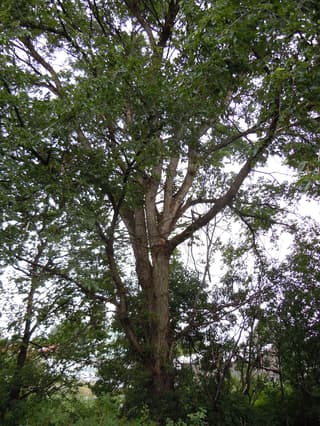
American elm
Ulmus americana
The American elm (Ulmus americana) is a fast-growing, deciduous tree from the elm family (Ulmaceae), originally native to eastern North America. The tree is known for its characteristic vase-shaped crown and can reach heights of up to 24 meters in the wild with a correspondingly wide canopy. From the mid-20th century, Dutch elm disease decimated large portions of the wild population in North America, but disease-resistant cultivars have since been developed. The species produces small, inconspicuous greenish-red flowers in early spring before the leaves emerge, and features coarse, dark green foliage that turns golden in the fall.
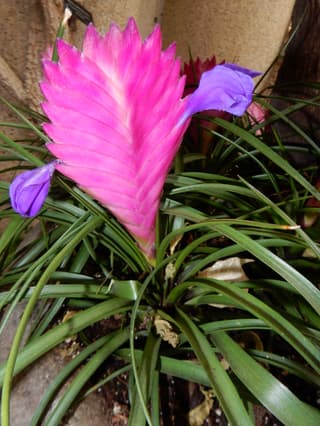
Pink quill
Wallisia cyanea
Wallisia cyanea (formerly Tillandsia cyanea), known as the pink quill, is an epiphytic bromeliad native to the tropical forests of Ecuador. It forms a dense rosette of narrow, grass-like leaves from which a flattened, vibrant pink spike resembling a quill emerges. From this spike, short-lived violet-blue flowers appear sequentially over several months. It is a slow-growing plant that does not require soil, primarily cultivated for its spectacular, long-lasting colorful inflorescence.
Medium Care Air Purifying
Our selection of 68 medium air purifying combines the characteristics of this category with moderate care needs. Ideal for those with basic experience.
Why Choose Medium Air Purifying?
Combining the beauty of air purifying with medium difficulty level lets you enjoy this category with a balanced care commitment. Each plant was selected to offer the best characteristics of the category at the care level you are looking for.