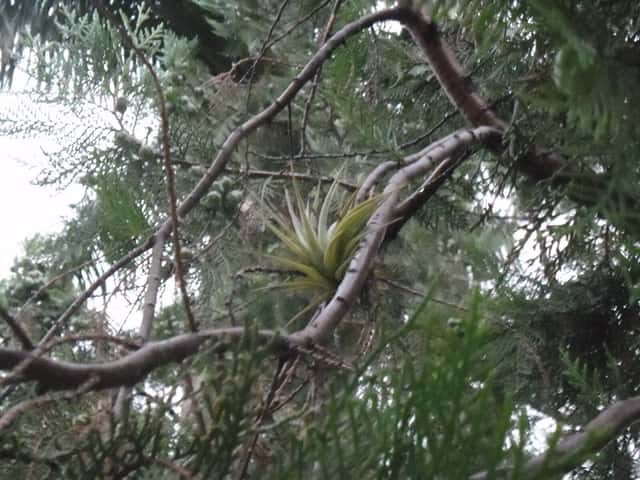
Bromeliaceae
Tillandsia brachycaulos (Blushing Bride Air Plant) Care Guide
Tillandsia brachycaulos
Give this air plant bright, indirect light, a weekly soak or thorough misting, and, most importantly, good airflow so it dries out within a few hours of watering. It rarely needs fertilizer or soil and is very forgiving once its drying routine is right.
Every 7 days
Partial shade
15° - 29°C
50% - 70%
Categories
What is Blushing Bride?
Blushing Bride (Tillandsia brachycaulos) is a medium-care plant from the Bromeliaceae family. Tillandsia brachycaulos is a small epiphytic air plant native to Mexico and Central America, prized for its dense rosette of narrow, silvery-green leaves that dramatically flush deep red to scarlet in the weeks before flowering, the trait behind its common name, "Blushing Bride." It thrives without...
Blushing Bride grows up to 25cm, spread of 25cm, watering every 7 days, 15°C – 29°C, 50–70% humidity. It is suitable for indoor environments and safe for pets.
Unlike many popular species, Blushing Bride is safe to keep around pets. Without adequate drainage, root rot can develop within 14 days.
How to Care for Blushing Bride?
TLDR: Blushing Bride needs Partial shade, watering every 7 days, and temperatures between 15-29°C with 50-70% humidity.
How Often Should You Water Blushing Bride?
Soak the whole plant in room-temperature rainwater, filtered water, or aquarium water for 20-30 minutes once a week (twice a week in hot, dry conditions), then shake off excess water and dry it upside down within about 4 hours. Never let water sit in the base; trapped moisture causes fatal rot.
How Much Light Does Blushing Bride Need?
Place it 2-4 feet from a bright east-facing window or in filtered light; morning sun helps trigger the red blush. Avoid harsh, direct midday sun, which can scorch the leaves.
What Is the Best Soil for Blushing Bride?
No soil or pot is needed, it is a true epiphyte. Mount it on driftwood, cork bark, or a shell, or simply rest it in an open dish with excellent air circulation.
What Pot Should You Use for Blushing Bride?
No pot required, mount on driftwood, cork bark, or in a wire or shell display with open air circulation; avoid sealed glass terrariums.
Care Schedule
Fertilize
Every 30 days
Misting
Every 3 days
What Is Blushing Bride and Where Does It Come From?
Tillandsia brachycaulos is a small epiphytic air plant native to Mexico and Central America, prized for its dense rosette of narrow, silvery-green leaves that dramatically flush deep red to scarlet in the weeks before flowering, the trait behind its common name, "Blushing Bride." It thrives without soil, drawing water and nutrients through specialized leaf scales called trichomes, and produces violet-to-purple tubular flowers rising from red or orange bracts.
How to Propagate Blushing Bride?
Pup division
Pups can also be left attached to the mother plant to form an expanding clump instead of being separated.
- 1 Wait until the mother rosette finishes flowering and produces pups (offsets) at its base
- 2 Let each pup grow to about one-third the size of the parent plant before separating
- 3 Gently twist or cut the pup away with a clean, sterile blade, keeping any tiny roots intact
- 4 Mount the pup on its own support or leave it attached to form a clumping display
- 5 Treat the new pup exactly like an adult plant: soak weekly and let it dry fully
Materials needed:
How Big Does Blushing Bride Grow?
TLDR: Blushing Bride can reach up to 25cm tall with Slow growth rate.
Max height
25cm
Spread
25cm
Growth rate
Slow
Foliage
Evergreen
Plant Uses
Ornamental
Great for decoration
Air Purifying
Improves air quality
Is your plant showing symptoms?
Click on the symptom to discover possible causes:
What Diseases Commonly Affect Blushing Bride?
TLDR: Blushing Bride is susceptible to 8 known diseases. Monitor regularly for early detection.
Root Rot
Root rot is a serious fungal disease that affects the root system of plants, causing them to decay and die. It is primarily caused by overwatering, poor drainage, or soil-borne fungi such as Pythium, Phytophthora, Rhizoctonia, and Fusarium. The disease thrives in waterlogged conditions where roots are deprived of oxygen, making them susceptible to fungal infection.
Overwatering
Overwatering occurs when plants receive too much water, depriving roots of oxygen and causing root rot. This environmental stress is one of the most common causes of houseplant death, as waterlogged soil prevents roots from breathing and functioning properly.
Crown Rot
Crown rot is a serious fungal disease that attacks the crown (base) of the plant where the stem meets the soil. It is caused by various fungal pathogens including Phytophthora, Fusarium, and Rhizoctonia. The disease thrives in waterlogged conditions and can quickly spread to kill the entire plant if not addressed promptly.
Poor Air Circulation
Poor air circulation is an environmental stress condition that occurs when plants lack adequate airflow around their foliage and stems. Stagnant air creates a microenvironment that promotes moisture buildup, depletes available CO2, and weakens plant defenses against fungal diseases and pests. This is especially common with densely packed indoor plants or plants placed in corners with limited ventilation.
Meaning & Symbolism
The vivid red blush that precedes flowering has made this plant a symbol of anticipation, transformation, and blossoming beauty, much like a bride glowing before her big day.
Fun Facts
Its leaves turn from silvery-green to bright scarlet in the weeks before flowering, giving it the nickname "Blushing Bride"
As a true epiphyte, it has no need for soil and absorbs water and nutrients through tiny leaf scales called trichomes
Each rosette flowers only once in its lifetime before slowly fading and passing its energy on to new pups
It is part of the Bromeliaceae family, related to pineapples
Frequently asked questions
Does Tillandsia brachycaulos need soil?
Why are the leaves turning red?
How often should I water my air plant?
Is Tillandsia brachycaulos toxic to pets?
How do I propagate this air plant?
Compare with similar plants
| Attribute | Difficulty | Light | Watering | Pet Safe |
|---|---|---|---|---|
| Dark Fieldcap | Medium | Low light | 2d | ⚠️ |
| Azalea | Medium | Partial shade | 3d | ⚠️ |
| Muriel's Bamboo | Medium | Partial shade | 3d | ✓ |
| Bougainvillea | Medium | Direct sun | 7d | ⚠️ |




