157 Hard Pet Safe | 2026 Guide - Page 3
Find 157 hard pet safe. Complete guide for your garden.
157 Pet Safe with hard level
Showing 73-108 of 157

Giant Orchid
Grammatophyllum speciosum
Grammatophyllum speciosum is the world's largest orchid species, an epiphytic giant native to the rainforests of Southeast Asia. It forms massive clumps of cane-like pseudobulbs that can reach over 2.5 meters long, with clusters weighing several hundred kilograms in the wild. Its striking yellow flowers marked with maroon blotches appear in dense, arching racemes, making it a prized specimen for botanical gardens and serious orchid collectors.

Chilean Gunnera
Gunnera tinctoria
Gunnera tinctoria, commonly known as Chilean rhubarb or nalca, is a colossal herbaceous perennial native to the cool, wet forests of central Chile and southern Argentina, where locals have long harvested its tart leaf stalks as a rhubarb-like vegetable. Forming clumps of enormous, deeply lobed leaves that can each span over a metre across, it produces a dense, cone-shaped flower spike in summer followed by small orange-red fruits. Outside its native range, however, it has become a serious invasive weed in wetlands and coastal areas of Ireland, the UK, New Zealand, and parts of the Azores, where it forms dense colonies that crowd out native vegetation and clog waterways -- check local regulations before planting it in these regions.
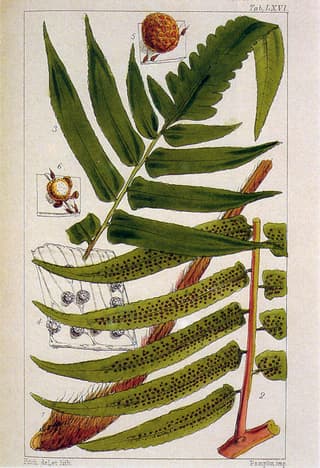
Asian Tree Fern
Gymnosphaera podophylla
Gymnosphaera podophylla, also known as Alsophila podophylla or Cyathea podophylla, is a trunk-forming tree fern native to Southeast Asia, southern China, Taiwan, Japan, and the Ryukyu Islands. It grows in shaded forest understories, along streams and in ravines at elevations of 600–1000 m. This dwarf tree fern develops a distinctive trunk adorned with warty, dark purple-polished old frond bases and attractive bipinnate fronds, reaching up to 1.8 m in height.
Ruby bolete
Hortiboletus rubellus
Hortiboletus rubellus, commonly known as the ruby bolete, is an edible mushroom in the family Boletaceae. It is characterized by a deep red to burgundy cap that is velvety when young. The pores are yellow and bruise blue when touched. The stem is typically yellow with red streaks or dots. It grows in deciduous forests, parks, and gardens, often forming mycorrhizal associations with oaks, lindens, or hornbeams.
Mealy tooth
Hydnellum ferrugineum
Hydnellum ferrugineum, known as the mealy tooth, is a fascinating terrestrial fungus that forms a mycorrhizal relationship with pine trees. It is characterized by its tough, corky texture and the deep reddish-brown droplets of fluid that are often exuded from its upper surface during active growth. The fungus features spines on its underside instead of gills, which is typical for the genus. It is not edible due to its extremely bitter taste and woody texture, but it is highly valued for dyeing wool, where it produces beautiful beige to brown tones.
Yellow Cup Fungus
Hydropisphaera peziza
Hydropisphaera peziza is a species of ascomycete fungus characterized by its tiny, cup-shaped fruiting bodies (perithecia), which are generally pale yellow to orange in color. They typically grow on decaying wood or on other fungi, preferring extremely humid and shaded environments in temperate and tropical forests.
Persistent Waxcap
Hygrocybe acutoconica
Hygrocybe acutoconica, commonly known as the Persistent Waxcap, is a striking mushroom characterized by its bright yellow to orange-yellow conical cap. The cap is often slimy or viscid when moist and maintains its pointed shape even as it matures. It is typically found in unimproved grasslands, dunes, and woodland edges. As a fungal species, it does not possess foliage or flowers but produces spores for reproduction.
Monk's-hood lichen
Hypogymnia physodes
Hypogymnia physodes, commonly known as monk's-hood lichen, is one of the most widespread lichens. It features a foliose thallus characterized by its inflated (puffed) lobe tips. The upper surface is grayish to whitish, while the lower surface is black and lacks attachment fibers (rhizines). It is a very resilient species; however, it reacts sensitively to air pollution from sulfur dioxide, making it an important bioindicator of air quality.
Bay bolete
Imleria badia
Imleria badia, commonly known as the bay bolete, is one of the most popular edible mushrooms in the Czech Republic. It is characterized by a chestnut-brown cap, which is slightly sticky when wet, and yellow pores that turn blue when bruised. It grows primarily in coniferous forests, forming mycorrhizal associations with spruces and pines. It is valued for its firm flesh and excellent taste.
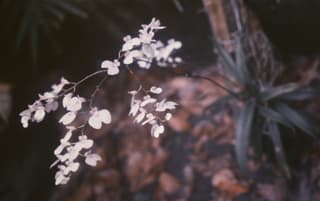
Delicate violet orchid
Ionopsis utricularioides
Ionopsis utricularioides is a small epiphytic orchid native to the Neotropics, from Florida and the Caribbean through Central and South America. It forms compact fans of stiff leaves and sends up airy, branched sprays of many small white-to-violet flowers, each with a broad, veined lower lip.
Deceiver
Laccaria laccata
The Deceiver (Laccaria laccata) is an extremely variable mushroom commonly found in various forest types. The name 'Deceiver' refers to the fact that this species can look different every time depending on the moisture level (hygrophanous), which often leads to it being confused with other small brown mushrooms. It forms an essential mycorrhizal symbiosis with the roots of both deciduous and coniferous trees, aiding in nutrient uptake for the tree.
False saffron milkcap
Lactarius deterrimus
Lactarius deterrimus, commonly known as the false saffron milkcap, is a fungus that forms a symbiotic mycorrhizal relationship with spruce trees. It is characterized by its orange-colored cap that develops green stains as it ages or is bruised. When cut, the mushroom exudes an orange latex that turns wine-red after several minutes. It is a popular edible mushroom in Europe, though it has a slightly bitter aftertaste compared to the true saffron milkcap.
Brown Birch Bolete
Leccinum scabrum
The Brown Birch Bolete (Leccinum scabrum) is a widespread and highly regarded edible mushroom belonging to the Boletaceae family. It features a grayish-brown to dark brown cap that is slightly sticky to the touch, and a characteristic white stem covered in dark scales. This fungus grows in symbiosis with birch trees, forming a mycorrhizal relationship with them.
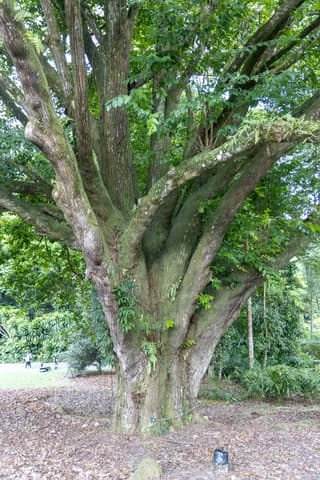
Paradise Nut
Lecythis pisonis
Lecythis pisonis, commonly known as the Paradise Nut or Monkey Pot, is a majestic tropical tree in the family Lecythidaceae, native to the Brazilian Atlantic Forest and Amazon rainforest. It is famous for its distinctive urn-shaped wooden fruit pods — the "monkey pots" — from which monkeys extract the edible seeds. The tree can reach up to 40 meters tall in forest conditions. Its seeds are similar to Brazil nuts but with a softer, creamier texture and milder flavor.
Lentinus crinitus
Lentinus crinitus
Lentinus crinitus is a saprophytic basidiomycete fungus, characterized by its funnel-shaped cap covered with stiff hairs (bristles) and decurrent gills. It is commonly found decomposing dead wood in tropical and subtropical regions. Although not widely consumed as food due to its leathery texture, it holds great ecological importance and biotechnological potential.

Edelweiss
Leontopodium nivale
Edelweiss (Leontopodium nivale) is a perennial alpine plant from the Asteraceae family, native to the high mountain ranges of Europe — the Alps, Carpathians, Pyrenees, Balkans, and Apennines — where it grows on limestone rocks and scree at altitudes of 1800-3400 m. The flowering stems, 3-20 cm tall (up to 40 cm in cultivation), bear small yellow flowers grouped in a 5-6 ray star shape, surrounded by white bracts densely covered with fine hairs that protect the plant from cold, drought, and intense ultraviolet radiation at high altitudes. It has been a legally protected species in Romania since 1933, declared a monument of nature.
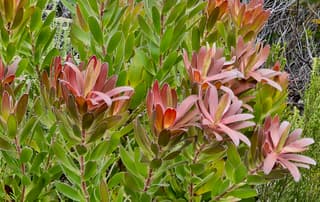
Golden Conebush
Leucadendron laureolum
Leucadendron laureolum, the golden conebush, is a hardy evergreen shrub native to the fynbos of South Africa's southwestern Cape. Reaching 1-2 m tall on a single woody stem, it produces vivid yellow-green flowerheads formed by leafy bracts that blaze through the winter months. Male and female plants look distinct: compact, golden-hued males and looser, greener females that mature into woody, fire-resistant seed cones. This adaptation lets the plant survive wildfires common to its habitat, releasing its stored seed to regenerate the landscape afterward.
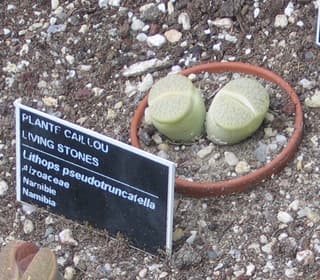
Living stones
Lithops pseudotruncatella
Lithops pseudotruncatella is a succulent from the ice plant family (Aizoaceae), native to the arid, stony regions of Namibia and South Africa. The plant belongs to the group known as "living stones" – its two thick leaves, fused at the base, mimic the color and texture of surrounding pebbles as a form of camouflage against herbivores. Every year, after a period of dormancy, the old pair of leaves withers and is "absorbed" by a new pair emerging between them – a process called molting. In autumn, a single daisy-like flower in yellow or white appears between the leaves. The plant grows very slowly, reaching only 2-5 cm in height, eventually forming small clusters.
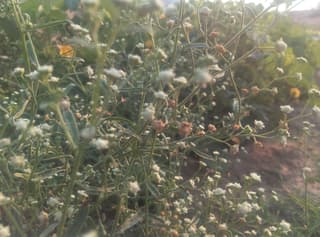
Living Stones
Lithops species
Lithops, known as living stones, are fascinating succulents native to South Africa that have evolved to resemble rocks and pebbles. This natural camouflage protects them from predators in their desert habitat. Each plant consists of two fused leaves with a fissure in the center from which flowers emerge.

Grasshopper orchid
Lycaste locusta
Lycaste locusta, also classified as Ida locusta or Sudamerlycaste locusta, is a large, cool-to-warm growing orchid native to Peru, where it grows as a lithophyte on sunny limestone embankments and rocky slopes between 2,000 and 3,000 meters elevation. Its oblong pseudobulbs support 2-3 broad, pleated, elliptic-lanceolate leaves reaching up to 80 cm long, and in cultivation it blooms in spring (fall in the wild) with pendant, waxy, green flowers up to 11.5 cm across and a fringed lip, carrying a distinct scent of apples.
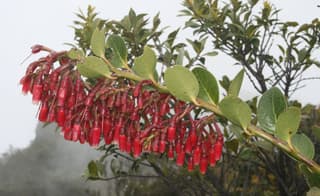
Andean Blueberry
Macleania rupestris
The Andean blueberry is a woody shrub in the Ericaceae family, native to cloud forests and the Andean páramo at altitudes between 2,000 and 4,100 m, ranging from Venezuela and Colombia to Ecuador and northern Peru. It grows as an epiphyte on trees or directly on exposed rocky outcrops, with branches that can reach up to 2.5 m (occasionally 6 m when climbing). Its leaves are small, rigid, and thick, adapted to nutrient-poor soils. It produces tubular magenta flowers pollinated by hummingbirds, followed by rounded edible berries with sweet and juicy pulp.
Parasol mushroom
Macrolepiota procera
Macrolepiota procera, commonly known as the parasol mushroom, is one of the most delicious and highly valued edible mushrooms. It is characterized by a large, spreading cap with a distinct central bump (umbo) and brown scales, as well as a long, slender stem with a movable ring. It occurs naturally on forest edges, clearings, and in parks. Home cultivation is extremely difficult and is usually limited to inoculating mycelium in a garden setting.
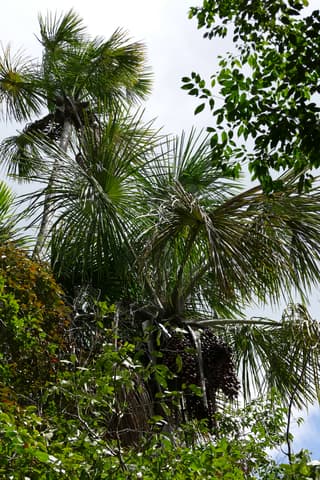
Moriche Palm
Mauritia flexuosa
The Moriche Palm (Mauritia flexuosa) is a majestic palm native to South America, particularly abundant in the wetland gallery forests (veredas) of the Brazilian Cerrado and throughout the Amazon basin. Known as the "Tree of Life" for its extraordinary utility, it can reach up to 25 meters in height and produces large, reddish-brown scaly fruits rich in beta-carotene. It is one of the most ecologically and culturally important palms of South America.
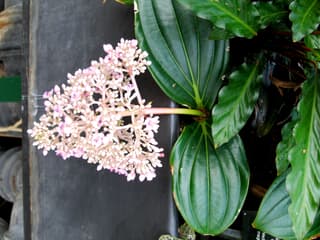
Rose Grape
Medinilla magnifica
Medinilla magnifica is a stunning tropical epiphytic shrub native to the Philippines. Known for its dramatic cascading clusters of pink flowers surrounded by large pink bracts, it is one of the most spectacular flowering houseplants. Its thick, leathery dark green leaves with prominent veins add to its ornamental appeal even when not in bloom.
Warty Knight
Melanoleuca verrucipes
Melanoleuca verrucipes, commonly known as the Warty Knight, is a distinctive mushroom characterized by its white cap and a stem covered in dark, warty scales or granules. It typically appears in gardens, parks, and compost-rich areas. Unlike many other Melanoleuca species, its stem texture makes it easily identifiable to mycologists.
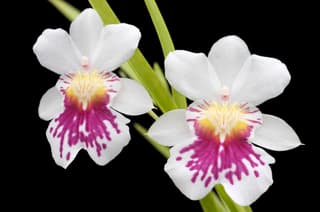
Pansy Orchid
Miltoniopsis phalaenopsis
Miltoniopsis phalaenopsis, commonly known as the Pansy Orchid, is a cool-growing epiphytic orchid native to the cloud forests of the Colombian Andes. Its large, flat blooms closely resemble garden pansies and come in shades of white, yellow, pink, red and purple with distinctive waterfall patterning. It is considered one of the most beautiful orchids in cultivation but requires cool temperatures and high humidity.
Porcelain Fungus
Mucidula mucida
Mucidula mucida, commonly known as the Porcelain Fungus, is a striking white mushroom found primarily on dead beech wood. It is characterized by its translucent, slimy (mucilaginous) cap that glows when backlit. While technically edible after washing off the slime, it is mostly valued for its ethereal beauty and its role in forest decomposition.
Bonnet mushroom
Mycena galericulata
Mycena galericulata, commonly known as the bonnet mushroom, is a common gilled mushroom belonging to the Mycenaceae family. It is characterized by a conical to bell-shaped cap with radial grooves and a typically stiff, hollow stipe. It usually grows in clusters on decaying hardwood, especially oak and beech. Its color varies from grayish-brown to whitish depending on humidity.
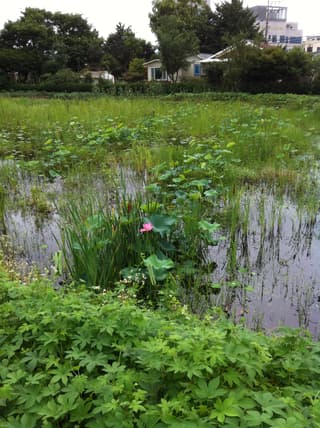
Sacred Lotus
Nelumbo nucifera
The Sacred Lotus is an iconic perennial aquatic plant native to Asia, cultivated in ponds for its large, fragrant flowers (8 to 12 inches in diameter) held above broad, water-repellent round leaves. Hardy up to USDA zone 4 as long as the rhizomes do not freeze underwater, it enters winter dormancy (deciduous foliage) before regrowing vigorously in the spring. Sacred in Buddhism and Hinduism, it symbolizes the ability to bloom pure despite a muddy environment.
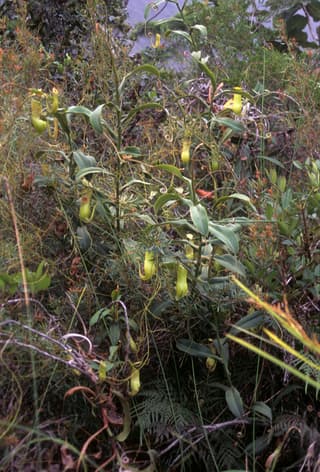
New Caledonia Pitcher Plant
Nepenthes vieillardii
Nepenthes vieillardii, the New Caledonia pitcher plant, is a climbing carnivorous shrub endemic to the island of New Caledonia in the southwest Pacific — the easternmost native range of any Nepenthes species. It grows in shrublands, dry thicket-forest, and open ground from the coastal plain up to about 900 m altitude, often on nutrient-poor ultramafic soils. Like all pitcher plants, it produces modified leaf tips that form fluid-filled traps: lower pitchers are squat and egg-shaped with fringed wings, while upper pitchers are slimmer and funnel-shaped, both ranging from yellowish to reddish in color. The trapped insects supplement the poor mineral nutrition of its native soils. It is a slow grower and considered a challenging species in cultivation, requiring very well-drained substrate and consistently high humidity.
clam lichen
Normandina pulchella
Normandina pulchella, commonly known as the clam lichen, is a small, squamulose lichen characterized by its distinctive shell-shaped or ear-shaped lobes. It typically displays a pale sea-green to bluish-gray color and often features soredia (asexual reproductive structures) along the margins. It grows epiphytically on mossy tree trunks or rocks in humid, temperate environments.
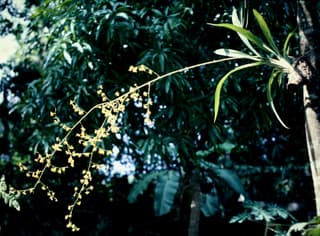
Bauer's Dancing Lady Orchid
Oncidium baueri
Oncidium baueri is an epiphytic orchid native to South America, celebrated for its graceful sprays of yellow and brown dancing-lady flowers that sway gently in the breeze. First described by Lindley in 1833, it is widely prized in orchid collections worldwide for its reliable flowering and elegant form.
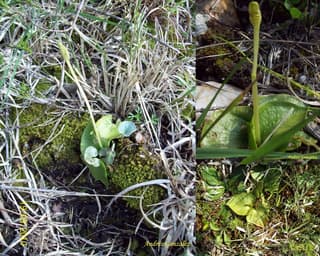
Bulbous Adder's-tongue
Ophioglossum crotalophoroides
Ophioglossum crotalophoroides is a tiny primitive fern (2 to 10 cm tall), with a single oval sterile leaf and a bulbous underground base (rather than a common cylindrical rhizome). It produces an elongated fertile spike resembling a rattlesnake's rattle, the origin of the epithet "crotalophoroides". It is ephemeral, appearing in spring (sporulating from March to June in the Northern Hemisphere) and disappearing shortly after. It occurs in disturbed lawns, open fields, and sandy soils of the southeastern United States. Like the entire Ophioglossaceae family, it depends closely on soil mycorrhizal fungi to germinate and develop, making it virtually impossible to cultivate outside its natural habitat.
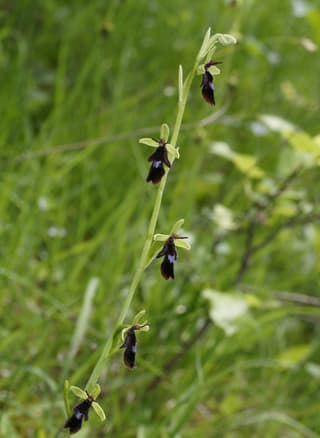
Fly Orchid
Ophrys insectifera
Ophrys insectifera, commonly known as the fly orchid, is a European terrestrial species notable for its pollination strategy. Its flowers have evolved to visually and chemically mimic the females of certain wasp and fly species, tricking males into performing pseudocopulation, which ensures pollen transfer. It is a small plant with a rosette of basal leaves and a slender inflorescence.
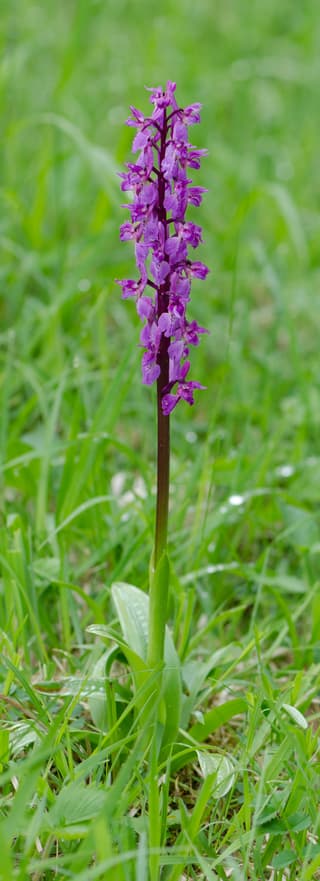
Early-purple orchid
Orchis mascula
Orchis mascula is a tuberous terrestrial orchid native to Europe, North Africa, and parts of Asia. It produces dense spikes of purple to pinkish flowers in the spring, rising above a rosette of leaves that are often spotted with dark purple. Unlike tropical orchids grown as houseplants, this is a wild species of woodlands and meadows that relies on a symbiotic soil fungus (mycorrhiza) to survive, making it notoriously difficult to cultivate outside its natural habitat. In many European countries, it is a protected wildflower and should never be removed from the wild.
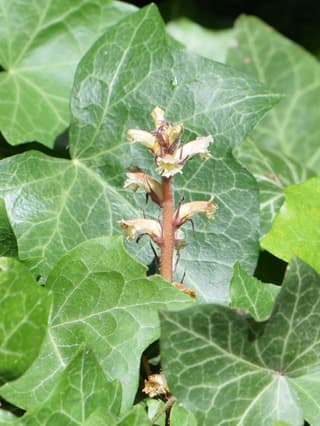
Ivy Broomrape
Orobanche hederae
Ivy broomrape (Orobanche hederae) is a holoparasitic plant that lacks chlorophyll. It grows exclusively on the roots of ivies (Hedera spp.), from which it absorbs all its necessary water, nutrients, and carbohydrates. The stem ranges from yellowish to purple in color, reaching up to 60 cm in height, and the flowers are cream-colored with reddish-brown veins. The plant blooms from spring to summer and produces a vast number of tiny seeds. It is native to Central and Northern Europe as well as parts of Asia.
Hard Care Pet Safe
Our selection of 157 hard pet safe combines the characteristics of this category with specific care needs. For enthusiasts seeking a challenge.
Why Choose Hard Pet Safe?
Combining the beauty of pet safe with hard difficulty level lets you enjoy this category while developing your gardening skills. Each plant was selected to offer the best characteristics of the category at the care level you are looking for.