155 Hard Pet Safe | 2026 Guide - Page 2
Find 155 hard pet safe. Complete guide for your garden.
155 Pet Safe with hard level
Showing 37-72 of 155
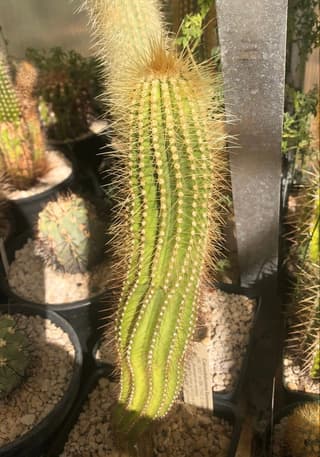
Fluminense Column Cactus
Coleocephalocereus fluminensis
Coleocephalocereus fluminensis is a columnar cactus endemic to the rocky inselbergs (isolated rocky hills) of southeastern Brazil, particularly in Rio de Janeiro and Espírito Santo states. It grows on exposed crystalline rock outcrops, forming dense clusters of erect ribbed stems covered in sharp spines. Adult plants develop a distinctive white woolly cephalium at the apex from which white to yellowish nocturnal flowers emerge.

Burger's Onion
Conophytum burgeri
Conophytum burgeri is a dwarf and highly compact succulent, endemic to a very restricted area of Bushmanland in the Northern Cape Province, South Africa, between Springbok and Pofadder. It consists of a single fleshy, onion-shaped body with a small fissure at the top from which the flower and new pair of leaves emerge. Its epidermis is smooth, shiny, and translucent, with coloration ranging from light green to purple, often taking on reddish-purple tones under intense sun. Over time, it may slowly divide to form small clusters of up to about five bodies. In nature, it grows in rocky and clayey soil among quartz pebbles, relying on winter mists and dew to survive the arid climate. It blooms in early autumn (April-May in the Southern Hemisphere), with sweet-scented purple flowers that open for a few hours in the late afternoon.
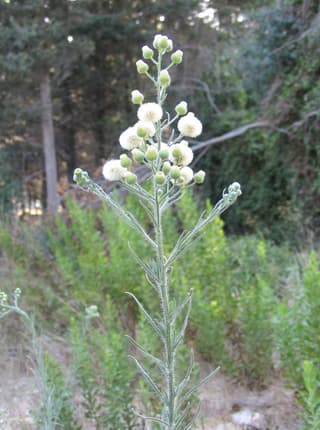
Argentine fleabane
Conyza bonariensis
Conyza bonariensis is an annual (occasionally biennial) herbaceous plant native to South America, belonging to the Asteraceae family. It is characterized by erect growth branching from the base, a height of 20-100 cm, and grey-green foliage covered in stiff bristles. The flowers are small, in capitula, with yellow disc florets and creamy bracts. It is one of the most problematic invasive plants in cultivated areas, notably resistant to glyphosate, primarily affecting soybean and corn crops.
Cookeina tricholoma
Cookeina tricholoma
Cookeina tricholoma is a tropical ascomycete fungus known for its vibrant cup shape and distinct marginal hairs. Found on decaying wood in humid forests, it displays colors ranging from pink to reddish-orange. It is not a plant, but a saprophytic fungus essential for the decomposition of organic matter.
violet webcap
Cortinarius violaceus
Cortinarius violaceus, commonly known as the violet webcap, is a spectacular fungus in the Cortinariaceae family. It is distinguished by its deep violet, almost black color and the velvety texture of both its cap and stem. It is a mycorrhizal species, forming complex symbiotic relationships with trees such as deciduous hardwoods (beech) or conifers.
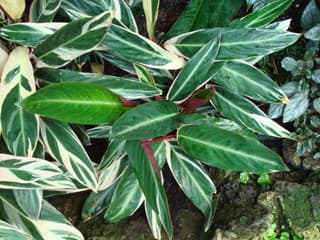
Never Never Plant
Ctenanthe oppenheimiana
Ctenanthe oppenheimiana, commonly known as the Never Never Plant or Giant Bamburanta, is a tropical plant native to Brazil belonging to the Marantaceae family. Its long ornamental leaves display striking tricolor patterns — dark green, light green, and silver-white on the upper surface with a deep purple underside — making it one of the most elegant houseplants available. Like its relatives the prayer plants, it performs a fascinating daily rhythmic movement, folding its leaves upward at night and opening them in the morning.
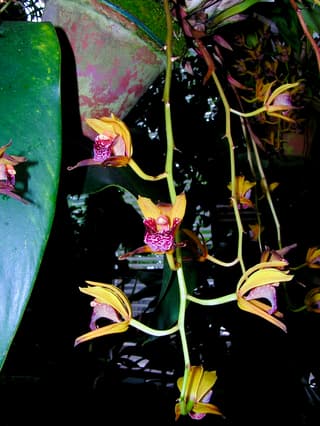
Devon's Cymbidium
Cymbidium devonianum
Devon's Cymbidium (Cymbidium devonianum) is an epiphytic orchid native to the Himalayan foothills of Nepal, northeast India, Bhutan, and Myanmar. It is prized for its striking pendant flower spikes bearing 15–35 blooms in yellow-green with purple-red markings, making it one of the most distinctive species in the Cymbidium genus.
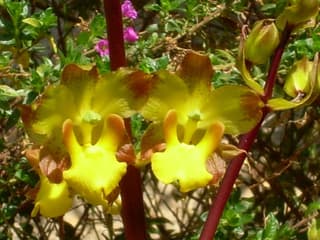
Cowhorn orchid
Cyrtopodium
Cyrtopodium is a genus of terrestrial, epiphytic, or lithophytic orchids native to the tropical and subtropical Americas, from southern Florida to Argentina, with a strong presence in Brazil. Recognized for its large, spindle-shaped, and wrinkled pseudobulbs resembling cigars or horns, the genus produces tall flower spikes covered in dozens of yellow flowers with brown spots. The plicate leaves drop before flowering, in a cycle marked by a period of vigorous growth followed by dormancy.
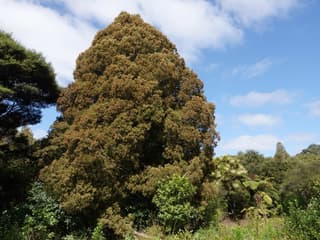
Kahikatea
Dacrycarpus dacrydioides
Kahikatea (Dacrycarpus dacrydioides) is New Zealand's tallest native tree and one of the world's most ancient conifer lineages, tracing back to Gondwanan forests. A slow-growing, evergreen podocarp, it naturally dominates swamp forests and floodplain terraces, sending up a slender, conical crown on a tall, often buttressed trunk that can exceed 50 m in the wild. Unlike flowering plants, it reproduces via small cones rather than true flowers; the female cone matures into a swollen, succulent red receptacle (koroi) that was historically a prized Māori food source. In cultivation it is an impressive specimen or shelter tree for large, permanently damp gardens, parks, and wetland restoration plantings, but it is not suited to small sections, pots, or dry soils.
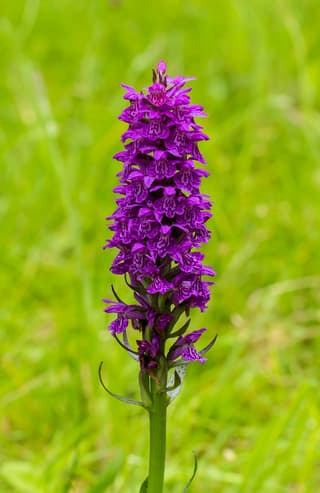
Heath Spotted Orchid
Dactylorhiza maculata
Dactylorhiza maculata, the heath spotted orchid, is a terrestrial tuberous perennial orchid native to Europe. It thrives in heathlands, damp meadows, bogs, and marshes, producing dense spikes of pale pink to deep purple flowers with characteristic dark markings on the labellum. Its leaves are distinctively spotted.
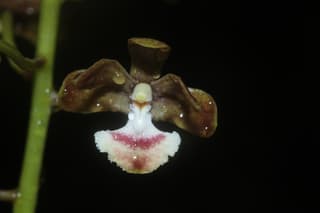
Virot's Dendrobium
Dendrobium virotii
Dendrobium virotii is a rare endemic orchid from New Caledonia, first described by Guillaumin in 1941. A medium-sized epiphyte, it grows on tree trunks in montane rainforests and scrubland at elevations from sea level to 1,000 meters. Its slightly zigzag, branching stems carry elliptic, clasping leaves, and in late spring it produces small racemes of 6 to 22 delicate flowers.
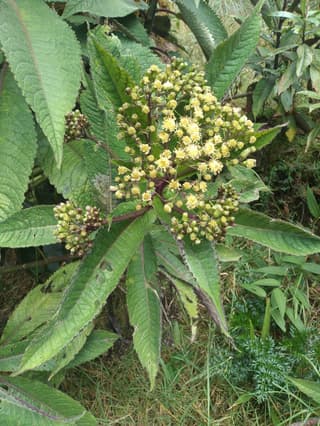
Dendrophorbium
Dendrophorbium
Dendrophorbium (Cuatrec.) C.Jeffrey is a genus of roughly 84 species of shrubby daisies in the tribe Senecioneae (Asteraceae), split off from the mega-genus Senecio in 1992. All species are Neotropical, concentrated in the northern Andes (Colombia, Ecuador and Peru, with a few outliers in Bolivia, Argentina and Brazil, plus one Caribbean species). Plants are erect, woody-based (suffrutescent) shrubs to small trees with fairly large, toothed leaves and terminal clusters of yellow, daisy-like flower heads, usually with ray florets. Nearly every species is a narrow-range endemic of subtropical/tropical montane cloud forest or high-elevation montane scrub, roughly between 2,000 and 3,800 m elevation, and many are considered threatened by habitat loss. Because the genus has essentially no history in cultivation and is known almost entirely from herbarium and taxonomic study, detailed horticultural data (exact light, water, soil and hardiness tolerances, mature size) has not been established for the genus as a whole; figures given here are cautious, habitat-based estimates rather than confirmed cultivation records.
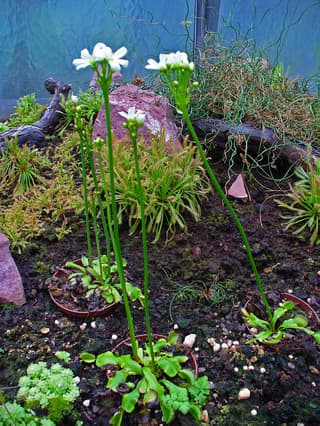
Venus Flytrap
Dionaea muscipula
The Venus Flytrap is one of the most fascinating carnivorous plants in the world, native to the subtropical wetlands of North and South Carolina, USA. Its iconic hinged traps snap shut when trigger hairs are stimulated by unsuspecting insects, digesting prey over 4-10 days. Despite its exotic appearance, it is a surprisingly compact rosette plant that rarely exceeds 30 cm in height.
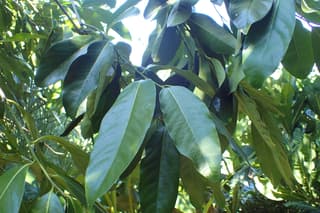
Black Sapote
Diospyros nigra
Black Sapote (Diospyros nigra) is a tropical fruit tree native to Mexico and Central America, belonging to the Ebenaceae (ebony) family. Nicknamed the "chocolate pudding fruit," its ripe pulp develops a deep dark-brown color with a mild, sweet flavor reminiscent of chocolate. It is a slow-growing, evergreen tree that can reach up to 25 meters in its natural habitat, though cultivated specimens are typically kept at 5–10 meters through regular pruning.
Hyacinth Orchid
Dipodium squamatum
Dipodium squamatum is a rare, leafless, mycoheterotrophic terrestrial orchid of the family Orchidaceae. Native to eastern Australia (Queensland, New South Wales, Victoria, and South Australia), New Caledonia, and Vanuatu, this species is one of the most challenging orchids to study and conserve. Completely lacking photosynthetic leaves, it depends entirely on fungal symbiosis for its nutrients. The erect, reddish-brown flowering stem reaches up to 100 cm tall, bearing 9 to 60 pink to purple flowers, each approximately 2.5 cm across. Blooms occur in summer and fall across its Southern Hemisphere range. In its native habitat, it inhabits open forests, woodlands, drier ridges, and coastal areas at elevations from 10 to 1100 meters in well-drained soils.
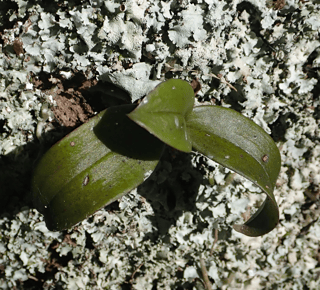
Green Fleshy Tree Orchid
Drymoanthus adversus
Drymoanthus adversus, commonly known as the Green Fleshy Tree Orchid, is a miniature epiphytic orchid endemic to New Zealand. It grows attached to tree trunks and branches in coastal to montane forests, forming compact tufts of dark green, fleshy leaves sometimes spotted with purple. In spring and early summer it produces small racemes of greenish-white flowers flecked with red.
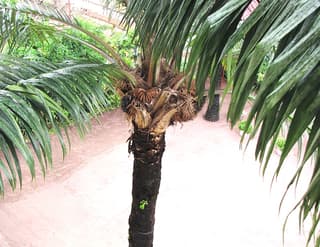
Oil palm
Elaeis guineensis
The oil palm (Elaeis guineensis) is a palm from the Arecaceae family, native to the low tropical regions of West Africa, particularly along the Gulf of Guinea. In the wild, it reaches 20 to 25 m in height, but in cultivation, it rarely exceeds 15 m. Its single trunk, marked by scars from old leaves, bears a crown of long pinnate fronds 5 to 7 m long. Separate male and female inflorescences produce clusters of reddish-orange ovoid fruits whose pulp and kernel provide palm oil and palm kernel oil, making this species the world's primary source of vegetable fat.
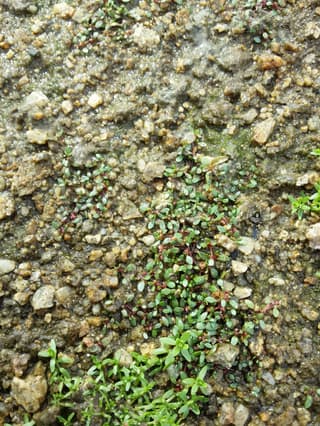
Eight-Stamened Waterwort
Elatine hydropiper
Elatine hydropiper, commonly known as Eight-Stamened Waterwort, is a tiny aquatic carpeting plant native to Europe and temperate Asia. It forms a dense, lush green carpet in aquariums, making it a prized foreground plant in aquascaping. Related to Hemianthus callitrichoides 'Cuba' in visual appeal, it is known for its demanding care requirements—needing high light, CO2 injection, and stable water parameters.
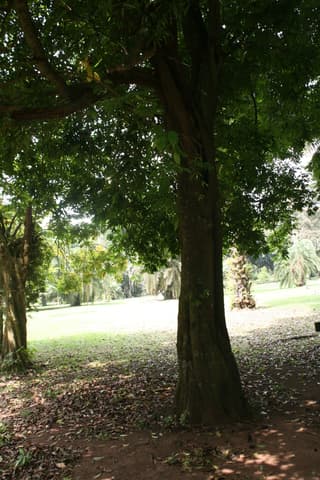
Wallaba
Eperua falcata
Eperua falcata is a rainforest tree in the legume family (Fabaceae), native to northern South America, primarily the Guianas (French Guiana, Suriname, Guyana) and northern Brazil (Amapá). It grows up to 35 meters tall, featuring grayish-brown bark and pinnately compound leaves consisting of 2-4 pairs of ovate leaflets approximately 18 cm long. Its bell-shaped flowers with red petals bloom in pendulous clusters and are highly decorative, while its ripening, mauve-pink, sword-shaped pods can eject seeds up to 30 meters away upon opening. The tree often forms pure stands on white quartz sands in riverine and swampy rainforests, up to elevations of 700 meters. Its reddish-brown heartwood is extremely durable; due to its natural fungal resistance, it is used for piles, shingles, and telegraph poles.

Night-Scented Orchid
Epidendrum nocturnum
Epidendrum nocturnum, commonly called the night-scented orchid, is an epiphytic orchid native to Florida, the Bahamas, the West Indies, and Central America through to northern Brazil and the Guyanas. It grows tall, leafy reed-like stems up to about a meter high, topped with clusters of green to yellow-brown flowers with a broad white lip. The blooms open with a subtle daytime scent but release a powerful, sweet fragrance -- often compared to eucalyptus or anise -- after dark, which is how the species earned its name.
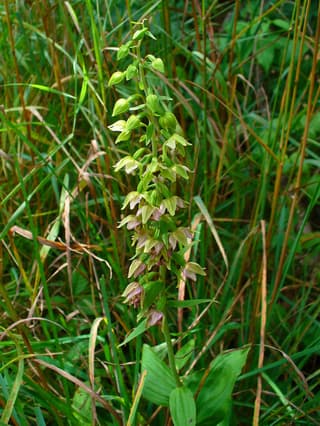
Broad-leaved Helleborine
Epipactis helleborine
Epipactis helleborine, commonly known as the broad-leaved helleborine, is a terrestrial orchid native to Europe and Asia. It grows in woodland settings, relying on mycorrhizal fungi for germination and survival. Its tall stems bear broad, ribbed leaves and a drooping raceme of greenish-purple flowers that bloom in summer.
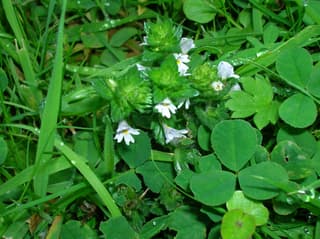
Eyebright
Euphrasia officinalis
Eyebright (Euphrasia officinalis) is a small, annual meadow plant from the broomrape family (Orobanchaceae). It is a hemiparasite: its roots form haustoria that attach to the roots of nearby grasses and sedges to extract water and nutrients, although the plant also photosynthesizes on its own. The plant grows 10–30 cm tall, with opposite, oval, and serrated leaves. Small white flowers with violet stripes and a yellow spot on the lower lip bloom from July to September. Eyebright grows in meadows, pastures, and roadsides, and has declined significantly in Finland due to the reduction of traditional mowing and grazing practices.
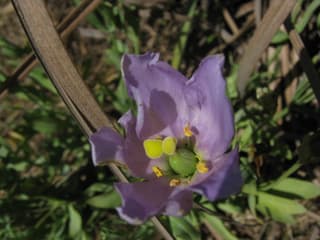
Lisianthus
Eustoma grandiflorum
Lisianthus (Eustoma grandiflorum) is a stunning flowering plant native to the southern Great Plains of North America, including southern USA and Mexico. Its rose-like blooms come in shades of white, pink, purple, blue, and bicolor. Prized as one of the finest cut flowers in the world, it is widely used in bridal bouquets and floral arrangements. Though notoriously difficult to grow, the reward is breathtaking.
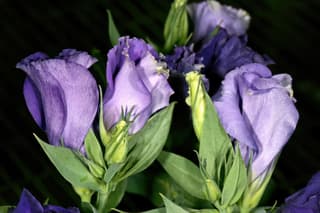
Lisianthus
Eustoma russellianum
Eustoma russellianum, commonly known as Lisianthus, is an herbaceous plant famous for its elegant flowers that resemble roses or tulips. Native to the prairies of the United States and Mexico, this species is highly valued in floriculture as a cut flower due to its sophisticated beauty and long vase life. Its petals have a satiny texture, and colors range from soft pastels to deep purples.
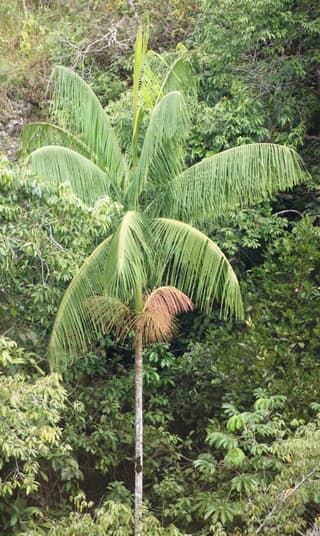
Juçara Palm
Euterpe edulis
Euterpe edulis, known as the Juçara Palm, is a native palm of Brazil's Atlantic Forest, critically threatened by illegal palm heart extraction. Its antioxidant-rich fruits are used as a sustainable alternative to Amazonian açaí, and the species plays a vital role in forest restoration and wildlife habitat for over 30 bird species.
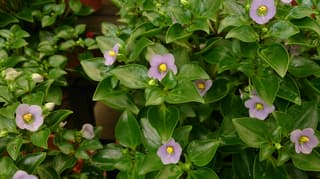
Persian Violet
Exacum affine
Exacum affine, commonly known as Persian Violet, is a charming compact flowering plant native to the island of Socotra in Yemen. Prized for its profusion of small, fragrant blue-purple flowers with bright yellow centers, it belongs to the Gentianaceae family. Though often grown as an annual houseplant, it is actually a short-lived perennial in its native subtropical habitat. Its glossy, rounded foliage and sweet fragrance make it a delightful indoor companion during spring and summer.
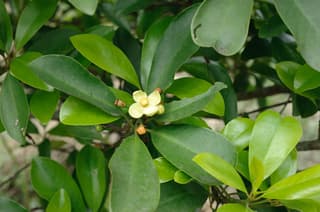
Garcinia
Garcinia
The Garcinia genus comprises tropical evergreen trees and shrubs, world-renowned for the Mangosteen, considered the 'queen of fruits'. Its leaves are dark green, glossy, and leathery. They are slow-growing plants that require patience but reward with dense foliage and highly nutritious and medicinal fruits.
Cedar Cup
Geopora sumneriana
Geopora sumneriana, commonly known as the Cedar Cup, is an ascomycete fungus that forms a strictly mycorrhizal symbiotic relationship with trees of the genus Cedrus. The fruiting body begins its development underground, emerging in spring as a hollow sphere that breaks open into a cup or star shape, revealing a smooth, cream-colored interior, while the exterior is densely covered with brownish hairs.
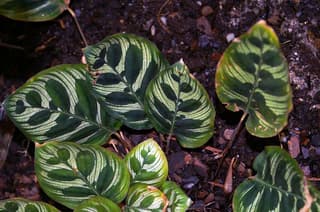
Peacock Plant
Goeppertia makoyana
Goeppertia makoyana, commonly known as the Peacock Plant, is a stunning tropical species native to the rainforests of eastern Brazil. Its leaves are a natural work of art: the upper surface displays light and dark green patterns resembling stained-glass cathedral windows, while the underside is painted in deep purple. Like other prayer plants, its leaves move throughout the day in response to light.
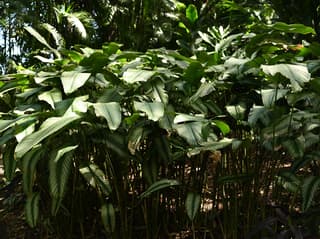
Pinstripe Calathea
Goeppertia ornata
Goeppertia ornata, popularly known as Calathea ornata, is a perennial herbaceous plant native to South America. It is famous for its deep dark-green oval leaves, adorned with thin, elegant lateral stripes that vary from pink to white, resembling brushstrokes. The underside of the leaves features a vibrant burgundy or purple hue. Like other plants in the Marantaceae family, it exhibits nyctinastic movement, closing its leaves vertically at night as if in prayer.
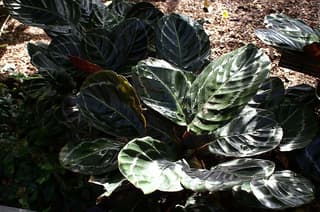
Rose Painted Calathea
Goeppertia roseopicta
Goeppertia roseopicta, commonly known as the Rose Painted Calathea or Rose-painted Prayer Plant, is a tropical foliage plant native to the Atlantic Forest of Brazil. Previously classified as Calathea roseopicta, it belongs to the family Marantaceae and is celebrated for its stunning oval leaves featuring dark green surfaces with rose-pink and silver brushstroke patterns and deep purple undersides. Famous for cultivars such as Medallion, Dottie, and Rosy, it folds its leaves upward at dusk in a behaviour called nyctinasty.
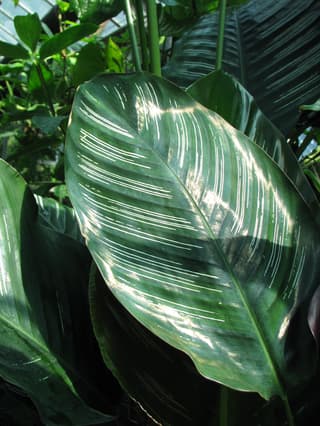
Sander's Calathea
Goeppertia sanderiana
Goeppertia sanderiana, commonly known as Sander's Calathea or Cigar Calathea, is a tropical foliage plant native to the rainforests of Ecuador and Peru in South America. It features large, striking leaves with decorative pink or white pinstripe patterns on a deep green background. A member of the Marantaceae family, it is celebrated for its nyctinastic leaf movement — leaves open during the day and fold upward at night, earning it the nickname 'prayer plant'.
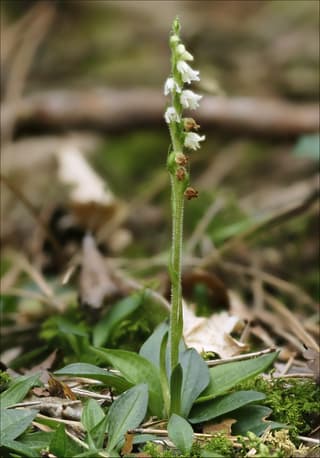
Creeping lady's-tresses
Goodyera repens
Creeping lady's-tresses (Goodyera repens) is a small, evergreen terrestrial orchid that spreads across the temperate coniferous and mixed forests of the Northern Hemisphere in Europe, Asia, and North America. The plant forms slowly expanding colonies via rhizomes in old, undisturbed coniferous forests, and its dark green leaves are decorated with a silvery-white reticulated pattern. From July to September, the plant produces a 10-20 cm tall one-sided inflorescence, bearing 7-36 small white or pale green hairy flowers. The orchid lives in close symbiosis with mycorrhizal fungi, upon which its seedlings are entirely dependent.
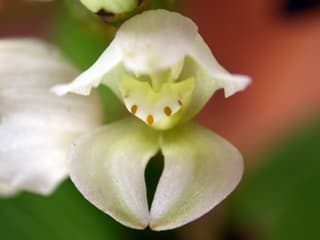
Govenia
Govenia
Govenia is a genus of terrestrial (rarely epiphytic) orchids belonging to the Orchidaceae family, comprising about 20–24 species. It naturally occurs in the mountainous pine-oak forests of Mexico, Central and South America (as far as Peru and Bolivia), and the Caribbean; a single taxon, now extinct (Govenia floridana), grew in Florida. The plants produce bulbous corms covered by membranous sheaths, from which usually two plicate (pleated) leaves emerge. The leaves are shed seasonally – in some species, flowering occurs while the leaves are still present, in others only after they have completely withered. The inflorescence forms a raceme of several to a dozen bright, usually white or cream-colored flowers, often speckled with purple or crimson, which do not fully open.

Giant Orchid
Grammatophyllum speciosum
Grammatophyllum speciosum is the world's largest orchid species, an epiphytic giant native to the rainforests of Southeast Asia. It forms massive clumps of cane-like pseudobulbs that can reach over 2.5 meters long, with clusters weighing several hundred kilograms in the wild. Its striking yellow flowers marked with maroon blotches appear in dense, arching racemes, making it a prized specimen for botanical gardens and serious orchid collectors.

Chilean Gunnera
Gunnera tinctoria
Gunnera tinctoria, commonly known as Chilean rhubarb or nalca, is a colossal herbaceous perennial native to the cool, wet forests of central Chile and southern Argentina, where locals have long harvested its tart leaf stalks as a rhubarb-like vegetable. Forming clumps of enormous, deeply lobed leaves that can each span over a metre across, it produces a dense, cone-shaped flower spike in summer followed by small orange-red fruits. Outside its native range, however, it has become a serious invasive weed in wetlands and coastal areas of Ireland, the UK, New Zealand, and parts of the Azores, where it forms dense colonies that crowd out native vegetation and clog waterways -- check local regulations before planting it in these regions.
Hard Care Pet Safe
Our selection of 155 hard pet safe combines the characteristics of this category with specific care needs. For enthusiasts seeking a challenge.
Why Choose Hard Pet Safe?
Combining the beauty of pet safe with hard difficulty level lets you enjoy this category while developing your gardening skills. Each plant was selected to offer the best characteristics of the category at the care level you are looking for.