2315 Easy Plants | 2026 Guide - Page 15
Discover 2315 easy plants for your garden. Complete care guide.
2315 Easy Plants
Showing 505-540 of 2315
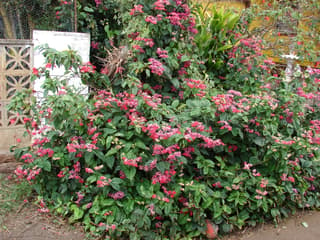
Red Bleeding Heart Vine
Clerodendrum × speciosum
Clerodendrum × speciosum, commonly known as the Red Bleeding Heart Vine, is an ornamental hybrid between the Bleeding Heart Glory Bower (Clerodendrum thomsoniae) and the Scarlet Glory Bower (Clerodendrum splendens). This vigorous scandent shrub produces dense clusters of tubular red flowers wrapped in persistent white calyces that blush pink with age, resembling a bleeding heart. Being a sterile hybrid, it produces no viable seed and is propagated only by cuttings or division.
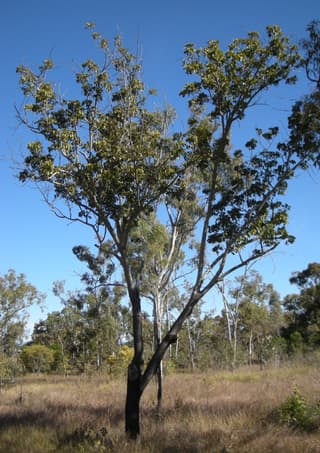
Lolly Bush
Clerodendrum floribundum
A shrub or small tree native to Australia and New Guinea, found at the margins of coastal rainforests as well as in rocky sites, gorges and creek beds across northern and eastern Australia. It produces fragrant white flowers in cymes from September to December, followed by glossy black drupes seated on an enlarged red fleshy calyx — the origin of its common name "lolly bush" — though the fruit itself is not edible. A hardy, easy-to-grow plant that adapts to a wide range of soils.
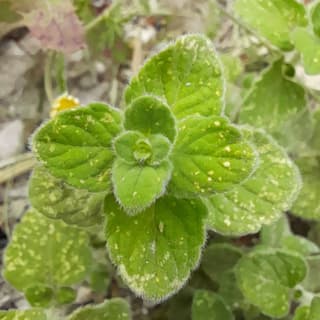
Lesser Calamint
Clinopodium nepeta
Lesser Calamint is a perennial, aromatic herb in the mint family (Lamiaceae) that forms a compact, tufted shrub with gray-green, oval leaves. The leaves possess a fresh scent of mint, oregano, and a hint of peppermint-like pennyroyal, and are widely used in Mediterranean cuisine. The plant is native to the Mediterranean region, North Africa, and parts of Central Asia, where it grows on dry, calcareous slopes and hillsides. From July to October, it bears numerous small, two-lipped flowers in white, pink, or lavender, which attract bees and butterflies. Lesser Calamint is hardy, drought-tolerant, and requires minimal care, making it a favorite for rock gardens and herb gardens.
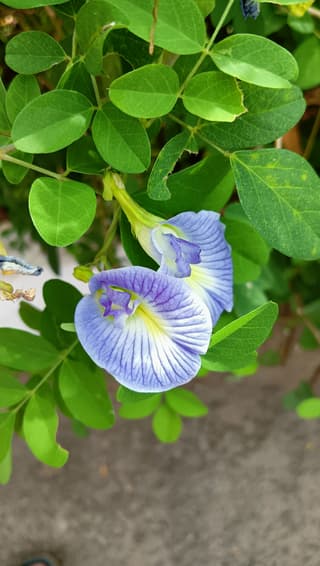
Butterfly Pea
Clitoria ternatea
Butterfly Pea (Clitoria ternatea) is a tropical climbing vine native to Southeast Asia, celebrated for its striking deep-blue butterfly-shaped flowers. It is widely grown as an ornamental, culinary, and medicinal plant. The flowers produce a natural blue pigment used in teas, foods, and beverages that turns purple when exposed to acidic ingredients. As a legume, it also fixes nitrogen, naturally enriching the soil.
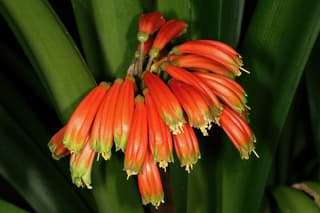
Green-tip Forest Lily
Clivia gardenii
Clivia gardenii is a clump-forming evergreen perennial native to the shaded forests of KwaZulu-Natal and the Eastern Cape in South Africa. A close, more delicate relative of the popular Clivia miniata, it produces slender, tubular, drooping orange flowers with distinctive green tips in autumn and winter, followed by bright red berries. Its strappy, dark green leaves grow from a thick rhizome and thrive in the dappled shade of forest understories. Slow-growing but long-lived, it is prized by collectors for its subtle beauty and shade tolerance.
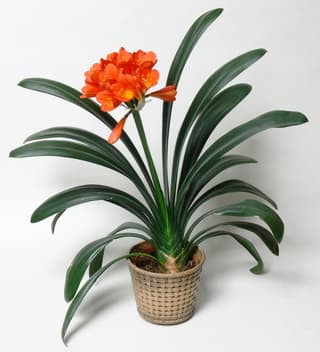
Bush Lily
Clivia miniata
Clivia miniata is an elegant evergreen perennial native to the shaded forests of South Africa's KwaZulu-Natal region. Known for its stunning clusters of trumpet-shaped orange flowers that bloom in late winter to early spring, it has become one of the most popular indoor flowering plants worldwide. Its dark green, strap-shaped leaves form a graceful fan shape, providing year-round ornamental value even when not in bloom.
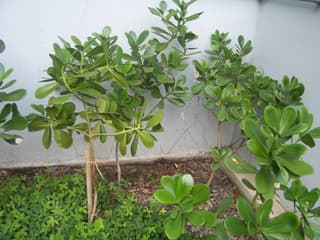
Autograph Tree
Clusia fluminensis
Clusia fluminensis is a native tree of the Brazilian Atlantic Forest, prized for its thick, leathery leaves on which names and messages can be scratched and remain visible as the leaf dries — hence the common name "autograph tree." It produces fragrant white flowers and ornamental fruits that split open to reveal orange-red seeds. The species is salt-tolerant and thrives in coastal environments.
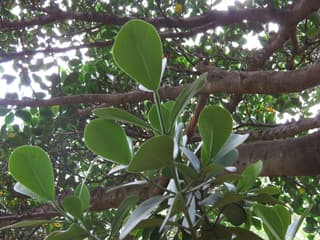
Autograph Tree
Clusia rosea
Clusia rosea is a perennial tropical plant known for its leathery, stiff, and glossy deep green leaves. It is popularly called the 'autograph tree' because names can be carved into its leaves, remaining visible for a long time. In the wild, it can grow as an epiphyte, but in cultivation, it is valued as a medium-sized ornamental shrub or tree, producing showy flowers ranging from white to pink.
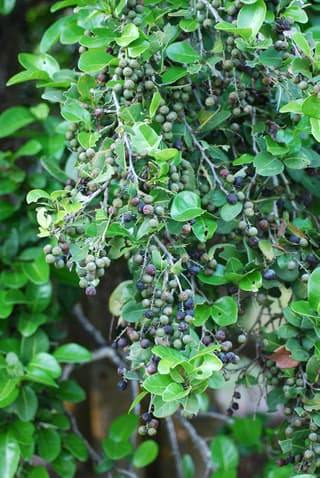
Pigeon Plum
Coccoloba diversifolia
Pigeon Plum (Coccoloba diversifolia) is a fast-growing, evergreen tropical tree native to the Caribbean, Florida, and Central America. Prized for its leathery dark-green foliage, creamy-white flower spikes, and small reddish-purple fruits loved by birds, it thrives in sandy coastal soils with outstanding drought and salt tolerance.

Sea Grape
Coccoloba uvifera
Coccoloba uvifera, commonly known as Sea Grape, is a coastal tree or large shrub native to the tropical Americas, including the Caribbean, southern Florida, Mexico, and Central and South America. It features large, round, leathery leaves up to 25 cm in diameter with distinctive reddish veins. Female trees produce hanging clusters of purple, grape-like fruits that are edible and widely used in Caribbean cuisine. The plant is highly tolerant of salt spray, wind, and sandy soils, making it a cornerstone of tropical coastal landscapes.
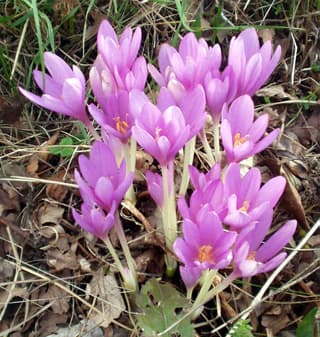
Autumn crocus
Colchicum autumnale
The autumn crocus (Colchicum autumnale) is a perennial cormous (bulb-like) plant from the Colchicaceae family, native to the meadows and pastures of central and southern Europe. It is unusual because it blooms in late summer and autumn without any leaves present – the pinkish-purple to white flowers emerge directly from the ground. The dark green leaves appear the following spring along with the seed capsule and die back by early summer. All parts of the plant, especially the corms and seeds, contain the alkaloid colchicine and are highly toxic to both humans and pets.
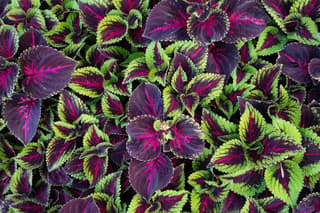
Coleus / Painted Nettle (genus)
Coleus
Coleus is a genus of ornamental plants in the family Lamiaceae, prized for their strikingly colorful foliage in shades of green, purple, red, and yellow. It serves as an umbrella genus for numerous popular species and cultivars grown in gardens and containers worldwide.
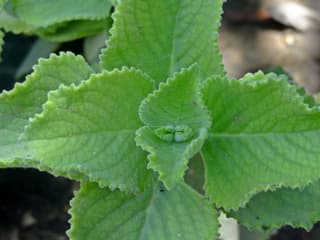
Mexican Mint
Coleus amboinicus
A succulent and highly aromatic perennial plant, Coleus amboinicus is famous for its thick, velvety, and brittle leaves. Native to Africa and widely naturalized in the tropics, it exudes a strong scent reminiscent of a blend of oregano and mint.
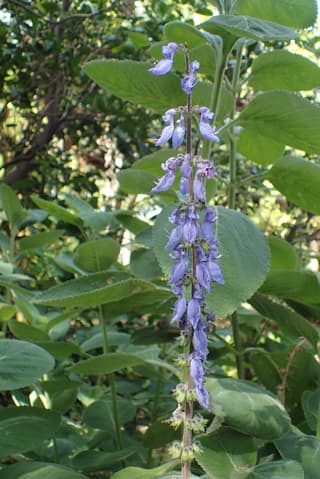
Indian Coleus
Coleus barbatus
Indian Coleus (Coleus barbatus, syn. Plectranthus barbatus) is an aromatic medicinal herb in the Lamiaceae family, native to Eastern Africa and widely naturalized in Brazil and tropical regions. It features large, velvety, fragrant leaves and produces dense spikes of blue-purple flowers. Widely cultivated for its digestive and liver-supportive properties, as well as its ornamental value.
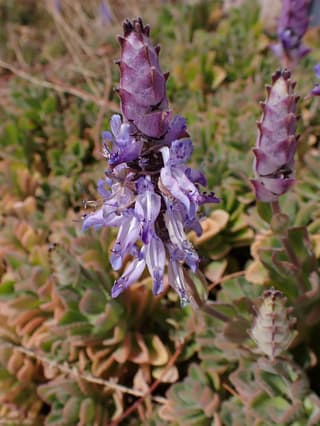
Scaredy Cat Plant
Coleus caninus
Coleus caninus (syn. Plectranthus caninus) is an aromatic tender perennial in the mint family (Lamiaceae), native to southern and eastern Africa. Its grey-green, scallop-edged leaves release a strong, skunk-like odor when brushed or bruised, a trait that has earned it the nicknames "scaredy cat plant" and "piss-off plant" for its reputed (though scientifically unproven) ability to deter cats, dogs and other animals from garden beds. Small spikes of pale blue-violet flowers appear from summer into fall.
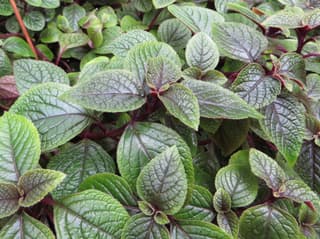
Prostrate Coleus
Coleus forsteri
Prostrate Coleus (Coleus forsteri, syn. Plectranthus forsteri) is a tender evergreen perennial in the mint family (Lamiaceae), native to the Southwest Pacific islands, including Fiji and New Caledonia. It has a low, spreading habit with rounded, scalloped, lightly succulent leaves that release a mild citrus scent when bruised. It is popular as a houseplant, groundcover, or trailing plant in hanging baskets thanks to its vigorous growth and easy care.
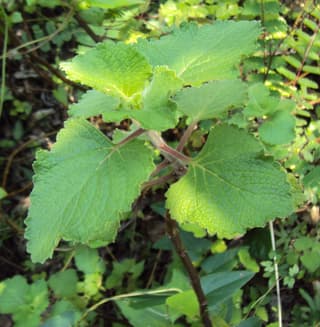
Hairy Coleus
Coleus hadiensis
Coleus hadiensis, formerly known as Plectranthus hadiensis, is a fast-growing, semi-succulent shrub native to South Africa's Eastern Cape and KwaZulu-Natal provinces, extending through eastern tropical Africa to the southern Arabian Peninsula. It forms an erect to decumbent shrub up to 1.5 m tall and 1 m wide, with soft, felted, aromatic leaves and terminal clusters of mauve to purple (occasionally white) tubular flowers that bloom from autumn into winter.
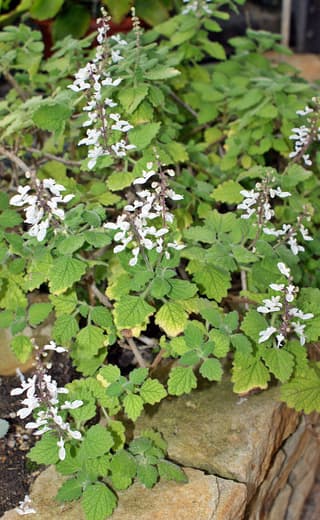
Madagascar Coleus
Coleus madagascariensis
Coleus madagascariensis, commonly known as Madagascar Coleus or Thicket Coleus, is a fast-growing aromatic perennial herb in the family Lamiaceae, native to southern and southeastern Africa. Its fleshy, variegated leaves release a refreshing mentholated fragrance when touched, earning it the nickname "Vicks Plant." This versatile species thrives both indoors and outdoors, valued for its ornamental foliage, pleasant scent, and traditional medicinal applications. In autumn it produces slender spikes of small white to mauve flowers that attract bees, butterflies, and birds.
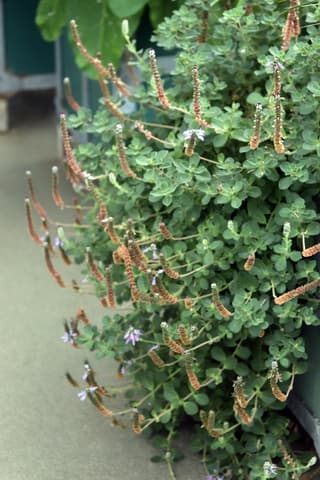
Blue Coleus
Coleus neochilus
Coleus neochilus, commonly known as Blue Coleus or Lobster Bush, is a fast-growing aromatic perennial herb in the Lamiaceae family, native to southern Africa (South Africa, Zimbabwe, and Mozambique). It forms dense, spreading mounds of succulent, grey-green scalloped leaves that emit a pungent, camphor-like scent naturally repelling flies and mosquitoes. Upright spikes of small purple-blue flowers bloom twice yearly, in late summer and winter. In Brazil it is widely grown as a medicinal herb under the folk name "boldo-rasteiro" and valued for digestive complaints.
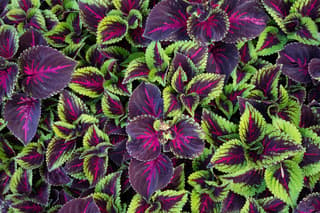
Coleus
Coleus scutellarioides
Coleus, popularly known as Painted Nettle, is a tropical herbaceous plant famous for its incredibly colorful and patterned foliage. Its velvety leaves feature vibrant combinations of red, pink, yellow, green, and purple. It is one of the most versatile ornamental plants, growing rapidly in both garden beds and indoor pots.

Asiatic Dayflower
Commelina communis
Commelina communis is a fast-growing summer annual herb native to East Asia, now naturalized across eastern North America. It produces sprawling, hairless stems with lance-to-egg-shaped leaves and distinctive two-petaled blue flowers that open for a single morning before fading. The young shoots and leaves are edible with a mild, mucilaginous texture, and the plant has a long history of use in traditional Asian medicine.
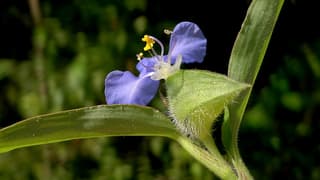
Whitemouth Dayflower
Commelina erecta
Commelina erecta, commonly known as Whitemouth Dayflower or Erect Dayflower, is a perennial herb native to the Americas. It produces vivid sky-blue flowers with a small white lower petal, each lasting only a single day. A resilient and adaptable plant, it thrives in sunny to partially shaded gardens and is valued for both its ornamental beauty and traditional medicinal uses across South America.
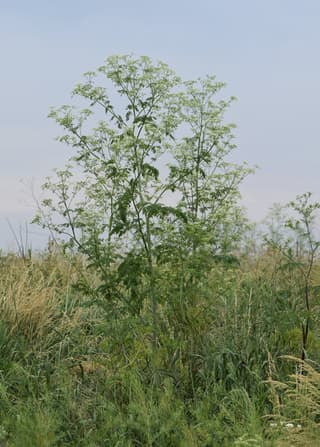
Poison hemlock
Conium maculatum
Poison hemlock (Conium maculatum) is a biennial herb in the Apiaceae family, native to Europe, North Africa, and temperate Asia, now naturalized as an invasive weed throughout much of the world. It is recognized by its hollow, ridged stems with purple spotting, its highly divided feathery leaves similar to parsley, and its small white flowers clustered in umbels. It is one of the most poisonous plants in temperate flora: all parts contain piperidine alkaloids (primarily coniine), responsible for fatal poisonings in humans and animals. It grows spontaneously in ditches, riverbanks, abandoned fields, and other moist, disturbed soils.
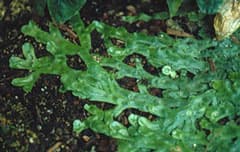
Great Scented Liverwort
Conocephalum
Conocephalum is a genus of thallose liverworts (bryophytes) in the family Conocephalaceae, best known for the distinctive hexagonal patterning on their thallus surface resembling snake scales — earning them the nickname "snakeskin liverwort." These non-vascular plants thrive in shaded, moist habitats such as stream banks, wet rocks, and forest floors. They are widely used in terrariums, vivariums, and paludariums as a lush, low-growing green carpet.
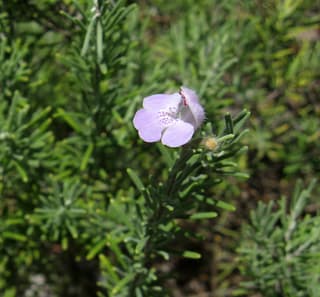
False Rosemary
Conradina
Conradina is a small genus of about seven aromatic, evergreen shrubs in the mint family (Lamiaceae), native to the sandy scrublands and coastal dunes of the southeastern United States, especially Florida. Commonly called false rosemary for its needle-like, gray-green leaves and rosemary-like scent, the plants form dense, rounded mounds 60-90 cm tall covered in small two-lipped purple, lavender, or white flowers from spring through fall. Highly drought-tolerant and adapted to poor, well-drained sandy soils, Conradina species are popular in xeriscaping, pollinator gardens, and coastal restoration plantings. Several species, including C. brevifolia, C. etonia, and C. glabra, are rare and federally protected.
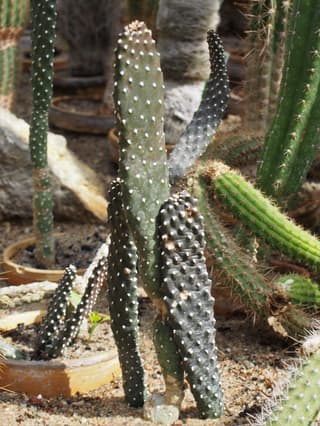
Road Kill Cactus
Consolea rubescens
Consolea rubescens is a tall, tree-like cactus from the Cactaceae family, native to the Caribbean islands (Puerto Rico, Virgin Islands, Lesser Antilles). It forms a woody trunk from which flattened, oval segments (pads) grow, taking on a reddish-purple hue in strong sunlight. In nature, it can reach up to 6 meters in height. In spring and summer, yellow-orange-red flowers appear, followed by edible, tart fruits.
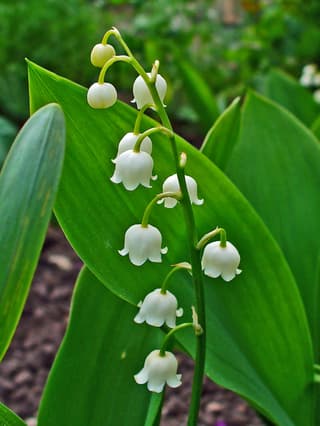
Lily of the Valley
Convallaria majalis
Lily of the Valley (Convallaria majalis) is a delicate, shade-loving perennial native to the cool temperate woodlands of Europe and Asia. It produces elegant, arching stems adorned with pairs of lance-shaped leaves and dainty, bell-shaped white flowers with an intensely sweet fragrance. Despite its delicate appearance, it is a vigorous spreader that forms dense ground-covering colonies. All parts of the plant are highly toxic due to cardiac glycosides, making it dangerous to children and pets.
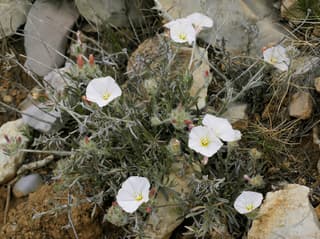
Silverbush
Convolvulus
Convolvulus is a genus in the Convolvulaceae family that ranges from climbers and ground covers to small shrubs, such as the silver-leaved silverbush (Convolvulus cneorum). They bear funnel- or trumpet-shaped flowers in white, pink and blue that open with the sun. They are prized in dry gardens, borders and containers.

Field Bindweed
Convolvulus arvensis
Field Bindweed (Convolvulus arvensis) is a fast-growing, rhizomatous perennial vine in the morning glory family. Native to Europe and Asia, it has become a widespread and highly invasive weed across temperate regions worldwide. Its funnel-shaped white or pale pink flowers open in summer, while its deep, extensive root system makes it notoriously difficult to eradicate once established.
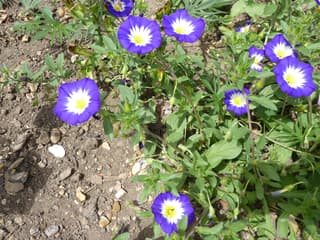
Dwarf Morning Glory
Convolvulus tricolor
Convolvulus tricolor, commonly known as Dwarf Morning Glory, is a compact annual plant native to the Mediterranean region. It produces stunning trumpet-shaped flowers with a characteristic tricolor pattern — deep blue or purple petals surrounding a white ring and bright yellow center. Each flower lasts only one day, but the plant blooms prolifically throughout summer, creating a continuous display of color in borders, containers, and ground cover plantings.
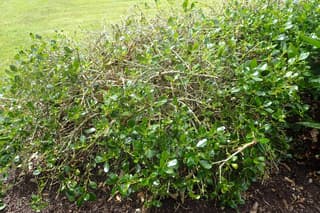
Mirror Plant
Coprosma repens
Coprosma repens, commonly known as the Mirror Plant, is a glossy-leaved evergreen shrub native to New Zealand. Its highly reflective, lacquered leaves give it the distinctive mirror-like appearance that inspired its name. It is an exceptionally tough coastal plant, tolerating salt spray, wind, and drought once established, making it a popular choice for hedging and screening in exposed gardens.
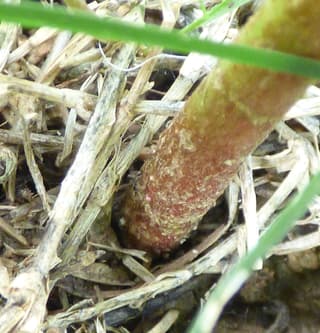
Jute Mallow
Corchorus olitorius
Corchorus olitorius is a fast-growing, erect annual herb in the mallow family (Malvaceae), prized across Africa, the Middle East, and Asia as a leafy vegetable. Left to mature it can reach 1.5-3.5 m, with slender green stems, serrated glossy leaves, and small solitary yellow flowers followed by slender ridged seed pods. Young shoots and leaves are harvested repeatedly for cooking -- most famously in Egyptian molokhia soup -- and the stem fibers can also be spun into jute-like textiles.
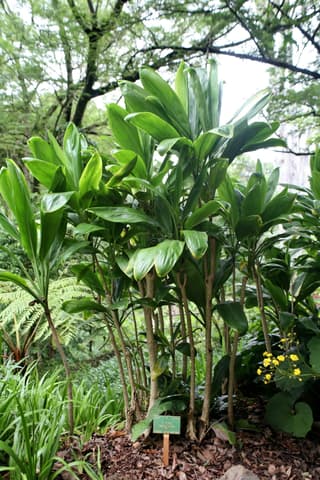
Ti Plant
Cordyline
Cordyline is a genus of tropical and subtropical plants prized for their striking foliage in shades of green, red, purple, and pink. Widely grown as both a houseplant and a garden specimen, they are primarily cultivated for their bold ornamental appearance.
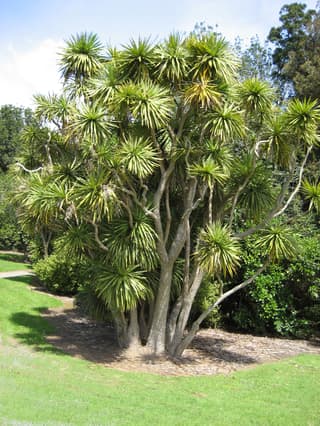
Cabbage Tree
Cordyline australis
Cordyline australis, commonly known as the Cabbage Tree or Tī kōuka, is an iconic palm-like tree native to New Zealand. Despite its tropical appearance, it is a remarkably hardy outdoor specimen that can tolerate temperatures as low as -7°C. It produces long, sword-shaped leaves that form a dramatic architectural crown, and mature trees develop a thick, fibrous trunk. In summer, established plants produce spectacular frothy spikes of tiny, fragrant white flowers. A beloved symbol of New Zealand landscapes, it is widely used as a bold architectural plant in gardens and streetscapes worldwide.
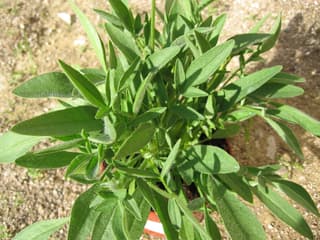
Large-flowered Tickseed
Coreopsis grandiflora
Coreopsis grandiflora, commonly known as Coreopsis or Tickseed, is a perennial plant native to North America, belonging to the Asteraceae family. Its radiant golden flowers bloom from late spring through summer, attracting pollinators such as bees and butterflies. It is an extremely hardy, drought-tolerant plant that is easy to grow.
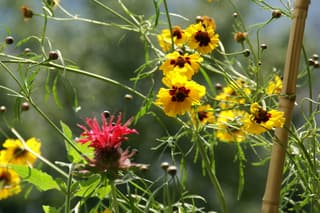
Plains Coreopsis
Coreopsis tinctoria
Plains Coreopsis (Coreopsis tinctoria) is a cheerful annual wildflower native to North America, producing masses of bright daisy-like flowers in yellow, red, burgundy, and gold from spring through fall. A staple of prairie meadows, it thrives in full sun with minimal care, making it a favorite for wildflower gardens and pollinator habitats.
What are Easy Plants?
Easy Plants are ideal for beginners or people with little time for care. These species are tolerant of watering mistakes, light variations, and don't require constant attention. Perfect for those just starting out with plants.
Tips for Growing Easy Plants
To succeed with easy plants, remember: less is more. Avoid overwatering, choose a spot with adequate light, and let the soil dry between waterings. Most of these plants prefer to be 'forgotten' occasionally.