1448 Easy Pet Safe | 2026 Guide - Page 11
Find 1448 easy pet safe. Complete guide for your garden.
1448 Pet Safe with easy level
Showing 361-396 of 1448
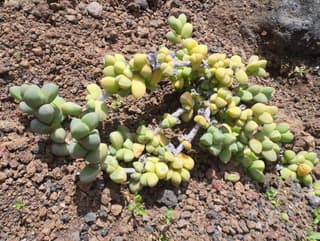
Ice Plant
Corpuscularia lehmannii
Corpuscularia lehmannii, popularly known as the Ice Plant or String of Buttons, is a compact, perennial succulent from the Aizoaceae family, native to the Western Cape region of South Africa. It forms small clusters of fleshy, cylindrical leaves that are slightly translucent at the tips, featuring a grayish-green to bluish hue that resembles grouped "fingers" or buttons. In late spring and early summer, it produces small yellow daisy-like flowers that open during the day under sunlight. It is a slow-to-moderate growing plant, highly drought-resistant and low-maintenance, making it ideal for rock gardens, shallow pots, and succulent arrangements.
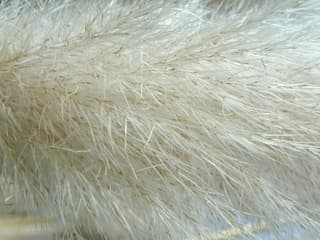
Pampas Grass
Cortaderia selloana
Pampas Grass (Cortaderia selloana) is a large, ornamental perennial grass native to the South American pampas. It forms impressive clumps of long, arching, razor-sharp leaves and produces spectacular feathery plumes in white, cream, or pink from summer through autumn, reaching up to 10 feet tall.
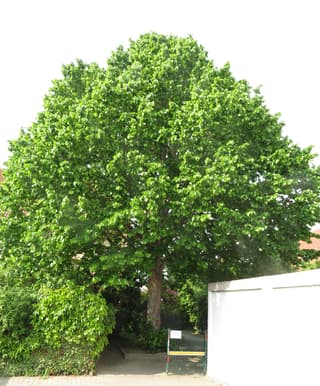
Common Hazel
Corylus avellana
Common Hazel (Corylus avellana) is a deciduous shrub or small tree native to Europe and Western Asia, from the British Isles to the Caucasus and Turkey. It typically reaches a height of 3–6 meters with a broad, multi-stemmed growth habit, forming dense thickets and hedgerows. The leaves are round to oval with doubly serrated margins and a characteristic rough texture; in autumn, they turn golden yellow. The female flowers are remarkably discreet – only the bright red stigmas are visible from the closed buds – while the male catkins hang in long, yellowish-green clusters and are a sure sign of early spring. The hazel is one of the earliest spring shrubs in the Northern European landscape. It flowers as early as January to April, before the leaves emerge, and is pollinated exclusively by wind. Its fruits are the well-known hazelnuts, which ripen in clusters with a cup-shaped involucre in September–October. The nuts are rich in fat (up to 60%), protein, and vitamin E, and have been an important food source for humans in Europe since the Stone Age. Hazel grows at forest edges, in hedgerows, scrublands, and along watercourses, and is a key species for biodiversity: its early pollen is crucial for bees, and it hosts the larvae of over 70 butterfly and moth species. The shrub is extremely hardy and adaptable; it thrives in almost all soil types, from sandy soil to clay, and from sea level to the mountains. It spreads naturally via suckers and can be effectively rejuvenated by coppicing – a traditional management method that both extends the shrub's lifespan and produces flexible, pliable wood suitable for weaving (hazel rods). In Denmark, hazel is a characteristic element of oak forests and scrublands throughout the country.
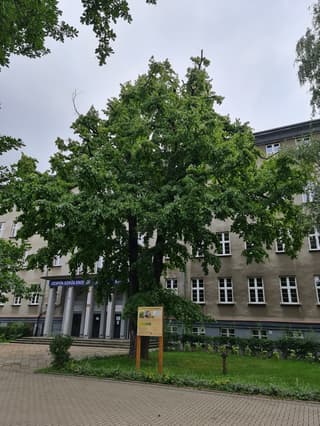
Turkish Hazel
Corylus colurna
Corylus colurna, the Turkish hazel, is a large deciduous tree native to southeastern Europe and Asia Minor. Recognized for its symmetrical pyramidal form and outstanding tolerance to urban conditions, heat, cold, and drought, it produces edible hazelnuts enclosed in distinctive hairy husks.
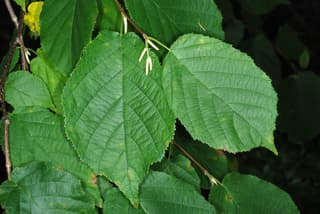
Giant Filbert
Corylus maxima
Corylus maxima, the giant filbert, is a vigorous deciduous shrub or small tree native to the Balkan Peninsula and parts of southeastern Europe and southwestern Asia. Closely related to the common hazel (Corylus avellana), it is distinguished by its edible nuts enclosed in a long, tubular husk that extends well beyond the shell. Grown both for its nut harvest and, in purple-leaved cultivars such as Purpurea, as an ornamental garden specimen, it produces striking pale yellow male catkins in late winter that are among the first signs of the growing season.
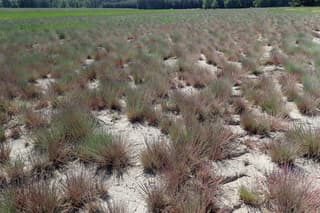
grey hair-grass
Corynephorus canescens
Grey hair-grass is a perennial, densely tufted grass from the Poaceae family, typically growing 15–30 cm tall. It has narrow, bristly, grey-green to silvery-blue leaves and produces delicate, silvery panicles with a purplish tint in June to July, whose awns have a characteristic club-like shape (hence the Czech name). It is a typical pioneer species of wind-blown sands and open sandy grasslands – in the Czech Republic, it grows scattered in warmer areas of central and northwestern Bohemia (Polabí region) and in South Moravia. It tolerates extreme drought, poor soil, and large temperature fluctuations, and is therefore valued as an undemanding ornamental grass for rock gardens, gravel beds, and containers.
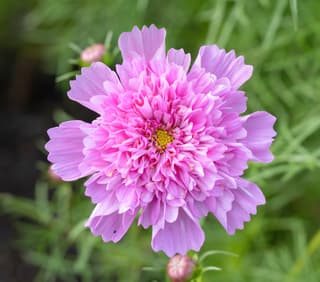
Garden Cosmos
Cosmos
Garden Cosmos (Cosmos spp.) is a fast-growing, sun-loving annual flower native to Mexico and the southwestern United States, prized for its airy, fern-like foliage and daisy-like blooms in shades of white, pink, purple, yellow and orange. The genus includes roughly 20-35 species, but almost all garden cultivation centers on Cosmos bipinnatus (pink, white and purple shades) and Cosmos sulphureus (yellow, orange and red shades). Cosmos thrives in poor, well-draining soil and full sun, blooming continuously from summer through fall with minimal care.
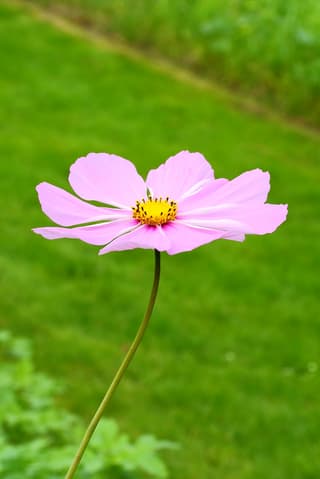
Garden cosmos
Cosmos bipinnatus
Cosmos bipinnatus, commonly known as Garden Cosmos, is a popular annual flowering plant native to Mexico. It is celebrated for its delicate, feathery foliage and large, daisy-like flowers that bloom in shades of pink, white, and purple. It is a resilient plant that thrives in sunny locations and is a favorite for pollinator gardens as it attracts bees and butterflies.
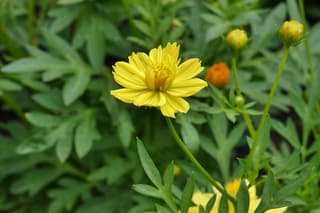
Sulfur Cosmos
Cosmos sulphureus
Cosmos sulphureus is a vibrant annual herbaceous plant native to Mexico and Central America. It is widely appreciated for its radiant flowers in shades of yellow, orange, and scarlet red, which stand out against finely cut, light green foliage. This species is extremely hardy, heat and drought-resistant, making it a popular choice for low-maintenance gardens and for attracting pollinators such as butterflies and bees.
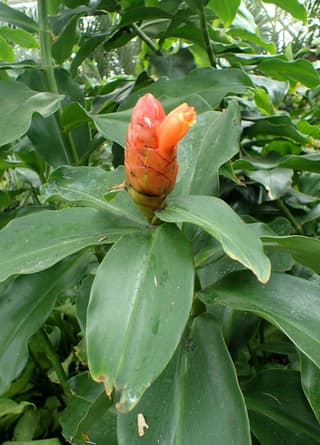
Spiral Ginger
Costus spiralis
Costus spiralis is a tropical plant in the Costaceae family, native to South America. It features distinctive spiral stems and tubular red or orange flowers. Popular in tropical gardens and used medicinally.
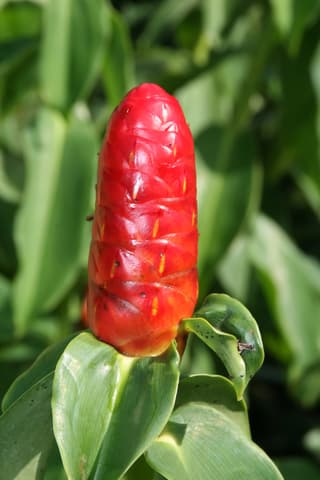
Red Button Ginger
Costus woodsonii
Costus woodsonii, commonly known as red button ginger or scarlet spiral-ginger, is a rhizomatous herbaceous perennial native to humid forests and coastal scrublands along the Caribbean coasts of Nicaragua, Costa Rica, and Panama to Colombia. It forms spiraling stems topped with glossy, overlapping bright red bracts from which small red-and-yellow tubular flowers emerge, blooming almost continuously in warm, humid climates. Popular as a tropical garden accent and container plant, it thrives in bright indirect light to partial sun and evenly moist, well-drained, organically rich soil.
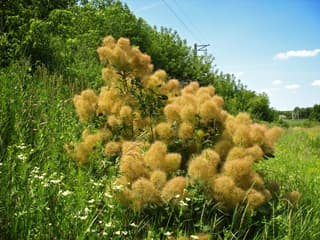
Smoke tree
Cotinus coggygria
Cotinus coggygria, commonly known as the smoke tree or smokebush, is a deciduous ornamental shrub in the Anacardiaceae family, native to dry mountainous areas of Central and Southern Europe and Asia. It is named for its distinctive, smoke-like inflorescences that decorate the plant from mid-summer to autumn with silvery-pink, feathery puffs. The leaves are round-ovate, blue-green in summer, and turn spectacular shades of yellow, red, or purple in autumn. It can reach a height of 4–5 meters with a similar spread. It particularly prefers well-drained soil and full sun, requiring low maintenance due to its drought tolerance.
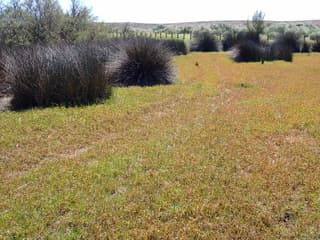
Brass Buttons
Cotula
Cotula is a genus of low-growing herbaceous plants, widely used as a groundcover. It forms a dense carpet of finely dissected, fern-like foliage and produces small, yellow, button-shaped flowers without visible petals, which gives it the common name Brass Buttons. It spreads rapidly via creeping stems.
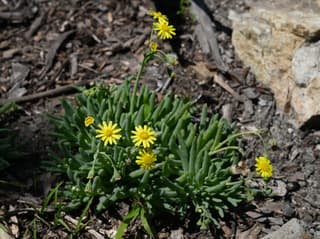
Little Pickles
Crassothonna capensis
Crassothonna capensis, commonly known as Little Pickles or Ruby Necklace, is a fast-growing trailing succulent native to the semi-arid Karoo scrub and rocky flats of the Eastern Cape Province, South Africa. It grows low to the ground with thin, reddish-purple stems bearing spirally arranged, finger-like, blue-green succulent leaves that flush to vivid ruby-red or maroon tones under intense sun or during dry stress. Small, cheerful yellow daisy-like flowers emerge on slender elongated stalks and can appear from spring through fall. It thrives in hanging baskets, rock gardens, and xeriscaping arrangements, making it a versatile and striking ornamental.
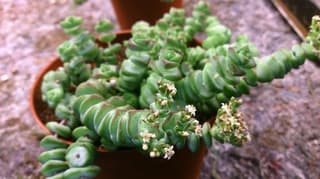
Worm Plant
Crassula marnieriana
Crassula marnieriana, commonly known as the Worm Plant or Jade Necklace, is a compact succulent native to South Africa. It forms distinctive rope-like stems of tightly stacked, fleshy round leaves that overlap in opposite pairs, creating a unique appearance. In spring, it produces delicate clusters of white to pale pink star-shaped flowers.
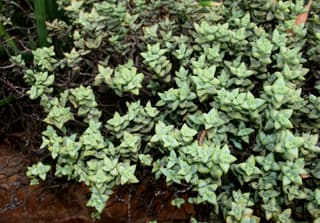
Concertina Plant
Crassula rupestris
Crassula rupestris is a charming stacked succulent native to South Africa, featuring triangular fleshy leaves threaded along creeping stems. Its geometric, bead-like foliage pattern gives it its popular names: Rosary Vine and Buttons on a String. In spring and summer it produces small star-shaped pink to white flowers.

Hawthorn
Crataegus
Hawthorn (Crataegus) is a large genus of thorny shrubs and small trees in the rose family, native mostly to the Northern Hemisphere. Prized for spring clusters of white or pink flowers, glossy serrated leaves, and bright red autumn berries, hawthorns are tough, adaptable plants used widely as ornamental trees, hedging, and wildlife habitat.
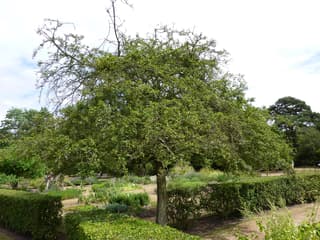
Midland Hawthorn
Crataegus laevigata
The Midland hawthorn (Crataegus laevigata) is a thorny, deciduous tree or shrub native to European woodlands. It is prized for its fragrant white blossom in spring, its clusters of red haws in autumn, and its long history in European folklore, where it is known simply as "the May tree". It grows 3-8m tall and wide, tolerates poor and clay soils, and is widely planted as a hedging and specimen tree.
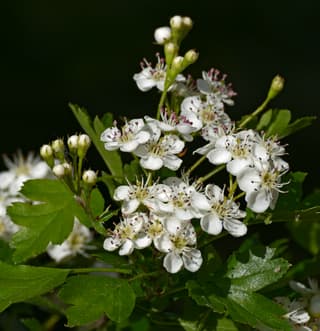
Common Hawthorn
Crataegus monogyna
Crataegus monogyna is a thorny, deciduous large shrub or small tree native to Europe, North Africa, and Western Asia. Prized for its clusters of white blossom in spring, deep red autumn haws, and dense, thorny growth, it has long been used as a hedging and wildlife plant across the British Isles and mainland Europe.
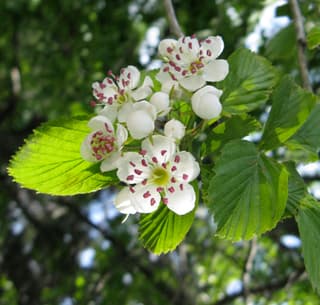
Dotted Hawthorn
Crataegus punctata
Dotted Hawthorn (Crataegus punctata) is a deciduous tree in the Rosaceae family, native to eastern North America. It grows up to 9 meters tall with a dense, rounded crown and characteristic thorns up to 7 cm long. In late spring, it develops white flowers in dense clusters, and in autumn, it is abundant with red fruits (pomes) with white dots, for which the species is named. It is particularly valuable for wildlife—the fruits attract migratory birds.
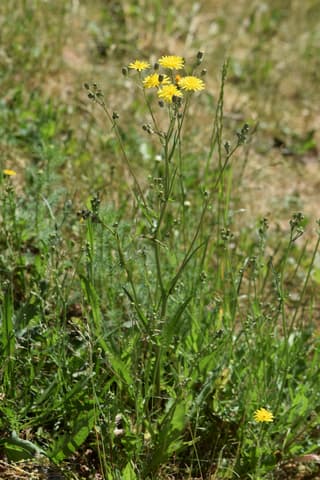
Hawksbeard
Crepis
Crepis is a genus of roughly 200 annual, biennial, and perennial wildflowers in the daisy family (Asteraceae), commonly called hawksbeards for their dandelion-like yellow flower heads and beaked seeds. This is a genus-level care profile — it covers general growing conditions shared across Crepis species rather than one particular species, since individual hawksbeards vary somewhat in height and habit. Native mainly to the Mediterranean Basin, Europe, Asia, and Africa, many Crepis species have naturalized worldwide along roadsides, lawns, and disturbed ground, where their nectar and seeds support bees, bumblebees, and seed-eating birds.
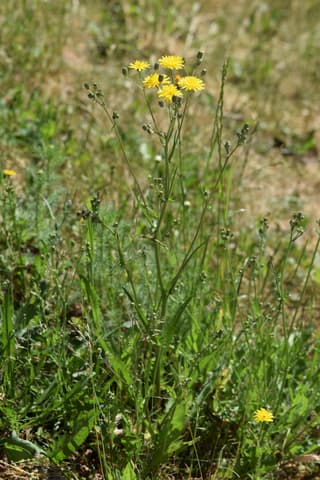
smooth hawksbeard
Crepis capillaris
Smooth hawksbeard (Crepis capillaris) is an annual or biennial herb in the Asteraceae family, native to Europe and western Asia and widely naturalized worldwide. It produces small yellow dandelion-like flowers in clusters that bloom from spring through autumn. Highly adaptable, it thrives in disturbed ground, roadsides, gardens, and grasslands. Young leaves are edible and have historically been used in Mediterranean salads.
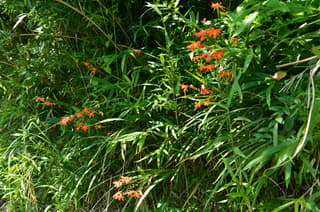
Montbretia
Crocosmia × crocosmiiflora
Montbretia (Crocosmia × crocosmiiflora) is a hybrid perennial corm-forming plant in the family Iridaceae, created by crossing Crocosmia aurea and Crocosmia pottsii by French horticulturist Victor Lemoine in 1880. It produces arching stems bearing funnel-shaped flowers in vivid shades of orange to red from mid-summer through early autumn. The foliage consists of bright green, sword-like leaves that emerge in spring and die back in winter. Widely grown in temperate gardens, it can naturalise readily and spread vigorously in mild, moist climates.
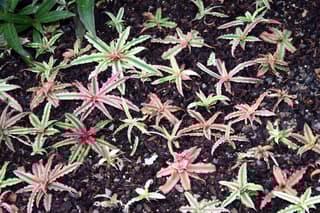
Earth Star
Cryptanthus bivittatus
Cryptanthus bivittatus, commonly known as Earth Star, is a terrestrial bromeliad native to Brazil. It forms flat rosettes of stiff, wavy leaves marked with longitudinal stripes in pink, green, and silver tones. Ideal for terrariums and indoor settings, it is an easy-care and low-maintenance plant.
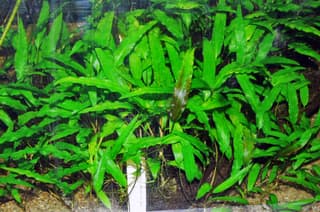
Wendt's Water Trumpet
Cryptocoryne wendtii
Wendt's Water Trumpet (Cryptocoryne wendtii) is an exceptionally popular and hardy aquatic plant from the Araceae family, native to Sri Lanka. It forms dense clusters of lanceolate to wavy leaves, with colors ranging from green to brown or reddish depending on the variety and light intensity. It spreads via underground runners (stolons) and gradually creates a thick carpet on the aquarium floor, making it one of the most widely used plants for the foreground or midground of an aquascape. It flowers only when grown above the water surface (emersed) – while submerged, it remains non-flowering but is highly valued for its low maintenance and stable growth.
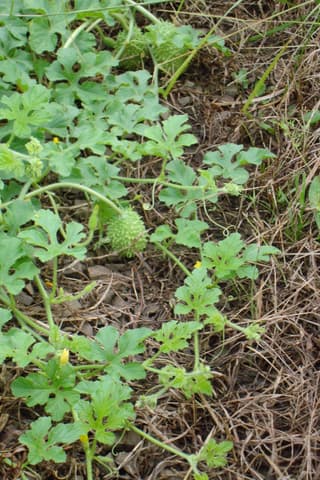
West Indian Gherkin
Cucumis anguria
Cucumis anguria, the West Indian gherkin, is a fast-growing annual climbing vine in the Cucurbitaceae family. Native to tropical Africa and naturalized across the Caribbean and South America, it produces small, oval, spiny fruits prized in tropical cuisines.
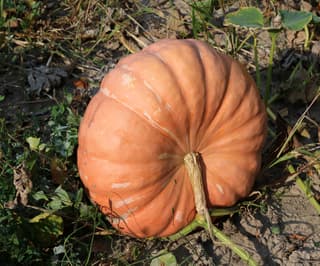
Pumpkin
Cucurbita maxima
Cucurbita maxima, commonly known as pumpkin or winter squash, is a vigorous annual trailing vine. Its leaves are large, heart-shaped, and rough, while its flowers are a vibrant yellow. It is widely cultivated for its nutritious fruits, which can vary drastically in size, shape, and rind color, being one of the species that produces the largest fruits in the plant kingdom.
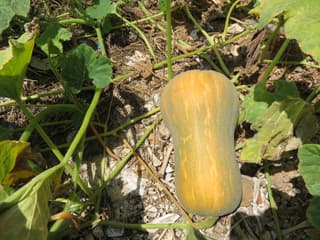
Butternut Squash
Cucurbita moschata
Cucurbita moschata, commonly known as Butternut Squash or Butternut Pumpkin, is an annual vining cucurbit native to Central and South America. It produces tan-skinned, pear-shaped fruits with sweet, orange flesh that is rich in vitamin A, potassium, and dietary fiber. One of the most popular and widely cultivated squash varieties worldwide, it is prized for its culinary versatility, long storage life, and nutritional value.
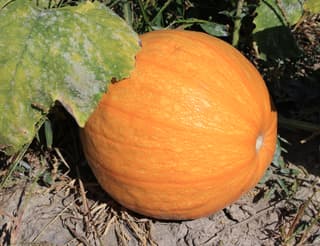
Zucchini
Cucurbita pepo
Cucurbita pepo is a highly versatile species of the Cucurbitaceae family, native to Mesoamerica, encompassing many popular cultivars including zucchini, pumpkin, acorn squash, spaghetti squash, and ornamental gourds. It is a fast-growing annual cultivated worldwide for food and decoration.
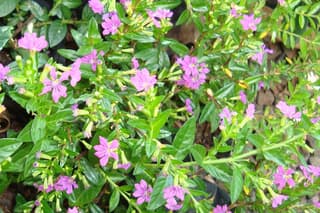
Slender Cuphea
Cuphea gracilis
Slender Cuphea (Cuphea gracilis) is a compact, evergreen perennial herb native to Brazil, beloved for its delicate foliage and year-round blooming. Growing up to 30 cm tall, it produces masses of tiny lilac, white, or pink flowers that make it a standout in gardens, containers, and border plantings.
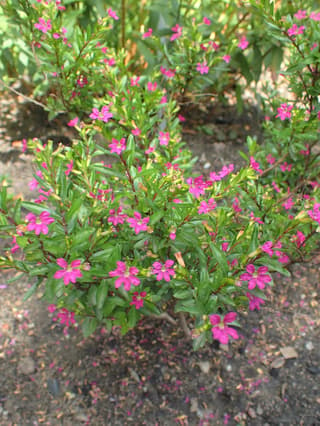
Mexican Heather
Cuphea hyssopifolia
Cuphea hyssopifolia, commonly known as Mexican Heather or False Heather, is a small evergreen shrub native to Mexico and Guatemala. It is famous for its dense, branched foliage with tiny lance-shaped leaves and a profusion of delicate flowers that bloom almost year-round. It is an extremely versatile plant, used in garden borders as well as in pots and window boxes.
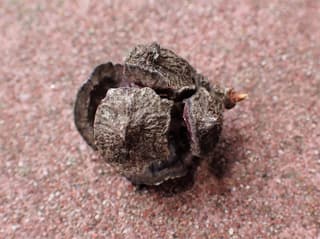
Mexican Cypress
Cupressus lusitanica
Cupressus lusitanica, commonly known as Mexican cypress or Cedar of Goa, is a large evergreen conifer native to Mexico and Central America. Growing at elevations between 1,500 and 3,000 meters, it forms an elegant conical to columnar crown reaching up to 35 meters tall. Its reddish-brown fibrous bark and dark green scale-like foliage make it a highly prized ornamental tree in parks and avenues, while it is also widely planted for timber, windbreaks, and reforestation projects across tropical highlands worldwide.
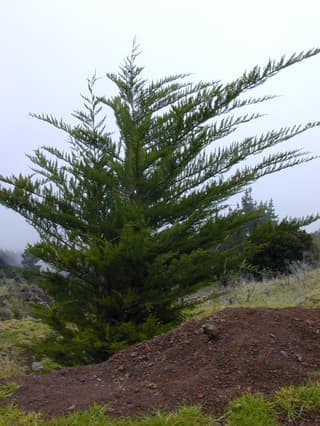
Monterey Cypress
Cupressus macrocarpa
Monterey Cypress (Cupressus macrocarpa) is a majestic evergreen conifer native to the central California coast. Famous for its dramatic windswept silhouette along the Monterey Peninsula, this fast-growing tree develops a broad, flat-topped crown in exposed coastal conditions. Its scale-like foliage emits a pleasant lemony fragrance when crushed. Though its natural habitat is restricted to two small groves near Monterey, it has been widely planted worldwide as a specimen tree, hedge, windbreak, and coastal screen.
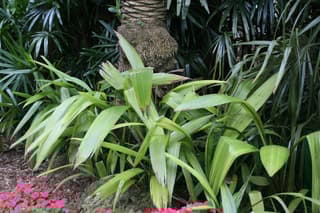
Palm Grass
Curculigo capitulata
Curculigo capitulata, commonly known as Palm Grass, is a lush evergreen perennial native to Southeast Asia. It produces bold, palm-like strap leaves up to 90 cm long that form dense, tropical clumps. Small yellow flowers emerge from the leaf bases and are sweetly scented. A remarkably adaptable plant suitable for both indoor and outdoor cultivation.

Hidden Ginger
Curcuma petiolata
Curcuma petiolata is a clumping tropical ginger grown for its lush, broad, paddle-shaped leaves and cone-like summer blooms whose showy pink-and-white bracts hide the true flowers tucked inside. Growing from a rhizome, it goes dormant in winter and returns each spring, making a bold accent in shade borders and large containers.
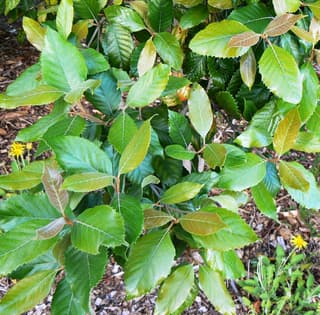
Assegai tree
Curtisia dentata
Curtisia dentata, commonly known as the Assegai tree, is a majestic evergreen tree native to Southern Africa. It features leathery, glossy dark green leaves with very characteristic serrated edges. Its bark is dark gray and becomes fissured with age. Historically, its extremely dense and durable wood was used by indigenous peoples to manufacture spear shafts (assegais). It produces small white fruits that attract various bird species.
Easy Care Pet Safe
Our selection of 1448 easy pet safe combines the characteristics of this category with reduced care needs. Perfect for beginners who love this category.
Why Choose Easy Pet Safe?
Combining the beauty of pet safe with easy difficulty level lets you enjoy this category without excessive maintenance worries. Each plant was selected to offer the best characteristics of the category at the care level you are looking for.