Polypodiaceae
Common Finger-Fern (Grammitis billardierei)
Grammitis billardierei
A plant for shady, humid ferneries rather than for pots on a windowsill. It needs full shade, shelter from wind and moisture that never runs out. It is rarely sold and hard to keep alive away from its native forest, so grow it mounted on a tree-fern trunk and keep the mount damp at all times.
Every 3 days
Low light
° - °C
% - %
Categories
What is Common finger-fern?
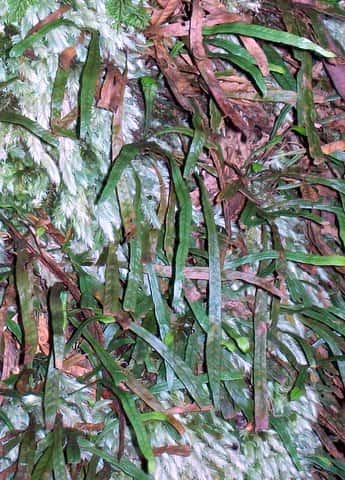
Common finger-fern (Grammitis billardierei) is a hard-care plant from the Polypodiaceae family. A small epiphytic fern from the cool, wet forests of Tasmania, eastern Australia and New Zealand. It forms tufts of narrow, undivided, leathery fronds, dark green with a clear midrib, usually 7 to 15 cm long and only a few millimetres wide. Oblong spore clusters sit at an angle on either side of the...
Common finger-fern grows up to 25cm, watering every 3 days. It is not suitable for indoor environments and safe for pets.
Unlike easy-care plants, Common finger-fern demands constant attention to humidity and light. Not recommended for beginners. Unlike many popular species, Common finger-fern is safe to keep around pets.
How to Care for Common finger-fern?
TLDR: Common finger-fern needs Low light, watering every 3 days, and temperatures between 15-30°C with 40-70% humidity.
How Often Should You Water Common finger-fern?
Never let the mount dry out. Water or mist the tree-fern trunk or moss it grows on whenever the surface starts to lose its dampness, often every two or three days in dry weather. Use rainwater if your tap water is hard.
How Much Light Does Common finger-fern Need?
Full shade, like the floor of a rainforest gully. Direct sun scorches and dries the thin fronds within hours.
What Is the Best Soil for Common finger-fern?
It does not grow in garden soil. Attach it to the fibrous trunk of a soft tree fern, a rotting log or a moss-covered slab so the rhizome sits on a damp, airy surface.
What Pot Should You Use for Common finger-fern?
No pot: mount it on a soft tree-fern trunk (Dicksonia) or a moss-covered slab in a sheltered, humid fernery.
What Is Common finger-fern and Where Does It Come From?
A small epiphytic fern from the cool, wet forests of Tasmania, eastern Australia and New Zealand. It forms tufts of narrow, undivided, leathery fronds, dark green with a clear midrib, usually 7 to 15 cm long and only a few millimetres wide. Oblong spore clusters sit at an angle on either side of the midrib on the underside. In the wild it grows on the trunks of soft tree ferns such as Dicksonia antarctica, on branches, rotting logs and mossy rocks, from sea level up to about 1,400 m. Botanists now call it Notogrammitis billardierei; Grammitis billardierei is the older name.
How to Propagate Common finger-fern?
Spores
There is no record of this fern being raised reliably from spores with standard methods, so expect failures. Mounting a piece that comes with the host log or tree fern is the realistic way to keep it.
- 1 Collect a frond with ripe, brown spore clusters on the underside
- 2 Let it dry on paper for a few days so the spores drop
- 3 Sow the spores on the surface of sterile, damp moss or fine fibre in a sealed container
- 4 Keep in shade and constant moisture until a green film and small plantlets form
Materials needed:
How Big Does Common finger-fern Grow?
TLDR: Common finger-fern can reach up to 25cm tall with Medium growth rate.
Max height
25cm
Foliage
Evergreen
Plant Uses
Ornamental
Great for decoration
Is your plant showing symptoms?
Click on the symptom to discover possible causes:
What Diseases Commonly Affect Common finger-fern?
TLDR: Common finger-fern is susceptible to 3 known diseases. Monitor regularly for early detection.
Low Humidity Stress
Low humidity stress occurs when indoor air becomes too dry, causing plants to lose moisture faster than they can absorb it through their roots. This is especially common during winter heating periods, near radiators and heating vents, or in air-conditioned spaces. Tropical plants are particularly susceptible to low humidity damage.
Underwatering
Underwatering or drought stress is a physiological disorder that occurs when the amount of water a plant loses through transpiration exceeds the amount its roots can absorb from the soil. This leads to cellular dehydration and various visible symptoms that can compromise plant health and productivity.
Sunburn (Sun Scorch)
Sunburn or sun scorch is an environmental condition that occurs when plants are exposed to intense, direct sunlight beyond their tolerance level. This causes the breakdown of chlorophyll in the leaves, resulting in bleached, dried, and damaged foliage. The damage can happen rapidly, sometimes within just a few hours of exposure.
Fun Facts
Its favourite home in Tasmania is the trunk of the soft tree fern Dicksonia antarctica.
It is the most common and variable Notogrammitis in New Zealand, reaching the subantarctic Auckland and Antipodes Islands.
The species name honours the French botanist Jacques Labillardière.
Notogrammitis means "southern line", a nod to its southern range and line-shaped spore clusters.
Frequently asked questions
Can I grow common finger-fern in a pot?
How much light does it need?
Is Grammitis billardierei the same as Notogrammitis billardierei?
Where can I buy it?
Compare with similar plants
| Attribute | Difficulty | Light | Watering | Pet Safe |
|---|---|---|---|---|
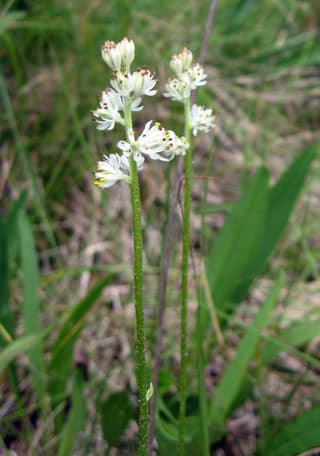
| Sticky false asphodel | Hard | Bright indirect | 1d | ✓ |
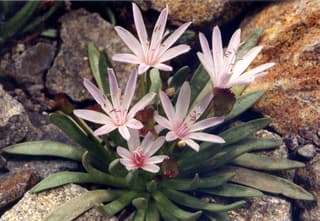
| Truckee lewisia | Hard | Bright indirect | 10d | ✓ |
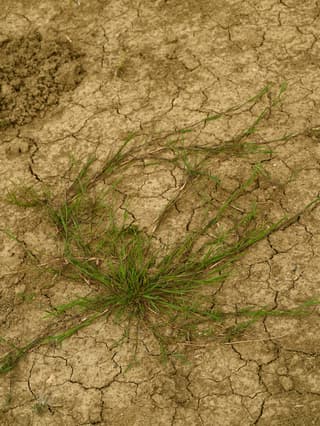
| Creeping bentgrass | Hard | Direct sun | 3d | ✓ |
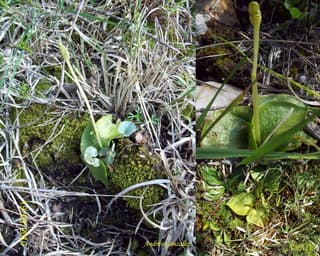
| Walking Palm | Hard | Bright indirect | 3d | ✓ |