Cactaceae
Aaron's Beard Cactus (Opuntia leucotricha)
Opuntia leucotricha
An easy cactus: full sun, very free-draining soil and infrequent watering, letting the soil dry out completely. Keep dry in winter. Handles intense heat and light frost in a dry climate.
Every 14 days
Direct sun
-7° - 40°C
20% - 50%
Categories
What is Aaron's Beard Cactus?
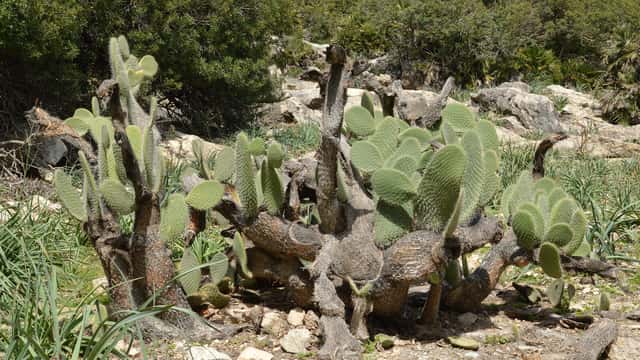
Aaron's Beard Cactus (Opuntia leucotricha) is a easy-care plant from the Cactaceae family. Opuntia leucotricha is a tree-like prickly pear from the Altiplano of central Mexico, growing a distinct trunk and a broad crown 3 to 5 m tall in the wild. Its grey-green pads are covered in a fine white fuzz, and the areoles carry flexible white spines that turn into long beard-like bristles on old...
Aaron's Beard Cactus grows up to 5.0m, watering every 14 days, -7°C – 40°C, 20–50% humidity. It is suitable for indoor environments and safe for pets.
Unlike many tropical plants, Aaron's Beard Cactus tolerates watering mistakes. Best for beginners. Unlike many popular species, Aaron's Beard Cactus is safe to keep around pets. Without adequate drainage, root rot can develop within 28 days.
How to Care for Aaron's Beard Cactus?
TLDR: Aaron's Beard Cactus needs Direct sun, watering every 14 days, and temperatures between -7-40°C with 20-50% humidity.
How Often Should You Water Aaron's Beard Cactus?
In summer water roughly every 2 weeks, only once the mix is completely dry. In winter, almost stop watering. Avoid watering on overcast, humid or cold days.
How Much Light Does Aaron's Beard Cactus Need?
Full sun is best; outdoors it also accepts afternoon shade. Indoors it needs very bright light with some direct sun.
What Is the Best Soil for Aaron's Beard Cactus?
Use a cactus mix with plenty of coarse sand or grit. The plant rots easily in cold, wet soil.
What Pot Should You Use for Aaron's Beard Cactus?
A heavy, wide terracotta pot with a drainage hole, to keep a tall, top-heavy plant stable.
Care Schedule
Fertilize
Every 42 days
Repot
Every 730 days
What Is Aaron's Beard Cactus and Where Does It Come From?
Opuntia leucotricha is a tree-like prickly pear from the Altiplano of central Mexico, growing a distinct trunk and a broad crown 3 to 5 m tall in the wild. Its grey-green pads are covered in a fine white fuzz, and the areoles carry flexible white spines that turn into long beard-like bristles on old trunks. In spring and summer it bears yellow flowers with a red style and green stigma lobes, followed by fragrant, edible white or red fruit.
How to Propagate Aaron's Beard Cactus?
Pad cutting
Always handle with gloves and tongs: the glochids come off at the slightest touch. Pads root quickly in loose, well-draining soil.
- 1 Cut a mature pad at the joint, wearing thick gloves
- 2 Let it callus in a dry, shaded spot for 1 to 2 weeks
- 3 Plant it with about a third of the base buried in cactus mix
- 4 Wait 1 to 2 weeks before the first light watering
Materials needed:
How Big Does Aaron's Beard Cactus Grow?
TLDR: Aaron's Beard Cactus can reach up to 5.0m tall with Medium growth rate.
Max height
5.0m
Growth rate
Medium
Foliage
Evergreen
Plant Uses
Ornamental
Great for decoration
Edible
Can be consumed
Culinary Uses
- Fruit (duraznillos) eaten fresh; fragrant, slightly sour pulp
Is your plant showing symptoms?
Click on the symptom to discover possible causes:
What Diseases Commonly Affect Aaron's Beard Cactus?
TLDR: Aaron's Beard Cactus is susceptible to 10 known diseases. Monitor regularly for early detection.
Overwatering
Overwatering occurs when plants receive too much water, depriving roots of oxygen and causing root rot. This environmental stress is one of the most common causes of houseplant death, as waterlogged soil prevents roots from breathing and functioning properly.
Root Rot
Root rot is a serious fungal disease that affects the root system of plants, causing them to decay and die. It is primarily caused by overwatering, poor drainage, or soil-borne fungi such as Pythium, Phytophthora, Rhizoctonia, and Fusarium. The disease thrives in waterlogged conditions where roots are deprived of oxygen, making them susceptible to fungal infection.
Scale Insects
Scale insects are small sap-sucking pests that appear as brown, shell-like bumps on plant stems and leaves. There are over 25 species, divided into armored (hard) and unarmored (soft) scales. They feed by piercing plant tissue and extracting sap, which weakens the plant and can lead to yellowing, stunted growth, and even death if left untreated. They also excrete honeydew, which attracts ants and promotes sooty mold growth.
Mealybugs
Mealybugs are small, soft-bodied insects covered with a white, waxy, cottony material. They are common pests of houseplants and outdoor plants in mild climates. These sap-sucking insects feed on plant tissue, causing damage, stunted growth, and can lead to plant death if left untreated. They produce sticky honeydew which attracts sooty mold.
Meaning & Symbolism
A symbol of endurance on the Mexican Altiplano, where its fruit, called duraznillos, is sold in local markets.
Fun Facts
Old trunks become covered in long white bristles, which gave it the name Aaron's beard
New pads orient themselves perpendicular to the light to capture more sun
Its fruit can stay edible on the plant for 12 months or more
Frequently asked questions
How often should I water Aaron's beard cactus?
Is it cold hardy?
Is the fruit edible?
Is it dangerous for pets?
Compare with similar plants
| Attribute | Difficulty | Light | Watering | Pet Safe |
|---|---|---|---|---|
| Field Maple | Easy | Bright indirect | 14d | ✓ |
| Iberian Houseleek | Easy | Direct sun | 14d | ✓ |
| Silver Birch | Easy | Direct sun | 14d | ✓ |
| Common Blanketflower | Easy | Direct sun | 10d | ✓ |