Peonies: How to Make Them Bloom and Why Buds Don't Open
Peonies: how to make them bloom. A peony that fails to bloom usually has buds buried too deep, too little sun, a warm winter, or is too young. Learn when it flowers, how long it takes to produce its first bloom, and how to identify the cause from the plant's symptoms.
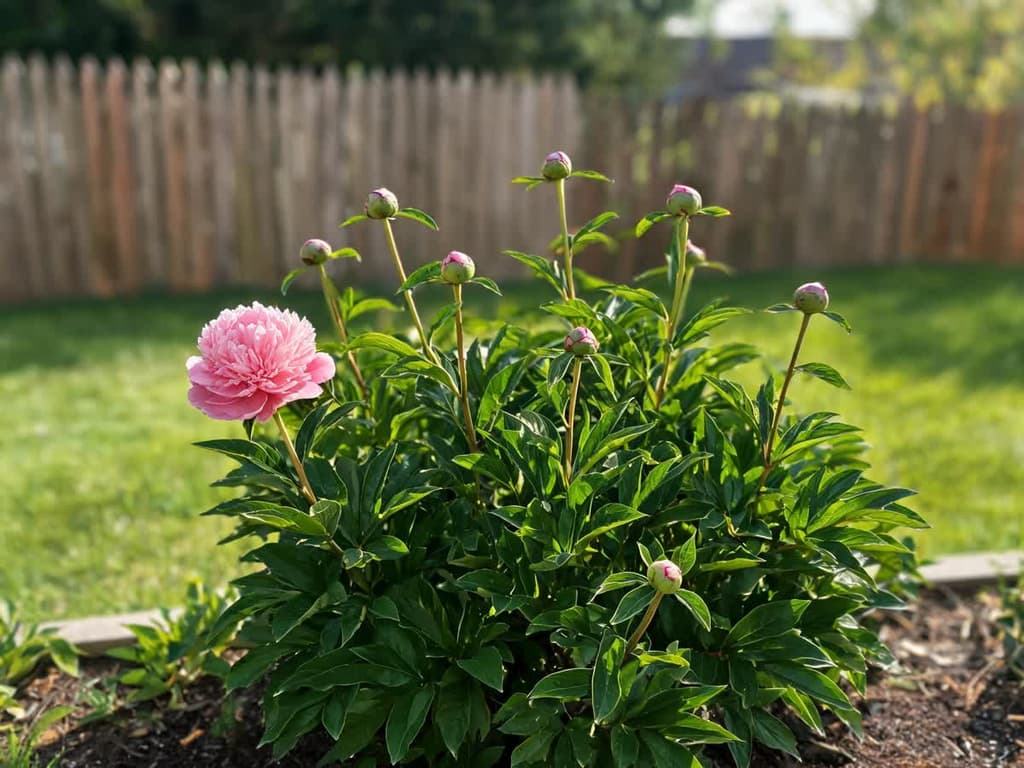
To make a peony bloom, it needs shallow buds, sun, cold, and time. The buds—the red shoots at the top of the root—should sit no more than 5 cm below the soil. Direct sunlight must hit for 6 hours or more. Winter needs at least 6 weeks below 4 °C, according to UConn. A lack of flowers usually stems from one of these four factors. Young plants can spend 2 or 3 years growing only leaves, and that is completely normal. Do not throw the peony away before checking the causes below.
The guide on how to care for peonies explains planting, watering, and fertilizing from start to finish. This article covers only the blooms: when they appear, how long they last, and what to do when the plant produces leaves but no flowers. Sources include US universities with extension services (such as Iowa State, Clemson, Cornell, and UConn). It also draws from the RHS (the Royal Horticultural Society) and published studies. An extension service provides research-based grower guidance offered by these universities.
When peonies bloom and how long the flowers last
Peonies bloom once a year, in late spring and early summer in each hemisphere. In the Northern Hemisphere, at lower latitudes, this falls in May and June, according to the University of Alaska (UAF). In the Southern Hemisphere, the season runs from October to December. In Chile, the peony harvest begins in October in the central region and runs through January in the far south. The data comes from ODEPA, the agricultural studies agency of the Chilean government.
In New Zealand, in Canterbury, peonies sprout in early October and the harvest ends in early December, according to growers in the region. We found no technical record of peony blooming in Brazil. Based on the calendar of these two countries, the likely time in Brazil is spring, from October to December. This is a deduction, not a measurement: observe your plant starting in October.
Each plant stays in bloom for a short time. NC State states that each peony blooms for about two weeks. The three types of peonies bloom in sequence, according to UConn (University of Connecticut):
Peony type | Bloom time | Bloom duration by type (UConn) |
|---|---|---|
Tree peony (woody-stemmed shrub) | First, about 2 weeks before herbaceous | About 2 weeks |
Herbaceous (stems die back in winter) | After tree peonies | 2 to 3 weeks |
Itoh (intersectional hybrid of the two) | Last, after herbaceous | 2 to 3 weeks; 3 to 4 weeks per plant, according to Mississippi State extension master gardeners |
The information that tree peonies bloom about two weeks before herbaceous peonies comes from Cornell. Mississippi State extension master gardeners say that Itoh peonies peak near the end of the herbaceous bloom. Each Itoh plant opens new buds for 3 to 4 weeks. Planting early, mid, and late varieties of all three types provides blooms for 6 to 8 weeks, according to UConn.
How long peonies take to produce their first flower
Herbaceous peonies usually begin to flower within three years after planting, according to Clemson. The timing varies depending on how the plant arrived in the garden:
How the peony was planted | Expected time to first bloom | Source |
|---|---|---|
Bare root planted in fall | Within 3 years | Clemson |
Bare root planted in spring | May delay first flowering until the following year | UConn |
Division with 3 to 5 eyes | About 2 years after division | RHS |
Division with 1 or 2 eyes | Several years | Clemson |
Transplanted plant | 2 to 3 years to bloom again | Iowa State |
Tree peony | Up to 4 years, even if purchased already blooming | RHS |
Grown from seed | 4 to 5 years | Iowa State |
The eyes, also called buds, are the red shoots sitting at the top of the peony's fleshy crown. Stems and flowers emerge directly from them. During its first few years, the plant directs its energy toward root growth, so a lack of flowers during this stage does not signal a problem.
Peony won't bloom: identify the cause by looking at the plant
The reason for non-blooming shows up in the peony's symptoms. A plant that only grows foliage has different issues from a plant that sets buds that fail to open. Identify your peony's situation below.
Only leaves and no flower buds
When a peony produces healthy leaves and no buds after its third year, the issue almost always stems from one of these causes. Iowa State and UConn list the same main causes.
Buds too deep: Clemson states that most peonies that fail to bloom were planted too deep. The top of the buds should sit no more than 5 cm below the soil, or at 2.5 cm where winters are short. To check, carefully dig around the clump (the group of stems emerging from the same root) and measure. If the top of the buds is more than 5 cm deep, replant the peony in the fall (in Brazil, March and April). Set the top of the buds at 2.5 cm.
Too little sun: less than 6 hours of direct sunlight per day. A nearby tree that matured over time may now cast shade where full sun used to reach.
Young plant or recently moved: herbaceous peonies take up to 3 years to produce their first flower. A relocated plant requires 2 to 3 years to resume blooming. Iowa State notes that peonies moved or divided in late summer rarely bloom well the following spring.
Too much nitrogen: fertilizer high in nitrogen forces the peony to produce lush leaves at the expense of blooms. UConn also lists phosphorus or potassium deficiencies as potential causes. Nitrogen is the first number on an N-P-K label, and the guide on how to choose fertilizer by the label breaks down the other two.
Foliage cut back early the previous year: removing the leaves in midsummer weakens the plant and reduces blooms, according to Iowa State. Virginia Tech explains why: crown buds develop while the foliage is alive. The crown is the base of the plant, from which stems emerge.
Severe drought the previous summer: extreme summer drought stresses the plant and cuts down flowering the following season, according to Iowa State.
Warm winter: with fewer than 6 weeks below 4 °C, herbaceous peonies produce few flowers or none at all. This guideline comes from UConn and a 2019 study.
Regarding sunlight, sources cite varying minimums. Iowa State mentions at least 4 to 6 hours of direct sun. UConn states that peonies perform best with 8 hours or more and yield fewer blooms with 5 to 6 hours. We recommend a minimum of 6 hours, matching guidelines from Clemson and the University of Wisconsin.
Buds form, but fail to open or dry up small
When a peony sets buds that turn hard, stop growing, and dry out, it managed to initiate buds, but something halted development before they could open. Iowa State and the RHS point to these causes:
Frost after sprouting: according to Iowa State, the plant tolerates a light frost, but the bud is more sensitive to cold. A hard frost after the buds form can kill them, and a dead bud will not open. The consulted sources do not indicate how to protect the bud.
Shade: in partial shade or dense shade, the plant lacks vigor and may be unable to nourish developing buds, according to Iowa State.
Weak or undernourished plant: thin, yellowing, or pale peonies can form buds but lack the energy needed to open them. Check eye depth, sunlight exposure, and fertilization, which are the same issues seen in plants with only foliage.
Spring drought: the RHS states that a prolonged spring drought harms bud formation. Water deeply if rain is lacking while buds are growing.
Fungal bud blast: gray mold causes buds to turn dark and wither before opening.
A Virginia Tech guide on container peony production cites another factor: warm night temperatures toward the end of the growing cycle cause buds to abort and dry up before opening.
A large bush with green, ball-shaped buds that never open might not be a peony at all. Tree peonies shed all their leaves in winter. An evergreen shrub with round buds that remains green year-round may be a completely different species, such as a camellia. Bloom (available for iOS) identifies plants from a single photo, and the reasons buds fail to open depend on the species.
Buds turn dark with gray mold
Buds that turn brown or black, wither, and fail to open are usually infected with gray mold (Botrytis), a fungal disease. A late freeze after bud break can also kill buds. Iowa State describes infected buds as dark brown and shriveled, noting that the fungus appears most frequently during cool, wet weather. An Ohio State extension specialist adds another symptom: buds that feel soft, turn brown on the outside, and never expand also indicate gray mold.
An affected bud will no longer open. Cut off dark buds and withered flowers and throw them in the trash, away from compost. In the fall, cut the stems level with the ground and throw the debris in the trash, according to Iowa State. If the peony is in partial shade, Iowa State recommends moving it in the fall (in Brazil, March and April) to a spot with more sun. It can take 2 to 3 years to flower again.
The page on causes of peony rot highlights gray mold alongside other causes of plant decay. Ants crawling on flower buds do not cause discoloration or rot. Iowa State confirms that peonies open whether ants are present or not. The care guide explains why ants on peony buds cause no harm.
Small flowers or sparse blooming
Peonies producing undersized blooms or very few flowers usually suffer from one of three factors:
Overcrowded clump: UConn notes that reduced flowering often indicates crowded root systems requiring division. Iowa State sees no need to divide mature clumps if they bloom reliably. Divide only clumps that have lost vigor and bloom poorly, doing so in the fall.
Side buds not removed: each stem forms a bud at the tip and sometimes others along the sides. The peony divides its energy among them, and each flower comes out smaller. Remove side buds as soon as they appear.
Too many stems cut the previous year: UConn notes that harvesting too many blooms for floral arrangements can reduce flowering in subsequent years.
Peonies need cold to bloom: winter chilling requirements
The herbaceous peony needs at least 6 weeks of temperatures below 4 °C (40 °F) in winter to bloom, according to UConn. It is the only extension figure we found, and it comes in weeks, not chill hours. Virginia Tech states that the herbaceous peony survives in warm climates, but rarely blooms. A 2019 study tracked the peony in warm regions of China. There, the warm winter reduced or eliminated flowering and, over time, led to the death of the plant.
In Brazil, we found no studies on the cold requirements peonies demand here, neither from Embrapa nor from universities. Based on foreign sources, herbaceous peonies most likely bloom well only where winters are cold, such as in the South and in the mountains. This conclusion is an inference, not a measurement.
Where winters are short and mild, the other two peony types show better heat tolerance. Mississippi State master gardeners report that Itoh hybrids tolerate more heat than herbaceous varieties. NC State notes that in North Carolina (a warm southern US state), tree peonies often outperform herbaceous ones. The cold requirements section of the peony care guide lists cultivars that require lower winter chill.
How to make peonies bloom better: seasonal care checklist
Each season brings a specific task that supports peony flowering, in this sequence:
When shoots emerge from the ground: fertilize once using a low-nitrogen formula and install plant supports. Detailed application rates are in the care guide.
When buds appear: pinch off side buds if you want larger primary blooms. Water deeply if spring rains are sparse.
During bloom: deadhead spent flowers just below the bloom, down to the first set of healthy leaves, as recommended by UConn. Leave the rest of the stem and foliage intact.
From post-bloom into fall: do not cut down green foliage. During prolonged summer droughts, water deeply every 10–14 days, as Clemson recommends.
In fall, when leaves wither: cut herbaceous peonies back flush to the soil surface. Leave woody stems standing on tree peonies.
According to UAF, the buds that will sprout the following spring form after flowering, at the base of the stems. Cornell instructs watering deeply in the summer and during flowering, because that is when the plant forms these buds. The two sources differ slightly, and neither provides the exact month. To be safe, water deeply from bloom through late summer if rain is lacking.
Iowa State advises keeping foliage intact until the first frost. Virginia Tech recommends waiting for the leaves to die back naturally in the fall. Both agree that leaves should only be removed once fully withered.
Extension sources differ on fertilization timing. UConn advises against feeding plants in late summer and fall, whereas Cornell fertilizes in late summer. We recommend applying fertilizer right at shoot emergence, mirroring our main care guide, as three sources endorse this timing. None of them measured quantitative differences between seasons.
Disbudding: getting one larger bloom per stem
Disbudding means removing the side buds from each stem and leaving only the terminal bud. According to the UAF, this directs all of the stem's energy into a single flower. Cornell explains that, without disbudding, the plant divides this energy among three flowers.
UConn advises disbudding as soon as side buds become visible. Gently grasp the side bud between your fingers and roll it off, or snip it with clean pruning shears. Gardeners who prefer more flowers over larger blossoms can leave side buds in place.
Cutting peonies for vases: finding the marshmallow stage
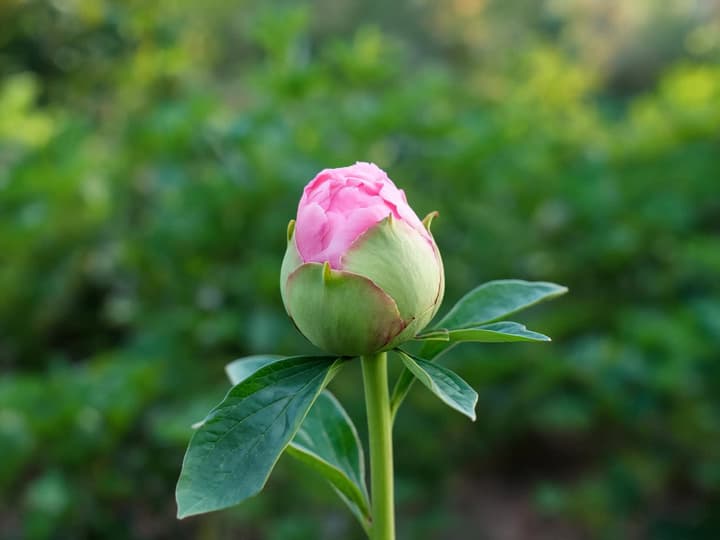
Cut peonies for the vase when the bud shows flower color and feels soft in the center, according to Iowa State. Growers call this the "marshmallow" stage because the bud yields to the touch like a marshmallow. UAF notes that the exact stage varies from one variety to another.
Buds cut at this stage can be stored in the refrigerator. Iowa State advises stripping foliage from the stem and wrapping the bud snugly in moist paper or plastic wrap. Handled this way, buds remain viable for several weeks. When ready to display, recut the stem ends and place them in lukewarm water to encourage opening.
Never cut every flower from the plant. UConn recommends taking at most one-third to one-half of the blossoms, preserving as much green foliage on the clump as possible. Every remaining leaf photosynthesizes to nourish the crown buds destined to bloom next year.
Frequently asked questions
How many times a year do peonies bloom?
Once per year. In the Northern Hemisphere, they bloom in May and June. In the Southern Hemisphere, from October to December, as seen in Chile and New Zealand. Individual plants remain in flower for about two weeks, according to NC State. None of the consulted sources describe a second flowering cycle in the same growing season.
Can peonies bloom in pots?
They can bloom in pots, provided the container stays outdoors and experiences cold winter temperatures. Virginia Tech publishes guidelines for commercial nursery container production. Their manual specifies covering eyes with 5 cm of soil and using 7.5 to 11-liter (2 to 3-gallon) containers for large root systems. No consulted source recommends container growing as a permanent multi-year solution, and the care guide suggests planting peonies directly in garden soil. NC State Extension advises keeping containerized store-bought peonies in their pots only until fall, then planting them out into the landscape.
Will peonies bloom in shade?
It blooms poorly or not at all. Iowa State says that, in partial shade or full shade, the plant becomes weak and may fail to nourish the buds. UConn says that peonies with 5 to 6 hours of direct sun produce fewer flowers than with 8 hours or more. If your peony is in the shade, move the plant in the fall (in Brazil, March and April). Choose a spot with 6 hours or more of direct sun. It can take 2 to 3 years to bloom again.
Do ants on buds stop peonies from blooming?
No. Iowa State confirms that peony buds open normally without ants. The ants visit solely to feed on sweet nectar droplets secreted by the developing bud scales and do not damage plant tissue. A bud that turns dark and fails to open, whether ants visit it or not, indicates gray mold infection.
How to make peonies bloom: summary
To get peonies to bloom, inspect planting depth, sunlight, and winter chilling. Plant eyes must sit no deeper than 5 cm beneath the soil surface, and the site must receive 6 hours or more of direct sunlight. Expect to wait up to 3 years for an herbaceous peony's first flowers, while tree peonies and seed-grown specimens take 4 years or longer. If buds form but fail to open, check for late frosts, shade, drought, or gray mold. After blooms fade, leave green foliage until it dies back naturally in fall and irrigate during dry summer spells, since next year's flower buds develop underground during this period.
Related articles
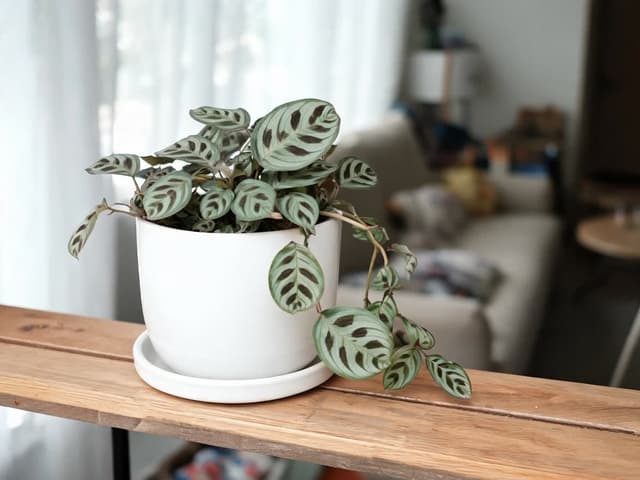
How to Care for a Prayer Plant: Light, Water, Humidity, and Closing Leaves
To care for a prayer plant, provide bright indirect light, keep the soil moist without waterlogging, and maintain air humidity above 50%. Water with fluoride-free water. Leaves that rise and fold at night are the plant's normal movement.
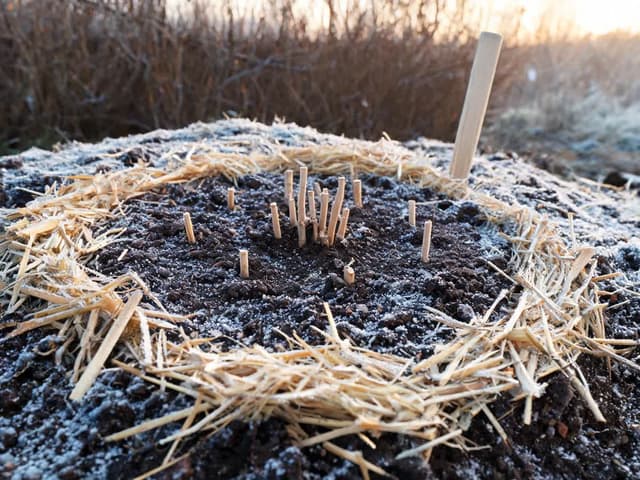
Peonies in Winter: Can They Handle Frost? Care by Type and in Pots
Peonies in winter: the herbaceous type tolerates lows of −15 to −20 °C, dies back above ground in winter and returns in spring, and tree peonies keep their branches. Cut dead foliage down to the ground, mulch the soil only in the first winter, protect the roots in pots, and cover the buds on frosty nights.
How to Take Care of Peonies: Cold, Shallow Planting, Sun and Blooms
How to take care of peonies, from planting to bloom. They need full sun, buds (eyes) 1 to 2 inches below the surface, well-draining soil, and a cold winter to flower. See what changes for tree peonies, how to water, fertilize, stake, divide, and deal with powdery mildew and ants.