Low-Light Plants: 12 That Tolerate Dark Corners
Low light means a corner between 25 and 75 foot-candles, more than 8 feet from a window. See which species handle this range, how many months each stays attractive according to NC State and UGA tables, and why watering must change in the shade.
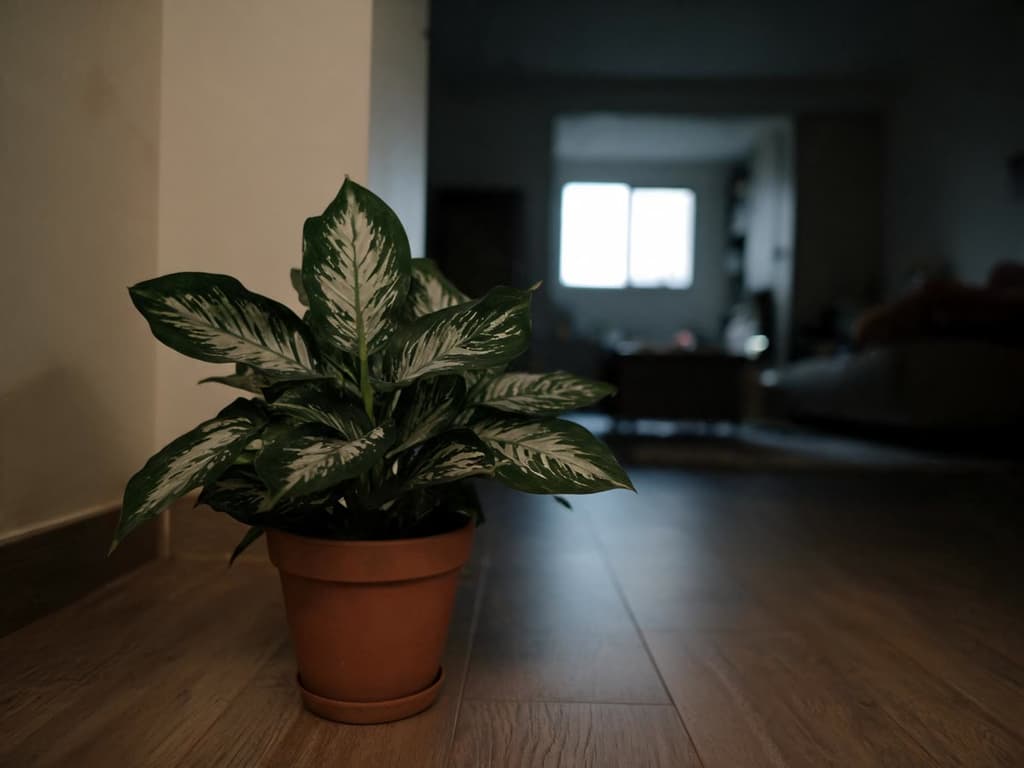
No houseplant prefers shade. Some tolerate it, and that is what low-light plant lists usually call "loving low light." In the shade, a plant stops growing, lives off the reserves it brought from the nursery, and dies once those reserves run out. The University of Georgia Extension describes this process in one sentence. Under insufficient light, the plant does not grow: it spends everything it produces on maintenance. If light is too low even for maintenance, it dies.
What separates the species that survive for years in a dark corner from those that last a single summer is making the right choice and managing water. Watering is where almost everyone goes wrong, because the same pot, in the same home, takes much longer to dry out when kept far from a window.
Quick summary:
Low light means a corner that receives between 25 and 75 foot-candles (the unit of light intensity used in gardening) over 8 hours a day. In household terms, that means being more than 8 feet (2.4 meters) from a window.
Within this range, the plant merely sustains itself. To grow, it needs 75 foot-candles or more.
The NC State table tracks how long each species remains attractive at each light level: Chinese evergreen lasts up to 36 months at 25 to 50 foot-candles, while peace lily reaches 12 months only starting at 75 to 100 foot-candles.
Peace lily, spider plant, fern, and prayer plant appear on nearly every low-light list, yet both university tables place them in the medium or high bracket.
In Brazil, the weakest window is the south-facing one. Every guide in English reverses this because it is written in the Northern Hemisphere.
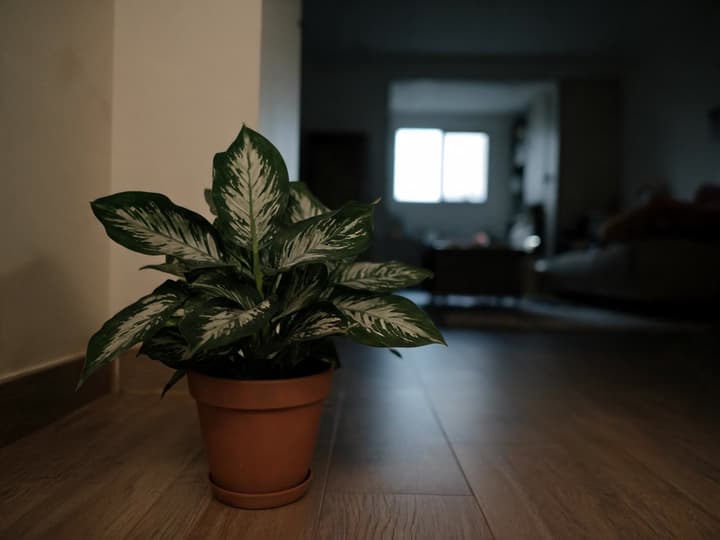
How I built this list
Only species that two university extension publications classify in the lowest light range they measure made the list. The first is University of Georgia bulletin B1318, which includes more than 200 indoor plants along with the light requirement for each one. The second is chapter 18 of the NC State Extension Gardener Handbook. It publishes three tables: the foot-candle ranges by light class and the class of each species. The third gives the number of months each plant remains attractive at each light level.
When the two sources disagree on a species, the text notes the disagreement and specifies which number is being used. ZZ plant was not part of the 1978 survey behind the Georgia table, as it became popular only later. Its source is different and cited directly in its profile.
What low light means in numbers and around the house
For a houseplant, low light is the range of 25 to 75 foot-candles received over 8 hours a day. The foot-candle is the gardening unit for light intensity, equal to the light a candle casts on a surface 1 foot (30 centimeters) away. Below 25, options narrow: among the plants on this list, seven still have measured figures in the 15 to 20 foot-candle range, and only one lasts beyond 12 months there.
All four sources agree the range begins at 25 foot-candles, but they disagree on where it ends. UGA and NC State cap it at 75 foot-candles, Illinois Extension also uses 75, and Penn State uses 100.
Isolated numbers do not help if you have never measured light. NC State's reference table resolves this by comparing everyday environments:
Environment | Foot-candles |
|---|---|
Library, classroom | 20 |
Office | 50 |
Supermarket | 100 |
Light coming through a window | 100 to 5,000 |
Outdoors, overcast sky | 1,000 |
Outdoors, full sun | 10,000 |
If your corner is darker than an office, it falls below 50 foot-candles. The difference between a corner and a window is substantial: it jumps from dozens of foot-candles to thousands.
There are three ways to measure your corner without buying anything:
Distance: NC State classifies anything more than 8 feet (2.4 meters) from a window as low light. Poorly lit corners, the middle of rooms, hallways, and any space receiving only artificial light fall into this same category.
Comparison to an office, using the table above.
Smartphone light meter app: NC State itself accepts these apps as an alternative to handheld meters, and some are free.
Dirty glass and window screens block incoming light. Cleaning the glass and removing the screen can increase incoming light by up to 30%, according to NC State.
In Brazil, the weak window is the south-facing one
Every good source on houseplant lighting comes from the Northern Hemisphere, and UGA explains why this matters. The United States receives most of its sunlight from the south. Because of this, north-facing windows there receive the least light and heat year-round.
In Brazil, the sun passes through the north. That is why the orientation is inverted in this table, on purpose: the north window is the strongest and the south is the weakest. East and west do not change, because the sun rises and sets at the same points in both hemispheres.
Illinois Extension publishes distances based on window orientation. Applying the inversion for the Southern Hemisphere gives the following:
Light level | North-facing window | East- or west-facing window | South-facing window |
|---|---|---|---|
Direct light, 1,500 foot-candles | right in front of the window | ||
High light, 300 foot-candles | up to 5 ft (1.5 m) | right in front of the window | |
Medium light, 150 foot-candles | 3 to 10 ft (0.9 to 3 m) | a few steps away | right in front of the window |
Low light, 75 foot-candles | 15 to 20 ft (4.5 to 6 m) | 3 to 10 ft (0.9 to 3 m) | a few steps away |
Empty cells represent combinations that Illinois Extension does not list: a south-facing window does not provide direct light anywhere in the room.
The general rule from NC State (more than 8 feet from a window) and this table do not conflict. The distance at which light levels drop depends on the window. By a south-facing window, just a few steps away is already low light; by a north-facing window, you have to cross the room.
Tolerating is not growing: how many months each plant stays attractive
NC State measured, species by species, how many months a plant retains an attractive appearance at each light level. Blank cells indicate the species was not tested at that level.
Plant | 15 to 20 foot-candles | 25 to 50 | 50 to 75 | 75 to 100 |
|---|---|---|---|---|
Aglaonema | 12 | 36 | 36 | |
Dracaena | 30 | 36 | 36 | 38 |
Cast-iron plant | 12 | 24 | 36 | 38 |
Philodendron | 12 | 30 | 36 | 36 |
Pothos | 30 | 36 | ||
Peperomia | 12 | |||
Dumb cane | 12 | 12 | 12 | |
Snake plant | 12 | |||
Arrowhead plant | 12 | |||
Peace lily | 12 |
Dracaena is the only plant with a measured figure at the lowest level of the table, lasting an impressive 30 months there. Snake plant and arrowhead plant hold up for 12 months at 15 to 20 foot-candles, offering about a year of good looks. Peace lily, which shows up on nearly every low-light list, has documented numbers only starting at 75 to 100 foot-candles.
NC State also provides a benchmark for the entire home. The average houseplant needs about 85 foot-candles for 12 hours a day to maintain its appearance for a year.
12 low-light plants
The order follows the strength of the evidence rather than popularity. Each entry details the data that earned the plant its spot, what it loses in the shade, and how to water it.
1. Chinese Evergreen (Aglaonema spp.)
Chinese evergreen boasts the best figure in the table: 36 months of good looks at 25 to 50 foot-candles. NC State classifies it as a medium to low light plant, and UGA places it in the same bracket. In the shade, it grows slowly, and varieties with silver leaf centers lose part of their pattern.
Allow the soil surface to dry before watering again. The ASPCA lists Chinese evergreen (Aglaonema modestum) as toxic to dogs, cats, and horses.
2. Dracaena (Dracaena spp.)
Dracaena is the only plant in the table with a recorded figure at the lowest level, lasting 30 months at 15 to 20 foot-candles and reaching 36 months at 25 to 50. The cultivars 'Janet Craig', 'Warneckii', and Madagascar dragon tree all fall into UGA's lowest bracket. The stems stretch out with wider spacing between leaves under low light, and the plant gains height more slowly.
Water when the surface of the soil dries out. The ASPCA lists dracaena as toxic to dogs and cats.
3. Heartleaf Philodendron (Philodendron hederaceum)
Thirty months at 25 to 50 foot-candles and 36 months at 50 to 75. Heartleaf philodendron handles distance from a window better than any other common vining plant. In the shade, its stems produce leaves spaced progressively farther apart, making the plant look leggy instead of full.
Water when the top of the soil dries out, and trim long runners to encourage fresh growth near the base. The ASPCA lists philodendron as toxic to dogs, cats, and horses.
4. Cast-Iron Plant (Aspidistra elatior)
Twenty-four months at 25 to 50 foot-candles and 36 months at 50 to 75, with a medium-to-low light rating from NC State. It is the classic choice for waiting rooms and hallways because it accepts corners that no other plant can endure, with the trade-off that it grows very little. One new leaf per season is normal.
Allow the potting mix to dry out thoroughly between waterings. The ASPCA does not list cast-iron plant as toxic to dogs, cats, or horses.
5. Parlor Palm (Chamaedorea elegans)
Here the two sources diverge. UGA places parlor palm in the lowest light bracket it measures. NC State classifies it as a high-to-medium light plant, reserving the low bracket for bamboo palm (Chamaedorea erumpens), which belongs to the same genus. This guide follows UGA for parlor palm, since that source tested the exact species, while noting that the other requires more light. In shade, it stops growing, just like any plant receiving insufficient light.
Keep the soil lightly moist without letting it become waterlogged. The ASPCA does not list parlor palm as toxic to dogs or cats.
6. Swiss Cheese Plant (Monstera deliciosa)
NC State rates Monstera deliciosa as a medium-to-low light plant, and UGA places it in the same bracket. It is the largest plant on this list and the one whose appearance changes most drastically in the shade. The characteristic holes and splits in the leaves require light, so in a dark corner, new leaves emerge smaller and with fewer perforations.
Water when the top 1 to 1.5 inches (2 to 3 cm) of potting mix is dry. The ASPCA lists Swiss cheese plant (Monstera deliciosa) as toxic to dogs and cats.
7. Pothos (Epipremnum aureum)
Pothos features on every low-light roundup. In NC State's table, however, it only has data starting at 50 foot-candles: it reaches 30 months in the 50 to 75 range and 36 months at 75 to 100. There are no measurements below that. Pothos occupies the top end of the low-light range, not the bottom.
Water when the surface of the soil dries out. Varieties with cream or white variegation need more light than solid green types because non-green tissue cannot produce food. In the shade, variegated leaves revert to solid green. The ASPCA lists pothos as toxic to dogs and cats.
8. Arrowhead Plant (Syngonium podophyllum)
Twelve months at 15 to 20 foot-candles in the NC State table, and UGA puts it in its lowest light tier. Yet in its species guide, NC State calls for high light. You can reconcile both findings: arrowhead plant will survive for about a year in a dark corner before losing its shape. Use it for a spot you plan to rearrange, not as a permanent placement.
Keep the potting mix lightly moist. The ASPCA lists arrowhead plant as toxic to dogs, cats, and horses.
9. Snake Plant (Dracaena trifasciata, formerly Sansevieria trifasciata)
Twelve months at 15 to 20 foot-candles is all the table measures for it. Variegated cultivars with yellow margins lose their borders in the shade: UGA notes that variegation, the two-tone leaf pattern, tends to disappear under low light. Snake plants survive where almost nothing else can, but they will not grow while kept there.
Its response to low light is the opposite of most houseplants: the leaves darken rather than turn pale. The light levels that prevent this darkening are detailed in ideal light for snake plants. Water sparingly, only when the potting mix has dried out deep down. The ASPCA lists snake plant as toxic to dogs and cats.
10. ZZ Plant (Zamioculcas zamiifolia)
ZZ plant does not appear in either table because it came after them. Both extension services that describe it say the same thing. Clemson states that it survives in low light, but bright indirect light speeds up growth that is already very slow. The Illinois Extension says that it tolerates low light and thrives in bright indirect light.
A comparison with snake plant helps answer the most common question between the two. Snake plant has documented performance at the lowest level: 12 months at 15 to 20 foot-candles. ZZ plant has no published figures, but it is more forgiving of missed waterings because its rhizomes, the thick stems growing underground, store water.
Clemson recommends watering ZZ plants once or twice a month, and only after the soil has dried out completely. That same fact sheet classifies the plant as unsafe for pets.
11. Baby Rubber Plant (Peperomia obtusifolia)
Twelve months at 25 to 50 foot-candles in NC State's table. UGA rates it between high and medium light, while NC State places it under medium light. It is the most sensitive species in this selection: it tolerates a dim corner, but with little margin for error. Its succulent leaves store water, making it prone to overwatering precisely where potting mix takes longest to dry.
Water when the surface of the soil dries out, and never leave standing water in the saucer. The ASPCA does not list this peperomia as toxic to dogs or cats. Watering frequency shifts significantly across seasons, and how often to water peperomia breaks down the numbers for each one.
12. Dumb Cane (Dieffenbachia)
Dumb cane records 12 months at 15 to 20 foot-candles, 12 months at 25 to 50, and 12 months at 50 to 75. Its limit remains one year across every light tier. Penn State tracked a dumb cane in low light and documented what happens to its foliage pattern: leaf edges darken and the creamy center gradually fades away.
It works in a dark corner for a single season. How to water dieffenbachia varies substantially between summer and winter. The ASPCA lists dumb cane as toxic to dogs and cats.
A cautionary note regarding the three profiles where the ASPCA does not report toxicity: an absence of data is not a guarantee of safety. Toxicity listings vary between institutions, every animal reacts differently, and chewing any leaf can trigger vomiting. When an animal eats plant tissue, your veterinarian should make the call.
Plants on every list that are not actually low-light species
Five widely recommended species actually fall into the medium or high light range in both sources cited here.
The peace lily is the most common misconception. NC State's table only grants it 12 months of attractive foliage starting at 75 to 100 foot-candles. The same university's master species list classifies it as a high-to-medium light plant, matching UGA's rating.
Flowering demands more energy than maintaining leaves, so the threshold for blooming is even higher than the table suggests. If your peace lily produces leaves but never flowers, the likely reason is detailed in what is the ideal light for a peace lily.
Spider plant and Boston fern are classified as high-to-medium light by both sources. Prayer plant is rated as a high-light plant by NC State.
Calathea, a relative of the prayer plant, requires medium light: its leaf patterns need light to develop properly, and how to care for calathea explains where to position it indoors. Anthurium also requires medium light according to NC State, and without it, the plant stops producing the spathe, the colorful modified leaf surrounding the actual flowers. How to care for anthurium outlines the light range it demands.
None of these plants will perish quickly in a dim corner. Instead, they simply stop doing what you bought them for: blooming, showing rich patterns, or maintaining lush foliage.
The fatal mistake: watering as if the plant were in bright light
Plants in bright light transpire more than plants in low light. UGA lists light among the core factors determining watering frequency, along with plant type, pot size, and residual soil moisture. The same pot, with the same plant and potting mix, takes longer to dry in a dim corner than by a window.
Because of this, you cannot carry over a watering schedule. Suppose you watered every five days when the plant sat on the windowsill. If you keep that same routine after moving it into a corner, you will end up overwatering without having changed anything in your schedule.
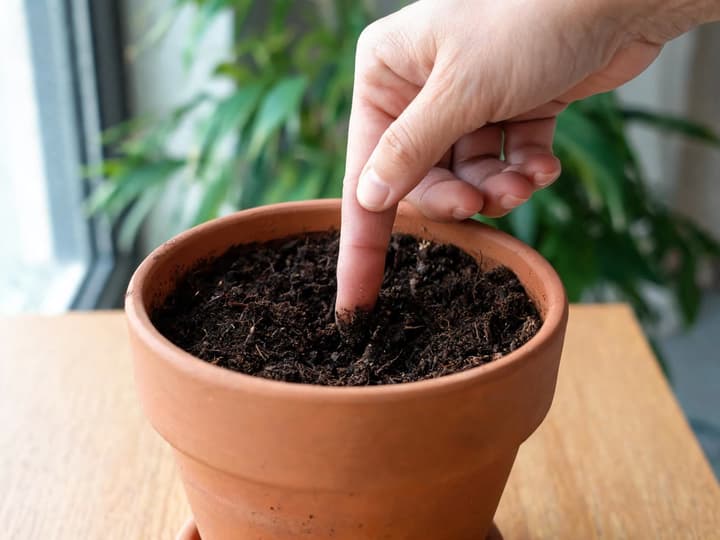
Check soil moisture instead of tracking calendar days. Insert your finger about an inch (2.5 cm) into the soil: if it still feels damp, hold off on watering. That is UGA's explicit guidance. Gauging the weight of the pot when wet versus dry works just as reliably once you have practiced two or three times.
When watering, pour until water drains freely from the bottom holes, then discard any liquid remaining in the saucer. UGA warns that standing water in the saucer concentrates fertilizer salts, which will burn root systems.
UGA notes that the two most common causes of stress in houseplants are inadequate light and overwatering. Combined, they create the ideal environment for root and crown rot diseases.
Drooping plant: is it low light or overwatering?
Both issues result in a wilting plant with dropping leaves, which is why giving more water usually worsens the damage. What distinguishes them is which leaves react and how the soil feels.
Signs of insufficient light, based on UGA's checklist:
the plant stops growing;
spacing between new leaves becomes wider than between older leaves;
new leaves develop smaller than older foliage;
new growth looks a lighter green than older leaves;
lower leaves die off.
NC State adds four more symptoms:
leaves fail to reach their typical size;
stems turn spindly and elongated;
leaves drop due to a lack of energy reserves;
the plant stops blooming.
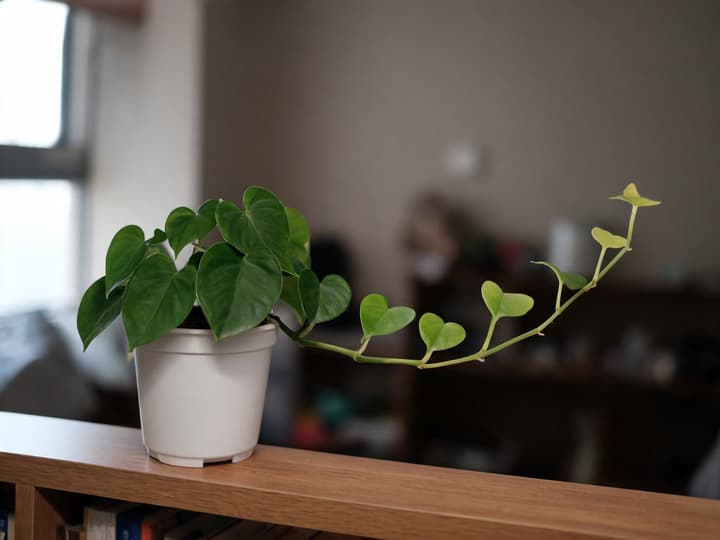
Signs of overwatering:
soil remains wet an inch (2.5 cm) down several days after watering;
yellowing begins on the bottom foliage;
a sour or fermented soil odor develops.
How to tell them apart: low light alters new foliage, while overwatering damages older leaves while the soil stays wet. If both descriptions match, both problems are likely present, which happens frequently in dark corners.
One caveat applies across the board: these symptoms are general guidelines. Certain species display opposite reactions, such as the snake plant, whose leaves darken in shade rather than turn pale. Before deciding, verify how your specific plant behaves.
If the plant arrived without a label, from a supermarket or as a gift, the first step is not watering. It is identifying the species, because the light range changes completely between a Chinese evergreen and a prayer plant. The Bloom app, available for iPhone, identifies the plant by photo and compares the symptom with the profile of the species.
Windowless rooms: can artificial lights compensate?
Low light is not zero light. NC State explicitly categorizes spaces relying entirely on artificial illumination as low-light environments. This answers questions about windowless bathrooms or basement rooms: without any light source, plants cannot survive.
Under lamps, plants survive, and distance is the deciding factor. NC State provides exact measurements: a 40 W fluorescent tube delivers 120 foot-candles at 1 foot (30 cm) and 75 foot-candles at 2 feet (60 cm). Therefore, a ceiling fixture does not reach a pot on the floor. With natural daylight, the drop-off is much lower within a 10-foot (3-meter) distance, as long as nothing blocks the path.
Three steps from NC State help when you cannot increase light: avoid overwatering, cut back on fertilizer, and lower room temperature by a few degrees, since heat speeds up how quickly a plant burns through stored energy. A fourth strategy is rotation: keep the plant in a bright location for one month and in the dark corner for the next, letting it replenish its energy reserves.
Extend the lighting duration up to 16 hours if intensity is low, and always ensure 8 hours of total darkness. Plants require a dark period, so leaving lights on 24 hours a day will not work.
Frequently asked questions
Which houseplant tolerates the lowest light?
Dracaena. It is the only plant in NC State's evaluation that lasted 30 months in good condition at the lowest tested level, 15 to 20 foot-candles. Cast-iron plant, Chinese evergreen, philodendron, snake plant, arrowhead plant, and dumb cane survived 12 months at that same intensity.
Can houseplants survive in a windowless room?
Only with artificial grow lights. NC State classifies spaces receiving only artificial light as low-light environments, not zero-light zones. A 40 W fluorescent fixture delivers 75 foot-candles at a distance of 2 feet (60 cm). That supports the plants on this list if kept on for about 16 hours a day, followed by 8 hours of dark.
Do low-light plants need less water?
They need less frequent watering, not less volume per session. In low light, a plant transpires less water, meaning the potting mix takes longer to dry out. Continue soaking the soil until water runs out the drainage hole, but space out your waterings: insert your finger an inch (2.5 cm) deep and only water when the mix is dry at that depth.
Do low-light houseplants bloom indoors?
Almost never. Blooming takes far more energy than vegetative maintenance, and in a dim corner, plants barely meet their basic metabolic needs. That is why peace lily, commonly marketed as a shade-blooming plant, only appears in NC State's data starting at 75 to 100 foot-candles.
In summary
Low light describes an area receiving 25 to 75 foot-candles over an 8-hour period, which translates to being more than 8 feet (2.4 meters) from a window. Twelve plants reliably endure this range. The longest-lasting performers are dracaena and Chinese evergreen, maintaining an attractive appearance for 36 months at 25 to 50 foot-candles. Snake plant lasts 12 months at 15 to 20 foot-candles.
Selecting the right plant is half the equation. The other half is adjusting your watering routine to match the location: in a dark corner, potting mix takes much longer to dry, and testing the soil an inch down with your finger is far more reliable than following any calendar.
Related articles
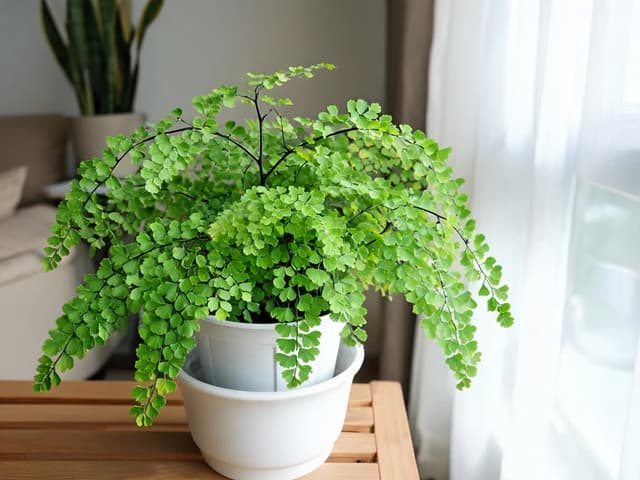
How to Care for a Maidenhair Fern: Light, Water, and Revival Tips
Learn how to care for a maidenhair fern indoors: bright indirect light, consistently moist soil, high humidity, and how to revive it if it dries out completely.
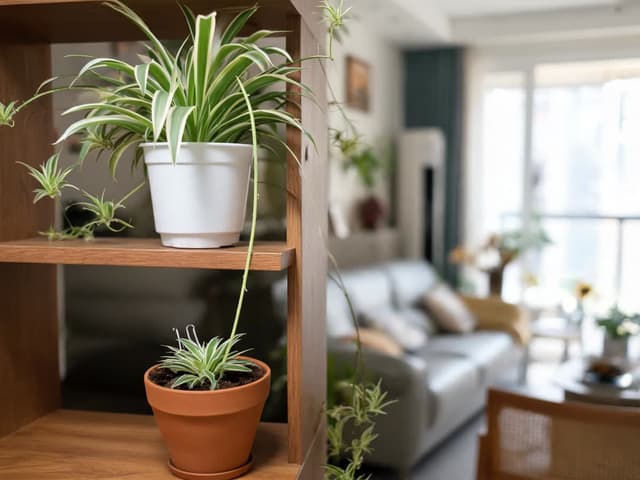
How to Propagate Spider Plants: Root the Pup Before Cutting
The safest spider plant cutting comes from a pup still attached to the mother plant: rest the plantlet on soil in a small pot, wait for roots to establish, and only then cut the stolon. Learn when the pup is ready, whether rooting in water is worth it, how to divide the clump, and why plants fail to produce babies.
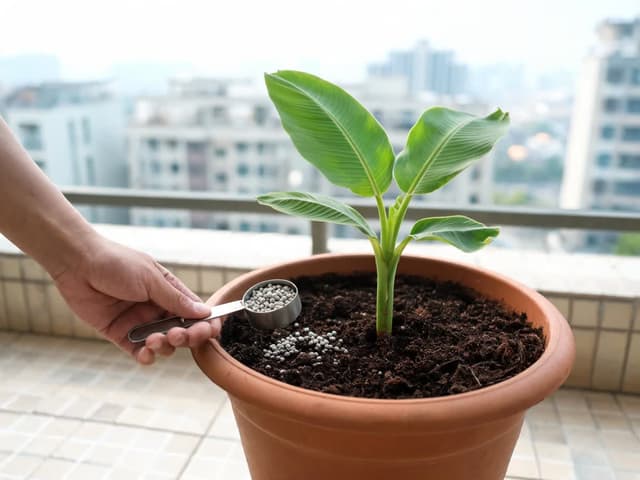
Banana plant fertilizer: fertilizing potted and backyard plants
Banana plant fertilizer needs more potassium than nitrogen, in a 3-1-6 ratio. For a potted plant on a balcony, use the label dose in spring and summer. In the backyard, fertilize every 2 months, adjusting the amount by mat age. Learn the formula, timing in Brazil, and signs of deficiency or excess.