Root Rot: Fungal Disease | Treatment Guide
Root rot is a serious fungal disease that affects the root system of plants, causing them to decay and die. It is primarily caused by overwatering, poor drainage, or soil-borne fungi such as Pythium, Phytophthora, Rhizoctonia, and Fusarium. The disease thrives in waterlogged conditions where roots are deprived of oxygen, making them susceptible to fungal infection.
Medium
21 days
What is Root Rot?
Root Rot is a fungal condition with high severity that affects plants. Root rot is a serious fungal disease that affects the root system of plants, causing them to decay and die. It is primarily caused by overwatering, poor drainage, or soil-borne fungi such as Pythium, Phytophthora, Rhizoctonia, and Fusarium. The disease thrives in waterlogged conditions where roots a...
Root Rot is a fungal disease with high severity that spreads at a moderate rate. Recovery typically takes approximately 21 days with proper treatment. It affects 10 plant species in our database. This condition is contagious and can spread between plants.
Unlike bacterial infections, Root Rot spreads slowly but is harder to eradicate. Without treatment, affected leaves won't recover. Not recommended to ignore early signs. Without early intervention, recovery can take twice as long. Without isolation, nearby plants can become infected within days.
🔍 What Are the Symptoms of Root Rot?
TLDR: Root Rot presents 8 main symptoms. Early identification is crucial for effective treatment.
Main Symptoms
- ! Wilting leaves despite moist soil
- ! Yellowing or browning of leaves
- ! Stunted growth and poor vigor
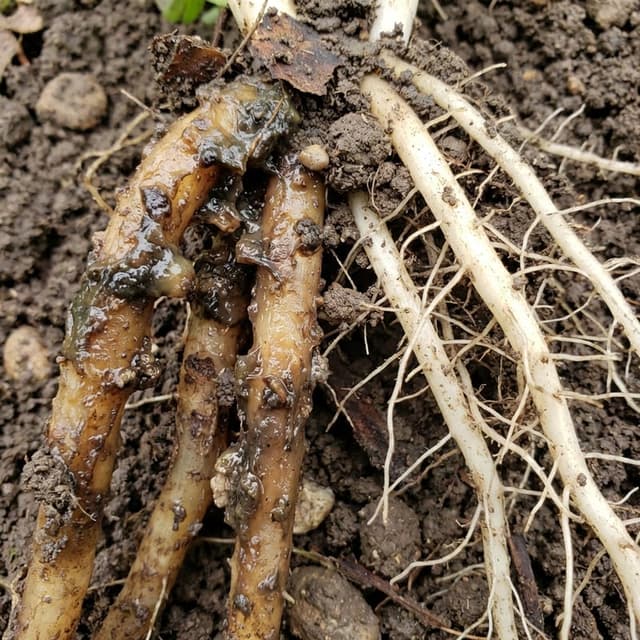
- ! Soft, mushy, dark brown or black roots
- ! Foul, rotting odor from the root zone
- ! Leaves dropping prematurely
- ! Plant easily pulls out of soil
- ! Base of stem appears soft and discolored
Visual Signs
❓ What Causes Root Rot in Plants?
- → Overwatering and waterlogged soil
- → Poor drainage in pots or soil
- → Soil-borne fungi (Pythium, Phytophthora, Rhizoctonia, Fusarium)
- → Compacted soil preventing oxygen flow
- → Reusing contaminated potting mix
- → Using garden soil instead of sterile potting mix
- → Pots without drainage holes
💊 How to Treat Root Rot?
TLDR: Treat Root Rot with 14 days of quick treatment or 21 days of organic treatment. Full recovery takes approximately 21 days.
Quick Fixes
~14 days
Emergency unpotting
Remove plant immediately from wet soil. Speed is critical.
Root rinse
Rinse roots under lukewarm running water to remove all soil.
Aggressive pruning
Cut away ALL affected roots without hesitation. Its better to over-prune than leave infected tissue.
Peroxide treatment
Spray or dip roots in 3% hydrogen peroxide solution. This kills pathogens and oxygenates tissue.
Quick dry
Pat roots with paper towels and let air dry for 30-60 minutes.
Fast repot
Repot in completely dry, fresh potting mix. Do not water for 3-5 days.
Stress reduction
Place in bright indirect light, away from direct sun. Reduce watering frequency significantly.
Materials needed:
Organic Treatment
~21 days
Remove and assess
Carefully remove the plant from its pot and gently wash away all soil from the roots. Assess the extent of root damage.
Prune affected roots
Using sterile scissors, cut away all soft, mushy, brown, or black roots. Cut back to healthy white tissue.
Apply cinnamon
Dust all cut surfaces generously with cinnamon powder to prevent fungal regrowth.
Prepare chamomile soak
Brew strong chamomile tea and let it cool. Soak the remaining roots for 15-20 minutes.
Air dry roots
Let the roots air dry for 2-4 hours in a shaded area with good air circulation.
Prepare new container
Clean the pot with diluted vinegar, rinse well, and fill with fresh sterile potting mix.
Repot carefully
Plant in the new soil, ensuring the root crown is at the proper level.
Initial watering
Water lightly with diluted neem oil solution (1 tsp per liter of water).
Recovery monitoring
Keep soil mostly dry for 1-2 weeks. Only water when top 2 inches are completely dry.
Materials needed:
Expert Treatment
~28 days
Complete root evaluation
Remove plant and thoroughly examine entire root system. Document extent of damage. If more than 75% of roots are affected, plant may not recover.
Surgical root removal
Using sterile tools, remove all infected tissue. Make clean cuts 1 cm above any visible infection. Dispose of infected material properly.
Fungicide dip
Prepare phosphorous acid solution per label instructions. Soak roots for 30 minutes.
Container sterilization
Soak container in 10% bleach solution for 30 minutes, then rinse thoroughly and air dry.
Prepare growing medium
Mix professional potting mix with 30% perlite and add Trichoderma biofungicide and mycorrhizae inoculant.
Replant with care
Plant at same depth, ensure no air pockets around roots. Apply root stimulator diluted per instructions.
Post-treatment watering
Water with copper fungicide solution once after repotting. Then withhold water for 5-7 days.
Follow-up treatments
Apply phosphorous acid drench every 2 weeks for 6 weeks. Monitor new root growth.
Environmental optimization
Maintain humidity 40-60%, bright indirect light, and excellent air circulation. Avoid temperature fluctuations.
Long-term monitoring
Check root health monthly for 3 months. Resume normal care only when vigorous new growth is evident.
Step by Step
- 1
Remove plant from pot immediately
- 2
Gently wash all soil from the roots
- 3
Inspect roots - healthy roots are white and firm
- 4
Cut away all soft, brown, or black roots with sterile scissors
- 5
Trim any dead or yellowing leaves
- 6
Discard old soil completely - do not reuse
- 7
Clean pot with 10% bleach solution and rinse well
- 8
Allow roots to air dry for several hours
- 9
Repot in fresh, sterile, well-draining potting mix
- 10
Water sparingly for the first 2 weeks
- 11
Monitor plant closely for signs of recovery
🧪 Natural vs Chemical: Which Treatment Works for Root Rot?
🌱 Natural Solutions
- ✓ Remove plant from pot and trim all affected roots
- ✓ Apply cinnamon powder to cut surfaces as natural fungicide
- ✓ Soak roots in chamomile tea solution for 15 minutes
- ✓ Use neem oil diluted in water as a root drench
- ✓ Apply hydrogen peroxide solution (1 part 3% H2O2 to 2 parts water)
- ✓ Repot in fresh, sterile potting mix
- ✓ Allow soil to dry completely between waterings
💉 Chemical Solutions
- ✓ Apply systemic fungicide containing phosphorous acid
- ✓ Use copper-based fungicide as soil drench
- ✓ Apply fungicide containing mefenoxam or metalaxyl
- ✓ Treat with propiconazole-based products
- ✓ Use thiophanate-methyl for severe infections
Treatment Comparison
| Type | Estimated time | Steps | Difficulty | Best For |
|---|---|---|---|---|
| ⚡Quick | ~14 days | 7 | Advanced | Urgent cases |
| 🌿Organic | ~21 days | 9 | Advanced | Indoor plants |
| 🔬Expert | ~28 days | 10 | Advanced | Severe infections |
🛡️ How to Prevent Root Rot?
TLDR: Prevent Root Rot with 8 essential care practices. Regular monitoring is key for early detection.
- ✓ Always use pots with drainage holes
- ✓ Use well-draining, pasteurized potting mix
- ✓ Allow soil to dry between waterings
- ✓ Check soil moisture before watering
- ✓ Never let plants sit in standing water
- ✓ Disinfect tools and pots between uses
- ✓ Avoid overwatering, especially in winter
- ✓ Ensure adequate air circulation around plants
🔗Related Diseases
Rust
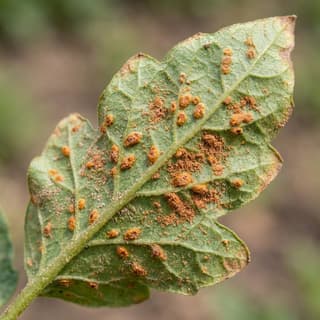
Rust fungi (Pucciniales) are fungal diseases that form rust-colored, usually orange to brown pustules with powdery spore dust on leaves, stems, or fruits. Typical symptoms include small spots that develop into cushions or rings; leaves turn yellow, curl, and drop prematurely. The fungi spread primarily in damp weather and dense foliage. Many ornamental and crop plants are affected, frequently including roses, mallows (hollyhocks), pears (pear rust), and currants. Some rust fungi require two host plants for their life cycle, such as pear and certain juniper species.
Cherry Witches' Broom
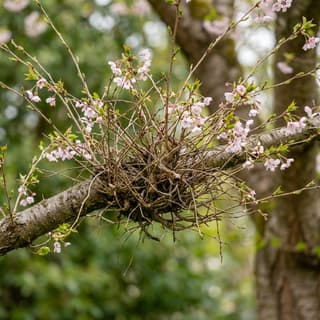
Taphrina wiesneri is a fungal disease affecting cherry trees (Prunus species, including sweet, sour, and ornamental varieties). The fungus overwinters in buds and bark, infecting young leaves and shoots during cool, wet spring weather. Infected leaves become thickened, puckered, and curled, often displaying reddish or yellow blotches and a fine whitish bloom on the surface. Severely affected leaves may drop prematurely. Small twigs can develop 'witches' brooms,' which are dense clusters of weak, distorted shoots.
Powdery Mildew
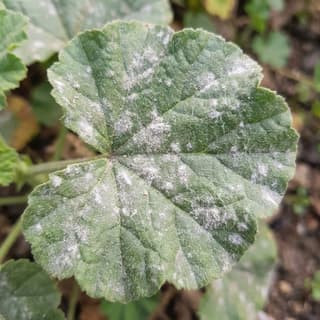
MediumPowdery mildew is a common fungal disease caused by various fungi species including Erysiphe, Podosphaera, Oïdium, and Leveillula. It affects over 10,000 plant species worldwide. The disease thrives in warm, dry climates with high humidity and appears as a distinctive white powdery coating on plant surfaces.
Black Spot
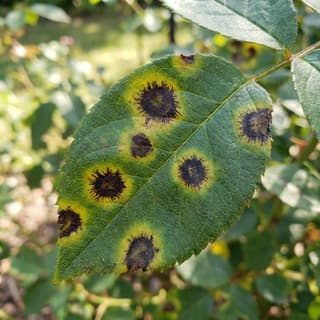
HighBlack spot is the most serious fungal disease affecting roses, caused by the fungus Diplocarpon rosae. It is characterized by dark circular spots on leaves that progress to yellowing and premature leaf drop. The disease thrives in humid and cool conditions, especially early in the growing season.