How Often to Water Rosemary: Pots, in the Ground, and Every Season
How often to water rosemary: in pots indoors, about once a week on average, whenever the top inch of soil dries out. In the ground, rain is enough after the first year. See the right baseline for your situation and how to find your plant's schedule.
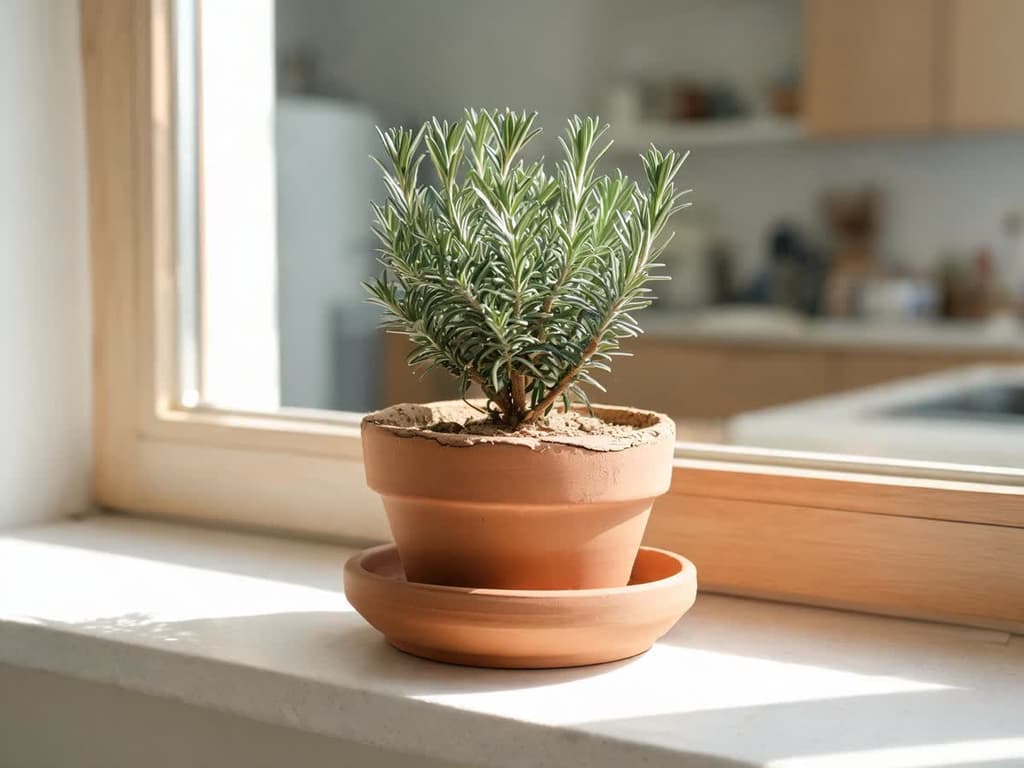
How often to water rosemary depends on where it is. In an indoor pot, the average is once a week, according to UF/IFAS, the University of Florida Extension. Water when the top 3 cm of soil is dry, until water comes out of the pot's drainage hole. In the ground, rosemary over a year old does not need watering beyond rainfall, according to the RHS, the Royal Horticultural Society of the United Kingdom.
If the lower, needle-like leaves have turned black and the soil remains moist, stop watering. This pair of signs indicates too much water, and the next watering should only happen when the top 3 cm dry out. Overwatering is the most common reason rosemary declines and dies. That is according to NC State Extension at North Carolina State University.
How often to water rosemary in every situation
Rosemary's watering schedule changes with the pot, the location, and the season. The table gives a starting baseline for each situation. In all of them, check the soil before you water.
Situation | Starting baseline | Source |
|---|---|---|
Pots indoors, near a sunny window | About once a week | UF/IFAS |
Outdoor pot, in full sun, during the Brazilian summer (December to March) | Check the soil every day; soil in a small pot can dry out in less than a week | RHS: pots dry out quickly in warm, sunny weather |
Pot in Brazil's winter (June to August) or in a cool place | Much less than once a week; water when the top 2 inches dry out | UNH Extension: cool spots call for less water |
Newly planted in the ground, in the first year | During dry spells | RHS |
In the ground for more than a year | Rain only | RHS |
Texas A&M AgriLife is the extension service of Texas A&M University. It gives a general average of 1 watering every 1 to 2 weeks, depending on plant size and climate. In gardening guides, the numbers range from 2 waterings per week to 1 watering every 2 weeks. The 2 waterings per week figure comes from a British blog, Urban Turnip, for containers. The numbers change with the pot, the sun, and the climate of whoever wrote them. This guide starts from university extensions, which have more evidence than a blog.
The soil test: when rosemary needs water
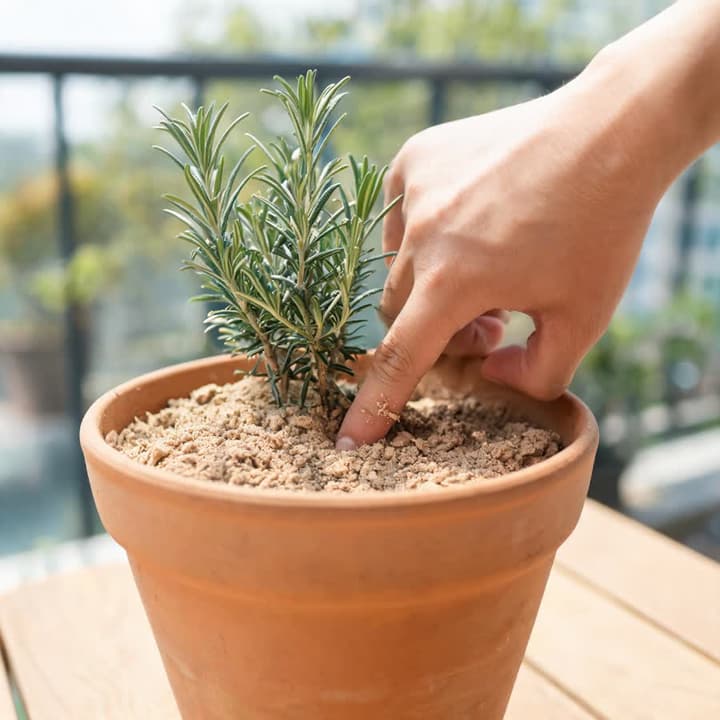
Stick your finger into the soil down to the first knuckle, about 1 inch deep. Dry soil at that depth means it is time to water. Moist soil or soil sticking to your finger means waiting another day; check again tomorrow.
The soil test comes before looking at the leaves because the leaves warn you too late. Texas A&M explains that it is hard to tell when rosemary needs water. The thin, needle-like foliage does not wilt like broad leaves do.
University extensions agree on letting the soil dry out between waterings, but they differ on how much. Here is how each describes the soil at watering time:
"Very dry": UNH Extension, from the University of New Hampshire, for potted rosemary.
"Dry slightly": Penn State Extension, for rosemary grown indoors.
"Completely": Texas A&M.
"Do not let it dry out": UVM Extension, from the University of Vermont. According to the extension, foliage losing its green calls for more water.
This guide follows the majority of extensions and advises letting the top inch of soil dry out between waterings. If the needles start losing their green while the soil is dry, watering is overdue, as UVM warns. None of these sources specifies a depth in inches for rosemary. The 1 inch is this guide's practical way to check the soil without tools.
In winter, push the test down to 2 inches, your finger's second knuckle, because cold soil dries slowly from underneath. Check the weight as well: lift the pot right after watering and again once the soil dries down to 1 inch (2 inches in winter). Over time, you will recognize by weight when the pot needs water.
What shortens and what lengthens rosemary's watering interval
Pot soil dries out faster in these situations:
Clay, fabric (felt), or unglazed ceramic pots (without the glossy coating). The soil dries out faster in them than in plastic or glazed ceramic, according to Illinois Extension.
Small pots. Less soil holds less water for the roots.
Direct sun and heat. The RHS notes that container soil dries out fast in warm, dry, sunny weather. Rosemary needs 6 hours or more of direct sun, as outlined in the guide on how much sun rosemary needs. For that reason, check the soil more frequently when the pot sits in full sun.
Wind and outdoor containers. Wind and heat reflected from walls dry out the pot faster, according to the Illinois Extension.
Pot soil takes longer to dry out in these situations:
Cold and winter. UNH Extension notes that rosemary in a cooler spot needs less water. In Brazil, winter runs from June to August. The guide on winter rosemary care covers watering and frost protection for each region.
Plastic or glazed ceramic pots, which do not lose moisture through the walls.
Rainy days, for uncovered pots: rain wets the soil and postpones the next watering.
How to find your rosemary's watering schedule
Your rosemary's exact schedule emerges after 2 to 3 weeks of testing. Follow these steps:
After a thorough watering, test every day at the same time: 1 inch deep (2 inches in winter).
Write down how many days the soil took to dry down to 1 inch.
Repeat this over 2 or 3 watering cycles and use the average as your watering reminder.
On reminder day, check the soil before you water; if it is still moist, wait one more day.
Recalculate when the seasons change, when you repot, or when you move the plant.
Picture rosemary in a small terracotta pot on a sunny windowsill in January (summer). Its soil will dry out well before that of the same rosemary in a plastic pot in June (winter).
How to water rosemary: amount, saucers, and timing
Water slowly around the base of the plant until water drains from the bottom hole. This is the watering technique Illinois Extension recommends for container plants. Small amounts of water only wet the surface and leave the bottom of the pot dry.
Empty the saucer under the pot once the water stops draining from the hole. Wisconsin Extension recommends a saucer to catch water and taking off the pot wrapping so the soil does not get waterlogged. Standing water in the saucer keeps the bottom of the soil wet, and that is where roots rot.
Water in the morning. Clemson Extension, from Clemson University, directs you to water herbs early so the leaves dry before nightfall. Lavender, another Mediterranean plant, also requires soil that dries quickly between waterings.
Supermarket rosemary: watering during the first few weeks
Supermarket rosemary arrives in a small pot, often wrapped in plastic sleeves or foil wrap. UF/IFAS warns that this wrap traps more moisture than rosemary can handle. Remove the wrapping and place the pot on a saucer you can empty.
During the first week at home, do the 1-inch test every day. Small pots dry out quickly in the sun. Even so, watering daily just to be safe keeps the soil soggy and rots the roots. Dry, stiff needles paired with dry soil call for a thorough watering until moisture drains from the hole. Black needles at the base paired with moist soil call for the opposite: stop watering until the soil dries out.
Move your rosemary into a pot one size up, with drainage holes and fast-draining potting mix. Supermarket pots usually contain several stems together, and the guide on how to care for rosemary shows how to separate them.
Overwatered vs. underwatered rosemary: reading the soil
Soil that has stayed moist for days paired with black or soft leaves points to overwatering. Bone-dry soil paired with dry, brittle, light brown needles points to underwatering.
What you see | Soil | Roots | What to do |
|---|---|---|---|
Lower needles black or soft, lower branches drying out | Moist for days | Brown and mushy | Stop watering and inspect the roots |
Dry, brittle, light brown needles | Bone dry, pulling away from the pot rim | Dry, but firm | Water until moisture drains from the bottom hole |
Wilted leaves with wet soil | Moist | Brown and mushy | Waterlogged roots: check the drainage hole and space out waterings |
Dry tips with soil moist for days | Moist | May be rotting | Wait for the soil to dry out before watering again |
Brown tips with dry soil indoors | Dry in the top inch | Firm | Water only if the top inch is dry and check indoor air humidity |
Brown tips indoors are not always a lack of water in the pot. The Illinois Extension warns that rosemary loses water quickly indoors and develops brown tips. Watering more often than the soil test calls for, in this case, leads to root rot, according to the same source. If the soil is moist and the tips stay brown, the likely cause is the roots.
To check the roots, remove the rosemary from its pot. White, firm roots are alive. Brown, mushy roots indicate root rot, the condition that sets in when roots sit in waterlogged soil for days:
If yellowing appears first on the needles, the guide on yellow leaves on rosemary separates watering issues from other causes based on where the yellowing shows up. Branches drying throughout the pot call for the scratch test, which shows what is still alive. The guide on dying rosemary explains the test.
Frequently asked questions about watering rosemary
Does rosemary need to be watered every day?
No. Daily watering keeps the soil constantly moist, and NC State identifies overwatering as the most common reason rosemary dies. In pots, water when the top inch of soil is dry, until water drains through the hole. Check the soil daily, but water only when it is dry.
How often should you water rosemary in winter?
Much less than in the summer. In cold weather, potted soil takes longer to dry out, and UNH Extension notes that rosemary in a cool location needs less water. In Brazil, from June to August, water potted rosemary when the top 2 inches (5 cm) of soil are dry.
Does rosemary need more water in pots or in the ground?
In pots. In-ground rosemary has much more soil surrounding its root system. The RHS states that plants established in the ground for over a year do not need supplemental watering. In pots, the roots only have container soil, which dries out quickly in heat and sun. That is why potted rosemary relies on you for water all year long.
Is a potted plant that smells like pine rosemary?
It could be. Rosemary has thin, needle-like leaves that are green on top and whitish underneath, with a strong aroma when you rub a branch, according to NC State. Before watering a plant you do not recognize, confirm the species: Bloom (available for iOS) identifies plants from a photo. Then use the 1-inch soil test.
Summary
Water potted rosemary when the top inch of soil dries out, until water runs through the drainage hole. Indoors, the average is about once a week. In winter, wait until the top 2 inches dry out. In the ground, rain is enough after the first year. Black needles with moist soil call for less water; dry, brittle needles with dry soil call for watering.
When foliage changes color and the soil does not explain why, a photo of the symptom helps pinpoint the likely disease:
Sources
Related articles
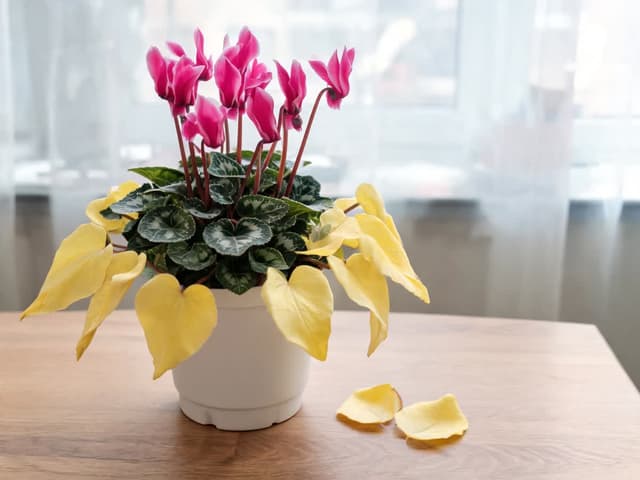
Cyclamen with Yellow Leaves: Causes and What to Do
A cyclamen with yellow leaves might just be going dormant. Learn how the tuber and the time of year tell dormancy apart from rot, heat, thirst, and mites, and what to do in each case.
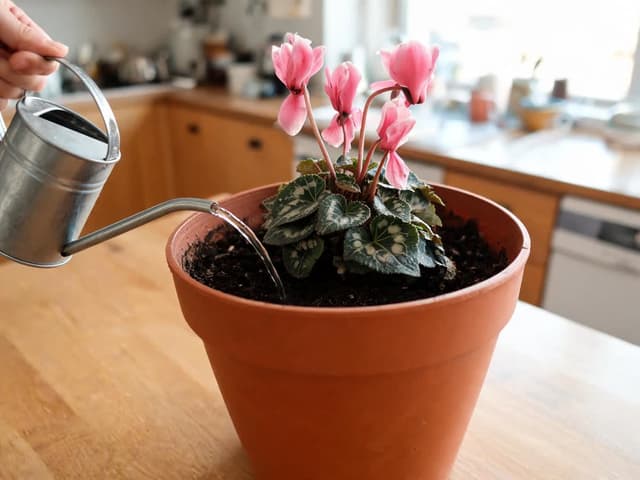
How to Water Cyclamen: Bottom Watering, Edge Watering, and the Wilt Test
How to water cyclamen without rotting the tuber: when the soil surface dries out, from below for 15 minutes or around the edge, never in the center. Plus the test to tell wilting from thirst apart from rot.
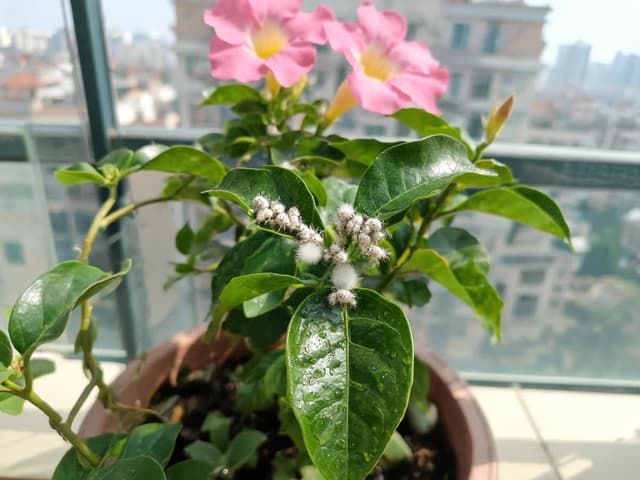
Dipladenia with Sticky White Dots: Which Pest Is It?
A sticky white dot on a dipladenia is almost always a mealybug, but whiteflies, aphids, spider mites, and the plant's own sap leave similar marks. See the test that separates each one and the source-backed treatment.