Hanging Plants: 10 Species and What Changes When the Pot Is Up High
A hanging pot is small because it must stay light, so it dries out before every other pot in the house. See 10 hanging plants, the light each needs, what the ASPCA says about cats and dogs, and why the plant goes bare on top.
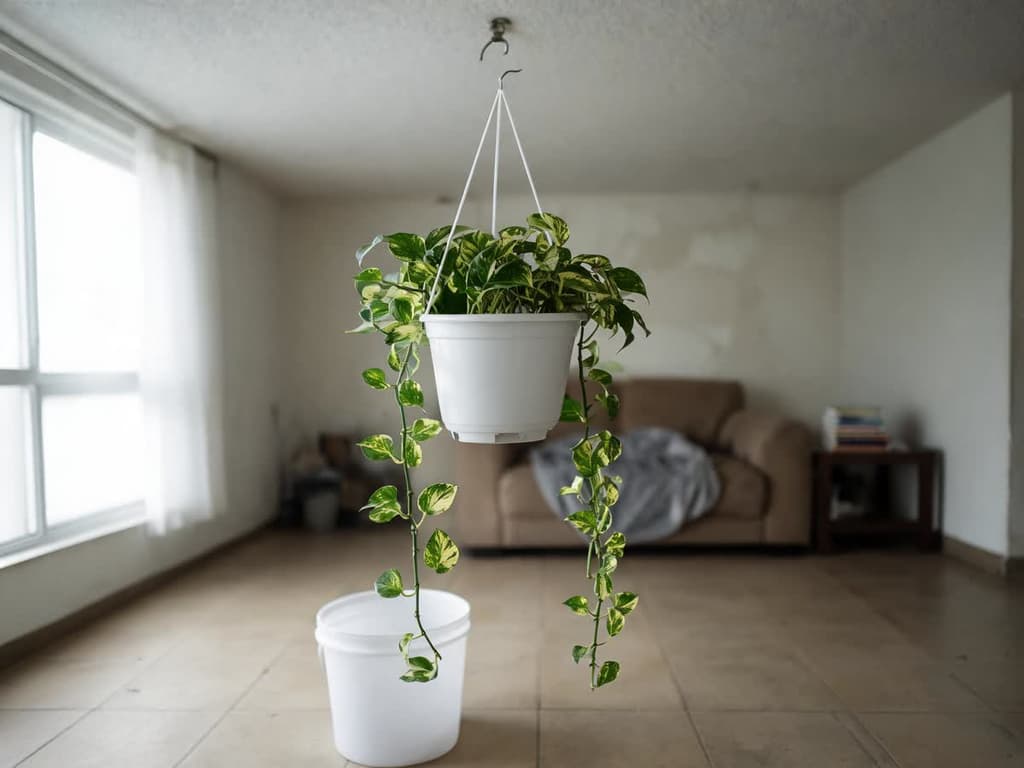
Hanging plants are species that grow trailing downward out of the pot instead of climbing. The list rarely changes from place to place: pothos, ferns, peperomia, string of pearls, ivy, inch plant. What almost never accompanies the list is what happens to the plant once the pot goes up on the hook.
A hanging pot needs to stay light, so it is small and shallow. Little soil inside, air circulating on all four sides, no shade from furniture. It is the pot in the house that dries out first, and it sits farthest from your reach. By the time you remember it, the leaves have already dried up.
Quick summary:
A hanging pot dries out before the others because it has to be light. Iowa State Extension notes the trade-off: a larger, deeper container takes longer to dry out, but becomes heavier, and weight is what dictates the size of a hanging pot.
Bare stems on top, small, widely spaced leaves, and long, empty vines: this points to a lack of light, not a lack of fertilizer. Clemson measures the threshold: below 200 foot-candles for 12 hours a day, a foliage plant derives no benefit from fertilizer. Foot-candles and lux measure the same thing, the intensity of light reaching the leaf, and 200 foot-candles equal about 2,150 lux.
Of the 10 plants on this list, 3 have specific profiles listing them as toxic to cats and dogs on the ASPCA database: pothos, Philodendron Brasil, and English ivy. The inch plant on this list (Tradescantia zebrina) has no dedicated profile; its relatives T. fluminensis and T. multiflora do. The height of the hook solves nothing, because the trailing tips drop right down to pet level.
String of pearls has no profile in the ASPCA under either of its botanical names. That data comes from NC State in its profile for Curio rowleyanus: pyrrolizidine alkaloids, the toxic compounds, sit in the leaves and sap, causing contact dermatitis, as well as vomiting and diarrhea upon ingestion.
Wax plant and Thanksgiving cactus are the two plants on this list that Clemson classifies under high light. Hung in a dark hallway, they survive but will not flower.
Plant | Light | ASPCA | What changes in a hanging pot |
|---|---|---|---|
String of pearls (Curio rowleyanus) | bright indirect light | no entry; NC State records low toxicity | tolerates the longest gaps between waterings, but splits quickest when overwatered |
Mistletoe cactus (Rhipsalis baccifera) | partial shade | not listed as toxic | stems scorch if the hook sits in direct sun |
Thanksgiving cactus (Schlumbergera) | high light | not listed as toxic | needs truly dark nights to produce blooms |
Trailing peperomia (Peperomia rotundifolia) | medium light | not listed as toxic | thick leaves store water and forgive late watering |
Wax plant (Hoya carnosa) | high light | not listed as toxic | blooms on the same spur every year, which must not be pruned |
Pothos (Epipremnum aureum) | survives at 50 fc, maintains foliage at 150 fc | toxic to dogs and cats | goes bare at the base with all leaves clustered at the tips |
Philodendron Brasil (Philodendron hederaceum) | survives at 75 fc, maintains foliage at 150 fc | toxic to dogs, cats, and horses | petioles stretch out and growth becomes sparse |
Inch plant (Tradescantia zebrina) | medium light to filtered sun | T. fluminensis and T. multiflora are toxic; zebrina has no dedicated entry | drops lower leaves first and fades in color |
English ivy (Hedera helix) | medium light | toxic to dogs, cats, and horses | trails down quickly, and leaves are more toxic than berries |
Boston fern (Nephrolepis exaltata) | 50 to 200 fc indoors | not listed as toxic | heaviest drinker on the list, and quickest to develop scorched tips |
The hanging pot dries out before the others, and weight is the reason
A hanging pot supports its entire weight from a hook. Iowa State Extension explains the direct consequence of this on its hanging basket page: "Larger and deeper containers will not dry out as quickly but will be heavier, an important consideration of hanging baskets", meaning a larger and deeper container takes longer to dry out but ends up heavier, and in a hanging pot, weight takes priority. Because of this, nearly every hanging basket on the market is shallow, narrow, and filled with lightweight potting mix.
University of Nebraska-Lincoln ties container size directly to watering: "Because the root systems of containerized plants are confined to a small area, it is necessary to pay close attention to watering". Roots stay confined to a small space, so the moisture reservoir empties sooner. University of Illinois measures moisture loss through the walls of the pot: hanging baskets "loose a tremendous amount of moisture through the sides as well as through normal drainage out of the bottom", losing water along the sides beyond what drains through the drainage hole.
These three extension pages refer to outdoor porch baskets in full sun with annual plants. No university extension resource focuses specifically on indoor hanging pots, and that is worth stating plainly: the watering frequency Iowa State suggests for porches, once a day on hot, sunny days, does not translate directly to a living room. The mechanism, however, does. A small volume of soil exposed on all sides dries out much faster than the same plant sitting in a large pot on a table.
The same caution applies to the idea that the upper reaches of a room are warmer and drier. Warm air rises—that is simple physics—but nobody has published measurements tracking the exact degree difference between sofa height and hook height in an ordinary living room. Instead of memorizing a number, run the test that settles the question right away: push your finger 2 cm (about an inch) into the soil of the hanging pot and into the soil of another pot in the same room at the same time. The hanging pot will be drier almost every time.
Bare stems on top and long growth below mean lack of light, not lack of fertilizer
The stem leaves the pot without a single leaf for the first foot or two, leaves only appear way out at the tips, and the ones that do grow are smaller and spaced farther apart than the older foliage. Most people react by buying fertilizer. That is the wrong purchase.
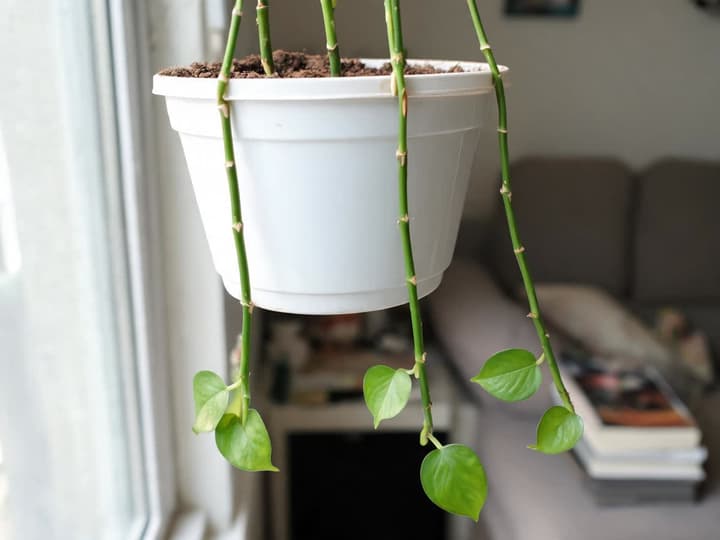
NC State describes the mechanism in its botany handbook: "Too little light causes a long internode and a spindly stem, an occurrence known as stretching or etiolation". Insufficient light lengthens the internode, which is the section of stem between one node and the next, with a node being the point on the stem where a leaf sprouts. The stem also grows thinner. The plant stretches out, expending its energy to reach the light.
Clemson provides two separate numbers, and the gap between them clears up the fertilizer question. About 100 foot-candles for 12 hours a day suffices "simply to maintain plant quality for one year", just to keep the plant alive and presentable for a year; however, "at least 200 ft-c for 12 hours per day are necessary for foliage plants to manifest any benefit from fertilization". Below 200 foot-candles (roughly 2,150 lux), fertilizing produces no measurable benefit in a foliage plant. A pot hanging in a dim hallway corner sits well below that threshold. Fertilizer there does nothing.
To determine where your hook falls, University of Illinois maps these categories to locations around the house: 75 foot-candles (800 lux) is low light, what you get a few steps away from a window with minimal direct sun; 150 foot-candles (1,600 lux) is medium light, requiring direct placement facing that window; 300 foot-candles (3,200 lux) is high light, which demands placing the plant directly before an east- or west-facing window. A light meter app on your phone measures this in lux and answers the question without specialized equipment.
UF/IFAS measured the same requirements species by species. For pothos: it tolerates levels down to 50 foot-candles, "but new leaves will be small and variegated cultivars will lose color", while 150 foot-candles or more are needed to maintain leaf color and size. For heartleaf philodendron, the same series notes that under low light, "petioles become excessively long and plant has an open appearance", meaning the petiole—the stem connecting the leaf to the vine—elongates, leaving the plant sparse and gappy. For Boston ferns, excessively low light "results in elongated, weak fronds that are dark green in color but few in number", creating long, weak fronds in sparse quantities.
The fix is pruning. Cut back the bare vines and use the trimmings: Iowa State recommends cuttings measuring 7.5 to 15 cm (3 to 6 inches) with at least two nodes, and most houseplant cuttings develop roots within 3 to 6 weeks. The same extension notes that propagation "improves plant appearance by taming leggy, abundant, misshapen, lopsided, or unruly growth". Once you prune, move the pot to a brighter spot; if it goes right back onto the same hook, the plant will stretch out all over again.
Yellowing leaves that appear alongside this growth pattern usually point to an additional underlying cause. Yellow leaves on plants can be diagnosed with three questions, and in a hanging pot, the most common culprit is standing water inside the cachepot, the decorative outer pot without drainage holes that houses the plastic inner pot.
The 10 hanging plants, from the most drought-tolerant to the least
The order follows how long each plant can go between waterings. This is the practical question for anyone hanging a pot seven feet up and dragging a ladder over every time.
1. String of pearls (Curio rowleyanus)
This plant features the most unusual leaves on the list: green, pea-sized spheres strung along a thin stem that trails downward without thickening. Each sphere is an entire leaf packed with water, which is why it tops the list.
NC State warns against both extremes: it tolerates infrequent watering, but excess moisture rots the roots, and the plant profile recommends never letting the pot dry out completely between waterings. Provide bright indirect light. In a hanging pot, it splits open and collapses into bare strings when watered too generously, which is the exact opposite of the mistake people expect to make with a succulent. Overwatering is the first of three mistakes that kill succulents, and in a hanging pot, it happens very easily.
Its botanical classification underwent a genus change, which is why searching for it in the ASPCA catalog pulls up the entry for an entirely different plant.
2. Mistletoe cactus (Rhipsalis baccifera)
A spineless jungle cactus that grows in nature hanging from tree trunks rather than rooted in desert sand. The slender stems cascade like green strings and thrive in a shallow pot, which matches the exact shape a ceiling hook supports.
The standard mistake here is treating it like an arid cactus. NC State notes that "direct sunlight can cause scorching of the stems". It prefers partial shade. The ASPCA does not list Rhipsalis cassutha, the name under which it appears in the database, among plants toxic to dogs, cats, and horses.
3. Thanksgiving cactus (Schlumbergera)
Another spineless jungle cactus, this is the only plant on the list that produces vibrant indoor blooms without requiring harsh, direct sun. The flattened segments grow end-to-end, cascading downward.
Clemson classifies the holiday cactus under high light, which surprises anyone who inherited one tucked away in a dim corner. To set buds, it requires long, unbroken dark nights, shielded from indoor lamps or streetlights shining through the window. These are two distinct requirements—daytime intensity and nighttime darkness—and our guide on how to make Thanksgiving cactus bloom covers each. The ASPCA does not include Schlumbergera bridgesii on its toxic list.
4. Trailing peperomia (Peperomia rotundifolia)
Lentil-sized, thick, fleshy round leaves grow along delicate trailing stems. The thickness of the leaf stores water, which forgives the week you forget about the pot overhead.
Medium light works well. Watering frequency for peperomias depends on leaf thickness; the foliage turns soft and slightly translucent before dropping, giving you time to correct course. The ASPCA lists neither Peperomia rotundifolia nor Peperomia obtusifolia as toxic to dogs, cats, or horses.
5. Wax plant (Hoya carnosa)
The leaves feel firm enough to pass for plastic, and the blooms form tight, rounded clusters with a waxy appearance that gives the plant its common name. It takes the longest of any plant on this list to produce flowers.
Clemson places Hoya carnosa under high light alongside the holiday cactus. Hung in a dark hallway, it can survive for years without ever setting a bloom. There is also one rule that matters more than watering: it always flowers from the exact same peduncle, the short, bare spur left behind after a bloom cycle, and removing this spur eliminates the next year's flowers. If you want a second plant, take a cut below a node: hoya cuttings root in water. The ASPCA does not list Hoya carnosa as toxic.
6. Pothos (Epipremnum aureum)
It is the most common hanging plant indoors in Brazil, and the one that most often shows up with the problem on this list. NC State describes what happens to it: "over time, leaves will yellow and fall off, concentrating most of the leaves at the end of the stems". The recommendation from the same fact sheet is to prune the stems to keep the plant full.
UF/IFAS defines the light thresholds: 50 foot-candles is the minimum needed for survival, while 150 foot-candles or more preserves both leaf size and coloration. Variegated white-and-yellow cultivars demand more light than solid green forms and lose their patterns first. The ASPCA lists pothos as toxic to dogs and cats: oral irritation, intense burning of the mouth, tongue, and lips, drooling, vomiting, and difficulty swallowing.
7. Philodendron Brasil (Philodendron hederaceum)
Heart-shaped leaves with two distinct shades of green, one light and one dark. It grows faster than pothos and reacts to low light differently: instead of dropping leaves, it elongates its petioles, the small stems connecting leaf to vine.
UF/IFAS identifies this as a symptom of inadequate light during growth: "petioles become excessively long and plant has an open appearance". The result is a plant with the same number of leaves as before, but with double the space between them. It tolerates 75 foot-candles and preserves its foliage at 150 or above. The ASPCA lists philodendron as toxic to dogs, cats, and horses, causing pain and swelling of the mouth, tongue, and lips, along with excessive drooling and vomiting.
8. Inch plant (Tradescantia zebrina)
Silver stripes on top, deep purple underneath, and the only plant on this list that NC State rates as fast-growing. It is also the easiest to propagate: the same profile notes that trimming stretched-out growth provides ready-to-root cuttings.
NC State describes the effects of inadequate light: "in areas providing low lighting, the stems can lose their lower leaves, and the remaining leaves can lose some of their beautiful color". It is the only plant here whose profile lists both low-light symptoms together: foliage loss and faded color. Regarding pets, read the listings carefully: the ASPCA lists Tradescantia fluminensis and Tradescantia multiflora as toxic, causing dermatitis, but maintains no profile for Tradescantia zebrina.
9. English ivy (Hedera helix)
It grows almost anywhere, ranks as the most vigorous grower on the list, and fills out a hanging basket fastest. It is also the most deceptive: it tolerates deep shade as well as bright sun, giving the impression that nothing can damage it.
Medium light keeps the foliage looking sharp, and variegated varieties need more light than solid green types. Pet safety, however, is non-negotiable: the ASPCA lists English ivy as toxic to dogs, cats, and horses, leading to vomiting, abdominal pain, drooling, and diarrhea. The entry adds a note on plant parts: "foliage is more toxic than berries". On a hanging ivy, the leaves are precisely what a cat can reach.
10. Boston fern (Nephrolepis exaltata)
The most demanding plant on the list. It drinks more water than the other nine combined and becomes the first to show crisp, brown tips if the soil completely dries out even once.
UF/IFAS notes that indoors it lives between 50 and 200 foot-candles, and excessively low light produces "elongated, weak fronds that are dark green in color but few in number". When you spot what looks like white cotton nestled at the frond bases, you are dealing with mealybugs, which require specific identification and treatment, not a fungal infection. The ASPCA does not list Nephrolepis exaltata as toxic to dogs, cats, or horses.
Hanging height does not keep trailing vines out of a cat's reach
A tabletop plant stays right where you place it. A hanging plant grows downward, actively moving closer to your pet. NC State notes that pothos vines can reach up to 40 feet (12 meters) in length given adequate space. Long before reaching that length, the tip will drop down into reach of a cat standing on its hind legs. A ceiling hook keeps the pot safe, not the vine ends.
"Not listed as toxic" means only one thing: the species does not appear in the ASPCA toxic plant database. It is not an invitation to let animals graze: eating large amounts of plant fiber causes cats to vomit even when the species appears on no toxic registry anywhere.
Species | Name in ASPCA | ASPCA verdict | Recorded signs |
|---|---|---|---|
Golden pothos | Golden Pothos, Epipremnum aureum | toxic to dogs and cats | oral irritation, burning of mouth, tongue, and lips, drooling, vomiting, difficulty swallowing |
Philodendron Brasil | Heartleaf Philodendron, Philodendron hederaceum | toxic to dogs, cats, and horses | pain and swelling of mouth, tongue, and lips, drooling, vomiting |
English ivy | English Ivy, Hedera helix | toxic to dogs, cats, and horses | vomiting, abdominal pain, drooling, diarrhea; foliage more toxic than berries |
Inch plant (relative of species on list) | Inch Plant, Tradescantia fluminensis | toxic to dogs, cats, and horses; T. zebrina has no dedicated entry | dermatitis |
Asparagus fern | Asparagus Fern, Asparagus densiflorus | toxic to dogs and cats | allergic dermatitis from repeated contact; berries cause vomiting, pain, and diarrhea |
Trailing peperomia | Peperomia Rotundifolia | not listed as toxic | no symptoms recorded |
Wax plant | Honey Plant, Hoya carnosa | not listed as toxic | no symptoms recorded |
Boston fern | Boston Fern, Nephrolepis exaltata | not listed as toxic | no symptoms recorded |
Thanksgiving cactus | Christmas Cactus, Schlumbergera bridgesii | not listed as toxic | no symptoms recorded |
Mistletoe cactus | Mistletoe Cactus, Rhipsalis cassutha | not listed as toxic | no symptoms recorded |
Burro's tail | Burro's Tail, Sedum morganianum | not listed as toxic | no symptoms recorded |
Staghorn fern | Common Staghorn Fern, Platycerium bifurcatum | not listed as toxic | no symptoms recorded |
String of pearls | no entry | not evaluated | see below |
String of pearls is a case where the search is misleading. The species used to be called Senecio rowleyanus and the accepted name today is Curio rowleyanus, with Senecio rowleyanus and Kleinia rowleyana kept as synonyms. The ASPCA has no profile under either name. Anyone searching "Senecio" in the catalog finds "Ragwort, Senecio species," which is toxic, but its recorded signs are liver damage in horses and cattle that ate the plant in forage. That is a different plant and a different animal. Anyone treating that profile as if it applies to string of pearls is reading it wrong.
The data does exist, through NC State. Its profile for Curio rowleyanus rates severity as low, identifies pyrrolizidine alkaloids as the active toxins, lists leaves and sap as toxic parts, notes contact dermatitis, and describes vomiting and diarrhea following leaf ingestion. That falls well short of pothos toxicity, but it is not zero.
How to water a high-hanging pot
Watering hanging plants has two approaches, and both work. The choice is between getting the floor wet and taking the pot down.
From above, in place. University of Illinois describes the method clearly: "fill the top of the container with water and allow it to drip out of the bottom of the basket each time you apply water". Set a bucket or basin on the floor underneath before starting. Any water that does not drain from the bottom hole never reached the lowest roots, and those roots die first in a shallow container.
From below, with the pot on the floor. University of Maryland describes bottom watering for houseplants: pour water into a saucer or set the pot in a water basin, letting the soil pull moisture upward, much like a paper towel soaking through when you touch only its tip to water. The same page concludes with a warning: "never let your houseplants sit in water". Remove the container from the water basin as soon as the top surface of the soil feels moist.
The right timing stays identical for both methods, and the soil makes the call. Push your finger 2 cm (about an inch) into the soil. If it comes out dry, water the plant. If it feels moist, wait. In a hanging pot, this test usually turns up dry sooner than your memory expects, because the container is small. If you keep a decorative outer cachepot around the plastic nursery pot, dump out the excess water after every single watering: it collects drainage water and creates the fastest path to root rot on a plant that nobody checks up close.
Frequently asked questions
Which plants are hanging plants?
Hanging plants are species with stems that trail or cascade downward rather than climbing, making them natural fits for hanging baskets and high shelving. Common indoor choices include pothos, Philodendron Brasil, trailing peperomia, wax plant, Boston fern, inch plant, English ivy, string of pearls, mistletoe cactus, and Thanksgiving cactus.
What is the best hanging plant for a living room?
For a living room with one window and irregular watering, trailing peperomia is the safest choice: the thick leaves retain moisture, it thrives in medium light, and the ASPCA does not list it as toxic. If your room receives indirect light without harsh direct sun and you have cats, mistletoe cactus serves the same role while staying off toxic plant lists.
Which hanging plant tolerates direct sun best?
The inch plant (Tradescantia zebrina) tolerates direct sun better than any other plant on the list, and NC State notes that it looks its best under filtered sun, showing deeper color the more light it gets. Mistletoe cactus sits at the opposite end: direct sunlight burns its stems. No indoor hanging plant tolerates harsh afternoon sun year-round without scorching its leaves.
Which plants can grow trailing in a pot?
Beyond the ten highlighted here, turtle vine (Callisia repens), burro's tail (Sedum morganianum), string of hearts (Ceropegia woodii), and asparagus fern (Asparagus densiflorus) make good trailing plants. The ASPCA lists asparagus fern as toxic to dogs and cats; burro's tail is not listed as toxic; and turtle vine and string of hearts have no dedicated profiles in the database.
Related articles
How to Care for a Maidenhair Fern: Light, Water, and Revival Tips
Learn how to care for a maidenhair fern indoors: bright indirect light, consistently moist soil, high humidity, and how to revive it if it dries out completely.
How to Propagate Spider Plants: Root the Pup Before Cutting
The safest spider plant cutting comes from a pup still attached to the mother plant: rest the plantlet on soil in a small pot, wait for roots to establish, and only then cut the stolon. Learn when the pup is ready, whether rooting in water is worth it, how to divide the clump, and why plants fail to produce babies.
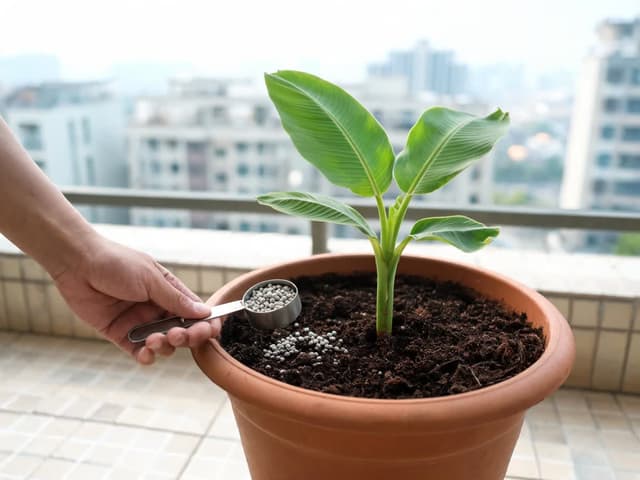
Banana plant fertilizer: fertilizing potted and backyard plants
Banana plant fertilizer needs more potassium than nitrogen, in a 3-1-6 ratio. For a potted plant on a balcony, use the label dose in spring and summer. In the backyard, fertilize every 2 months, adjusting the amount by mat age. Learn the formula, timing in Brazil, and signs of deficiency or excess.