How to Care for Dracaena: Light, Watering, Fluoride, and Brown Tips
Dracaena tolerates low light and missed waterings, but has three weak spots: fluoride in the water, too much moisture at the base of the stem, and the shock of shedding lower leaves. Find out which dracaena you have and what each sign requires.
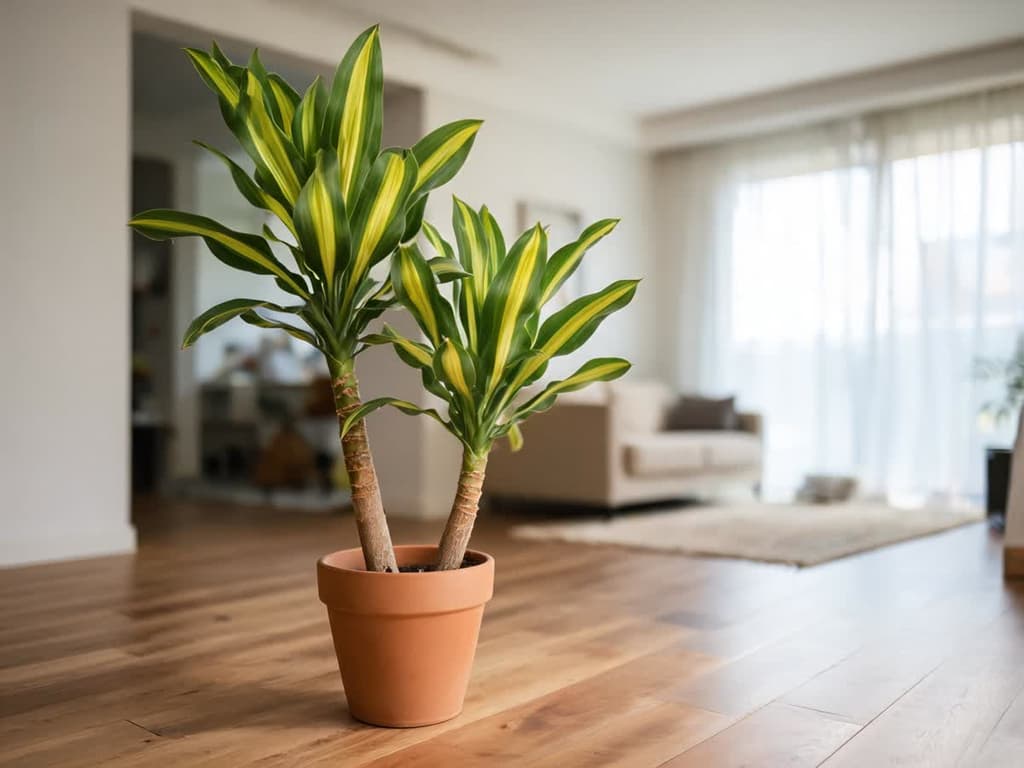
To care for dracaena, keep the pot in bright light without harsh afternoon sun. Water only when the top 5 cm (2 inches) of soil are dry. Use fluoride-free water whenever possible, because dracaena is very sensitive to it. Avoid soil with excessive perlite.
A lower leaf turning yellow and dropping from time to time is normal: that is how dracaena forms its trunk. What calls for action are brown tips across many leaves, multiple leaves dropping in the same week, or a soft stem near the soil line. Each of these signs has a dedicated section below.
Quick summary:
Dracaena is very sensitive to fluoride, according to Clemson University. The tips and margins of the leaves turn yellow and dry out, and the University of Florida notes that damaged foliage will not recover.
Water when the top 5 cm (2 inches) of soil are dry, which is the rule from the RHS, the Royal Horticultural Society. Constantly wet soil rots roots and the base of the stem.
Madagascar dragon tree sheds its lower leaves with age, according to North Carolina State University Extension (NC State). One leaf at a time is normal; several at once indicate an issue.
Cutting the top off a tall dracaena causes the stem to bud right below the cut (RHS), producing 2 or more new branches, according to NC State.
Which dracaena do you have?
Dracaena (Dracaena) is an entire genus, and several of its species are sold as houseplants. The four in the table are on the University of Florida list of dracaenas grown indoors. The care recommendations in this guide apply to all of them, and specific differences appear in the final column.
Common name | Scientific name | How to recognize | Care differences |
|---|---|---|---|
Corn plant | Dracaena fragrans (includes 'Massangeana', 'Janet Craig', and 'Warneckii') | Broad, strap-shaped leaves, often with a yellow or white stripe down the center; thick cane, sometimes sold as a cut log | In low light, new leaves emerge narrower (NC State) |
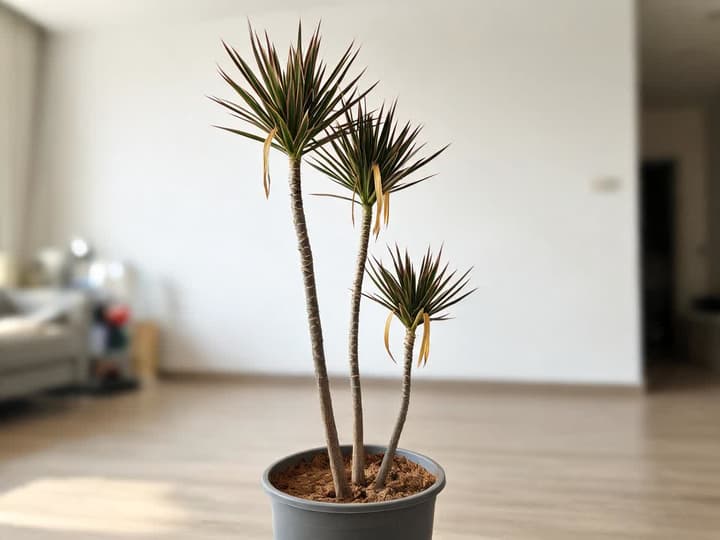
Madagascar dragon tree, marginata, or tricolor | Dracaena marginata | Slender, stiff leaves roughly 1.3 cm (0.5 in) wide with reddish margins; leaf tufts atop thin, bare stems | Loses lower leaves with age; exposed to temperatures near 0 °C (32 °F), leaves develop yellow bands |
Song of India | Dracaena reflexa ('Song of India') | Short leaves that curve downward, hence the reflexed name; commercial varieties feature yellow or cream stripes | Standard care applies without adjustments |
Lucky bamboo | Dracaena sanderiana | Smooth, green stems with sparse leaf clusters, often sold with their bases standing in water | When grown in water, this guide's watering rules do not apply |
The name of the marginata is disputed among sources. The NC State profile already treats it as a variety of Song of India, Dracaena reflexa var. angustifolia. The RHS and the University of Florida still use Dracaena marginata. For plant care, the difference in name changes nothing.
The plant profiles for corn plant, Madagascar dragon tree, and Song of India feature photos of each species to help you identify your plant.
The snake plant has also been reclassified as a dracaena, Dracaena trifasciata. A DNA study published in the journal Phytotaxa in 2018 placed the former genus Sansevieria into Dracaena. Its thick leaves store water, and snake plant watering is spaced much further apart than that of the dracaenas in this guide.
Is it a dracaena or a palm?
Many people call dracaenas palms, but foliage distinguishes the two. A dracaena leaf is whole, shaped like a strap or blade, and emerges directly from the stem. A palm leaf features a long petiole and is divided into many leaflets (areca, kentia) or fans out like an open hand (lady palm).
Potted palms turn yellow for different reasons, such as potassium and manganese deficiencies described in the guide to palms with yellow leaves. On dracaenas, the primary suspect is water quality, as shown in the section on fluoride.
Light: where to place your dracaena
Dracaena thrives in bright, filtered light without direct sun hitting the foliage. NC State notes that direct sun scorches corn plant leaves. In insufficient light, new leaves grow noticeably narrower. The RHS recommends an east- or west-facing window, keeping foliage out of direct summer sun.
In Brazil, the window that gets sun almost all day faces north. The RHS writes for the northern hemisphere and cites a south-facing window with a sheer curtain: here, that equals a north-facing window with a curtain. Avoid direct afternoon sun hitting the foliage, even behind glass.
Dracaena survives in low-light corners. In NC State tables, it is the species that keeps an attractive appearance longest under low-light conditions. For a comparison with other species, check the list of plants for low light. Far from a window, however, stems stretch, new leaves grow narrow, and lower leaves drop sooner. Dracaenas with yellow, white, or pink stripes need the brightest part of the room.
How to water dracaena
Water dracaena when the top 5 cm (2 inches) of soil feel dry to the touch. Then soak the potting mix thoroughly until water drains from the bottom of the pot. After 15 minutes, empty any water standing in the saucer. Do not use ice-cold water: Clemson recommends avoiding cold water.
Sources differ slightly on how dry to let the soil get. Clemson suggests waiting until just the surface dries out. NC State advises keeping corn plant soil moist during the active growing season and watering less in winter. The RHS calls for the top 5 cm (2 inches) to be dry. This guide follows the RHS rule, because the most common error that kills potted dracaenas is overwatering: both the RHS and Clemson cite frequent watering as the main cause of root rot.
There is no set number of days that works for every home. Soil dries slower in large pots, in low-light corners, and in winter, which runs from June to August in Brazil. Stick your finger into the soil before each watering, down to the second knuckle, and only water if it comes out dry.
Fluoride and salts: the water issues that scorch dracaena tips
Dracaena is extremely sensitive to fluoride, and Clemson outlines the symptoms: yellowing leaf tips and margins, or dead patches that look scorched. NC State reports the same for the two most common species, corn plant and marginata. The RHS adds that fluoride in tap water causes brown leaf tips.
Fluoride gets in through three routes: water, soil, and fertilizer. In Brazil, Law 6,050 of 1974 requires the fluoridation of water in systems with a treatment plant. Perlite, those white specks mixed into the soil, is the second route: Clemson advises avoiding soil with excessive perlite. The third is superphosphate fertilizer, a phosphorus fertilizer that the same fact sheet says contains high levels of fluoride.
Take three steps to protect your plant:
Water with rainwater, filtered water, or distilled water whenever possible, as recommended by both the RHS and NC State.
Flush the soil once a month: pour fluoride-free water slowly through the pot until plenty drains out the bottom holes, then empty the saucer. NC State recommends this to remove built-up fertilizer salts.
Keep soil pH, the acidity level measured with a test kit, between 6.0 and 6.5. This is the range recommended by Clemson and the University of Florida. At a pH below 6.0, the University of Florida associates this with tip burn and yellowed leaves.
None of the reviewed sources state a maximum fluoride threshold in milligrams per liter. All recommend reducing fluoride and salts entering the potting mix.
Brown tips on dracaena: causes and how to tell them apart
Brown tips on dracaena stem from four primary causes, and two of them produce identical symptoms. Damaged leaf tissue will not turn green again, according to the University of Florida. Improvements will show only on new leaves.
What you see | Probable cause | What to do |
|---|---|---|
Brown tips and edges with a yellow halo between brown and green, on a plant watered on schedule | Fluoride from water or potting mix | Switch to fluoride-free water and flush soil monthly |
The same pattern, with a white crust on the soil surface or pot rim | Accumulated fertilizer salts | Flush the potting soil and reduce fertilizer |
Dry tips appearing when air conditioning is running or indoor air is dry | Dry air (NC State) | Move away from air vents and increase humidity |
Brown tips alongside yellow foliage, soil wet for days, and a darkened stem base | Overwatering and root rot | See the section on soft stems |
Fluoride and salt damage produce identical leaf symptoms. In practice, the fix for both is the same: fluoride-free water and periodic soil leaching. Low humidity shows up differently: NC State links brown tips to dry winter air when home heating is active. In Brazilian apartments, air conditioning running for hours dries out the air just as intensely.
If brown tips bother you aesthetically, trim away only the dead portions with clean scissors, following the natural pointed shape of the leaf. Trimming does not address the cause. If newly emerging leaf tips continue turning brown, the underlying problem remains.
Yellow lower leaves dropping: when it is not a problem
Madagascar dragon tree naturally sheds lower leaves with age, according to NC State. That is how it develops its bare cane crowned with foliage at the top. One yellowing leaf at the bottom at a time, on a plant that continues putting out new growth above, is normal.
Multiple leaves dropping at once indicates trouble. Clemson points to five causes for sudden heavy leaf loss: temperature changes, drafts, overwatering, poor drainage, and insect infestations. Middle and top leaves yellowing at the same time also call for attention.
Yellow leaves can also stem from general houseplant issues, such as nutrient deficiencies or abrupt light changes. The guide to yellow leaves helps diagnose these causes based on leaf position and pattern.
Soft lower stem: what you can save
A soft, dark, wet stem near the soil line indicates rot. The RHS explains the cause: keeping soil soaked through frequent watering or letting the pot sit in standing water rots the roots. In its lucky bamboo guide, NC State notes that excess moisture causes stems to rot as well.
Squeeze the stem gently, working your way up from the base. If only the base is soft while the upper section remains firm with healthy green leaves, the top can still be saved as a new plant. Dracaena roots readily from stem tip cuttings and stem sections, according to Clemson and Iowa State University. None of the referenced sources provide a step-by-step rot rescue guide, making this the safest approach:
Cut the stem with a clean knife at the point where tissue is firm and pale on the inside.
Discard the rotted base along with the waterlogged potting mix.
Root the healthy top and any firm stem sections in fresh, lightly moistened potting mix.
This rescue method avoids chemicals entirely, an important factor in homes with cats. If roots are healthy and only the lowest leaves have yellowed, the plant needs no pruning: space out waterings, check soil with your finger before watering, and empty saucers promptly.
Pruning: what to do with an overgrown dracaena
Dracaena responds well to hard pruning. The RHS notes that it readily produces new shoots on the stem directly below the cut. According to NC State, a pruned marginata stem usually sends out 2 or more branches. Clemson recommends cutting leggy, bare canes back to the desired height, noting that new foliage will appear soon after.
Clemson recommends spring or late summer for taking cuttings. In Brazil, that is from September to November, or February and March. The cut top does not need to go in the trash: it roots and becomes a new dracaena.
Soil, pots, and fertilizer for dracaena
Dracaena soil must drain freely and contain minimal perlite. Clemson advises avoiding mixes high in perlite and fertilizers containing superphosphate, both due to fluoride risk. The University of Florida, writing for commercial foliage growers, recommends pre-leaching perlite before use. Standard indoor potting mix without dense concentrations of white perlite pellets works well.
Repot only when roots have fully filled the current container. The RHS notes that nursery-bought dracaenas can remain in their original containers for years. After that, repot every 2 to 3 years, choosing a pot only one size larger. An oversized pot retains excess water too long, leading to root rot.
Fertilize once a month with liquid fertilizer for foliage plants from September to March, which are spring and summer in Brazil. That is the frequency Clemson indicates for these two seasons. The RHS warns that too much fertilizer hurts rather than helps, because it damages the roots. In the cold months, do not fertilize.
Indoor temperature and humidity
NC State recommends keeping corn plants above 10 °C (50 °F) whenever possible. They grow best between 21 °C and 27 °C (70 °F to 80 °F). The University of Florida reports that marginata develops yellow bands across foliage after just a few hours between 0 °C and 3 °C (32 °F to 37 °F). The same source directs handlers to keep dracaenas above 15.5 °C (60 °F) during transport and retail display.
In cities with cold winters, move the pot away from window glass on winter nights (from June to August in Brazil). Keep the plant away from cold drafts and air conditioning vents.
If indoor relative humidity drops below 30% to 40%, Clemson recommends misting leaves occasionally. The RHS suggests placing pots on trays filled with moist pebbles, making sure the bottom of the container stays above water, or grouping plants together.
Dracaena pests
The most common dracaena pests are mealybugs, scale insects, spider mites, and thrips, according to NC State, Clemson, and the RHS. Clemson reports that scale and mites are the most frequent. Inspect leaf undersides and leaf axils, where leaves meet the stem, during every watering. White cottony fuzz indicates mealybugs, small brown bumps suggest scale, and fine webbing points to spider mites.
Unidentified spots or insects could indicate either pests or disease. The guide on what is wrong with my plant distinguishes between the two by looking at symptom patterns.
Is dracaena toxic to cats and dogs?
Yes. The ASPCA, the humane society of the United States, lists the corn plant and the Madagascar dragon tree as toxic to dogs and cats. The toxic principle is saponins, substances within the plant itself that cause the symptoms. Signs include vomiting (occasionally with blood), depression, loss of appetite, drooling, and dilated pupils in cats.
The factsheet for each species outlines its toxicity details:
Frequently asked questions
How often should you water dracaena?
Water when the top 5 cm (2 inches) of soil are dry, the RHS rule. No source gives a number of days that works for every home. A large pot, a low-light corner, and winter (June to August in Brazil) make the soil dry more slowly. Stick your finger into the soil before each watering and only water if the soil comes out dry.
Should you cut brown tips off dracaena?
You can trim them, but strictly for cosmetic reasons. The brown tissue will not turn green again, according to the University of Florida. Use clean scissors to cut away only the dead tissue, following the natural pointed shape of the leaf. If new leaves continue emerging with brown tips, the underlying cause is still unresolved: inspect your water for fluoride and check the soil for salt buildup.
What does dracaena dislike?
Dracaena dislikes soggy soil and standing in water-filled saucers. It also struggles with fluoridated tap water, perlite-heavy soils, and superphosphate fertilizers. Direct afternoon sunlight scorches the foliage. Temperatures below 10 °C (50 °F), cold drafts, and ice-cold irrigation water round out the list of conditions to avoid.
Can you keep dracaena in the bedroom?
Yes, as long as the bedroom offers bright indirect light and the plant is kept out of reach of cats and dogs. In a dim bedroom, stems stretch and lower leaves drop prematurely. Corn plant rarely blooms indoors, but its flowers produce an intense nighttime fragrance, according to NC State.
Does dracaena like sun?
Dracaena likes plenty of light, but not direct sun on its leaves. NC State notes that direct sun burns the leaves of corn plant. In Brazil, north-facing windows receive the most sun, so use a sheer curtain on them. Near west-facing windows, keep the pot out of the path of direct afternoon sun.
Where to start today
Identify your dracaena using the table at the beginning of this guide and pinpoint the problem: is it on leaf tips, bottom leaves, or the stem? Brown tips require fluoride-free water and a thorough soil flush. Yellowing leaves combined with wet soil or a softening stem require less frequent watering, waiting until the top 5 cm (2 inches) dry out completely.
If you are not certain whether your plant is a dracaena, Bloom can identify the species from a single photo. The app is available exclusively for iPhone and includes 2 free plant identifications each month.
Related articles
How to Care for a Maidenhair Fern: Light, Water, and Revival Tips
Learn how to care for a maidenhair fern indoors: bright indirect light, consistently moist soil, high humidity, and how to revive it if it dries out completely.
How to Propagate Spider Plants: Root the Pup Before Cutting
The safest spider plant cutting comes from a pup still attached to the mother plant: rest the plantlet on soil in a small pot, wait for roots to establish, and only then cut the stolon. Learn when the pup is ready, whether rooting in water is worth it, how to divide the clump, and why plants fail to produce babies.
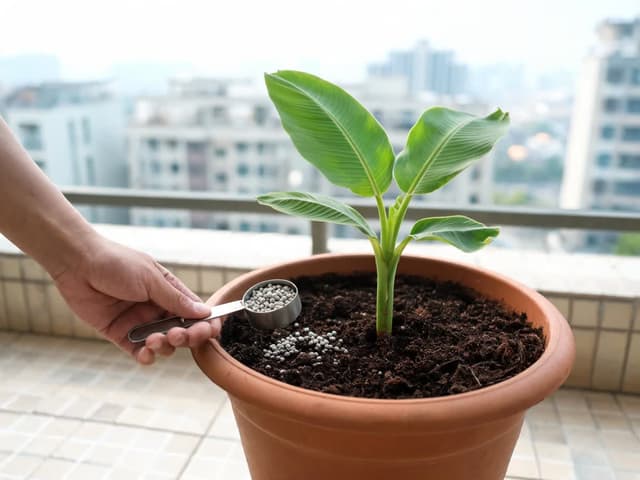
Banana plant fertilizer: fertilizing potted and backyard plants
Banana plant fertilizer needs more potassium than nitrogen, in a 3-1-6 ratio. For a potted plant on a balcony, use the label dose in spring and summer. In the backyard, fertilize every 2 months, adjusting the amount by mat age. Learn the formula, timing in Brazil, and signs of deficiency or excess.