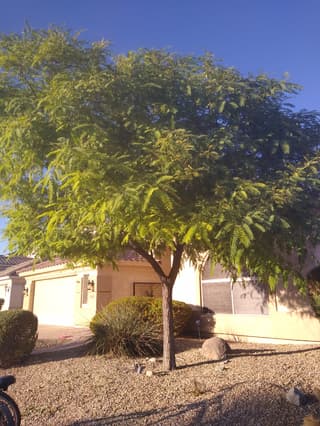
Tipu tree with Falling Leaves: Pet-Safe Treatment
Tipuana tipu
Tipu tree is a plant that needs bright light and infrequent watering. When showing falling leaves, it may indicate issues related to its environment or care.
Is your Tipu tree showing falling leaves? Discover 5 possible causes and how to treat them.
🔍 Possible Causes (5)
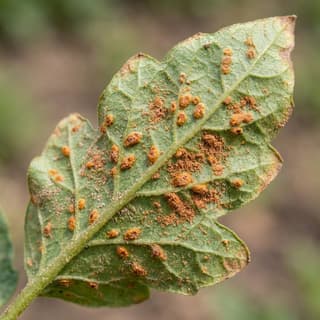
Rust
Rust is a common fungal disease caused by fungi in the order Pucciniales that affects a wide variety of plants. The disease gets its name from the characteristic orange, yellow, or reddish-brown pustules that appear on leaves, resembling metal rust. This obligate fungal parasite requires living plants to survive and can cause significant economic losses in agricultural crops.
✓ Related symptoms:
- • Premature yellowing and leaf drop
⚡ Quick Fixes:
Immediate Pruning
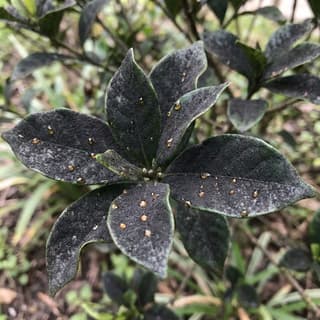
Sooty Mold
Sooty mold is a fungal disease that develops on surfaces coated with honeydew, a sticky sweet substance secreted by sap-sucking insects like aphids, scale insects, and whiteflies. While it does not directly infect plant tissue, it reduces photosynthetic capacity by blocking sunlight and diminishes the plant's aesthetic appearance.
✓ Related symptoms:
- • Yellowing or premature leaf drop due to reduced light
⚡ Quick Fixes:
Immediate physical removal

Root Rot
Root rot is a serious fungal disease that affects the root system of plants, causing them to decay and die. It is primarily caused by overwatering, poor drainage, or soil-borne fungi such as Pythium, Phytophthora, Rhizoctonia, and Fusarium. The disease thrives in waterlogged conditions where roots are deprived of oxygen, making them susceptible to fungal infection.
✓ Related symptoms:
- • Leaves dropping prematurely
⚡ Quick Fixes:
Emergency unpotting
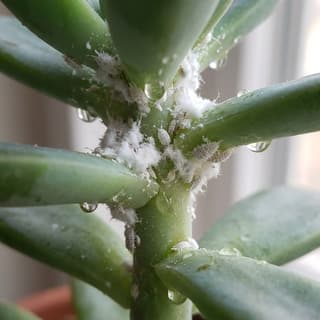
Mealybugs
Mealybugs are small, soft-bodied insects covered with a white, waxy, cottony material. They are common pests of houseplants and outdoor plants in mild climates. These sap-sucking insects feed on plant tissue, causing damage, stunted growth, and can lead to plant death if left untreated. They produce sticky honeydew which attracts sooty mold.
✓ Related symptoms:
- • Leaf drop and defoliation
⚡ Quick Fixes:
Step 1
Whiteflies
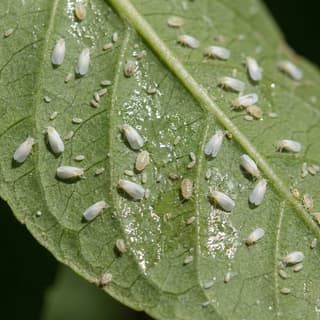
Whiteflies are small, soft-bodied, winged insects closely related to aphids and mealybugs. They are moth-like in appearance, about 1/16 inch long, triangular in shape, and gray-white in color. These sap-sucking pests feed on plant tissue, causing yellowing, stunted growth, and wilting. They also excrete honeydew, which attracts ants and promotes sooty mold growth. Whiteflies can transmit serious plant viruses.
✓ Related symptoms:
- • Leaf drop in severe infestations
⚡ Quick Fixes:
Step 1