Snake Plant with Salt Buildup? Rare but Treatable
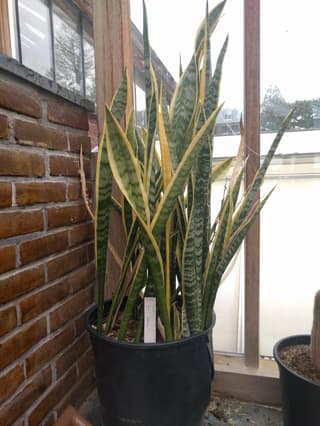
Sansevieria trifasciata
Salt Buildup on Snake Plant: What to Know?
Salt Buildup on Snake Plant (Sansevieria trifasciata) is a environmental condition with moderate severity. Snake Plant has low susceptibility to this disease. Salt buildup (also called salt accumulation or fertilizer salt deposits) is an environmental condition where mineral salts accumulate in the soil over time, creating a toxic environment for plant root...
Snake Plant is a easy-care plant. Recovery from Salt Buildup takes approximately 14 days with proper treatment. As an indoor plant, ensure good ventilation to aid recovery.
Unlike most plants, Snake Plant has natural resistance to Salt Buildup. Best treated with preventive measures rather than reactive treatment.
🔍 What Does Salt Buildup Look Like on Snake Plant?
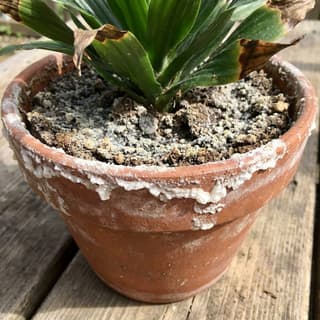
- • White crusty deposits on soil surface
- • White or yellow crystalline buildup around pot edges
- • Brown or burned leaf tips and edges
- • Yellowing leaves (chlorosis)
- • Wilting despite adequate watering
- • Stunted growth, especially in new growth
- • Premature leaf drop
- • Dead root tips
- • Reduced flowering or bud abortion
❓ What Causes Salt Buildup on Snake Plant?
- → Frequent shallow watering that does not flush salts through drainage
- → Over-fertilization or too frequent fertilization
- → Tap water high in dissolved minerals and salts
- → Poor drainage preventing salt leaching
- → Underwatering that concentrates salts in remaining water
- → Low-quality potting soil with high salt content
- → Hard water with high mineral content
- → Lack of flushing between fertilizer applications
💊 How to Treat Salt Buildup on Snake Plant?
TLDR: Treat Salt Buildup on Snake Plant with quick treatment (~7 days) or organic (~14 days). Snake Plant has low susceptibility to this disease.
Quick Fixes
Step 1
Take plant to sink, bathtub, or outdoors where water can drain freely
Step 2
Water soil thoroughly as normal, wait 5 minutes
Step 3
Water again heavily - pour twice the pot volume slowly through soil
Step 4
Let water drain completely through bottom holes
Step 5
Remove any visible white crust from soil surface and pot rim
Step 6
Do not let pot sit in drainage tray during process
Organic Treatment
Step 1
Remove visible white salt crust from soil surface (up to 0.25 inches deep)
Step 2
Use only rainwater or distilled water for leaching to avoid adding more minerals
Step 3
Slowly pour water through soil until it drains freely - use 3-4 times the pot volume
Step 4
Allow excess water to drain completely, never let pot sit in drained water
Step 5
Incorporate organic compost or worm castings to buffer future salt accumulation
Step 6
Repeat leaching every 4-6 months as preventive maintenance
🛡️ How to Prevent Salt Buildup on Snake Plant?
TLDR: Prevent Salt Buildup on Snake Plant with 8 essential preventive care practices.
- ✓ Water thoroughly until water drains from the bottom to flush salts
- ✓ Leach container soil every 3-6 months as preventive maintenance
- ✓ Use distilled, filtered, or rainwater instead of tap water
- ✓ Use slow-release fertilizers instead of frequent liquid feeding
- ✓ Apply fertilizer at half the recommended strength
- ✓ Ensure pots have adequate drainage holes
- ✓ Avoid over-fertilizing, follow package instructions
- ✓ Choose organic fertilizers which have lower salt content
🌱 How to Care for Snake Plant to Prevent Salt Buildup?
💧 How to Water
Allow soil to dry completely between waterings. Water every 2-3 weeks in growing season, monthly in winter. Overwatering is the most common mistake - when in doubt, don't water.
☀️ Lighting
Adapts to most light conditions from low light to bright indirect. Avoid intense direct sunlight which can scorch leaves. Darker varieties tolerate low light better; variegated types need more light to maintain coloring.
🪴 Ideal Soil
Use well-draining soil mix. Combine regular potting soil with coarse sand and perlite for optimal drainage. Ensure pot has drainage holes to prevent root rot.
Frequently asked questions
Can Salt Buildup kill my Snake Plant?
How long does Snake Plant take to recover from Salt Buildup?
Is Salt Buildup contagious to other plants near Snake Plant?
Sources & References
- Know the Signs of Salt Buildup in Desert Soil & How to Fix It
- Remember to Flush: Removing Excessive Salt Build-Up
- Signs of Salt Build Up in Plants: How to Spot and Prevent It
- Symptoms of Salt Buildup in Plants
- How To Manage Salt Build-Up in Indoor Plants
- Salt buildup in soil
- Sansevieria 101: How to Care for Snake Plants | Bloomscape
- Snake Plant Care Guide - Healthy Houseplants
- How to Grow and Care for Sansevieria - World of Succulents
- Sansevieria trifasciata - Missouri Botanical Garden
- Fact sheet: Sansevieria trifasciata - UF/IFAS Extension