Complete Plant Guide
Explore plants by difficulty, season and more. Find the perfect plant for you.
Difficulty
Categories
Plants by City
🗺️ Plants by City3752 plants found
Showing 721-756 of 3752
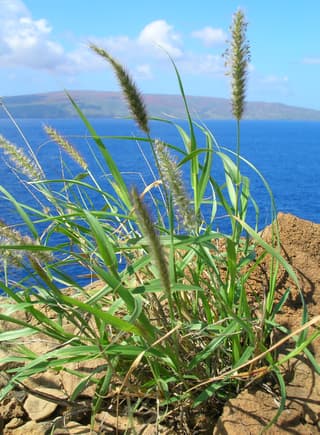
Sandbur
Cenchrus
Cenchrus is a genus of grasses in the family Poaceae, commonly known as sandbur, buffelgrass, or fountaingrass. It includes ornamental species such as crimson fountaingrass (Cenchrus setaceus) and forage grasses such as buffelgrass (Cenchrus ciliaris), widely used in pastures across arid and semi-arid regions. The genus is characterized by dense clumps of fine foliage, plume-like inflorescences, and bur-like seed heads with spines that cling to fur and clothing for dispersal.
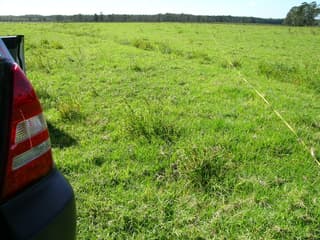
Kikuyu Grass
Cenchrus clandestinus
Kikuyu Grass (Cenchrus clandestinus) is a vigorous, fast-growing perennial grass native to the highland regions of East Africa. It is widely used as a lawn, pasture, and ground cover grass in tropical, subtropical, and warm temperate climates worldwide, including Australia, New Zealand, South Africa, and California. The plant spreads aggressively through an extensive network of rhizomes and stolons, forming dense, hard-wearing mats that recover quickly from mowing, grazing, and foot traffic. Its drought tolerance, adaptability to various soil types, and rapid establishment make it one of the most popular turf grasses globally.
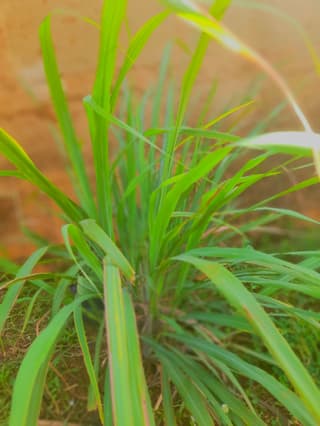
Elephant Grass
Cenchrus purpureus
Elephant Grass (Cenchrus purpureus, formerly Pennisetum purpureum) is a giant perennial grass native to tropical Africa. One of the most productive grasses in the world, it can reach up to 7 meters in height, forming dense bamboo-like clumps. Widely cultivated as a forage crop, biomass source, and for erosion control across tropical and subtropical regions.
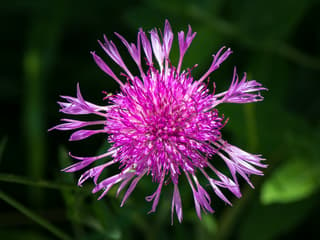
Knapweed / Cornflower
Centaurea
Centaurea is a large and diverse genus of over 700 herbaceous flowering plants in the family Asteraceae, native primarily to the Mediterranean basin, the Middle East, and broader Eurasia. The genus spans annuals, biennials, and perennials — from the beloved annual cornflower (C. cyanus) with its iconic blue blooms to robust perennial knapweeds that thrive in meadows and prairies. Flowers are characterized by a distinctive frilly outer ring of ray florets surrounding a dense central disc, appearing in shades of blue, purple, pink, white, yellow, and red. They are celebrated as excellent pollinator plants, attracting bees, butterflies, and hoverflies. Hardy, drought-tolerant, and low-maintenance, Centaurea species are widely grown in cottage gardens, wildflower meadows, and herbaceous borders.
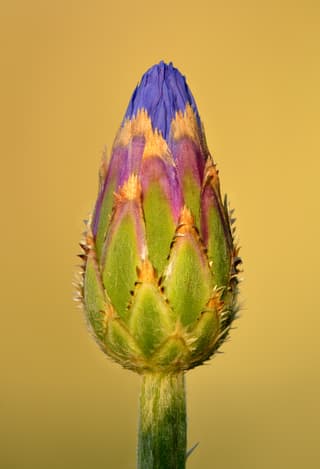
Cornflower
Centaurea cyanus
Centaurea cyanus, commonly known as the Cornflower or Bachelor's Button, is an iconic annual wildflower native to Europe. Famous for its vivid blue blooms, it has long been a staple of cottage gardens and wildflower meadows. Once a common sight in grain fields across Europe, it is Germany's de facto national flower, symbolizing resilience and unity. Its edible petals make it a popular garnish in culinary applications.
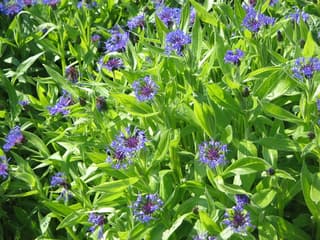
perennial cornflower
Centaurea montana
Centaurea montana, commonly known as Mountain Bluet or Perennial Cornflower, is a robust, clump-forming perennial. It features distinctive fringed, spider-like flower heads, most famously in a deep violet-blue, though cultivars exist in white and pink. Its lance-shaped leaves are covered in fine silvery hairs when young, giving the foliage a soft, grey-green appearance. It is highly valued in cottage gardens for its hardiness and ability to attract pollinators.
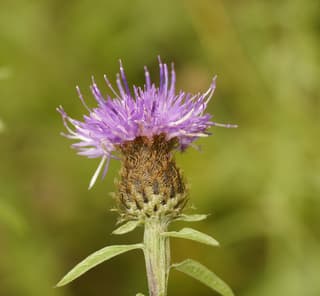
Common knapweed
Centaurea nigra
Common knapweed (Centaurea nigra) is a hardy herbaceous perennial wildflower native to Europe, prized for its thistle-like purple flowerheads and exceptional value to pollinators such as bees and butterflies. It grows upright to about 1 m tall, blooming from June to September in meadows, verges and wildlife gardens.
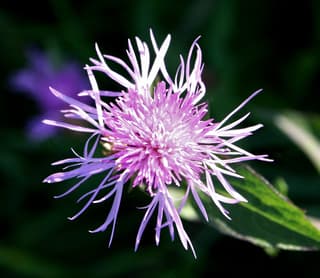
Tyrol Knapweed
Centaurea nigrescens
Centaurea nigrescens is a hardy perennial wildflower in the daisy family (Asteraceae), native to the mountain meadows of Central and Southeastern Europe. Its erect, branching stems bear thistle-like purplish-pink flower heads with distinctively dark, fringed bracts from summer into fall. Though prized in wildflower and pollinator gardens for its tough, low-maintenance nature, it has also naturalized widely outside its native range and is regulated as a noxious weed in parts of North America, so check local regulations before planting.
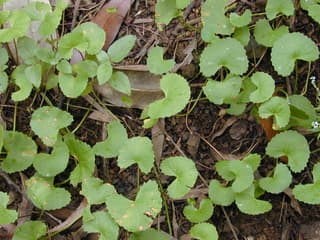
Gotu Kola
Centella asiatica
Gotu kola is a creeping perennial herb in the Apiaceae family, native to the wetlands of South and Southeast Asia. It produces long creeping stolons that root at the nodes, quickly covering moist soil. The leaves are kidney-shaped to coin-shaped with scalloped margins, and the plant bears tiny whitish to pinkish flowers in the summer. It is considered one of the most significant medicinal herbs in traditional Ayurvedic and Chinese medicine.
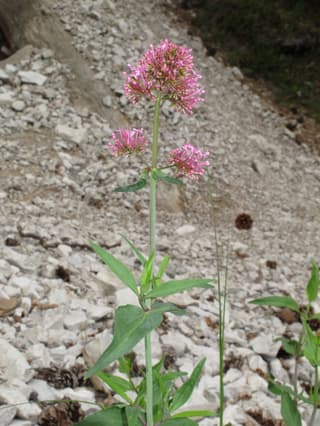
Red Valerian
Centranthus ruber
Red Valerian (Centranthus ruber) is a perennial plant from the Caprifoliaceae family, originally native to the Mediterranean region. With its vibrant red, pink, or white flower panicles and an upright, bushy growth habit reaching up to 90 cm in height, it is a true eye-catcher in any garden. The plant is extremely robust, drought-tolerant, and thrives particularly well in sunny, calcareous locations. Its long flowering period from spring to autumn, as well as its attractiveness to butterflies and bees, make it a valuable addition to any wildlife garden. Once established, it is nearly maintenance-free and overwinters effortlessly in temperate climates.
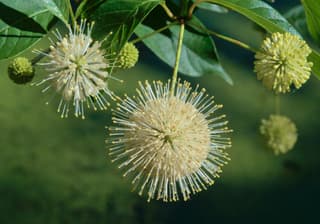
Buttonbush
Cephalanthus occidentalis
The Common Buttonbush (Cephalanthus occidentalis) is a deciduous wetland shrub native to eastern North America, where it naturally grows along lakeshores, marshes, and streams. From June to August, it produces distinctive, spherical flower heads composed of small, white to cream-colored, fragrant tubular flowers that resemble pincushions and attract butterflies, hummingbirds, and bees. The shrub typically reaches 5 to 8 feet in height and width, featuring glossy, dark green opposite leaves. Because it tolerates flooding and standing water, it is ideal for rain gardens, pond edges, and moist depressions.
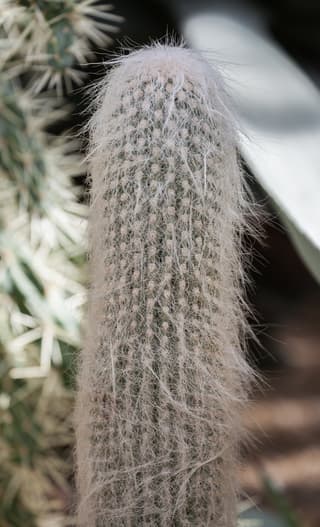
Old Man Cactus
Cephalocereus senilis
Cephalocereus senilis, the Old Man Cactus, is a slow-growing columnar cactus native to the mountains of northeastern Mexico. It is famous for the long, shaggy coat of white hair-like spines that cloaks its stem, shielding the plant from intense sun and cold. In the wild it can eventually tower many meters tall over a century or more, but as a container plant it stays a compact, sculptural, and remarkably low-maintenance houseplant.
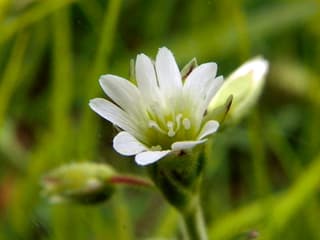
Common mouse-ear chickweed
Cerastium fontanum
Cerastium fontanum, commonly known as mouse-ear chickweed, is a low-growing, mat-forming perennial herb. It is easily identified by its small, hairy, oval leaves and tiny white flowers with five petals that are so deeply notched they appear as ten. It is a resilient species often found in lawns, meadows, and disturbed soils across temperate regions.
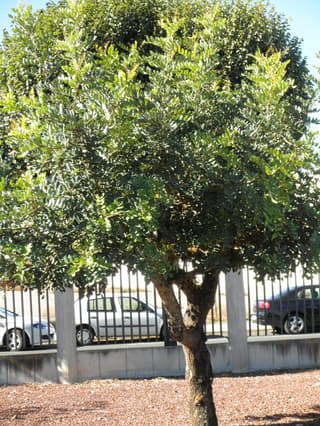
Carob Tree
Ceratonia siliqua
The carob tree (Ceratonia siliqua) is an evergreen Mediterranean tree in the legume family, prized for its sweet, edible seed pods used as a chocolate substitute. Extremely drought-tolerant and long-lived, it thrives in poor, rocky soils and can reach up to 15 m tall.
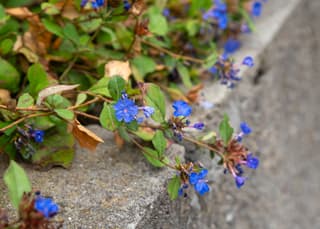
Hardy Plumbago
Ceratostigma plumbaginoides
Ceratostigma plumbaginoides, commonly known as hardy plumbago or dwarf plumbago, is a creeping herbaceous perennial native to China. It forms dense colonies 20 to 25 cm (8 to 10 inches) tall thanks to its creeping rhizomes, and produces a profusion of intense gentian-blue flowers in late summer that persist until the first frosts. Its glossy green foliage turns spectacular bronze-red hues in autumn, offering double ornamental interest. A particularly resilient plant, it tolerates drought once established and withstands cold winters (down to USDA zone 5a).
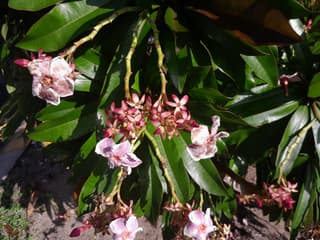
Suicide tree
Cerbera odollam
Cerbera odollam, also known as the suicide tree or pong-pong, is an evergreen tree in the Apocynaceae family, native to the coastal swamps and mangroves of southern India, Madagascar, and Southeast Asia. It can reach 10-12 meters in height, featuring glossy leaves and fragrant white flowers with a yellow center. The fruits, which turn from green to red as they ripen, contain a single extremely toxic seed rich in cardiac glycosides (cerberin), capable of stopping the heartbeat even in very small quantities: hence the tragic nickname by which it is known in India.
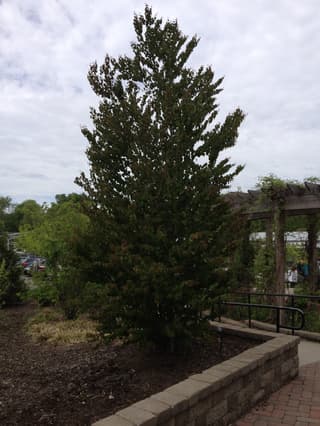
Katsura tree
Cercidiphyllum japonicum
Cercidiphyllum japonicum, known as the Katsura tree, is a deciduous tree native to Japan and China featuring characteristic heart-shaped leaves that emerge reddish and turn green throughout the summer. In autumn, the foliage shifts to shades of yellow, orange, and reddish-apricot, and as the leaves fall, they emit a sweet fragrance reminiscent of caramel, cinnamon, or cotton candy. The tree is medium to large, often multi-stemmed, with an elegant, rounded crown and grayish bark that flakes with age. It is fully hardy and frequently planted as an ornamental tree in gardens, parks, and avenues.
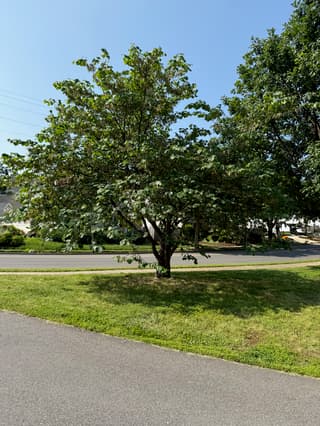
Eastern Redbud
Cercis canadensis
Cercis canadensis, commonly known as the Eastern Redbud, is a small to medium-sized deciduous tree native to eastern North America. It is celebrated for its spectacular early-spring display of rosy-pink, pea-like flowers that erupt in dense clusters along bare branches and even the trunk before the heart-shaped leaves emerge. Growing 20–30 feet tall and wide, it thrives as an understory tree and is one of the first trees to herald the arrival of spring.
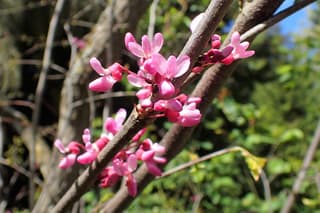
Chinese Redbud
Cercis chinensis
Cercis chinensis, commonly known as Chinese redbud, is a deciduous flowering shrub or small tree native to central China. Prized for its spectacular display of rosy-pink to magenta flowers that cover bare branches in early to mid-spring before the heart-shaped leaves emerge, it is a popular ornamental in gardens, courtyards, and as a specimen plant. Left unpruned it typically grows as a multi-stemmed shrub reaching 2-4.5 m tall, though it can be trained into a small single-trunk tree.
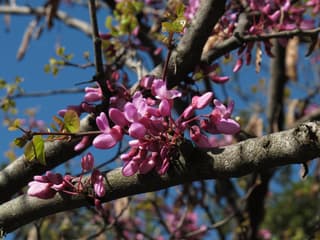
Judas tree
Cercis siliquastrum
The Judas tree (Cercis siliquastrum) is a deciduous ornamental tree native to the Mediterranean region and the Near East. Renowned for its spectacular spring bloom, it produces clusters of pink-purple flowers directly on its branches and trunk (cauliflory) before the heart-shaped leaves appear. It reaches 6 to 8 meters in height with a similar spread, and also features decorative purple seed pods in summer and golden foliage in autumn.
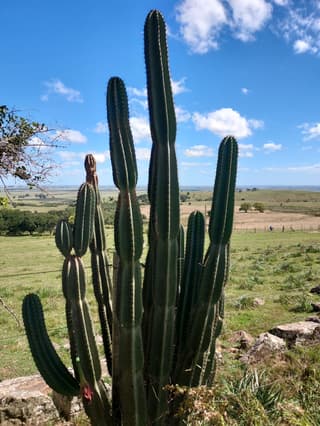
Cereus / Hedge Cactus (genus)
Cereus
Cereus is a genus of tall columnar cacti native to South America, including species like C. hildmannianus, C. repandus, and C. peruvianus. These robust, fast-growing cacti produce spectacular white nocturnal flowers and are widely grown as ornamental plants in gardens and sunny interiors.

Beach Apple Cactus
Cereus fernambucensis
The beach apple cactus is a shrubby, richly branching columnar cactus endemic to the eastern coast of Brazil, where it grows on sand dunes, restinga scrub, and rocky coastal outcrops, forming dense clumps up to 5 meters across. Its ribbed, spiny stems bear large, night-blooming white flowers followed by edible fruit with tangy white pulp. It is a tough, drought- and salt-tolerant species well suited to hot, sunny coastal conditions.
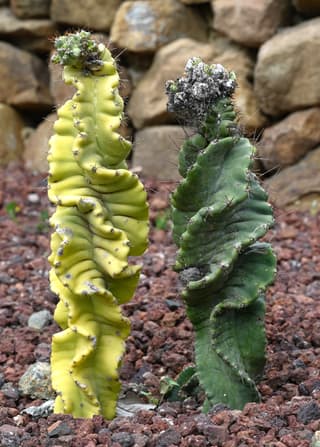
Spiral Cactus
Cereus forbesii 'Spiralis'
Cereus forbesii 'Spiralis' is a columnar cactus featuring blue-green, waxy-coated stems with ribs that twist spirally around the trunk, creating a striking decorative effect. In its natural South American habitat, it can reach several meters in height, but in container cultivation, it grows much slower and remains more compact. During summer nights, mature specimens may produce large, funnel-shaped white flowers. It is an easy-to-care-for plant, drought-tolerant and resilient to neglect, making it ideal for beginner succulent enthusiasts.
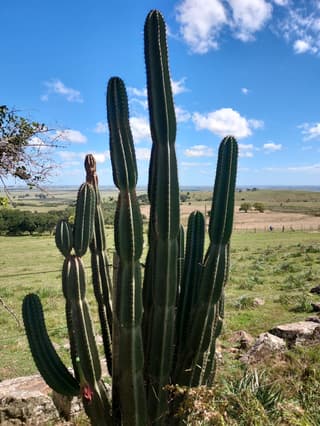
Monster Cactus
Cereus hildmannianus
Cereus hildmannianus f. monstrosus, commonly known as Monster Cactus, is a fascinating and sculptural variant of the columnar cactus native to South America. Its most striking characteristic is its irregular and twisted growth, resulting from mutations in the growth points, which creates unique and 'monstrous' forms. It has a bluish-green coloration and, although rarely in pots, can produce large nocturnal white flowers followed by reddish, sweet fruits.
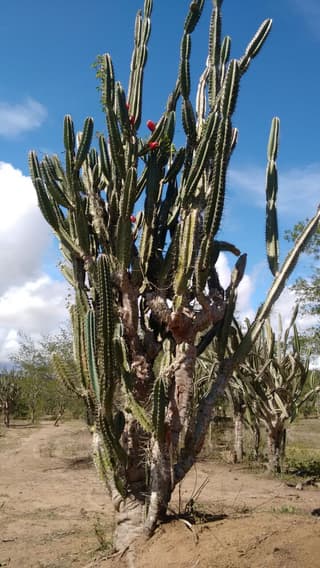
Mandacaru Cactus
Cereus jamacaru
Cereus jamacaru, popularly known as Mandacaru, is an iconic columnar cactus native to the Brazilian semi-arid region. It is characterized by its imposing stature, thorny branches, and magnificent white flowers that bloom only at night and wither by dawn. A symbol of the Caatinga's resilience and vitality, it is capable of storing large amounts of water in its succulent stem.
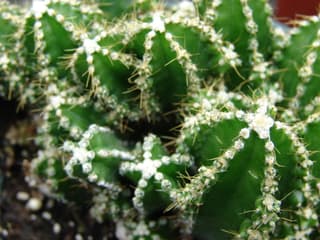
Giant Peruvian Cereus
Cereus peruvianus
The Giant Peruvian Cereus (Cereus peruvianus) is a fast-growing columnar cactus native to South America, closely related to other Cereus species and prized for its dramatic upright form and large, fragrant, night-blooming flowers. It can grow several meters tall, featuring blue-green ribbed stems armed with sturdy spines. Its cream to white flowers open only at night and wilt by morning. Extremely drought-tolerant, it is commonly grown as an ornamental accent, security hedge, or living fence in warm climates.
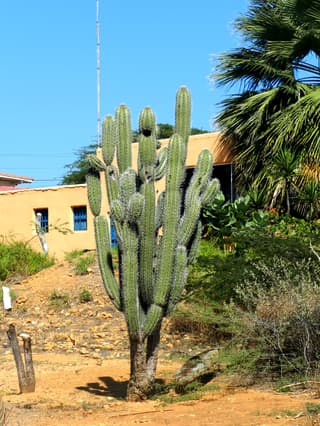
Peruvian Apple Cactus
Cereus repandus
Cereus repandus, commonly known as the Peruvian Apple Cactus, is a tall columnar cactus native to South America, particularly Venezuela and Colombia. Its gray-green to blue-green cylindrical stems can reach up to 33 feet (10m) in the wild, adorned with 8-13 ribs and robust spines. In late spring through fall, fragrant white flowers bloom for a single night before giving way to edible red fruit. This fast-growing species is celebrated worldwide for its architectural beauty and remarkable drought tolerance.

honeywort
Cerinthe major
Cerinthe major, commonly called honeywort, is a fast-growing Mediterranean annual in the borage family prized for its waxy, blue-green foliage and nodding clusters of tubular flowers cupped by heart-shaped bracts. Native to southern Europe, western Asia and North Africa, it self-seeds readily in warm borders and containers, blooming from spring through fall. Its nectar-rich flowers are a magnet for bees and other pollinators, and the genus name -- Greek for "wax flower" -- nods to the old belief that bees gathered wax from its blooms.
Cerioporus
Cerioporus
Cerioporus is a genus of polypore fungi, most notably represented by Cerioporus squamosus, commonly known as Dryad's Saddle. These fungi are characterized by their large, fan-shaped or kidney-shaped fruiting bodies that grow on decaying hardwood. They feature a distinctive pattern of brownish scales on their upper surface and a porous underside instead of gills. When young, they are tender and possess a unique scent reminiscent of watermelon rind or cucumber.
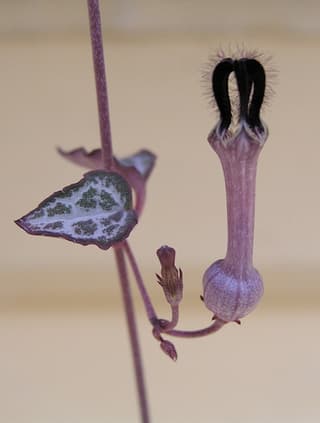
Rosary Vine
Ceropegia
Ceropegia is a genus of succulent trailing and climbing plants in the family Apocynaceae, native primarily to South Africa, Eswatini, and Zimbabwe. The most popular species is Ceropegia woodii, commonly known as String of Hearts or Rosary Vine, celebrated for its heart-shaped leaves in dark green with silver variegations and purple undersides, cascading along long trailing stems. It produces tubular lantern-shaped flowers in pale pink to deep purple during summer and fall, and forms aerial tubers along its stems that can be used for propagation.
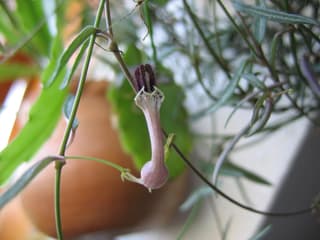
String of Needles
Ceropegia linearis
Ceropegia linearis is a trailing succulent vine from South Africa in the Apocynaceae family. It forms long, thin hanging stems with narrow leaves and small tubular, lantern-shaped flowers. Its subspecies woodii is the popular string of hearts.
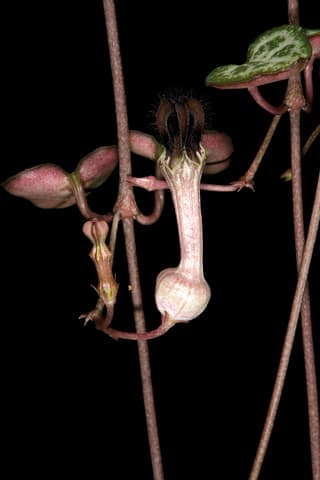
String of Hearts
Ceropegia woodii
Ceropegia woodii, commonly known as String of Hearts, is a charming trailing succulent native to South Africa. This elegant plant features delicate heart-shaped leaves with beautiful marbled patterns in shades of green and silver, growing on slender, cascading vines that can reach up to 4 meters in length. It produces small, tube-shaped pink-purple flowers in summer and fall, and develops small aerial tubers along its stems.
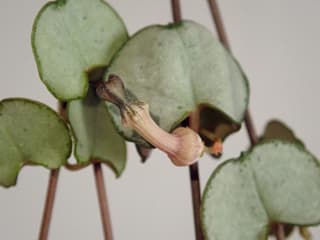
Variegated String of Hearts
Ceropegia woodii 'Variegata'
Ceropegia woodii 'Variegata' is a trailing succulent vine native to South Africa and Zimbabwe, belonging to the Apocynaceae family. Its small heart-shaped leaves display a striking variegated pattern of green, silver-gray, cream, and pink tones, with purple undersides. The thin, wiry, reddish stems can trail several meters, making it a favorite for hanging baskets and shelves.
Yellow Oleander
Cervera thevetia
Cascabela thevetia, commonly known as Yellow Oleander or Lucky Nut, is an evergreen shrub or small tree prized for its glossy green foliage and tubular flowers. While aesthetically pleasing, it is extremely toxic in all its parts due to the presence of cardiac glycosides.
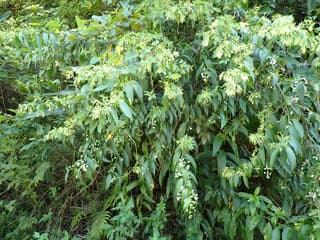
Night-blooming jasmine
Cestrum nocturnum
Cestrum nocturnum, commonly known as Night-blooming jasmine, is a fast-growing woody shrub famous for its small, greenish flowers that open at dusk, releasing a sweet and powerful fragrance that can be detected from long distances.
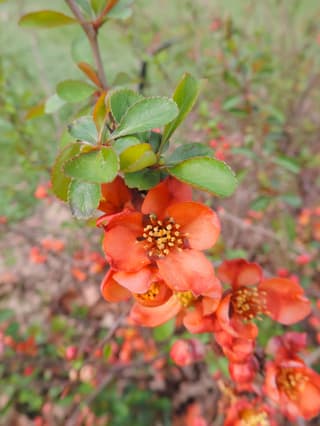
Maule's Quince
Chaenomeles japonica
Maule's Quince (Chaenomeles japonica) is a thorny, deciduous shrub native to Japan and South Korea, belonging to the Rosaceae family. It is prized as an ornamental plant for its spectacular early spring blooms in shades of red, orange, pink, and white, which appear on bare branches before the leaves emerge. The small, yellow-green fruits are aromatic and edible, commonly used in jellies, preserves, and liqueurs. Highly cold-hardy (USDA zones 5a–9b), it is widely used in borders, hedges, erosion control, and bonsai cultivation.
Find the Perfect Plant
Our plant guide helps you find ideal species for your experience level and time of year.
Browse by Difficulty, Season & More
Use the filters below to narrow this catalog by care difficulty, season, environment, or search directly by name. Each filter leads to a focused list tailored to your specific growing conditions.