Asteraceae
Zig-zag bush: Ground Cover Plant
Launaea arborescens
An extremely hardy and low-maintenance plant, adapted to arid and semi-arid climates. It requires full, direct sun, very well-drained sandy or stony soil, and sporadic watering—excess water is the primary cause of issues. It does not require regular fertilization. Suitable only for outdoor cultivation in xeriscape gardens or rockeries.
Every 21 days
Direct sun
2° - 42°C
20% - 50%
Categories
What is Zig-zag bush?
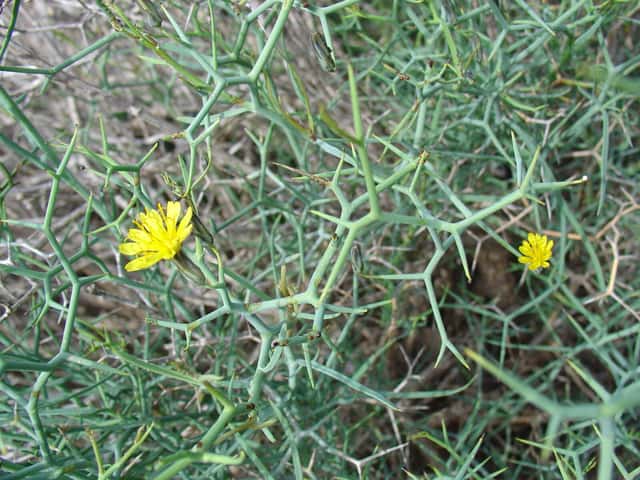
Zig-zag bush (Launaea arborescens) is a easy-care plant from the Asteraceae family. A woody and thorny shrub, reaching up to 1 m in height, native to North Africa, southern Spain (primarily Almeria and Murcia), and the Canary Islands. It is characterized by glaucous-green, waxy branches that are highly branched in a zigzag pattern (divaricate growth), ending in rigid, sharp tips as...
Zig-zag bush grows up to 1.0m, spread of 100cm, watering every 21 days, 2°C – 42°C, 20–50% humidity. It is not suitable for indoor environments and safe for pets.
Unlike many tropical plants, Zig-zag bush tolerates watering mistakes. Best for beginners. Unlike many popular species, Zig-zag bush is safe to keep around pets.
How to Care for Zig-zag bush?
TLDR: Zig-zag bush needs Direct sun, watering every 21 days, and temperatures between 2-42°C with 20-50% humidity.
How Often Should You Water Zig-zag bush?
Water only when the soil is completely dry deep down; in its natural habitat, it survives solely on seasonal rainfall. In cultivation, spaced waterings (every 2-3 weeks in summer, practically none in winter) are sufficient. Avoid waterlogging.
How Much Light Does Zig-zag bush Need?
Requires full, direct sun throughout the day; it is a typical heliophilic plant of desert environments and does not tolerate prolonged shade or indoor cultivation.
What Is the Best Soil for Zig-zag bush?
Prefer sandy or stony soils, poor in organic matter, alkaline to neutral, and with excellent drainage. It tolerates some soil salinity.
What Pot Should You Use for Zig-zag bush?
If grown in a container, opt for an unglazed clay or terracotta pot that is wide and shallow, with multiple drainage holes and a layer of gravel at the bottom.
What Is Zig-zag bush and Where Does It Come From?
A woody and thorny shrub, reaching up to 1 m in height, native to North Africa, southern Spain (primarily Almeria and Murcia), and the Canary Islands. It is characterized by glaucous-green, waxy branches that are highly branched in a zigzag pattern (divaricate growth), ending in rigid, sharp tips as a defense against herbivores. Leaves are sparse, fleshy, and inconspicuous, and the entire stem secretes a milky latex when broken. The flower heads are small and terminal, with light yellow florets similar to a miniature dandelion. It grows in arid scrublands, stony slopes, and dry riverbeds, from sea level up to approximately 800 m in altitude.
How Big Does Zig-zag bush Grow?
TLDR: Zig-zag bush can reach up to 1.0m tall with Slow growth rate.
Max height
1.0m
Spread
1.0m
Growth rate
Slow
Foliage
Evergreen
Plant Uses
Ground Cover
Soil coverage
Ornamental
Great for decoration
Is your plant showing symptoms?
Click on the symptom to discover possible causes:
What Diseases Commonly Affect Zig-zag bush?
TLDR: Zig-zag bush is susceptible to 2 known diseases. Monitor regularly for early detection.
Overwatering
Overwatering occurs when plants receive too much water, depriving roots of oxygen and causing root rot. This environmental stress is one of the most common causes of houseplant death, as waterlogged soil prevents roots from breathing and functioning properly.
Root Rot
Root rot is a serious fungal disease that affects the root system of plants, causing them to decay and die. It is primarily caused by overwatering, poor drainage, or soil-borne fungi such as Pythium, Phytophthora, Rhizoctonia, and Fusarium. The disease thrives in waterlogged conditions where roots are deprived of oxygen, making them susceptible to fungal infection.
Compare with similar plants
| Attribute | Difficulty | Light | Watering | Pet Safe |
|---|---|---|---|---|
| Field Maple | Easy | Bright indirect | 14d | ✓ |
| Silver Birch | Easy | Direct sun | 14d | ✓ |
| Common Blanketflower | Easy | Direct sun | 10d | ✓ |
| Cushion Bush | Easy | Direct sun | 14d | ✓ |





