Asteraceae
Yam Daisy: Edible Plant
Microseris lanceolata
Grow murnong in full sun in loose, friable, well-drained soil with a neutral pH. Water regularly through the spring-to-summer growing season while leaves and tubers are developing, then let the soil dry out as the foliage dies back after flowering — the plant is dormant and drought-tolerant over this period. It is frost hardy and suits both open garden beds and deep pots that give the roots room to expand.
Every 7 days
Bright indirect
-5° - 30°C
30% - 70%
Categories
What is Yam Daisy?
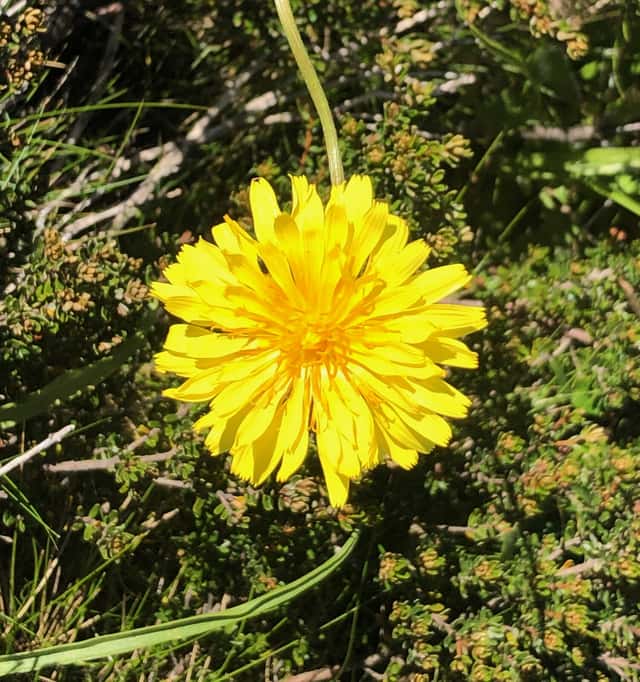
Yam Daisy (Microseris lanceolata) is a medium-care plant from the Asteraceae family. Microseris lanceolata, known as the yam daisy or murnong, is a perennial herb in the daisy family (Asteraceae) native to the plains, open forests and alpine herbfields of southeastern Australia. It grows from a tuft of narrow, toothed, lance-shaped leaves and sends up a bare stalk topped with a sing...
Yam Daisy grows up to 40cm, spread of 30cm, watering every 7 days, -5°C – 30°C, 30–70% humidity. It is not suitable for indoor environments and safe for pets.
Unlike many popular species, Yam Daisy is safe to keep around pets.
How to Care for Yam Daisy?
TLDR: Yam Daisy needs Bright indirect, watering every 7 days, and temperatures between -5-30°C with 30-70% humidity.
How Often Should You Water Yam Daisy?
Keep soil lightly moist during active growth in spring and summer to plump up the tubers, then cut back sharply once leaves yellow and die back after flowering; waterlogging the dormant tuber invites rot.
How Much Light Does Yam Daisy Need?
Needs full sun (at least 6 hours a day) for strong flowering and tuber development; tolerates a little dappled shade in very hot inland climates.
What Is the Best Soil for Yam Daisy?
Prefers loose, loamy, well-draining soil with a near-neutral pH (about 6.5-7.3) so the branching tuberous roots can expand freely; avoid heavy, waterlogged clay.
What Pot Should You Use for Yam Daisy?
A deep pot (at least 25-30 cm) with excellent drainage holes, giving the branching tuberous roots vertical room to develop.
Care Schedule
Fertilize
Every 60 days
Repot
Every 730 days
What Is Yam Daisy and Where Does It Come From?
Microseris lanceolata, known as the yam daisy or murnong, is a perennial herb in the daisy family (Asteraceae) native to the plains, open forests and alpine herbfields of southeastern Australia. It grows from a tuft of narrow, toothed, lance-shaped leaves and sends up a bare stalk topped with a single dandelion-like yellow flower head that closes on cloudy days. Below ground, several fleshy, tapering roots branch out from the base of the rosette. For thousands of years these roots were dug, roasted in earth ovens and eaten by Aboriginal peoples across southeastern Australia, particularly the Kulin nations, for whom murnong was a dietary staple before European livestock grazing devastated wild populations in the 1800s.
How to Propagate Yam Daisy?
Seed Sowing
- Use fresh seed - seed older than about 6 months germinates poorly.
- Direct-sow where plants are to grow, since tubers dislike disturbance once established.
- 1 Timing
Sow in autumn to early winter; hot weather greatly reduces germination.
- 2 Sowing
Scatter seed on the soil surface and press in lightly without burying it - darkness inhibits germination.
- 3 Care
Keep the seed bed lightly moist until germination, then grow on before transplanting to final position.
Materials needed:
How Big Does Yam Daisy Grow?
TLDR: Yam Daisy can reach up to 40cm tall with Fast growth rate.
Max height
40cm
Spread
30cm
Growth rate
Fast
Foliage
Deciduous
Plant Uses
Edible
Can be consumed
Ornamental
Great for decoration
Culinary Uses
- Tubers eaten raw with a sweet, coconutty, radish-like crunch
- Tubers roasted or baked in embers/earth ovens until sweet and caramelised
- Baked tubers mashed with butter or added to salads
- Young leaves used as a bitter-green salad garnish
- Tubers boiled or dried and ground into flour
Is your plant showing symptoms?
Click on the symptom to discover possible causes:
What Diseases Commonly Affect Yam Daisy?
TLDR: Yam Daisy is susceptible to 4 known diseases. Monitor regularly for early detection.
Aphids
Aphids are small, soft-bodied, pear-shaped insects (1/16 to 1/8 inch long) that feed by sucking nutrient-rich sap from plants. They reproduce rapidly and can quickly weaken plants, causing distorted growth and transmitting plant viruses. Aphids come in various colors including green, black, red, yellow, brown, and gray. They secrete honeydew, a sticky substance that attracts ants and encourages sooty mold growth.
Slugs and Snails
Slugs and snails are mollusks that feed on plant tissue, causing irregular holes in leaves and damage to young seedlings. They are most active at night and in moist conditions, leaving characteristic silvery slime trails. These pests can quickly devastate gardens, especially during wet seasons.
Powdery Mildew
Powdery mildew is a common fungal disease caused by various fungi species including Erysiphe, Podosphaera, Oïdium, and Leveillula. It affects over 10,000 plant species worldwide. The disease thrives in warm, dry climates with high humidity and appears as a distinctive white powdery coating on plant surfaces.
Root Rot
Root rot is a serious fungal disease that affects the root system of plants, causing them to decay and die. It is primarily caused by overwatering, poor drainage, or soil-borne fungi such as Pythium, Phytophthora, Rhizoctonia, and Fusarium. The disease thrives in waterlogged conditions where roots are deprived of oxygen, making them susceptible to fungal infection.
Meaning & Symbolism
A symbol of resilience and of Aboriginal land stewardship in southeastern Australia, where murnong was once so abundant it was described as a staple as important as the potato in Europe before colonisation nearly wiped it out.
Compare with similar plants
| Attribute | Difficulty | Light | Watering | Pet Safe |
|---|---|---|---|---|
| Dark Fieldcap | Medium | Low light | 2d | ⚠️ |
| Azalea | Medium | Partial shade | 3d | ⚠️ |
| Muriel's Bamboo | Medium | Partial shade | 3d | ✓ |
| Bougainvillea | Medium | Direct sun | 7d | ⚠️ |




