Winteraceae
Winter's Bark (Drimys winteri)
Drimys winteri
A handsome evergreen for mild, sheltered gardens. Plant it in full sun or partial shade, out of cold drying winds, in humus-rich, moist but well-drained, slightly acid soil. Water young plants regularly during their first years; established trees tolerate short dry spells. It is hardy to about -10 C. Little pruning is needed: just remove dead wood and shape lightly once a year. It is generally free of pests and diseases, but waterlogged soil can cause root rot.
Every 7 days
Bright indirect
-10° - °C
% - %
Categories
What is Winter's Bark?
Winter's Bark (Drimys winteri) is a medium-care plant from the Winteraceae family. Drimys winteri, known as Winter's bark, canelo or foye, is an evergreen tree in the Winteraceae, an ancient family related to the magnolias. It is native to Chile, from the Limarí River to Cape Horn, and to Andean Patagonia in Argentina down to Tierra del Fuego, growing from sea level to about 1,700...
Winter's Bark grows up to 20.0m, spread of 800cm, watering every 7 days. It is not suitable for indoor environments and safe for pets.
Unlike many popular species, Winter's Bark is safe to keep around pets.
How to Care for Winter's Bark?
TLDR: Winter's Bark needs Bright indirect, watering every 7 days, and temperatures between -10-30°C with 40-70% humidity.
How Often Should You Water Winter's Bark?
Water young plants about once a week in their first two or three years, more often in hot, dry weather, so the soil stays evenly moist. Established trees cope with short dry spells but grow best with steady moisture. Use rainwater if your tap water is hard, and never leave the roots standing in stagnant water.
How Much Light Does Winter's Bark Need?
Full sun to partial or dappled shade. In hot, sunny areas a little afternoon shade helps. Choose a spot sheltered from strong, cold winds, which brown the leaves and make the plant more vulnerable to frost and drought.
What Is the Best Soil for Winter's Bark?
Deep, humus-rich, moist but well-drained soil, slightly acid to neutral. It accepts loam and clay, but dislikes very chalky soil. When planting, dig a hole three times the size of the root ball and mix in well-rotted compost and some coarse sand for drainage.
What Pot Should You Use for Winter's Bark?
Best planted in the ground. A young plant can grow for a few years in a large, deep container with drainage holes and an acid, humus-rich mix, but containers dry out faster, so water it attentively.
What Is Winter's Bark and Where Does It Come From?
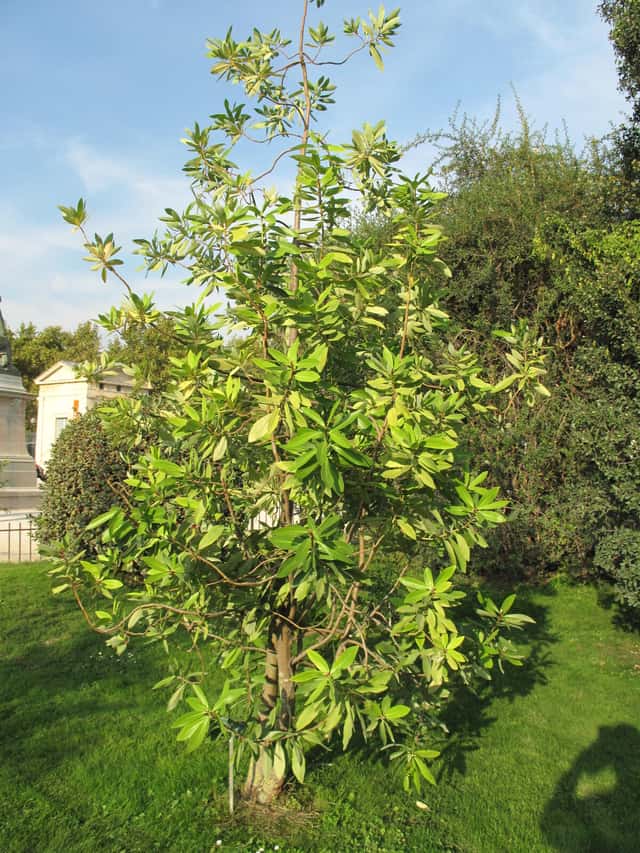
Drimys winteri, known as Winter's bark, canelo or foye, is an evergreen tree in the Winteraceae, an ancient family related to the magnolias. It is native to Chile, from the Limarí River to Cape Horn, and to Andean Patagonia in Argentina down to Tierra del Fuego, growing from sea level to about 1,700 m, often beside streams, lakes and wetlands. In gardens it usually forms a tree or multi-stemmed shrub around 7-8 m tall, while wild trees reach 15-20 m. The leathery, glossy green leaves are 6-20 cm long and whitish underneath, and smell peppery when crushed. The aromatic bark is reddish brown. Clusters of fragrant, jasmine-scented, creamy-white flowers with red sepals open mainly in late spring and early summer, followed by small bluish to purple-black berries.
How to Propagate Winter's Bark?
Semi-hardwood cuttings
Rooting is slow and around 60% of cuttings usually take. Keep humidity high without letting the compost become soggy.
- 1 In July or August, cut 10-15 cm semi-ripe shoots from the current year's growth
- 2 Remove the lower leaves and dip the base in rooting hormone
- 3 Insert the cuttings in a moist mix of peat-free compost and sand
- 4 Keep them in a humid, shaded spot such as a covered propagator or cold frame
- 5 Pot them up individually once well rooted
Materials needed:
Seed
Germination is often below 30%, so sow plenty of seed. Fresh seed and a cold period give the best results.
- 1 Collect ripe, dark berries in autumn and clean out the black, kidney-shaped seeds
- 2 Sow fresh seed in pots of moist, humus-rich compost
- 3 Place the pots in a cold frame over winter, or chill the seed at about 4 C before sowing
- 4 Keep the compost moist and prick out seedlings once they are large enough to handle
Materials needed:
How Big Does Winter's Bark Grow?
TLDR: Winter's Bark can reach up to 20.0m tall with Medium growth rate.
Max height
20.0m
Spread
8.0m
Growth rate
Medium
Foliage
Evergreen
Plant Uses
Ornamental
Great for decoration
Medicinal
Medicinal properties
Aromatic
Pleasant fragrance
Edible
Can be consumed
Medicinal Uses
- Bark infusion historically used to prevent and treat scurvy
- Bark used in Chilean folk medicine to reduce fever
Culinary Uses
- Dried bark used as a pepper substitute in Chile and Argentina
- Dried berries used as a spice
Is your plant showing symptoms?
Click on the symptom to discover possible causes:
What Diseases Commonly Affect Winter's Bark?
TLDR: Winter's Bark is susceptible to 2 known diseases. Monitor regularly for early detection.
Root Rot
Root rot is a serious fungal disease that affects the root system of plants, causing them to decay and die. It is primarily caused by overwatering, poor drainage, or soil-borne fungi such as Pythium, Phytophthora, Rhizoctonia, and Fusarium. The disease thrives in waterlogged conditions where roots are deprived of oxygen, making them susceptible to fungal infection.
Phytophthora Root Rot
The Phytophthora genus consists of soil-borne oomycetes (water molds) that act as plant pathogens, primarily affecting trees and woody plants. It typically spreads through the root system, leading to systemic decline and eventual plant collapse.
Meaning & Symbolism
The canelo is the sacred tree of the Mapuche people of Chile and Argentina, a symbol of good, peace and justice. Mapuche spiritual leaders were known as "servants of the foye".
Fun Facts
Its name honours Captain John Wynter, who took the bark to Europe around 1580 as a remedy for scurvy.
An infusion of the bark helped keep Captain James Cook's crew healthy in the South Pacific.
It is the sacred tree of the Mapuche people of Chile and Argentina.
The Winteraceae are an ancient flowering plant family whose wood lacks the water-conducting vessels found in most flowering plants.
Frequently asked questions
How cold-hardy is Winter's bark?
How much sun does Drimys winteri need?
What soil does Winter's bark like?
When does Winter's bark flower?
Is the bark of Drimys winteri edible?
Compare with similar plants
| Attribute | Difficulty | Light | Watering | Pet Safe |
|---|---|---|---|---|
| Dark Fieldcap | Medium | Low light | 2d | ⚠️ |
| Azalea | Medium | Partial shade | 3d | ⚠️ |
| Muriel's Bamboo | Medium | Partial shade | 3d | ✓ |
| Bougainvillea | Medium | Direct sun | 7d | ⚠️ |
Choose & Compare
Sources & References
- Drimys winteri Winter's bark - RHS Plant Profile
- Drimys winteri - Landscape Plants, Oregon State University
- Drimys winteri - Wikipedia
- Drimys winteri (Canelo) - EcuRed
- Drimys: planting, growing and maintaining - Promesse de Fleurs
- Drimys winteri (Winter's Bark) - Karen's Garden Tips
- Drimys winteri (DRIWI) pests - EPPO Global Database