Verbenaceae
Sweet almond verbena: Aromatic Plant
Aloysia gratissima
Prefers full sun and well-drained soils, even poor or stony ones; tolerates drought once established and only needs regular watering during its first year. It does not require intensive fertilization or special care: simply prune it after flowering to maintain its compact shape and stimulate new blooms.
Every 14 days
Direct sun
-15° - 38°C
% - %
Categories
What is Sweet almond verbena?
Sweet almond verbena (Aloysia gratissima) is a easy-care plant from the Verbenaceae family. Aloysia gratissima, popularly known as sweet almond verbena, bee bush, or almond verbena, is an aromatic shrub from the Verbenaceae family, native to the temperate and subtropical regions of South America (Argentina, Paraguay, Uruguay, southern Brazil) and also found in Mexico and the southern Unite...
Sweet almond verbena grows up to 3.6m, spread of 245cm, watering every 14 days, -15°C – 38°C. It is not suitable for indoor environments and safe for pets.
Unlike many tropical plants, Sweet almond verbena tolerates watering mistakes. Best for beginners. Unlike many popular species, Sweet almond verbena is safe to keep around pets.
How to Care for Sweet almond verbena?
TLDR: Sweet almond verbena needs Direct sun, watering every 14 days, and temperatures between -15-38°C with 40-70% humidity.
How Often Should You Water Sweet almond verbena?
Water deeply once or twice a week during the first year to encourage rooting. Once established, reduce watering to a minimum and only do so during prolonged dry periods; excessive water promotes root rot.
How Much Light Does Sweet almond verbena Need?
Needs full sun, at least 6 hours of direct light per day, to flower abundantly. Tolerates partial shade, but flowering is significantly reduced.
What Is the Best Soil for Sweet almond verbena?
Adapts to sandy, stony, or calcareous soils with a neutral to slightly alkaline pH (6.1-7.8); the only essential requirement is good drainage, as it does not tolerate waterlogging.
What Pot Should You Use for Sweet almond verbena?
It is preferable to grow it directly in the garden soil; if grown in a pot, choose a large terracotta pot (minimum 40 cm) with multiple drainage holes, as the porous material helps prevent excess moisture in the roots.
What Is Sweet almond verbena and Where Does It Come From?
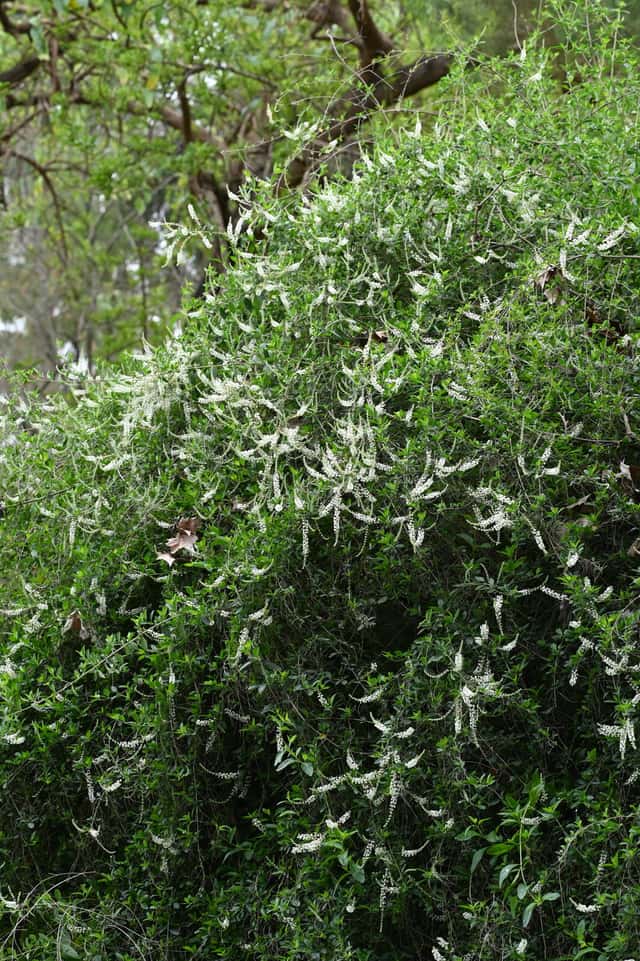
Aloysia gratissima, popularly known as sweet almond verbena, bee bush, or almond verbena, is an aromatic shrub from the Verbenaceae family, native to the temperate and subtropical regions of South America (Argentina, Paraguay, Uruguay, southern Brazil) and also found in Mexico and the southern United States. It reaches between 2 and 3.5 meters in height, with slender, flexible branches covered in small, grayish-green opposite leaves. Between spring and autumn, especially after warm rains, it is covered in tiny white flowers with an intense vanilla perfume that attract bees and other pollinators, which is why it is also known as the "bee bush." It is a very drought-resistant and low-maintenance species, ideal for xeriscape gardens, living fences, and pollinator spaces.
How to Propagate Sweet almond verbena?
Semi-hardwood stem cuttings
Take cuttings from this year's shoots, slightly woody at the base, in spring or early summer. Using rooting hormone improves success.
- 1 Cut 10-15 cm cuttings from semi-hardwood stem tips
- 2 Remove leaves from the bottom third and dip the base in rooting hormone
- 3 Plant in a light, well-drained mixture (sand + substrate)
- 4 Keep moist and in partial shade until rooted
- 5 Transplant when new leaves appear, a sign of formed roots
Materials needed:
Seed propagation
Seed propagation is slower and less reliable than cuttings; plants obtained this way take longer to flower.
- 1 Collect mature seeds after flowering
- 2 Sow in a well-drained substrate, barely covering with soil
- 3 Keep moist and in a warm, bright place
- 4 Transplant seedlings when they have several true leaves
Materials needed:
How Big Does Sweet almond verbena Grow?
TLDR: Sweet almond verbena can reach up to 3.6m tall with Medium growth rate.
Max height
3.6m
Spread
2.5m
Growth rate
Medium
Foliage
Semi-evergreen
Plant Uses
Ornamental
Great for decoration
Medicinal
Medicinal properties
Aromatic
Pleasant fragrance
Medicinal Uses
- Infusion of leaves and stems as a digestive, carminative, and tonic for gastrointestinal discomfort
- Decoction of tender stems to reduce fever
- Traditional use to regulate blood pressure in cases of hypotension and relieve vertigo
- Washes with the decoction of the aerial part to relieve varicose legs
- Phytochemical studies report antioxidant, anti-inflammatory, gastroprotective, and antimicrobial activity
Culinary Uses
- Leaves and flowers used to flavor mate, tea, or "aguapasto" in northeastern Argentina
Is your plant showing symptoms?
Click on the symptom to discover possible causes:
What Diseases Commonly Affect Sweet almond verbena?
TLDR: Sweet almond verbena is susceptible to 3 known diseases. Monitor regularly for early detection.
Root Rot
Root rot is a serious fungal disease that affects the root system of plants, causing them to decay and die. It is primarily caused by overwatering, poor drainage, or soil-borne fungi such as Pythium, Phytophthora, Rhizoctonia, and Fusarium. The disease thrives in waterlogged conditions where roots are deprived of oxygen, making them susceptible to fungal infection.
Aphids
Aphids are small, soft-bodied, pear-shaped insects (1/16 to 1/8 inch long) that feed by sucking nutrient-rich sap from plants. They reproduce rapidly and can quickly weaken plants, causing distorted growth and transmitting plant viruses. Aphids come in various colors including green, black, red, yellow, brown, and gray. They secrete honeydew, a sticky substance that attracts ants and encourages sooty mold growth.
Spider Mites
Spider mites are tiny arachnids (less than 1/20 inch long) related to spiders and ticks that feed on plant sap. They thrive in hot, dry conditions and can cause significant damage to ornamental and vegetable plants. During severe infestations, crop losses can reach 14% or higher as these pests disrupt vital plant processes including photosynthesis, carbon dioxide absorption, and transpiration.
Meaning & Symbolism
Due to its ability to flower in poor soils and attract swarms of bees, sweet almond verbena symbolizes resilience and the generosity of nature; in popular South American tradition, it also represents the wisdom of homemade medicine passed down through generations.
Compare with similar plants
| Attribute | Difficulty | Light | Watering | Pet Safe |
|---|---|---|---|---|
| Field Maple | Easy | Bright indirect | 14d | ✓ |
| Silver Birch | Easy | Direct sun | 14d | ✓ |
| Common Blanketflower | Easy | Direct sun | 10d | ✓ |
| Cushion Bush | Easy | Direct sun | 14d | ✓ |
Choose & Compare
Sources & References
- Whitebrush (Aloysia gratissima): All You Need To Know - Gardenia.net
- Aloysia gratissima - Native Plant Society of Texas
- Aloysia gratissima - Wikipedia
- Aloysia gratissima: description, scope, popular uses, chemical composition, medicinal potential and toxicity - PubMed
- Plantas Nativas de Buenos Aires: Aloysia gratissima - Cedrón del monte
- Aloysia gratissima (usillo) - SIB, Parques Nacionales, Argentina





