Cannaceae
Water canna: Full Sun Plant
Canna glauca
Grow in full sun in constantly wet to waterlogged, organically rich soil, or as a marginal plant in shallow water above the rootstock. It is frost-tender: foliage dies back with cold, but the rhizome survives to resprout the following spring in warm-temperate to tropical climates.
Every 1 days
Direct sun
5° - 35°C
% - %
Categories
What is Water canna?
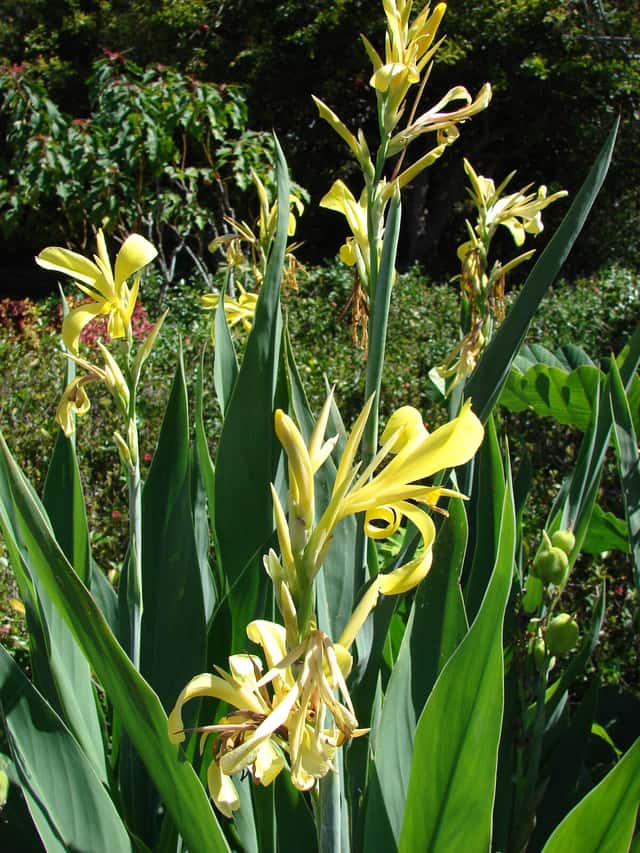
Water canna (Canna glauca) is a easy-care plant from the Cannaceae family. Water canna is a perennial herb in the family Cannaceae, native to wetlands of tropical and subtropical America, from the southeastern United States through Mexico, Central America, South America and the West Indies. It is easily recognized by its narrow, blue-green (glaucous) leaves and its large,...
Water canna grows up to 1.8m, watering every 1 days, 5°C – 35°C. It is not suitable for indoor environments and safe for pets.
Unlike many tropical plants, Water canna tolerates watering mistakes. Best for beginners. Unlike many popular species, Water canna is safe to keep around pets.
How to Care for Water canna?
TLDR: Water canna needs Direct sun, watering every 1 days, and temperatures between 5-35°C with 40-70% humidity.
How Often Should You Water Water canna?
Never let the soil dry out — this species is happiest with standing water over its roots, making it ideal for pond margins, rain gardens or containers without drainage.
How Much Light Does Water canna Need?
Full sun gives the best flowering; it tolerates light shade but blooms less prolifically.
What Is the Best Soil for Water canna?
Use a rich, organic, constantly moist to waterlogged soil; it tolerates a wide pH range from slightly acid to alkaline.
What Pot Should You Use for Water canna?
A drainage-free pot or aquatic planting basket kept submerged under a few inches of water suits it best.
What Is Water canna and Where Does It Come From?
Water canna is a perennial herb in the family Cannaceae, native to wetlands of tropical and subtropical America, from the southeastern United States through Mexico, Central America, South America and the West Indies. It is easily recognized by its narrow, blue-green (glaucous) leaves and its large, pale-to-bright yellow flowers, produced from spring through fall. Unlike most cannas, it grows naturally as a marginal aquatic or bog plant, rooting in wet soil or in up to about 15 cm (6 in) of still or slow-moving water around lakes, marshes and pond edges.
How to Propagate Water canna?
Rhizome division
- 1 Lift the clump from soil or container in late winter or early spring
- 2 Cut the rhizome into sections, keeping at least one growth bud (eye) per piece
- 3 Replant immediately in moist, organically rich soil or directly in shallow water
Materials needed:
Seed
- 1 Collect dark, mature seeds from the seed pods after flowering
- 2 Nick or lightly sand the hard seed coat to speed germination
- 3 Sow in moist substrate and keep warm
Materials needed:
How Big Does Water canna Grow?
TLDR: Water canna can reach up to 1.8m tall with Fast growth rate.
Max height
1.8m
Growth rate
Fast
Foliage
Deciduous
Plant Uses
Ornamental
Great for decoration
Culinary Uses
- The starch-rich rhizome has traditionally been eaten in some Andean regions of South America, though the species is grown almost exclusively as an ornamental for its foliage and flowers.
Is your plant showing symptoms?
Click on the symptom to discover possible causes:
What Diseases Commonly Affect Water canna?
TLDR: Water canna is susceptible to 3 known diseases. Monitor regularly for early detection.
Rust
Rust is a common fungal disease caused by fungi in the order Pucciniales that affects a wide variety of plants. The disease gets its name from the characteristic orange, yellow, or reddish-brown pustules that appear on leaves, resembling metal rust. This obligate fungal parasite requires living plants to survive and can cause significant economic losses in agricultural crops.
Aphids
Aphids are small, soft-bodied, pear-shaped insects (1/16 to 1/8 inch long) that feed by sucking nutrient-rich sap from plants. They reproduce rapidly and can quickly weaken plants, causing distorted growth and transmitting plant viruses. Aphids come in various colors including green, black, red, yellow, brown, and gray. They secrete honeydew, a sticky substance that attracts ants and encourages sooty mold growth.
Spider Mites
Spider mites are tiny arachnids (less than 1/20 inch long) related to spiders and ticks that feed on plant sap. They thrive in hot, dry conditions and can cause significant damage to ornamental and vegetable plants. During severe infestations, crop losses can reach 14% or higher as these pests disrupt vital plant processes including photosynthesis, carbon dioxide absorption, and transpiration.
Compare with similar plants
| Attribute | Difficulty | Light | Watering | Pet Safe |
|---|---|---|---|---|
| Field Maple | Easy | Bright indirect | 14d | ✓ |
| Silver Birch | Easy | Direct sun | 14d | ✓ |
| Common Blanketflower | Easy | Direct sun | 10d | ✓ |
| Cushion Bush | Easy | Direct sun | 14d | ✓ |
Choose & Compare
Sources & References
- Canna glauca - Wikipedia
- Canna (aquatic group) - Plant Finder, Missouri Botanical Garden
- Canna glauca (Water canna) - Native Plant Information Network
- Canna Lily - ASPCA Toxic and Non-Toxic Plants
- How to Prevent and Treat Rust on Canna Plants - Gardener's Path
- Canna glauca (Canna-do-Brejo) - Jardim Cor
- Canna glauca (Maraca Amarilla) - Flora of the Southeastern United States
- File:Starr 071024-0184 Canna glauca.jpg - Wikimedia Commons





