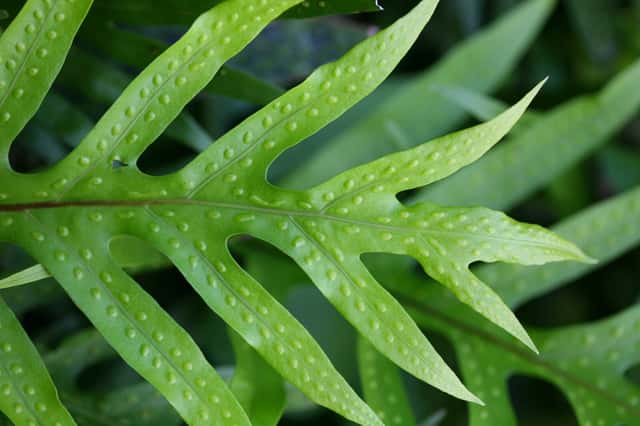
Polypodiaceae
Wart Fern (Phymatosorus grossus) Care Guide
Phymatosorus grossus
Grow in low to bright indirect light with consistently moist, well-draining, organically rich soil. Water when the top of the soil dries out, avoid soggy conditions that invite root rot, and keep humidity high with a pebble tray or regular misting.
Every 6 days
Low light
15° - 32°C
60% - 85%
Categories
What is Wart Fern?
Wart Fern (Phymatosorus grossus) is a easy-care plant from the Polypodiaceae family. Phymatosorus grossus, commonly called the wart fern or maile-scented fern, is a rhizomatous fern native to the tropical Pacific and Australasia. Its glossy, leathery fronds emerge from creeping, scaly rhizomes and release a maile-like fragrance when crushed. In Hawaii, where it naturalized after bei...
Wart Fern grows up to 60cm, spread of 90cm, watering every 6 days, 15°C – 32°C, 60–85% humidity. It is suitable for indoor environments and safe for pets.
Unlike many tropical plants, Wart Fern tolerates watering mistakes. Best for beginners. Unlike many popular species, Wart Fern is safe to keep around pets. Without adequate drainage, root rot can develop within 12 days.
How to Care for Wart Fern?
TLDR: Wart Fern needs Low light, watering every 6 days, and temperatures between 15-32°C with 60-85% humidity.
How Often Should You Water Wart Fern?
Water roughly every 5-7 days, checking that the top 2cm of soil has dried first; the rhizome and roots rot quickly in waterlogged soil.
How Much Light Does Wart Fern Need?
Provide bright, indirect light or partial shade; it tolerates low light but direct sun scorches and bleaches the fronds.
What Is the Best Soil for Wart Fern?
Use a rich, well-draining mix of peat moss, perlite, and compost that holds some moisture without staying soggy.
What Pot Should You Use for Wart Fern?
A wide, shallow pot with generous drainage holes suits its creeping rhizome habit better than a deep container.
Care Schedule
Fertilize
Every 42 days
Misting
Every 3 days
Repot
Every 365 days
What Is Wart Fern and Where Does It Come From?
Phymatosorus grossus, commonly called the wart fern or maile-scented fern, is a rhizomatous fern native to the tropical Pacific and Australasia. Its glossy, leathery fronds emerge from creeping, scaly rhizomes and release a maile-like fragrance when crushed. In Hawaii, where it naturalized after being introduced in the early 20th century, its fronds are woven into lei and used to scent traditional kapa cloth. As a houseplant it forms dense, spreading mats of deeply lobed foliage that tolerates low light better than most ferns.
How to Propagate Wart Fern?
Rhizome division
Always use clean, sharp tools and keep divisions humid until they establish; avoid burying the rhizome too deep.
- 1 Remove the plant from its pot and locate a healthy section of rhizome with at least one or two fronds and some roots attached
- 2 Cut the rhizome section free with clean, sharp scissors or a knife
- 3 Plant the division in a rich, well-draining mix with the rhizome sitting at or just below the soil surface
- 4 Keep the soil evenly moist and in a shaded spot until new growth appears
Materials needed:
Spore propagation
This method is slow and mainly used by enthusiasts or breeders; rhizome division is far more reliable for home growers.
- 1 Collect mature spores from the brown sori on the underside of older fronds
- 2 Sow spores thinly onto sterile, moist peat-based medium
- 3 Cover the container to keep humidity near 100% and keep in bright, indirect light
- 4 Wait for the prothallus stage to develop and become fertilized before tiny new ferns emerge, then pot up seedlings once large enough to handle
Materials needed:
How Big Does Wart Fern Grow?
TLDR: Wart Fern can reach up to 60cm tall with Fast growth rate.
Max height
60cm
Spread
90cm
Growth rate
Fast
Foliage
Evergreen
Plant Uses
Ornamental
Great for decoration
Aromatic
Pleasant fragrance
Ground Cover
Soil coverage
Is your plant showing symptoms?
Click on the symptom to discover possible causes:
What Diseases Commonly Affect Wart Fern?
TLDR: Wart Fern is susceptible to 5 known diseases. Monitor regularly for early detection.
Root Rot
Root rot is a serious fungal disease that affects the root system of plants, causing them to decay and die. It is primarily caused by overwatering, poor drainage, or soil-borne fungi such as Pythium, Phytophthora, Rhizoctonia, and Fusarium. The disease thrives in waterlogged conditions where roots are deprived of oxygen, making them susceptible to fungal infection.
Overwatering
Overwatering occurs when plants receive too much water, depriving roots of oxygen and causing root rot. This environmental stress is one of the most common causes of houseplant death, as waterlogged soil prevents roots from breathing and functioning properly.
Scale Insects
Scale insects are small sap-sucking pests that appear as brown, shell-like bumps on plant stems and leaves. There are over 25 species, divided into armored (hard) and unarmored (soft) scales. They feed by piercing plant tissue and extracting sap, which weakens the plant and can lead to yellowing, stunted growth, and even death if left untreated. They also excrete honeydew, which attracts ants and promotes sooty mold growth.
Mealybugs
Mealybugs are small, soft-bodied insects covered with a white, waxy, cottony material. They are common pests of houseplants and outdoor plants in mild climates. These sap-sucking insects feed on plant tissue, causing damage, stunted growth, and can lead to plant death if left untreated. They produce sticky honeydew which attracts sooty mold.
Meaning & Symbolism
In Hawaiian culture the maile-like scent of its crushed fronds links the plant to fragrance, adornment and lei-making, symbolizing connection to the land.
Fun Facts
Its crushed fronds smell like maile, a fragrant vine traditionally woven into Hawaiian lei.
It was introduced to Hawaii in the late 1910s and has since naturalized across all the main islands.
New fronds grow from creeping, scaly rhizomes rather than a central crown, letting the plant spread sideways to form dense mats.
Frequently asked questions
Is the wart fern easy to care for?
Why do the fronds smell fragrant when touched?
Can I grow it outdoors?
Compare with similar plants
| Attribute | Difficulty | Light | Watering | Pet Safe |
|---|---|---|---|---|
| Field Maple | Easy | Bright indirect | 14d | ✓ |
| Silver Birch | Easy | Direct sun | 14d | ✓ |
| Common Blanketflower | Easy | Direct sun | 10d | ✓ |
| Cushion Bush | Easy | Direct sun | 14d | ✓ |
Choose & Compare
Sources & References
- Microsorum Care Guide (Indoor Ferns) - ukhouseplants
- Microsorum grossum Plant Care - Greg App
- Microsorum grossum - Wikipedia
- Phymatosorus scolopendria - NC State Extension Plant Toolbox
- The Complete Wart Fern Plant Care Guide - Greg App
- Plant FAQs: Microsorum Scolopendria - Monsteraholic
- Phymatosorus grossus - Musk Fern - Wildlife of Hawaii





