Crassulaceae
Silver Bracts (Pachyphytum bracteosum)
Pachyphytum bracteosum
An easy succulent for a sunny windowsill or for pots outdoors in frost-free climates. It wants full sun, sharply drained cactus mix and moderate watering while growing, then nearly dry the rest of the year. Light feeding, no pruning.
Every 10 days
Bright indirect
5° - °C
% - %
Categories
What is Silver bracts?
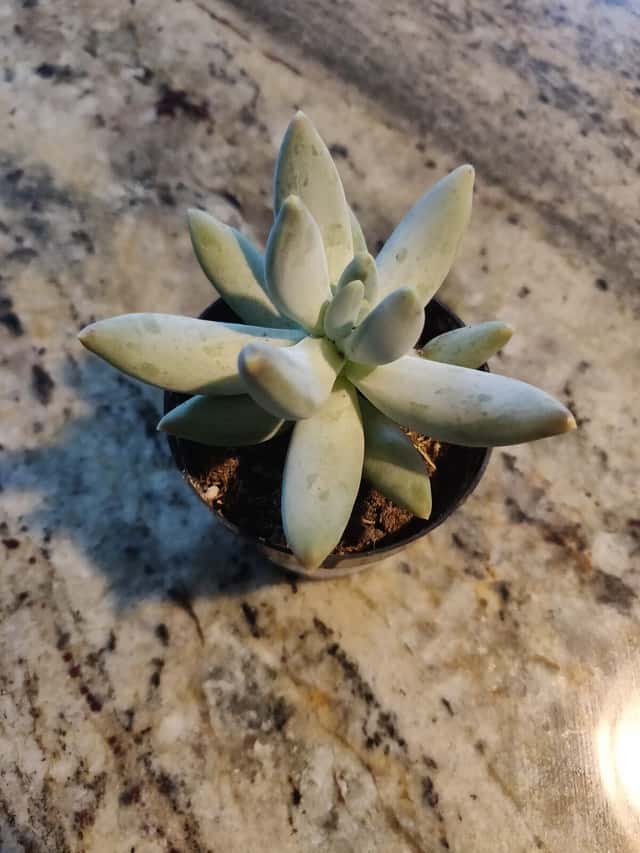
Silver bracts (Pachyphytum bracteosum) is a easy-care plant from the Crassulaceae family. A Mexican succulent that grows on rocks between 1,200 and 1,800 m around the Barranca de Metztitlán in Hidalgo. It forms rosettes of thick, spoon-shaped leaves up to about 5 cm long, silvery grey to bluish green, which flush pink in strong light. The fleshy stem reaches about 30 cm and carries round...
Silver bracts grows up to 50cm, spread of 50cm, watering every 10 days. It is suitable for indoor environments and safe for pets.
Unlike many tropical plants, Silver bracts tolerates watering mistakes. Best for beginners. Unlike many popular species, Silver bracts is safe to keep around pets. Without adequate drainage, root rot can develop within 20 days.
How to Care for Silver bracts?
TLDR: Silver bracts needs Bright indirect, watering every 10 days, and temperatures between 5-30°C with 40-70% humidity.
How Often Should You Water Silver bracts?
In spring and summer, water when the mix has dried out completely. In autumn and winter keep it nearly dry. Wet roots in cold weather lead to rot.
How Much Light Does Silver bracts Need?
Full sun, ideally a south- or west-facing spot. Indoors, give it the sunniest window; in low light the rosette stretches and loses its silver colour.
What Is the Best Soil for Silver bracts?
Sharply drained cactus compost with plenty of sand or perlite. It accepts acid, neutral or alkaline soil as long as it never stays wet.
What Pot Should You Use for Silver bracts?
A terracotta pot with drainage holes, slightly wider than the rosette.
Care Schedule
Fertilize
Every 45 days
What Is Silver bracts and Where Does It Come From?
A Mexican succulent that grows on rocks between 1,200 and 1,800 m around the Barranca de Metztitlán in Hidalgo. It forms rosettes of thick, spoon-shaped leaves up to about 5 cm long, silvery grey to bluish green, which flush pink in strong light. The fleshy stem reaches about 30 cm and carries round scars where old leaves fell. From late spring into summer it sends up stalks 20 to 60 cm long with a nodding tip, packed with silvery bracts that almost hide the red flowers.
How to Propagate Silver bracts?
Leaf cutting
A leaf torn at the base will not sprout. Do not bury the leaf; just lay it on the surface.
- 1 Gently twist off a whole leaf with its base intact
- 2 Let it dry in shade for 2-3 days
- 3 Lay the leaf on top of dry cactus mix
- 4 Mist lightly once roots appear and keep in bright light
Materials needed:
Seed
The seed is tiny; cover the tray with clear plastic to hold in moisture.
- 1 In spring, scatter seed over fine, moist mix
- 2 Keep at 19-24 °C in good light
- 3 Do not let the surface dry out until germination
- 4 Pot on seedlings once they are sturdy
Materials needed:
How Big Does Silver bracts Grow?
TLDR: Silver bracts can reach up to 50cm tall with Medium growth rate.
Max height
50cm
Spread
50cm
Foliage
Evergreen
Plant Uses
Ornamental
Great for decoration
Is your plant showing symptoms?
Click on the symptom to discover possible causes:
What Diseases Commonly Affect Silver bracts?
TLDR: Silver bracts is susceptible to 2 known diseases. Monitor regularly for early detection.
Mealybugs
Mealybugs are small, soft-bodied insects covered with a white, waxy, cottony material. They are common pests of houseplants and outdoor plants in mild climates. These sap-sucking insects feed on plant tissue, causing damage, stunted growth, and can lead to plant death if left untreated. They produce sticky honeydew which attracts sooty mold.
Root Rot
Root rot is a serious fungal disease that affects the root system of plants, causing them to decay and die. It is primarily caused by overwatering, poor drainage, or soil-borne fungi such as Pythium, Phytophthora, Rhizoctonia, and Fusarium. The disease thrives in waterlogged conditions where roots are deprived of oxygen, making them susceptible to fungal infection.
Fun Facts
Its red flowers are almost hidden by silvery bracts, which is where the name bracteosum comes from.
It is a close relative of Pachyphytum oviferum, the moonstone plant.
Pachyphytum comes from Greek for thick plant.
Frequently asked questions
How often should I water Pachyphytum bracteosum?
Can it take cold?
Why is my plant stretching?
How do I propagate it?
Compare with similar plants
| Attribute | Difficulty | Light | Watering | Pet Safe |
|---|---|---|---|---|
| Field Maple | Easy | Bright indirect | 14d | ✓ |
| Iberian Houseleek | Easy | Direct sun | 14d | ✓ |
| Silver Birch | Easy | Direct sun | 14d | ✓ |
| Common Blanketflower | Easy | Direct sun | 10d | ✓ |





