Asparagaceae
Portuguese Squill: Perfect Plant for Beginners
Scilla peruviana
An easy-to-grow species that is quite resistant to pests and diseases. It prefers full sun or partial shade in a sheltered location with excellent soil drainage. The greatest risk is overwatering: the bulb is sensitive to waterlogging, especially during summer dormancy, when watering should be almost entirely suspended.
Every 12 days
Bright indirect
-10° - 32°C
30% - 60%
Categories
What is Portuguese Squill?
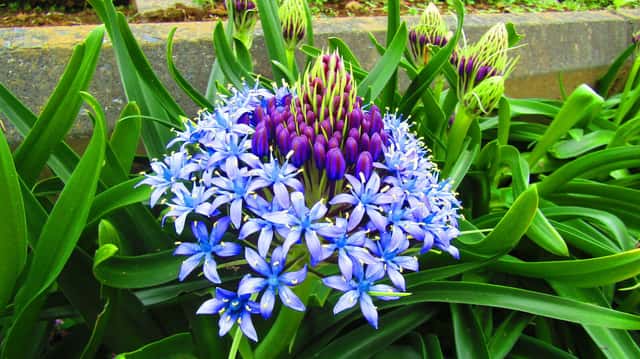
Portuguese Squill (Scilla peruviana) is a easy-care plant from the Asparagaceae family. Despite its name, Scilla peruviana is not native to Peru; it is indigenous to the western Mediterranean, found in Portugal, Spain, Italy, and North Africa. It is a perennial bulbous plant that forms a basal rosette of long, dark green, lance-shaped, semi-evergreen leaves. In spring and early summer,...
Portuguese Squill grows up to 45cm, spread of 50cm, watering every 12 days, -10°C – 32°C, 30–60% humidity. It is suitable for indoor environments and not safe for pets.
Unlike many tropical plants, Portuguese Squill tolerates watering mistakes. Best for beginners. Without precautions, ingestion can cause irritation in pets. Keep out of reach of cats and dogs. Without adequate drainage, root rot can develop within 24 days.
How to Care for Portuguese Squill?
TLDR: Portuguese Squill needs Bright indirect, watering every 12 days, and temperatures between -10-32°C with 30-60% humidity.
How Often Should You Water Portuguese Squill?
Water regularly from autumn to spring, the period of active growth and flowering, keeping the soil slightly moist. Drastically reduce watering in the summer when the plant enters dormancy to prevent bulb rot.
How Much Light Does Portuguese Squill Need?
Grow in full sun or light partial shade, preferably in a wind-protected spot facing west or south—this encourages more abundant and showy flowering.
What Is the Best Soil for Portuguese Squill?
Requires very well-drained soil; mix coarse sand, perlite, or vermiculite into the substrate to prevent water accumulation around the bulb. It tolerates a wide range of pH levels, from acidic to alkaline.
What Pot Should You Use for Portuguese Squill?
Terracotta (clay) pots with large drainage holes are ideal, as the porous material helps evaporate excess moisture and reduces the risk of bulb rot.
Care Schedule
Fertilize
Every 30 days
Rotate
Every 15 days
Repot
Every 1095 days
What Is Portuguese Squill and Where Does It Come From?
Despite its name, Scilla peruviana is not native to Peru; it is indigenous to the western Mediterranean, found in Portugal, Spain, Italy, and North Africa. It is a perennial bulbous plant that forms a basal rosette of long, dark green, lance-shaped, semi-evergreen leaves. In spring and early summer, it produces a spectacular pyramid-shaped inflorescence (a dense conical raceme), gathering between 50 and 100 small star-shaped flowers in shades of deep violet-blue (white varieties also exist). After flowering, the bulb enters a short period of dry dormancy during the summer.
How to Propagate Portuguese Squill?
Division of offsets
- Do not overwater newly planted bulbs; resume regular watering only when new foliage appears in the autumn.
- 1 Wait for dormancy
Wait for the foliage to dry out completely at the end of summer when the bulb enters dormancy.
- 2 Dig up
Carefully lift the main bulb from the soil with a garden trowel, avoiding damage to the roots and offsets.
- 3 Separate offsets
Gently detach the offsets (bulblets) formed around the mother bulb.
- 4 Replant
Replant immediately in sandy, well-drained soil at a depth of about twice the height of the bulb, spacing them well apart.
Materials needed:
Seed propagation
- Plants grown from seed may show slight color variations compared to the parent plant.
- 1 Collect seeds
Harvest seeds from the dry capsules after flowering in late spring or early summer.
- 2 Sow
Sow in a well-drained sandy substrate, covering lightly with a thin layer of soil.
- 3 Wait for germination
Keep moist and in a shaded spot until germination, which usually occurs in autumn or winter.
- 4 Grow seedlings
Grow the seedlings for several years until they form mature bulbs capable of flowering.
Materials needed:
How Big Does Portuguese Squill Grow?
TLDR: Portuguese Squill can reach up to 45cm tall with Slow growth rate.
Max height
45cm
Spread
50cm
Growth rate
Slow
Foliage
Semi-evergreen
Warning: Toxic Plant
This plant can be toxic if ingested. Keep out of reach of:
Plant Uses
Ornamental
Great for decoration
Is your plant showing symptoms?
Click on the symptom to discover possible causes:
What Diseases Commonly Affect Portuguese Squill?
TLDR: Portuguese Squill is susceptible to 9 known diseases. Monitor regularly for early detection.
Root Rot
Root rot is a serious fungal disease that affects the root system of plants, causing them to decay and die. It is primarily caused by overwatering, poor drainage, or soil-borne fungi such as Pythium, Phytophthora, Rhizoctonia, and Fusarium. The disease thrives in waterlogged conditions where roots are deprived of oxygen, making them susceptible to fungal infection.
Overwatering
Overwatering occurs when plants receive too much water, depriving roots of oxygen and causing root rot. This environmental stress is one of the most common causes of houseplant death, as waterlogged soil prevents roots from breathing and functioning properly.
Aphids
Aphids are small, soft-bodied, pear-shaped insects (1/16 to 1/8 inch long) that feed by sucking nutrient-rich sap from plants. They reproduce rapidly and can quickly weaken plants, causing distorted growth and transmitting plant viruses. Aphids come in various colors including green, black, red, yellow, brown, and gray. They secrete honeydew, a sticky substance that attracts ants and encourages sooty mold growth.
Slugs and Snails
Slugs and snails are mollusks that feed on plant tissue, causing irregular holes in leaves and damage to young seedlings. They are most active at night and in moist conditions, leaving characteristic silvery slime trails. These pests can quickly devastate gardens, especially during wet seasons.
Meaning & Symbolism
Symbolizes resilience and renewal: even after a seemingly lifeless period of dormancy, the Squill produces one of the most spectacular blooms in the Mediterranean garden, reminding us that beauty can emerge after a silent pause.
Compare with similar plants
| Attribute | Difficulty | Light | Watering | Pet Safe |
|---|---|---|---|---|
| Field Maple | Easy | Bright indirect | 14d | ✓ |
| Silver Birch | Easy | Direct sun | 14d | ✓ |
| Common Blanketflower | Easy | Direct sun | 10d | ✓ |
| Cushion Bush | Easy | Direct sun | 14d | ✓ |





