Araceae
Portora Elephant Ear (Alocasia 'Portora')
Alocasia 'Portora'
Bright indirect light, an airy mix that holds some moisture, and water when about half the pot has dried. Likes warmth (18–30 °C) and high humidity; suffers below 15 °C. Needs room and a heavy pot because it gets very large.
Every 7 days
Bright indirect
15° - 30°C
60% - 80%
Categories
What is Portora Elephant Ear?
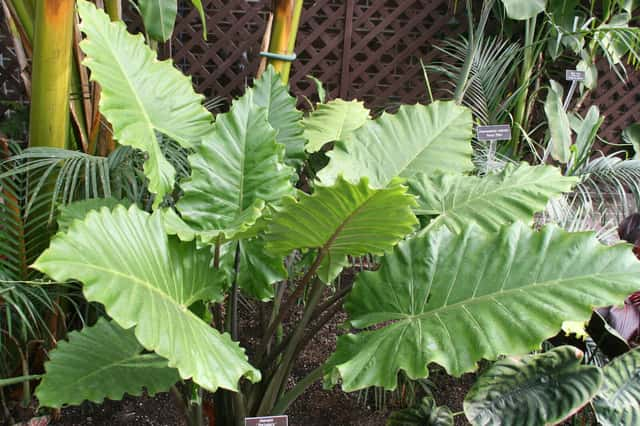
Portora Elephant Ear (Alocasia 'Portora') is a medium-care plant from the Araceae family. A cultivated hybrid of Alocasia odora and Alocasia portei, bred by LariAnn Garner at Aroidia Research. It forms a tall, broad upright clump of huge arrow-shaped leaves with strongly waved margins and a corrugated surface, carried on stout green-to-olive petioles with fine dark mottling. In a large c...
Portora Elephant Ear grows up to 2.5m, spread of 180cm, watering every 7 days, 15°C – 30°C, 60–80% humidity. It is suitable for indoor environments and not safe for pets.
Without precautions, ingestion can cause irritation in pets. Keep out of reach of cats and dogs. Without adequate drainage, root rot can develop within 14 days.
How to Care for Portora Elephant Ear?
TLDR: Portora Elephant Ear needs Bright indirect, watering every 7 days, and temperatures between 15-30°C with 60-80% humidity.
How Often Should You Water Portora Elephant Ear?
Water when 40–60% of the mix is dry, usually about once a week in summer and less in winter. Never leave water in the saucer: the rhizome rots when waterlogged.
How Much Light Does Portora Elephant Ear Need?
Give it plenty of filtered light. Strong direct sun scorches and marks the leaves; if moved outdoors, acclimate it gradually and prefer partial shade.
What Is the Best Soil for Portora Elephant Ear?
Use a well-draining, organic-rich aroid mix with pine bark, perlite and some coco coir.
What Pot Should You Use for Portora Elephant Ear?
A large, heavy pot (ceramic or terracotta) with drainage holes so it does not tip over as it grows.
Care Schedule
Fertilize
Every 15 days
Repot
Every 730 days
What Is Portora Elephant Ear and Where Does It Come From?
A cultivated hybrid of Alocasia odora and Alocasia portei, bred by LariAnn Garner at Aroidia Research. It forms a tall, broad upright clump of huge arrow-shaped leaves with strongly waved margins and a corrugated surface, carried on stout green-to-olive petioles with fine dark mottling. In a large container it can top 2 m.
How to Propagate Portora Elephant Ear?
Clump division
Use sterilized tools and wear gloves, as the sap irritates skin. Avoid soaking the division in its first weeks.
- 1 Lift the plant from its pot in spring
- 2 Cut away a side shoot that already has its own roots using a clean knife
- 3 Pot the division in moist, well-draining mix
- 4 Keep it in indirect light and high humidity until established
Materials needed:
Corms (offsets)
Warmth (above 22 °C) and humidity speed up sprouting; a plastic bag or closed box helps.
- 1 Collect the small corms that form among the roots
- 2 Set them half-buried in moist sphagnum or perlite
- 3 Keep warm and humid until they sprout
- 4 Move to potting mix once the first leaf appears
Materials needed:
How Big Does Portora Elephant Ear Grow?
TLDR: Portora Elephant Ear can reach up to 2.5m tall with Medium growth rate.
Max height
2.5m
Spread
1.8m
Growth rate
Medium
Foliage
Evergreen
Warning: Toxic Plant
This plant can be toxic if ingested. Keep out of reach of:
Plant Uses
Ornamental
Great for decoration
Is your plant showing symptoms?
Click on the symptom to discover possible causes:
What Diseases Commonly Affect Portora Elephant Ear?
TLDR: Portora Elephant Ear is susceptible to 6 known diseases. Monitor regularly for early detection.
Root Rot
Root rot is a serious fungal disease that affects the root system of plants, causing them to decay and die. It is primarily caused by overwatering, poor drainage, or soil-borne fungi such as Pythium, Phytophthora, Rhizoctonia, and Fusarium. The disease thrives in waterlogged conditions where roots are deprived of oxygen, making them susceptible to fungal infection.
Spider Mites
Spider mites are tiny arachnids (less than 1/20 inch long) related to spiders and ticks that feed on plant sap. They thrive in hot, dry conditions and can cause significant damage to ornamental and vegetable plants. During severe infestations, crop losses can reach 14% or higher as these pests disrupt vital plant processes including photosynthesis, carbon dioxide absorption, and transpiration.
Mealybugs
Mealybugs are small, soft-bodied insects covered with a white, waxy, cottony material. They are common pests of houseplants and outdoor plants in mild climates. These sap-sucking insects feed on plant tissue, causing damage, stunted growth, and can lead to plant death if left untreated. They produce sticky honeydew which attracts sooty mold.
Scale Insects
Scale insects are small sap-sucking pests that appear as brown, shell-like bumps on plant stems and leaves. There are over 25 species, divided into armored (hard) and unarmored (soft) scales. They feed by piercing plant tissue and extracting sap, which weakens the plant and can lead to yellowing, stunted growth, and even death if left untreated. They also excrete honeydew, which attracts ants and promotes sooty mold growth.
Meaning & Symbolism
Tropical lushness and sheer presence; the name 'Portora' blends the names of its two parents, A. portei and A. odora.
Fun Facts
The name 'Portora' combines portei and odora, the two species it came from.
Its leaves can exceed 1 m in length, with heavily ruffled edges.
It has been used as a parent of other hybrids, such as Alocasia 'Sumo'.
Frequently asked questions
How often should I water Alocasia 'Portora'?
Is Alocasia 'Portora' toxic?
How big does Alocasia 'Portora' get?
Can it handle cold?
Compare with similar plants
| Attribute | Difficulty | Light | Watering | Pet Safe |
|---|---|---|---|---|
| Dark Fieldcap | Medium | Low light | 2d | ⚠️ |
| Azalea | Medium | Partial shade | 3d | ⚠️ |
| Muriel's Bamboo | Medium | Partial shade | 3d | ✓ |
| Bougainvillea | Medium | Direct sun | 7d | ⚠️ |




