Asteraceae
pink thoroughwort: Perfect Plant for Beginners
Fleischmannia incarnata
Give pink thoroughwort a partly shaded to lightly sunny woodland-edge spot and consistently moist, humus-rich soil; it is low-maintenance once settled but sulks if the ground dries out for long. Feed lightly once or twice a year, tidy up spent stems after the fall bloom, and watch for aphids, spider mites, or powdery mildew in still, humid conditions.
Every 3 days
Partial shade
10° - 35°C
50% - 80%
Categories
What is pink thoroughwort?
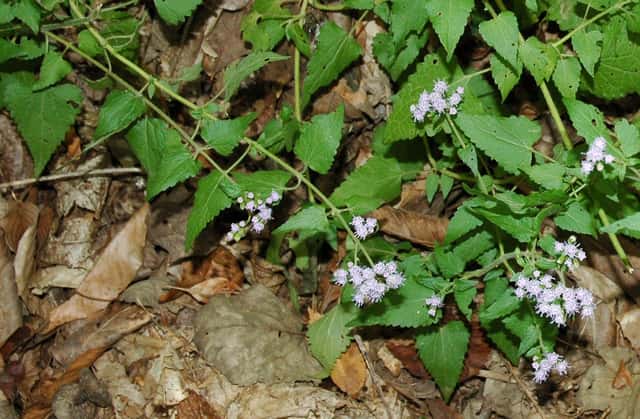
pink thoroughwort (Fleischmannia incarnata) is a easy-care plant from the Asteraceae family. Pink thoroughwort is a native perennial wildflower in the aster family, forming a loosely branching, sprawling clump of catnip-like, triangular-to-heart-shaped leaves. From late summer into fall it produces flat-topped clusters of small, ray-less flower heads in soft pink to purple (occasionally whi...
pink thoroughwort grows up to 1.5m, spread of 100cm, watering every 3 days, 10°C – 35°C, 50–80% humidity. It is not suitable for indoor environments and safe for pets.
Unlike many tropical plants, pink thoroughwort tolerates watering mistakes. Best for beginners. Unlike many popular species, pink thoroughwort is safe to keep around pets.
How to Care for pink thoroughwort?
TLDR: pink thoroughwort needs Partial shade, watering every 3 days, and temperatures between 10-35°C with 50-80% humidity.
How Often Should You Water pink thoroughwort?
Keep the soil evenly moist, especially through summer heat -- this plant is a natural moisture indicator and wilts quickly when it dries out. Established plantings gain some drought tolerance but still perform best without long dry spells.
How Much Light Does pink thoroughwort Need?
In the wild it grows along woodland edges and streambanks, so it is happiest with partial shade to dappled sun; it also accepts several hours of direct morning sun if the soil stays consistently moist.
What Is the Best Soil for pink thoroughwort?
Use rich, organic, moisture-retentive soil -- amend average garden soil with compost or well-rotted manure. It is notably tolerant of high-calcium (alkaline) soils that cause many acid-loving shrubs to struggle, and does well across a pH range of roughly 5.5 to 7.5.
What Pot Should You Use for pink thoroughwort?
This wildflower is best planted directly in the ground along a woodland edge or border, since it spreads loosely and roots run wide; if grown in a container, choose a wide, deep pot with generous drainage holes and a moisture-retentive, organic-rich mix, and expect to water it more often than an in-ground planting.
Care Schedule
Fertilize
Every 180 days
What Is pink thoroughwort and Where Does It Come From?
Pink thoroughwort is a native perennial wildflower in the aster family, forming a loosely branching, sprawling clump of catnip-like, triangular-to-heart-shaped leaves. From late summer into fall it produces flat-topped clusters of small, ray-less flower heads in soft pink to purple (occasionally whitish) shades that draw butterflies, skippers, and native bees. Native to the southeastern and south-central United States and northeastern Mexico, it grows naturally in moist woodlands, bottomland forests, thickets, and along streambanks, where its airy habit lets it lean informally against neighboring plants. Once established it tolerates both ordinary garden soil and the high-calcium soils that trouble many acid-loving shrubs.
How to Propagate pink thoroughwort?
Seed Sowing
- Fall sowing mimics natural self-seeding and gives the most reliable germination.
- Thin seedlings to allow the sprawling mature habit room to spread.
- 1 Collect Seed
Let seedheads dry fully on the plant, then strip the small cypsela seeds into a paper bag.
- 2 Direct Sow
Scatter seed on prepared, moist soil in fall (or after the last frost in spring) and press lightly -- do not bury deeply.
- 3 Keep Moist
Keep the seedbed consistently moist until seedlings are established.
Materials needed:
Stem Cuttings
- Maintain high humidity around the cutting (a clear bag or dome helps) until it roots.
- 1 Take Cutting
Cut a healthy, non-flowering 6-inch stem tip and remove the lower leaves.
- 2 Root
Dip the cut end in rooting hormone and insert into a well-draining potting mix.
- 3 Establish
Keep the mix moist and the cutting in bright, indirect light until roots form, then transplant.
Materials needed:
How Big Does pink thoroughwort Grow?
TLDR: pink thoroughwort can reach up to 1.5m tall with Medium growth rate.
Max height
1.5m
Spread
1.0m
Growth rate
Medium
Foliage
Deciduous
Plant Uses
Ornamental
Great for decoration
Medicinal Uses
- No reliably documented modern medicinal use exists for this species. Some general gardening sources loosely associate thoroughworts (the wider Eupatorium alliance that historically included this genus) with folk remedies for aches and fevers, but this has not been verified for Fleischmannia incarnata specifically, so it should not be treated as a medicinal plant.
Culinary Uses
- None documented. Pink thoroughwort is not grown or used as a food or culinary herb.
Is your plant showing symptoms?
Click on the symptom to discover possible causes:
What Diseases Commonly Affect pink thoroughwort?
TLDR: pink thoroughwort is susceptible to 3 known diseases. Monitor regularly for early detection.
Powdery Mildew
Powdery mildew is a common fungal disease caused by various fungi species including Erysiphe, Podosphaera, Oïdium, and Leveillula. It affects over 10,000 plant species worldwide. The disease thrives in warm, dry climates with high humidity and appears as a distinctive white powdery coating on plant surfaces.
Aphids
Aphids are small, soft-bodied, pear-shaped insects (1/16 to 1/8 inch long) that feed by sucking nutrient-rich sap from plants. They reproduce rapidly and can quickly weaken plants, causing distorted growth and transmitting plant viruses. Aphids come in various colors including green, black, red, yellow, brown, and gray. They secrete honeydew, a sticky substance that attracts ants and encourages sooty mold growth.
Spider Mites
Spider mites are tiny arachnids (less than 1/20 inch long) related to spiders and ticks that feed on plant sap. They thrive in hot, dry conditions and can cause significant damage to ornamental and vegetable plants. During severe infestations, crop losses can reach 14% or higher as these pests disrupt vital plant processes including photosynthesis, carbon dioxide absorption, and transpiration.
Meaning & Symbolism
Pink thoroughwort has no widely recorded folklore or symbolism of its own; in the garden it is best known simply as a reliable late-season nectar source, so it has come to represent quiet, unglamorous support for pollinators moving into fall.
Compare with similar plants
| Attribute | Difficulty | Light | Watering | Pet Safe |
|---|---|---|---|---|
| Field Maple | Easy | Bright indirect | 14d | ✓ |
| Silver Birch | Easy | Direct sun | 14d | ✓ |
| Common Blanketflower | Easy | Direct sun | 10d | ✓ |
| Cushion Bush | Easy | Direct sun | 14d | ✓ |
Choose & Compare
Sources & References
- Fleischmannia incarnata (Pink thoroughwort) - Lady Bird Johnson Wildflower Center
- Fleischmannia incarnata - Wikipedia
- Fleischmannia incarnata - Missouri Plants
- Wildflower Wednesday: Fleischmannia incarnata - Clay and Limestone
- Pink Slender-Thoroughwort (Fleischmannia incarnata) Care Guide - Plantiary





