Crassulaceae
Pies from Heaven (Kalanchoe rhombopilosa)
Kalanchoe rhombopilosa
Give it bright light with gentle or filtered sun. Water well in summer and let it dry out; water less in spring and autumn, and in winter only when the leaves start to shrivel. Use a sandy, gritty mix. Keep it above 5 °C. Handle it gently, because the leaves fall off easily.
Every 14 days
Bright indirect
5° - °C
% - %
Categories
What is Pies from Heaven?
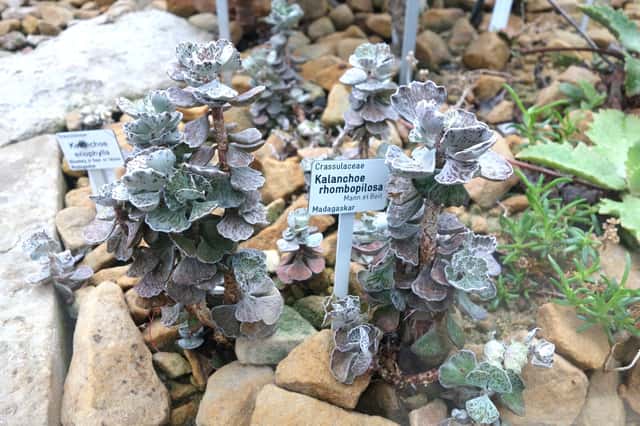
Pies from Heaven (Kalanchoe rhombopilosa) is a easy-care plant from the Crassulaceae family. A small succulent from south-western Madagascar, where it grows in dry bushland, usually in the shade of other plants. It forms a little shrub 10 to 20 cm tall, rarely 30, with silvery stems. The fan-shaped leaves are 2 to 3 cm long, silver-grey with coppery-brown blotches and scalloped tips like a...
Pies from Heaven grows up to 30cm, watering every 14 days. It is suitable for indoor environments and not safe for pets.
Unlike many tropical plants, Pies from Heaven tolerates watering mistakes. Best for beginners. Without precautions, ingestion can cause irritation in pets. Keep out of reach of cats and dogs. Without adequate drainage, root rot can develop within 28 days.
How to Care for Pies from Heaven?
TLDR: Pies from Heaven needs Bright indirect, watering every 14 days, and temperatures between 5-30°C with 40-70% humidity.
How Often Should You Water Pies from Heaven?
In summer, water thoroughly and wait until the soil is dry before watering again. In winter, water only now and then, when the leaves begin to wrinkle. Too much water is the most common way to lose this plant.
How Much Light Does Pies from Heaven Need?
A bright spot with morning sun or filtered light. Harsh midday sun can burn the leaf tips. In low light the markings fade.
What Is the Best Soil for Pies from Heaven?
A lean mix of equal parts loam and sand with pumice or grit added for drainage. A cactus mix also works.
What Pot Should You Use for Pies from Heaven?
A small terracotta pot with a drainage hole. It stays compact, so it is easy to move outside for summer and back in when it turns cold.
Care Schedule
Fertilize
Every 30 days
What Is Pies from Heaven and Where Does It Come From?
A small succulent from south-western Madagascar, where it grows in dry bushland, usually in the shade of other plants. It forms a little shrub 10 to 20 cm tall, rarely 30, with silvery stems. The fan-shaped leaves are 2 to 3 cm long, silver-grey with coppery-brown blotches and scalloped tips like a pie crust. They are brittle and drop off at the slightest touch. Small greenish-yellow to pink flowers with purple lines appear in spring. It grows slowly.
How to Propagate Pies from Heaven?
Leaf cutting
Every leaf that drops can become a new plant. Be patient: this one grows slowly.
- 1 Take a healthy leaf that has dropped, or gently pull off a whole one
- 2 Let it dry in the shade for 1 to 2 days
- 3 Lay it on top of cactus mix without burying it
- 4 Mist lightly once roots appear and keep it in bright light
Materials needed:
How Big Does Pies from Heaven Grow?
TLDR: Pies from Heaven can reach up to 30cm tall with Slow growth rate.
Max height
30cm
Growth rate
Slow
Foliage
Evergreen
Warning: Toxic Plant
This plant can be toxic if ingested. Keep out of reach of:
Plant Uses
Ornamental
Great for decoration
Is your plant showing symptoms?
Click on the symptom to discover possible causes:
What Diseases Commonly Affect Pies from Heaven?
TLDR: Pies from Heaven is susceptible to 5 known diseases. Monitor regularly for early detection.
Root Rot
Root rot is a serious fungal disease that affects the root system of plants, causing them to decay and die. It is primarily caused by overwatering, poor drainage, or soil-borne fungi such as Pythium, Phytophthora, Rhizoctonia, and Fusarium. The disease thrives in waterlogged conditions where roots are deprived of oxygen, making them susceptible to fungal infection.
Overwatering
Overwatering occurs when plants receive too much water, depriving roots of oxygen and causing root rot. This environmental stress is one of the most common causes of houseplant death, as waterlogged soil prevents roots from breathing and functioning properly.
Mechanical damage and leaf detachment
Physical injury to plant tissues caused by external forces such as wind, handling, pets, or falling objects. Unlike biological diseases, this is a structural issue where the plant's skin or stems are torn, crushed, or broken, leading to localized drying or leaf loss.
Sunburn (Sun Scorch)
Sunburn or sun scorch is an environmental condition that occurs when plants are exposed to intense, direct sunlight beyond their tolerance level. This causes the breakdown of chlorophyll in the leaves, resulting in bleached, dried, and damaged foliage. The damage can happen rapidly, sometimes within just a few hours of exposure.
Fun Facts
The common name comes from the scalloped leaf tips, which look like the crimped edge of a pie.
Rhombopilosa refers to the diamond-shaped leaves and their fine coat of hairs.
Leaves grown in shade stay greener, while those in sun turn silvery with darker spots.
Frequently asked questions
Why does my Kalanchoe rhombopilosa keep dropping leaves?
How should I water it?
Is it toxic to pets?
Can it take the cold?
Compare with similar plants
| Attribute | Difficulty | Light | Watering | Pet Safe |
|---|---|---|---|---|
| Field Maple | Easy | Bright indirect | 14d | ✓ |
| Iberian Houseleek | Easy | Direct sun | 14d | ✓ |
| Silver Birch | Easy | Direct sun | 14d | ✓ |
| Common Blanketflower | Easy | Direct sun | 10d | ✓ |





