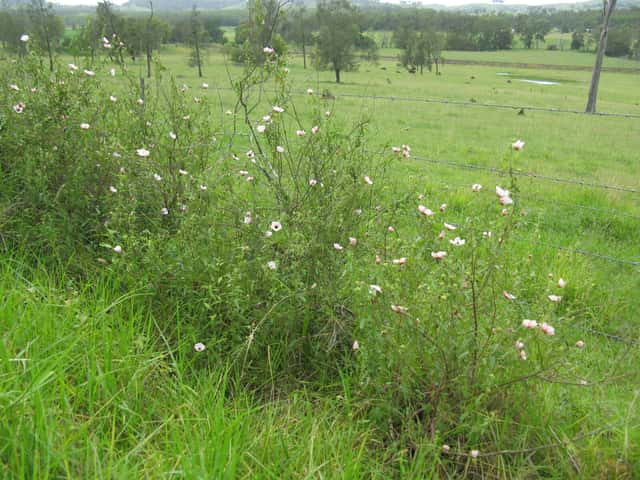
Malvaceae
Pavonia (genus Pavonia)
Pavonia
Easy in warm climates: full sun to part shade (at least 6 hours of sun for good flowering), well-drained soil and water when the top dries. Feed monthly in the growing season and prune lightly after flowering. Most are not frost-hardy (USDA zones 9 to 11); in colder areas grow them in pots and bring them in for winter. P. multiflora indoors wants bright filtered light and high humidity.
Every 5 days
Bright indirect
° - °C
% - %
Categories
What is Pavonia (genus)?
Pavonia (genus) (Pavonia) is a easy-care plant from the Malvaceae family. Pavonia is a genus of about 150 to 300 species of shrubs, subshrubs and herbs in the mallow family (Malvaceae), close relatives of hibiscus, found across the tropics and subtropics of the Americas, Africa, Asia and Oceania. Their flowers look like small hibiscus blooms in pink, white, yellow or red;...
Pavonia (genus) grows up to 2.5m, spread of 150cm, watering every 5 days. It is suitable for indoor environments and safe for pets.
Unlike many tropical plants, Pavonia (genus) tolerates watering mistakes. Best for beginners. Unlike many popular species, Pavonia (genus) is safe to keep around pets. Without adequate drainage, root rot can develop within 10 days.
How to Care for Pavonia (genus)?
TLDR: Pavonia (genus) needs Bright indirect, watering every 5 days, and temperatures between 15-30°C with 40-70% humidity.
How Often Should You Water Pavonia (genus)?
Water deeply when the top 2-3 cm of soil is dry, usually every 4 to 7 days in summer and less in winter. Established garden plants tolerate dry spells but flower better with steady moisture; avoid waterlogging.
How Much Light Does Pavonia (genus) Need?
Full sun or part shade; at least 6 hours of direct sun for heavy flowering. Indoors, place by a very bright window with filtered sun.
What Is the Best Soil for Pavonia (genus)?
Average, well-drained garden soil, slightly acidic to neutral (pH 6.0 to 6.8). Lighten clay with compost and sand. In pots, use a loam-based, free-draining mix.
What Pot Should You Use for Pavonia (genus)?
A 25-40 cm pot with good drainage holes and a loam-based mix; in cold climates, a container you can move indoors for winter.
Care Schedule
Fertilize
Every 30 days
What Is Pavonia (genus) and Where Does It Come From?
Pavonia is a genus of about 150 to 300 species of shrubs, subshrubs and herbs in the mallow family (Malvaceae), close relatives of hibiscus, found across the tropics and subtropics of the Americas, Africa, Asia and Oceania. Their flowers look like small hibiscus blooms in pink, white, yellow or red; botanically they differ from hibiscus in having a style with 10 branches instead of 5. Garden species include Pavonia multiflora and its hybrid P. × gledhillii (Brazilian candles), a shrub to 2.5 m with red bracts around candle-like purple flowers; P. hastata (spearleaf swampmallow), with pale pink, red-centred flowers; the Texan P. lasiopetala (rock rose), with pink blooms; and South Africa's P. praemorsa, with lemon-yellow flowers. Many bloom almost all year in warm climates, each flower usually lasting a single day.
How to Propagate Pavonia (genus)?
Semi-hardwood cuttings
Bottom heat speeds rooting. This is the best way to keep hybrids such as P. × gledhillii, which set little seed.
- 1 Take 8-12 cm semi-hardwood cuttings
- 2 Strip the lower leaves
- 3 Dip the base in rooting hormone
- 4 Insert in a mix of coarse sand and potting mix somewhere warm and humid
Materials needed:
Seed
Some species, such as P. hastata, self-seed freely; pull seedlings that come up where you do not want them.
- 1 Sow in a mix of fine bark and coarse sand
- 2 Cover lightly and keep moist at 19-24 °C
- 3 Pot on seedlings once they have 2 pairs of leaves
Materials needed:
How Big Does Pavonia (genus) Grow?
TLDR: Pavonia (genus) can reach up to 2.5m tall with Medium growth rate.
Max height
2.5m
Spread
1.5m
Foliage
Evergreen
Plant Uses
Ornamental
Great for decoration
Is your plant showing symptoms?
Click on the symptom to discover possible causes:
What Diseases Commonly Affect Pavonia (genus)?
TLDR: Pavonia (genus) is susceptible to 5 known diseases. Monitor regularly for early detection.
Whiteflies
Whiteflies are small, soft-bodied, winged insects closely related to aphids and mealybugs. They are moth-like in appearance, about 1/16 inch long, triangular in shape, and gray-white in color. These sap-sucking pests feed on plant tissue, causing yellowing, stunted growth, and wilting. They also excrete honeydew, which attracts ants and promotes sooty mold growth. Whiteflies can transmit serious plant viruses.
Spider Mites
Spider mites are tiny arachnids (less than 1/20 inch long) related to spiders and ticks that feed on plant sap. They thrive in hot, dry conditions and can cause significant damage to ornamental and vegetable plants. During severe infestations, crop losses can reach 14% or higher as these pests disrupt vital plant processes including photosynthesis, carbon dioxide absorption, and transpiration.
Mealybugs
Mealybugs are small, soft-bodied insects covered with a white, waxy, cottony material. They are common pests of houseplants and outdoor plants in mild climates. These sap-sucking insects feed on plant tissue, causing damage, stunted growth, and can lead to plant death if left untreated. They produce sticky honeydew which attracts sooty mold.
Powdery Mildew
Powdery mildew is a common fungal disease caused by various fungi species including Erysiphe, Podosphaera, Oïdium, and Leveillula. It affects over 10,000 plant species worldwide. The disease thrives in warm, dry climates with high humidity and appears as a distinctive white powdery coating on plant surfaces.
Fun Facts
The name honours José Antonio Pavón, a Spanish botanist who explored Peru and Chile in the 18th century
In many species each flower lasts just one day, but new ones open almost daily
In P. hastata the first spring flowers often never open and self-pollinate while closed
Frequently asked questions
Is Pavonia a hibiscus?
Is Pavonia cold hardy?
Why is my Pavonia not flowering?
What pests affect Pavonia?
Compare with similar plants
| Attribute | Difficulty | Light | Watering | Pet Safe |
|---|---|---|---|---|
| Field Maple | Easy | Bright indirect | 14d | ✓ |
| Iberian Houseleek | Easy | Direct sun | 14d | ✓ |
| Silver Birch | Easy | Direct sun | 14d | ✓ |
| Common Blanketflower | Easy | Direct sun | 10d | ✓ |





