Orchidaceae
Jiminy Cricket Cattleya Orchid: Perfect Indoor Houseplant
Rhyncovola Jiminy Cricket x Cattleya dowiana
Grow in a coarse, fast-draining bark mix under bright, filtered light with strong airflow. Water thoroughly, then let the mix approach dryness before watering again, and keep humidity moderate to high. Feed regularly during active growth and provide a cooler night temperature to encourage its large, fragrant late-spring to summer flowers.
Every 7 days
Bright indirect
13° - 29°C
40% - 70%
Categories
What is Jiminy Cricket Cattleya Orchid?
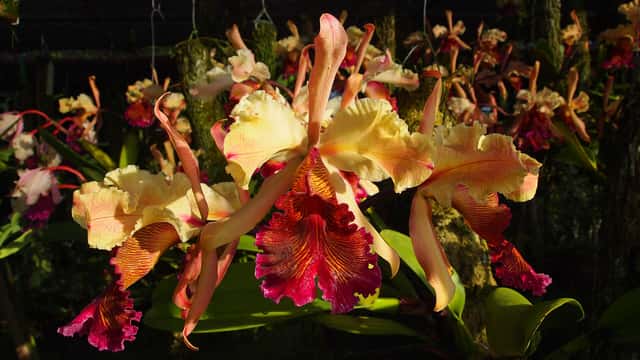
Jiminy Cricket Cattleya Orchid (Rhyncovola Jiminy Cricket x Cattleya dowiana) is a medium-care plant from the Orchidaceae family. A Cattleya-alliance orchid hybrid combining the grex Rhyncovola Jiminy Cricket with the species Cattleya dowiana, prized for large, fragrant flowers with a velvety lip streaked in gold. Like other Cattleyas, it is an epiphytic orchid with sympodial growth, thick pseudobulbs, and leathery evergreen l...
Jiminy Cricket Cattleya Orchid grows up to 45cm, spread of 40cm, watering every 7 days, 13°C – 29°C, 40–70% humidity. It is suitable for indoor environments and safe for pets.
Unlike many popular species, Jiminy Cricket Cattleya Orchid is safe to keep around pets. Without adequate drainage, root rot can develop within 14 days.
How to Care for Jiminy Cricket Cattleya Orchid?
TLDR: Jiminy Cricket Cattleya Orchid needs Bright indirect, watering every 7 days, and temperatures between 13-29°C with 40-70% humidity.
How Often Should You Water Jiminy Cricket Cattleya Orchid?
Water thoroughly and let the mix dry almost all the way through before watering again, roughly every 6-8 days during active growth and less often in cooler months. Silvery-green (not white or soggy) roots are the cue to water again; never let the pot sit in standing water.
How Much Light Does Jiminy Cricket Cattleya Orchid Need?
Give bright, indirect to lightly filtered light, such as an east-facing window or a shaded south or west window. Leaves should stay a light chartreuse-green; dark green means too little light, reddish leaves mean too much.
What Is the Best Soil for Jiminy Cricket Cattleya Orchid?
Pot in a coarse, well-draining orchid bark mix (medium-grade bark, optionally with added sphagnum or perlite) in a container sized for just 2-3 years of growth. Repot roughly every two years once the bark starts to break down.
What Pot Should You Use for Jiminy Cricket Cattleya Orchid?
A clay or plastic pot with generous drainage holes, or a slatted basket or mount for maximum root airflow; clear plastic pots also make it easy to monitor root health.
Care Schedule
Fertilize
Every 7 days
Repot
Every 730 days
What Is Jiminy Cricket Cattleya Orchid and Where Does It Come From?
A Cattleya-alliance orchid hybrid combining the grex Rhyncovola Jiminy Cricket with the species Cattleya dowiana, prized for large, fragrant flowers with a velvety lip streaked in gold. Like other Cattleyas, it is an epiphytic orchid with sympodial growth, thick pseudobulbs, and leathery evergreen leaves, thriving in bright light with strong air movement and a dry-between-waterings routine.
How to Propagate Jiminy Cricket Cattleya Orchid?
How Big Does Jiminy Cricket Cattleya Orchid Grow?
TLDR: Jiminy Cricket Cattleya Orchid can reach up to 45cm tall with Slow growth rate.
Max height
45cm
Spread
40cm
Growth rate
Slow
Foliage
Evergreen
Plant Uses
Ornamental
Great for decoration
Is your plant showing symptoms?
Click on the symptom to discover possible causes:
What Diseases Commonly Affect Jiminy Cricket Cattleya Orchid?
TLDR: Jiminy Cricket Cattleya Orchid is susceptible to 12 known diseases. Monitor regularly for early detection.
Root Rot
Root rot is a serious fungal disease that affects the root system of plants, causing them to decay and die. It is primarily caused by overwatering, poor drainage, or soil-borne fungi such as Pythium, Phytophthora, Rhizoctonia, and Fusarium. The disease thrives in waterlogged conditions where roots are deprived of oxygen, making them susceptible to fungal infection.
Scale Insects
Scale insects are small sap-sucking pests that appear as brown, shell-like bumps on plant stems and leaves. There are over 25 species, divided into armored (hard) and unarmored (soft) scales. They feed by piercing plant tissue and extracting sap, which weakens the plant and can lead to yellowing, stunted growth, and even death if left untreated. They also excrete honeydew, which attracts ants and promotes sooty mold growth.
Spider Mites
Spider mites are tiny arachnids (less than 1/20 inch long) related to spiders and ticks that feed on plant sap. They thrive in hot, dry conditions and can cause significant damage to ornamental and vegetable plants. During severe infestations, crop losses can reach 14% or higher as these pests disrupt vital plant processes including photosynthesis, carbon dioxide absorption, and transpiration.
Mealybugs
Mealybugs are small, soft-bodied insects covered with a white, waxy, cottony material. They are common pests of houseplants and outdoor plants in mild climates. These sap-sucking insects feed on plant tissue, causing damage, stunted growth, and can lead to plant death if left untreated. They produce sticky honeydew which attracts sooty mold.
Meaning & Symbolism
As a Cattleya-type orchid it carries the traditional symbolism of the genus: mature charm, luxury, and refined beauty, long associated with corsages and special occasions.
Compare with similar plants
| Attribute | Difficulty | Light | Watering | Pet Safe |
|---|---|---|---|---|
| Dark Fieldcap | Medium | Low light | 2d | ⚠️ |
| Azalea | Medium | Partial shade | 3d | ⚠️ |
| Muriel's Bamboo | Medium | Partial shade | 3d | ✓ |
| Bougainvillea | Medium | Direct sun | 7d | ⚠️ |
Choose & Compare
Sources & References
- Cattleya Culture Sheet - American Orchid Society
- Cattleya dowiana - Blooming and Care - Hanami Botanic
- Cattleya Alliance Care Sheet - Carter and Holmes Orchids
- Cattleya: What Can Go Wrong Part 2 - Pests and Diseases - St. Augustine Orchid Society
- Cattleya dowiana - Chadwick Orchids
- Toxic and Non-toxic Plants: Winter Cattleya - ASPCA
- Cattleya Orchid Hardiness Zones Guide




