Rutaceae
Mountain Rue (Ruta montana)
Ruta montana
A tough plant for sun and poor soil: full sun, stony or sandy well-drained ground of any pH, and water only in long droughts. It needs no fertilizer. Always handle it with gloves and long sleeves, because sap on skin plus sunlight causes burns and blisters.
Every 14 days
Bright indirect
° - °C
% - %
Categories
What is Mountain rue?
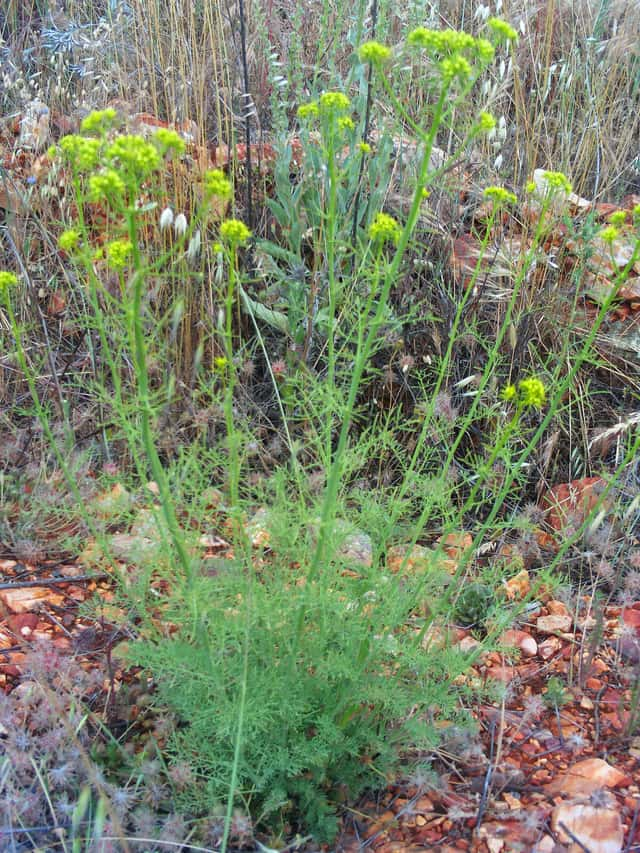
Mountain rue (Ruta montana) is a easy-care plant from the Rutaceae family. Ruta montana is a perennial evergreen subshrub in the citrus family, a relative of common rue, native to the Mediterranean basin, from Iberia and North Africa to the Middle East. It grows in dry, stony, sunny places, reaching 20 to 60 cm, with thin stems and finely divided light-green leaves that ha...
Mountain rue grows up to 60cm, watering every 14 days. It is not suitable for indoor environments and not safe for pets.
Unlike many tropical plants, Mountain rue tolerates watering mistakes. Best for beginners. Without precautions, ingestion can cause irritation in pets. Keep out of reach of cats and dogs.
How to Care for Mountain rue?
TLDR: Mountain rue needs Bright indirect, watering every 14 days, and temperatures between 15-30°C with 40-70% humidity.
How Often Should You Water Mountain rue?
Once established it barely needs watering: one drink every two weeks during a long dry spell is enough. Soggy soil is worse than drought.
How Much Light Does Mountain rue Need?
Full sun, like the rocky slopes where it grows wild. It tolerates light shade but gets sparse.
What Is the Best Soil for Mountain rue?
Poor, stony or sandy, well-drained soil. Acid, neutral or chalky soils are all fine; no feeding needed.
What Pot Should You Use for Mountain rue?
A terracotta pot with drainage holes and a very sandy mix, in full sun and out of reach of children and pets.
What Is Mountain rue and Where Does It Come From?
Ruta montana is a perennial evergreen subshrub in the citrus family, a relative of common rue, native to the Mediterranean basin, from Iberia and North Africa to the Middle East. It grows in dry, stony, sunny places, reaching 20 to 60 cm, with thin stems and finely divided light-green leaves that have a strong, unpleasant smell. From May to August it bears small yellow flowers in cymes, followed by four-lobed capsules. It is widely used in traditional North African medicine but is toxic: the sap burns skin exposed to sunlight and high-dose infusions have caused serious poisonings.
How to Propagate Mountain rue?
Seed
Wear gloves when handling seedlings; the sap is already irritating.
- 1 Sow as soon as ripe, or in early spring, in a cold frame
- 2 Cover lightly with sandy mix and keep moist
- 3 Prick out seedlings into small pots once they can be handled
- 4 Plant out after the last frost
Materials needed:
Stem cuttings
The easiest method. Wear gloves and wash your hands afterwards.
- 1 Cut 8-10 cm tips from half-ripe shoots
- 2 Strip the lower leaves
- 3 Insert into lightly moist sandy mix
- 4 Keep in bright shade until rooted
Materials needed:
How Big Does Mountain rue Grow?
TLDR: Mountain rue can reach up to 60cm tall with Medium growth rate.
Max height
60cm
Foliage
Evergreen
Warning: Toxic Plant
This plant can be toxic if ingested. Keep out of reach of:
Plant Uses
Medicinal
Medicinal properties
Aromatic
Pleasant fragrance
Medicinal Uses
- Used in traditional North African medicine for digestive complaints, rheumatism and respiratory illness
- Traditional gynecological and antidiabetic uses, not clinically proven
- Toxic at high doses and abortifacient: do not use without medical advice, and never in pregnancy
Is your plant showing symptoms?
Click on the symptom to discover possible causes:
Fun Facts
In the Maghreb it is called fijel or aourmi
It was once classified as a variety of common rue
Its strong smell comes from an essential oil rich in ketones such as 2-undecanone
Frequently asked questions
Is mountain rue poisonous?
Why does rue burn the skin?
Is it dangerous for dogs and cats?
How is it different from common rue?
Compare with similar plants
| Attribute | Difficulty | Light | Watering | Pet Safe |
|---|---|---|---|---|
| Field Maple | Easy | Bright indirect | 14d | ✓ |
| Iberian Houseleek | Easy | Direct sun | 14d | ✓ |
| Silver Birch | Easy | Direct sun | 14d | ✓ |
| Common Blanketflower | Easy | Direct sun | 10d | ✓ |





