Liliaceae
Martagon Lily (Lilium martagon)
Lilium martagon
A garden lily for cold-winter climates: morning sun or part shade, rich and very well-drained soil, regular watering while it grows. It takes 2 to 5 years to form a clump and dislikes being moved. Highly toxic to cats.
Every 7 days
Partial shade
-20° - °C
% - %
Categories
What is Martagon Lily?
Martagon Lily (Lilium martagon) is a medium-care plant from the Liliaceae family. Lilium martagon is a bulbous lily in the family Liliaceae, native to a huge stretch of Eurasia from Portugal to Mongolia, where it grows in woodland and on mountain slopes. Its upright stems reach 1 to 1.5 m and carry leaves in whorls. In early summer each stem opens dozens of small, nodding, scente...
Martagon Lily grows up to 1.5m, spread of 30cm, watering every 7 days. It is not suitable for indoor environments and not safe for pets.
Without precautions, ingestion can cause irritation in pets. Keep out of reach of cats and dogs.
How to Care for Martagon Lily?
TLDR: Martagon Lily needs Partial shade, watering every 7 days, and temperatures between -20-30°C with 40-70% humidity.
How Often Should You Water Martagon Lily?
Keep the soil lightly moist from spring until flowering ends, watering about once a week in dry spells. Cut back once the foliage yellows. The bulb rots in waterlogged soil, especially in winter.
How Much Light Does Martagon Lily Need?
One of the most shade-tolerant lilies. Morning sun or light shade is ideal, with the base of the plant kept shaded and cool. In hot climates, avoid strong afternoon sun.
What Is the Best Soil for Martagon Lily?
Grows in chalk, clay, sand or loam, acid to alkaline (alkaline preferred), as long as it drains well. Enrich with leaf mould or well-rotted compost. On heavy soil, plant on a slope or add grit to the planting hole.
What Pot Should You Use for Martagon Lily?
Best planted in the ground. In a container, use a deep pot (at least 30 cm) with drainage holes, and watch for vine weevil, which attacks potted plants.
What Is Martagon Lily and Where Does It Come From?
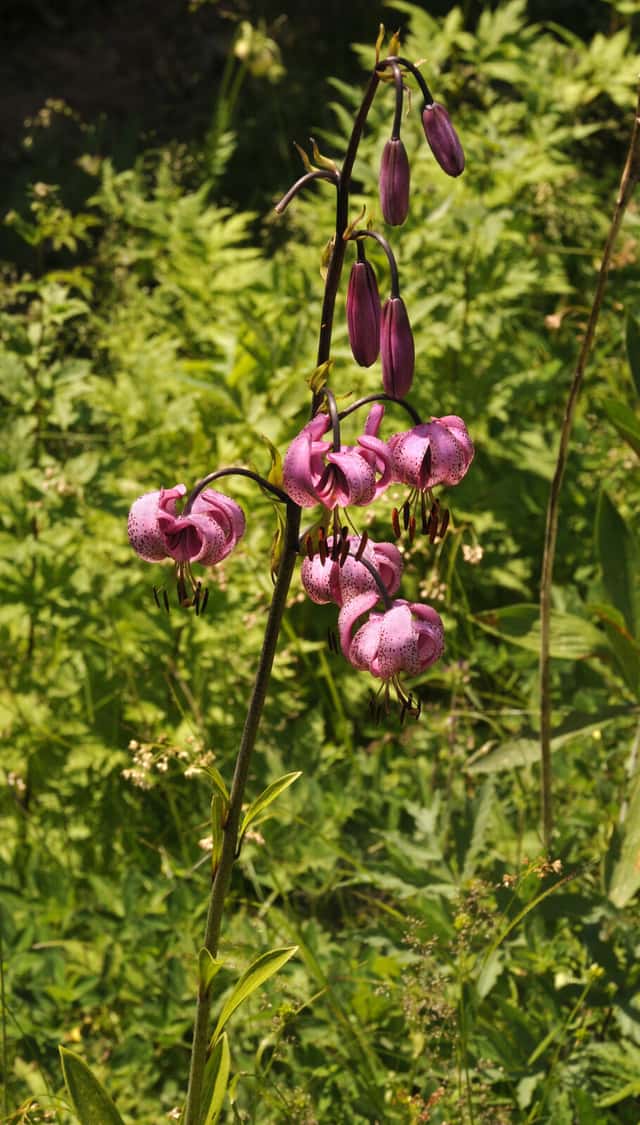
Lilium martagon is a bulbous lily in the family Liliaceae, native to a huge stretch of Eurasia from Portugal to Mongolia, where it grows in woodland and on mountain slopes. Its upright stems reach 1 to 1.5 m and carry leaves in whorls. In early summer each stem opens dozens of small, nodding, scented flowers with petals curled back like a turban; the usual colour is purplish pink with dark spots, but forms range from white to almost black.
How to Propagate Martagon Lily?
Bulb offsets
Only do this when the clump is crowded: the plant resents disturbance and may skip a year of flowering.
- 1 Wait until the foliage dies down after flowering
- 2 Lift the clump carefully so you don't damage the bulbs
- 3 Separate the smaller offsets from the main bulb
- 4 Replant straight away, 10 to 15 cm deep, in well-drained soil
Materials needed:
Seeds
Seedlings take several years to reach flowering size, so be patient.
- 1 Collect seeds from ripe capsules in late summer
- 2 Sow them fresh in pots of free-draining mix
- 3 Keep the pots outdoors or in a cold frame over winter
- 4 Keep the mix lightly moist until seedlings appear
Materials needed:
How Big Does Martagon Lily Grow?
TLDR: Martagon Lily can reach up to 1.5m tall with Slow growth rate.
Max height
1.5m
Spread
30cm
Growth rate
Slow
Foliage
Deciduous
Warning: Toxic Plant
This plant can be toxic if ingested. Keep out of reach of:
Plant Uses
Ornamental
Great for decoration
Is your plant showing symptoms?
Click on the symptom to discover possible causes:
What Diseases Commonly Affect Martagon Lily?
TLDR: Martagon Lily is susceptible to 7 known diseases. Monitor regularly for early detection.
Gray Mold (Botrytis Blight)
Gray mold, caused by the fungus Botrytis cinerea, is one of the most common fungal diseases in plants. It affects over 200 plant species, including ornamentals, vegetables, fruits, and houseplants. The disease thrives in cool, humid conditions with poor air circulation, causing grayish spots and soft rot on infected tissues.
Aphids
Aphids are small, soft-bodied, pear-shaped insects (1/16 to 1/8 inch long) that feed by sucking nutrient-rich sap from plants. They reproduce rapidly and can quickly weaken plants, causing distorted growth and transmitting plant viruses. Aphids come in various colors including green, black, red, yellow, brown, and gray. They secrete honeydew, a sticky substance that attracts ants and encourages sooty mold growth.
Slugs and Snails
Slugs and snails are mollusks that feed on plant tissue, causing irregular holes in leaves and damage to young seedlings. They are most active at night and in moist conditions, leaving characteristic silvery slime trails. These pests can quickly devastate gardens, especially during wet seasons.
Mosaic Virus
Mosaic virus is a group of plant viruses that cause mottled, patchy patterns on leaves and can affect a wide variety of plants. The virus creates characteristic yellow, white, and green mosaic patterns, often accompanied by stunted growth and deformed plant parts. This highly contagious disease spreads rapidly through insect vectors and contaminated tools.
Fun Facts
A single vigorous stem can carry up to 50 flowers
The name Turk's cap comes from the swept-back petals, which look like a turban
It grows from Portugal to Mongolia, one of the widest ranges of any lily
Frequently asked questions
Does the martagon lily like sun or shade?
When should I plant Lilium martagon bulbs?
Is the martagon lily toxic to cats?
Why didn't my martagon lily flower?
Compare with similar plants
| Attribute | Difficulty | Light | Watering | Pet Safe |
|---|---|---|---|---|
| Dark Fieldcap | Medium | Low light | 2d | ⚠️ |
| Azalea | Medium | Partial shade | 3d | ⚠️ |
| Muriel's Bamboo | Medium | Partial shade | 3d | ✓ |
| Bougainvillea | Medium | Direct sun | 7d | ⚠️ |




