Celastraceae
Maitén: Edible Plant
Maytenus boaria
The Maitén is a low-maintenance tree once established: it grows slowly, tolerates drought well, and is not very susceptible to pests and diseases. It prefers full sun or partial shade, moderate watering, and fertile, well-drained soil.
Every 12 days
Bright indirect
-10° - 35°C
% - %
Categories
What is Maitén?
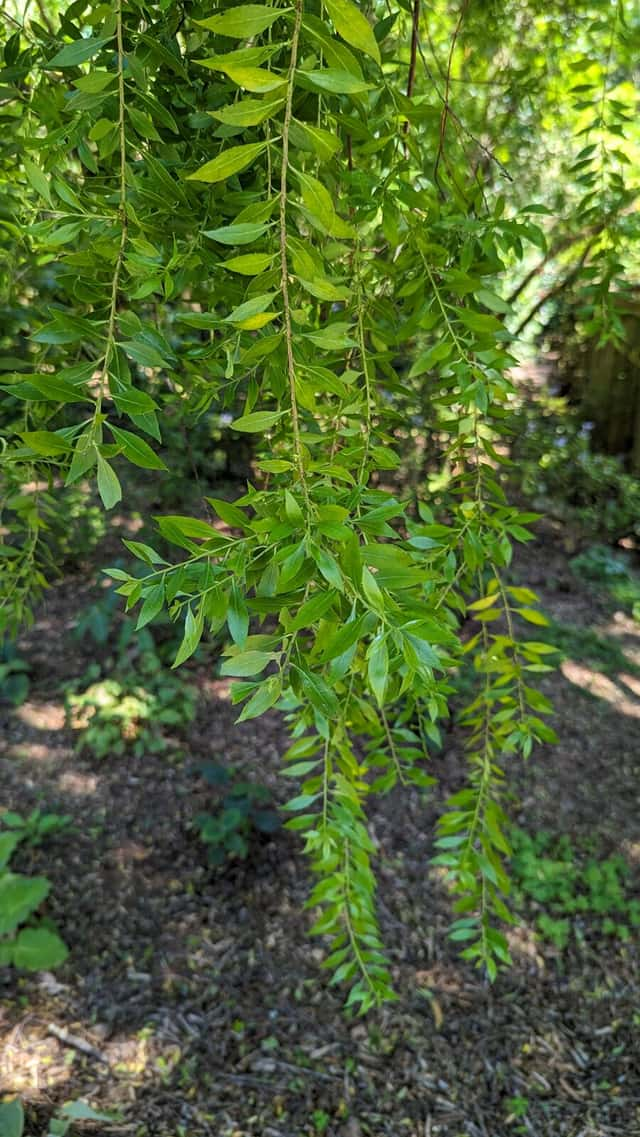
Maitén (Maytenus boaria) is a easy-care plant from the Celastraceae family. The Maitén (Maytenus boaria) is a tree native to Chile and Argentina, belonging to the Celastraceae family. It is an evergreen species with a dense, rounded canopy and somewhat drooping branches, reaching between 10 and 20 m in height in the wild. Its leaves are alternate, elliptical, 2 to 6 cm long...
Maitén grows up to 20.0m, spread of 1000cm, watering every 12 days, -10°C – 35°C. It is not suitable for indoor environments and safe for pets.
Unlike many tropical plants, Maitén tolerates watering mistakes. Best for beginners. Unlike many popular species, Maitén is safe to keep around pets.
How to Care for Maitén?
TLDR: Maitén needs Bright indirect, watering every 12 days, and temperatures between -10-35°C with 40-70% humidity.
How Often Should You Water Maitén?
Water regularly during the first year to help establish the roots; then reduce frequency and allow the topsoil to dry out between waterings, as the Maitén tolerates short periods of drought well once mature.
How Much Light Does Maitén Need?
Place it in full sun or partial shade, with at least 6 hours of light per day for optimal development; it tolerates some shade, especially in very hot climates.
What Is the Best Soil for Maitén?
Use fertile soil with organic matter and good drainage; it tolerates loamy, stony-loamy, or sandy soils, with a pH from slightly acidic to neutral (6 to 7.5).
What Pot Should You Use for Maitén?
Due to its large adult size, the Maitén thrives best when planted directly in the garden soil. If growing young plants in pots, choose a large container with good drainage and transplant it before the roots become pot-bound.
Care Schedule
Fertilize
Every 180 days
What Is Maitén and Where Does It Come From?
The Maitén (Maytenus boaria) is a tree native to Chile and Argentina, belonging to the Celastraceae family. It is an evergreen species with a dense, rounded canopy and somewhat drooping branches, reaching between 10 and 20 m in height in the wild. Its leaves are alternate, elliptical, 2 to 6 cm long, with finely serrated edges. It flowers between August and September with small yellowish-green flowers and produces capsules with seeds enclosed in a red aril. It grows wild in semi-arid transition zones and along riverbanks and streams, from sea level up to about 1600 m in altitude, and is considered a sacred tree by the Mapuche people.
How to Propagate Maitén?
Propagation by seed
- Seeds germinate easily
- Transplant seedlings right after their first winter to strengthen them
- 1 Sowing
Sow seeds in spring, in a seedbed or greenhouse, in a light and well-drained substrate.
- 2 Initial care
Keep the substrate moist but not waterlogged until germination.
- 3 Transplanting
Transplant seedlings to their final location after their first winter.
Materials needed:
Semi-hardwood cuttings
- Use branches from the current year, already semi-hardened, not completely tender
- Maintain high ambient humidity until they root
- 1 Cutting
Cut semi-hardwood cuttings about 10-15 cm long in late summer.
- 2 Planting
Plant the cuttings in a mixture of light substrate and perlite or sand, inside a cold frame or greenhouse.
- 3 Rooting
Maintain humidity and partial shade until new roots appear.
Materials needed:
How Big Does Maitén Grow?
TLDR: Maitén can reach up to 20.0m tall with Slow growth rate.
Max height
20.0m
Spread
10.0m
Growth rate
Slow
Foliage
Evergreen
Plant Uses
Ornamental
Great for decoration
Edible
Can be consumed
Medicinal
Medicinal properties
Medicinal Uses
- Leaf infusion traditionally used as a febrifuge (to reduce fever)
- Purgative/laxative effect
- Topical use in washes to relieve skin rashes, including those caused by Lithraea caustica
- Antibacterial and anti-inflammatory properties attributed to triterpenes like β-amyrin and lupeol
Culinary Uses
- Tender leaves occasionally consumed in salads
- Oil extracted from seeds, traditionally used for cooking
Is your plant showing symptoms?
Click on the symptom to discover possible causes:
What Diseases Commonly Affect Maitén?
TLDR: Maitén is susceptible to 5 known diseases. Monitor regularly for early detection.
Phytophthora Root Rot
Disease caused by fungus-like organisms (oomycetes) that live in soil and can survive for years. It affects roots, stem, and crown of plants, being especially severe in waterlogged or poorly drained soils. It is the second most common cause of root rot in trees and shrubs.
Canker
Canker is a disease caused by various fungi and bacteria that create necrotic, sunken areas on bark of branches, stems, and trunks. Pathogens enter through wounds and natural openings, especially when plants are stressed. Canker can gradually weaken or kill branches by disrupting water and nutrient flow.
Aphids
Aphids are small, soft-bodied, pear-shaped insects (1/16 to 1/8 inch long) that feed by sucking nutrient-rich sap from plants. They reproduce rapidly and can quickly weaken plants, causing distorted growth and transmitting plant viruses. Aphids come in various colors including green, black, red, yellow, brown, and gray. They secrete honeydew, a sticky substance that attracts ants and encourages sooty mold growth.
Scale Insects
Scale insects are small sap-sucking pests that appear as brown, shell-like bumps on plant stems and leaves. There are over 25 species, divided into armored (hard) and unarmored (soft) scales. They feed by piercing plant tissue and extracting sap, which weakens the plant and can lead to yellowing, stunted growth, and even death if left untreated. They also excrete honeydew, which attracts ants and promotes sooty mold growth.
Meaning & Symbolism
In Mapuche culture, the Maitén is considered a sacred tree, whose name means "tree" or "tree of wisdom." Due to its longevity and ability to adapt to adverse climates, it is associated with resilience and strength, also serving as a symbol of identity for the indigenous peoples of southern South America.
Compare with similar plants
| Attribute | Difficulty | Light | Watering | Pet Safe |
|---|---|---|---|---|
| Field Maple | Easy | Bright indirect | 14d | ✓ |
| Iberian Houseleek | Easy | Direct sun | 14d | ✓ |
| Silver Birch | Easy | Direct sun | 14d | ✓ |
| Common Blanketflower | Easy | Direct sun | 10d | ✓ |
Choose & Compare
Sources & References
- Maytenus boaria - Wikipedia
- Maytenus boaria (horco molle-maiten) - SIB Parques Nacionales Argentina
- Maytenus boaria - Mayten Tree - PFAF Plant Database
- Maytenus boaria (Maiten) - Manos a la Tierra
- Maiten (Maytenus boaria), en lengua mapuche, significa arbol sagrado o de la sabiduria - El Patagonico
- Maytenus boaria - Water Wise Gardening





