Cactaceae
Spider Cactus: Full Sun Plant
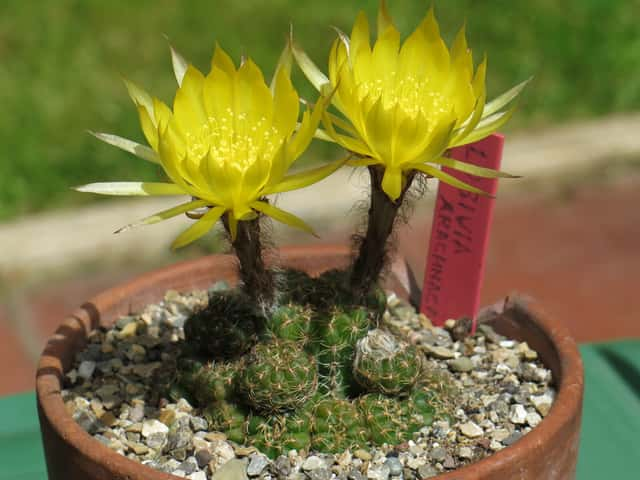
Lobivia arachnacantha
Place in a bright and sunny location, water sparingly, and allow the soil to dry out completely between waterings. A highly permeable, mineral-based substrate prevents root rot. Water regularly but moderately from spring to autumn; in winter, keep the plant cool (below approx. 45°F/7°C) and almost dry to encourage flower formation in the spring. Protection from persistent moisture, mealybugs, and spider mites is essential.
Every 14 days
Direct sun
5° - 30°C
20% - 50%
Categories
What is Spider Cactus?
Spider Cactus (Lobivia arachnacantha) is a easy-care plant from the Cactaceae family. Lobivia arachnacantha is a small, globular to short cylindrical cactus from the Cactaceae family. It grows in clusters, producing numerous offsets over time. In spring and summer, large funnel-shaped flowers bloom during the day, typically in yellow or orange, and more rarely in white, red, or viole...
Spider Cactus grows up to 10cm, watering every 14 days, 5°C – 30°C, 20–50% humidity. It is suitable for indoor environments and safe for pets.
Unlike many tropical plants, Spider Cactus tolerates watering mistakes. Best for beginners. Unlike many popular species, Spider Cactus is safe to keep around pets. Without adequate drainage, root rot can develop within 28 days.
How to Care for Spider Cactus?
TLDR: Spider Cactus needs Direct sun, watering every 14 days, and temperatures between 5-30°C with 20-50% humidity.
How Often Should You Water Spider Cactus?
In summer, water approximately every two weeks, only once the substrate is completely dry. In winter, water at most once a month or not at all.
How Much Light Does Spider Cactus Need?
Full sun to very bright light. After winter, acclimate the plant slowly to intense sun to avoid sunburn spots.
What Is the Best Soil for Spider Cactus?
Use a very well-draining mix of cactus soil, sand, and pumice or perlite. Avoid waterlogging at all costs.
What Pot Should You Use for Spider Cactus?
A shallow clay pot with drainage holes that allows excess moisture to evaporate; choose a size only slightly larger than the plant body.
Care Schedule
Fertilize
Every 30 days
Repot
Every 730 days
What Is Spider Cactus and Where Does It Come From?
Lobivia arachnacantha is a small, globular to short cylindrical cactus from the Cactaceae family. It grows in clusters, producing numerous offsets over time. In spring and summer, large funnel-shaped flowers bloom during the day, typically in yellow or orange, and more rarely in white, red, or violet. This species is known for being very floriferous and is well-suited for beginners. It stores water in its body and survives dry periods without difficulty.
How to Propagate Spider Cactus?
Rooting is most successful during spring and summer.
- 1 Carefully remove or twist off a well-developed offset using a clean knife.
- 2 Allow the cut surface to air-dry for a few days up to two weeks until it callouses over.
- 3 Place the offset on dry, mineral substrate in a bright spot away from direct sunlight.
- 4 Only begin watering carefully once roots have started to form.
Seedlings grow slowly and require patience.
- 1 Sow seeds on moist, sandy seed-starting mix and press down lightly.
- 2 Keep covered in a bright spot at approximately 68 to 77°F (20 to 25°C).
- 3 Maintain even, light moisture in the substrate until seedlings emerge.
- 4 Prick out seedlings later and gradually acclimate them to lower humidity.
How Big Does Spider Cactus Grow?
TLDR: Spider Cactus can reach up to 10cm tall with Slow growth rate.
Max height
10cm
Growth rate
Slow
Foliage
Evergreen
Plant Uses
Ornamental
Great for decoration
Is your plant showing symptoms?
Click on the symptom to discover possible causes:
What Diseases Commonly Affect Spider Cactus?
TLDR: Spider Cactus is susceptible to 6 known diseases. Monitor regularly for early detection.
Mealybugs
Mealybugs are small, soft-bodied insects covered with a white, waxy, cottony material. They are common pests of houseplants and outdoor plants in mild climates. These sap-sucking insects feed on plant tissue, causing damage, stunted growth, and can lead to plant death if left untreated. They produce sticky honeydew which attracts sooty mold.
Spider Mites
Spider mites are tiny arachnids (less than 1/20 inch long) related to spiders and ticks that feed on plant sap. They thrive in hot, dry conditions and can cause significant damage to ornamental and vegetable plants. During severe infestations, crop losses can reach 14% or higher as these pests disrupt vital plant processes including photosynthesis, carbon dioxide absorption, and transpiration.
Root Rot
Root rot is a serious fungal disease that affects the root system of plants, causing them to decay and die. It is primarily caused by overwatering, poor drainage, or soil-borne fungi such as Pythium, Phytophthora, Rhizoctonia, and Fusarium. The disease thrives in waterlogged conditions where roots are deprived of oxygen, making them susceptible to fungal infection.
Overwatering
Overwatering occurs when plants receive too much water, depriving roots of oxygen and causing root rot. This environmental stress is one of the most common causes of houseplant death, as waterlogged soil prevents roots from breathing and functioning properly.
Compare with similar plants
| Attribute | Difficulty | Light | Watering | Pet Safe |
|---|---|---|---|---|
| Field Maple | Easy | Bright indirect | 14d | ✓ |
| Iberian Houseleek | Easy | Direct sun | 14d | ✓ |
| Silver Birch | Easy | Direct sun | 14d | ✓ |
| Common Blanketflower | Easy | Direct sun | 10d | ✓ |





