Crassulaceae
Lindley's Aeonium (Aeonium lindleyi)
Aeonium lindleyi
Easy. Bright sun or part shade, a free-draining mix and infrequent watering. Protect from cold below about 5 °C.
Every 14 days
Bright indirect
5° - °C
% - %
Categories
What is Lindley's Aeonium?
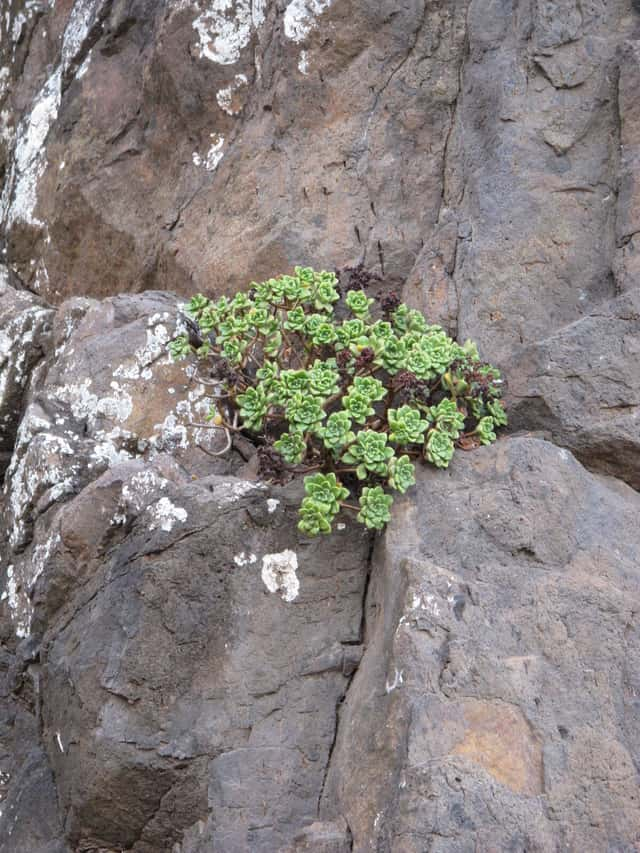
Lindley's Aeonium (Aeonium lindleyi) is a easy-care plant from the Crassulaceae family. Lindley's aeonium (Aeonium lindleyi) is a succulent in the stonecrop family (Crassulaceae) endemic to the Canary Islands: subspecies lindleyi grows on Tenerife and subspecies viscatum on La Gomera, on sunny cliffs and rocks from the coast up to about 700 m. It is a subshrub branching from the base,...
Lindley's Aeonium grows up to 50cm, spread of 50cm, watering every 14 days. It is suitable for indoor environments and safe for pets.
Unlike many tropical plants, Lindley's Aeonium tolerates watering mistakes. Best for beginners. Unlike many popular species, Lindley's Aeonium is safe to keep around pets. Without adequate drainage, root rot can develop within 28 days.
How to Care for Lindley's Aeonium?
TLDR: Lindley's Aeonium needs Bright indirect, watering every 14 days, and temperatures between 5-30°C with 40-70% humidity.
How Often Should You Water Lindley's Aeonium?
Water when the mix has dried out completely. In the wild it grows on dry rock, so underwatering is safer than overwatering.
How Much Light Does Lindley's Aeonium Need?
Full sun or part shade; strong sun turns the rosettes reddish. Introduce it to stronger sun gradually after winter to avoid scorch.
What Is the Best Soil for Lindley's Aeonium?
A sandy, free-draining mix such as cactus compost with perlite; acid, neutral or alkaline is fine.
What Pot Should You Use for Lindley's Aeonium?
A terracotta pot with a drainage hole, not too deep; stems tend to lean to one side, so a wide pot gives stability.
What Is Lindley's Aeonium and Where Does It Come From?
Lindley's aeonium (Aeonium lindleyi) is a succulent in the stonecrop family (Crassulaceae) endemic to the Canary Islands: subspecies lindleyi grows on Tenerife and subspecies viscatum on La Gomera, on sunny cliffs and rocks from the coast up to about 700 m. It is a subshrub branching from the base, 20-50 cm tall, with small rosettes of thick, hairy, very sticky leaves that are green or turn reddish-yellow in strong sun. In summer (July to September in the wild) it bears clusters of golden-yellow, star-shaped flowers. Canary Islanders traditionally used the leaf juice against burns from spurge latex.
How to Propagate Lindley's Aeonium?
Rosette cuttings
The sticky leaves pick up dust; handle gently and do not water the cutting before it roots.
- 1 Cut a rosette with 3-5 cm of stem
- 2 Let it callus in the shade for a few days
- 3 Set it on dry, free-draining mix
- 4 Start light watering once roots appear
Materials needed:
How Big Does Lindley's Aeonium Grow?
TLDR: Lindley's Aeonium can reach up to 50cm tall with Medium growth rate.
Max height
50cm
Spread
50cm
Foliage
Evergreen
Plant Uses
Ornamental
Great for decoration
Medicinal
Medicinal properties
Medicinal Uses
- Leaf juice traditionally used in the Canary Islands against irritation from spurge (Euphorbia) latex
Is your plant showing symptoms?
Click on the symptom to discover possible causes:
Fun Facts
On Tenerife its leaf juice was dripped into the eyes of people hit by the caustic latex of the Canary Island spurge (Euphorbia canariensis), which grows right beside it.
It is named after John Lindley, English botanist and secretary of the Royal Horticultural Society.
It is a protected species in the Canary Islands.
Frequently asked questions
Why are the leaves sticky?
Is it frost hardy?
How often should I water it?
How do I propagate it?
Compare with similar plants
| Attribute | Difficulty | Light | Watering | Pet Safe |
|---|---|---|---|---|
| Field Maple | Easy | Bright indirect | 14d | ✓ |
| Iberian Houseleek | Easy | Direct sun | 14d | ✓ |
| Silver Birch | Easy | Direct sun | 14d | ✓ |
| Common Blanketflower | Easy | Direct sun | 10d | ✓ |
Choose & Compare
Sources & References
- RHS Plant Profile - Aeonium lindleyi
- LLIFLE Encyclopedia of Succulents - Aeonium lindleyi
- CanariWiki (Gobierno de Canarias) - Higuerita, higuereta, gomereta
- Macaronesian.org - Bejequillo gomereta (Aeonium lindleyi)
- Botanical Dermatology Database - Crassulaceae (Aeonium lindleyi)
- Surreal Succulents - Aeonium lindleyi





