1319 Medium Plants | 2026 Guide - Page 4
Discover 1319 medium plants for your garden. Complete care guide.
1319 Medium Plants
Showing 109-144 of 1319
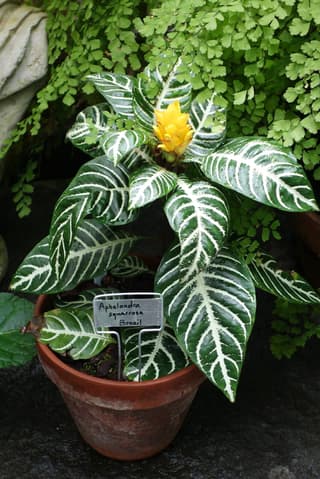
Aphelandra
Aphelandra
Aphelandra is a genus of about 200 evergreen shrubs in the acanthus family (Acanthaceae), native to tropical forests of Central and South America. In the wild many reach 1-2 m, but the ones grown at home stay compact. The best known is Aphelandra squarrosa, the zebra plant from Brazil's Atlantic Forest: glossy dark green leaves with bold white or cream veins and, in late summer or autumn, a cone-shaped spike of golden-yellow bracts that stays colourful for several weeks while the small tubular flowers last only days. Other cultivated species, such as A. aurantiaca and A. sinclairiana, carry orange, scarlet or coral-pink spikes. Grown as houseplants they reach about 30-60 cm, grow slowly and are prized for both foliage and flowers.
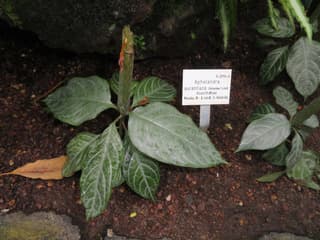
Fiery spike
Aphelandra aurantiaca
A tropical evergreen shrub in the Acanthaceae family, native to a range spanning Mexico to Brazil and Bolivia, growing in partial shade along riverbanks, forest edges and paths between 100 and 1800 m elevation. Reaches 50 cm to 1 m tall, with large opposite leaves (10-30 cm) marked by prominent veining. Produces showy terminal spikes of orange-red bracts with yellow flowers, attractive to hummingbirds.
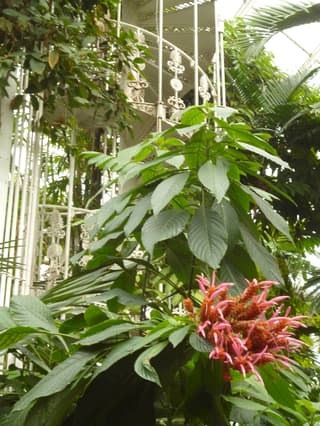
Coral Aphelandra
Aphelandra sinclairiana
Aphelandra sinclairiana, commonly known as Coral Aphelandra or Panama Queen, is a tropical evergreen shrub native to Central America, particularly Panama and Costa Rica. It can grow up to 3 meters tall and is celebrated for its spectacular coral-orange flower spikes with brilliantly colored bracts that remain decorative for weeks. The large, opposite, deep-green leaves with prominent white veins make it a striking ornamental plant for both indoor spaces and tropical gardens.
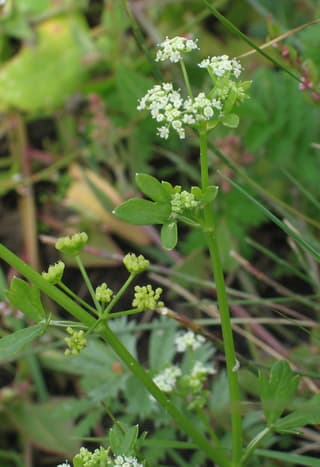
Celery
Apium graveolens
Celery (Apium graveolens) is a biennial plant in the Apiaceae family, cultivated for over 3,000 years as both a food crop and medicinal herb. Native to temperate regions of Europe, Asia, and North Africa, it is widely grown in vegetable gardens for its crisp stalks, aromatic leaves, and flavorful seeds.

Apoballis
Apoballis acuminatissima
Apoballis acuminatissima is a striking tropical perennial native to the rainforests of Sumatra. It is highly prized for its ornamental foliage, which features elongated, lance-shaped leaves decorated with intricate silver-green mottling and patterns. As an understory plant, it has adapted to lower light conditions but requires high humidity to maintain its lush appearance. It was formerly classified under the genus Schismatoglottis.
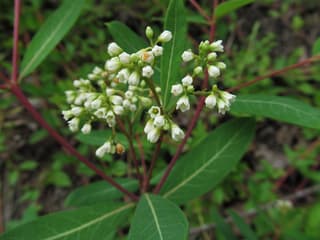
Indian Hemp
Apocynum cannabinum
Apocynum cannabinum, commonly known as Indian Hemp or Hemp Dogbane, is a native North American perennial herb in the Apocynaceae family. Despite its common name, it is not related to Cannabis — the name derives from the historical use of its strong bast fibers as cordage by Native Americans. The plant produces clusters of small white bell-shaped flowers in summer and spreads aggressively via rhizomes. CRITICAL WARNING: All parts of this plant contain potent cardiac glycosides that can cause fatal cardiac arrhythmias. It is highly toxic to humans, dogs, cats, horses, and livestock.
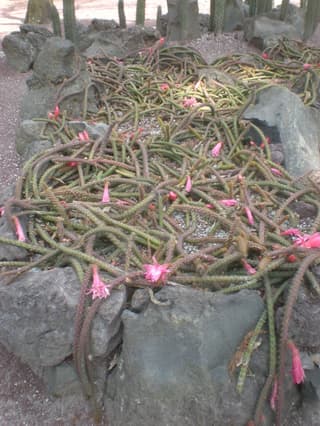
Rat Tail Cactus
Aporocactus flagelliformis
Aporocactus flagelliformis, commonly known as the rat tail cactus, is an epiphytic succulent native to Mexico (Hidalgo, Puebla, and Veracruz states). Its long, cylindrical, trailing stems, covered in fine brown spines, can reach up to 150 cm in length, making it ideal for hanging baskets. In spring, it produces vibrant tubular flowers in shades of pink, red, and crimson, which last only a few days but are exceptionally beautiful.
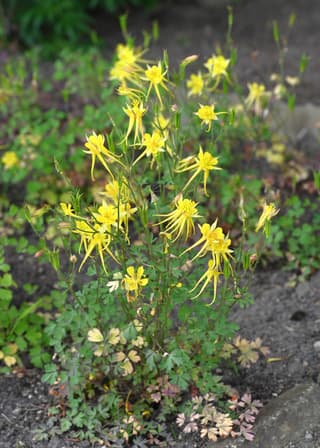
golden columbine
Aquilegia chrysantha
Aquilegia chrysantha, commonly known as the golden columbine, is a herbaceous perennial native to the Southwestern United States and Northern Mexico. It is celebrated for its large, canary-yellow flowers that feature exceptionally long, outward-curving spurs. The plant produces delicate, fern-like, blue-green foliage that remains attractive throughout the growing season. It is a favorite for pollinators, particularly hummingbirds and hawkmoths, which are attracted to its nectar-rich blooms.
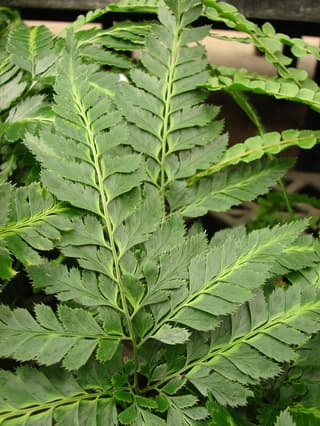
East Indian holly fern
Arachniodes simplicior
Arachniodes simplicior, commonly known as the East Indian holly fern or variegated shield fern, is a perennial fern native to China, Japan, Korea, and Vietnam. Its leathery, glossy fronds of deep dark green feature a striking yellowish-green or lime central stripe, giving it an almost waxy appearance that adds an exotic touch to shaded indoor and outdoor spaces. It forms compact, slow-growing clumps that rarely exceed 24 inches in height.
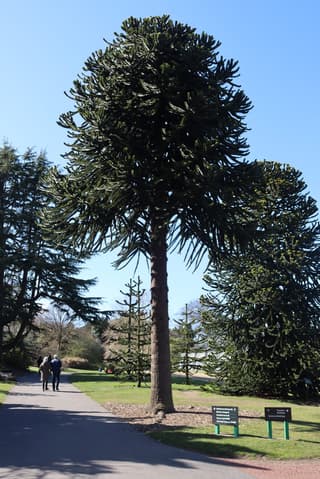
Araucaria
Araucaria
Araucaria is a genus of evergreen conifers in the family Araucariaceae, with about 20 species, all from the Southern Hemisphere. Most grow in New Caledonia; the rest are found on Norfolk Island, in eastern Australia, New Guinea, Chile, Argentina and southern Brazil. In the wild they are straight-trunked trees, 5 to 80 meters tall, with branches set in tiers around the trunk. Female cones can reach 7 to 25 cm and hold up to 200 large seeds; those of the monkey puzzle (Araucaria araucana), the Paraná pine (A. angustifolia) and the bunya pine (A. bidwillii) are eaten. As a potted plant, the species usually sold is the Norfolk Island pine (Araucaria heterophylla), which grows slowly and does well indoors for years.
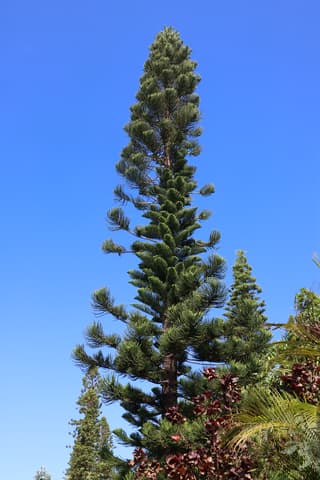
Cook Pine
Araucaria columnaris
The Cook Pine (Araucaria columnaris) is a majestic conifer native to New Caledonia, renowned for its distinctive columnar silhouette and a fascinating biological quirk: its trunk tilts toward the equator, regardless of which hemisphere it grows in. A slow-growing tree that can reach 60 meters in the wild, it typically stays 15-20 meters in cultivation. Widely used as an ornamental tree in coastal and subtropical gardens.

Norfolk Island Pine
Araucaria heterophylla
The Norfolk Island Pine (Araucaria heterophylla) is a slow-growing evergreen conifer endemic to Norfolk Island in the South Pacific. Renowned for its symmetrical, tiered horizontal branches and star-like silhouette, it is widely cultivated as an ornamental houseplant and outdoor landscape tree. In its native habitat it can reach over 60 meters tall, but indoors typically stays under 2 meters.
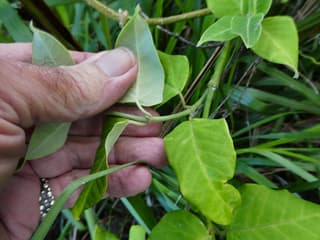
Cruel Vine
Araujia sericifera
Araujia sericifera, commonly known as Cruel Vine or Moth Plant, is an invasive climbing vine native to South America (Brazil, Argentina, Paraguay). It produces fragrant white to pale pink waxy flowers in summer and fall that trap moths overnight — hence its common name. The milky latex sap is a skin and eye irritant. It is classified as invasive in Australia, New Zealand, California, and Portugal.
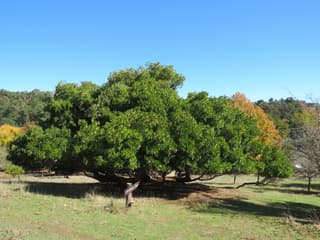
Strawberry Tree
Arbutus unedo
The strawberry tree (Arbutus unedo) is an evergreen shrub or small tree in the Ericaceae family, native to the Mediterranean region and western Europe. It is known for its white urn-shaped flowers and red strawberry-like fruit, which ripen in autumn and winter alongside the new flowering.
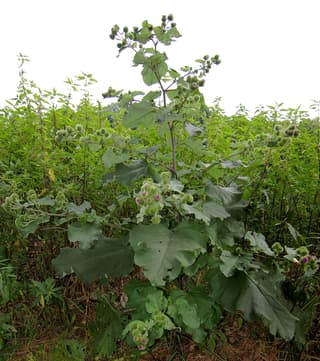
Burdock
Arctium lappa
Arctium lappa, commonly known as Burdock or Gobo, is a robust biennial herbaceous plant native to Europe and Asia. It grows up to 2 meters tall, producing large heart-shaped leaves and distinctive purple flower heads surrounded by hooked bracts that cling to clothing and animal fur — inspiring the invention of Velcro. Both the root and leaves have been valued for centuries in traditional medicine and Asian cuisine.
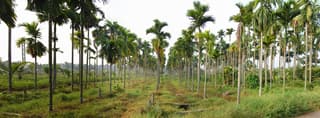
Betel Nut Palm
Areca catechu
The Betel Nut Palm (Areca catechu) is a slender tropical palm native to Southeast Asia, widely cultivated for its fruit, the areca nut. It can reach up to 20 meters tall with a graceful trunk and arching deep-green fronds. It is one of the most widely cultivated palms in the world, holding immense cultural and economic significance across tropical Asia.
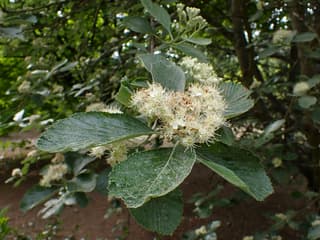
Whitebeam
Aria edulis
The whitebeam (Aria edulis, synonym Sorbus aria) is a deciduous tree in the Rosaceae family, native to Europe, North Africa and western Asia. It forms a compact, domed crown with oval, serrated leaves that are dark green and glossy above, and covered in a felty white-grey down beneath, giving the tree its common name. Cream-white flowers appear in clusters in spring, followed in autumn by scarlet berries that only become palatable once "bletted" (softened by frost or storage).
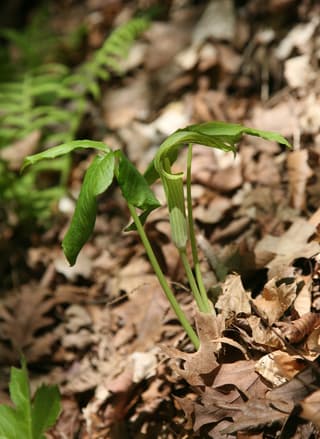
Jack in the pulpit
Arisaema
Arisaema is a genus of approximately 150 species of woodland tuberous aroids native to Asia and North America. They are celebrated for their unique hooded inflorescences (spathe and spadix) and exotic foliage. Plants go dormant in winter and re-emerge vigorously each spring. The most well-known species is A. triphyllum, commonly called Jack in the pulpit.
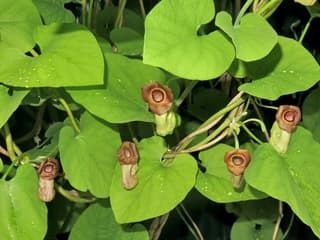
Dutchman's Pipe
Aristolochia
Aristolochia is a large genus of about 350 climbing and herbaceous plants in the family Aristolochiaceae, prized for their curious pipe- or trumpet-shaped flowers in brown, yellow, green and purple tones. Species range from cold-hardy temperate vines like A. macrophylla to tender tropical climbers. All parts of the plant contain aristolochic acid, a compound now known to be nephrotoxic and carcinogenic, so it should be handled with care and kept away from children and pets.
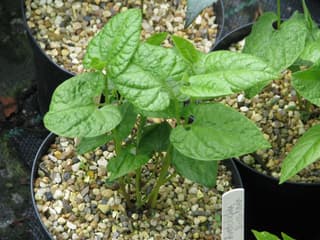
Virginia Snakeroot
Aristolochia serpentaria
Aristolochia serpentaria, commonly known as Virginia Snakeroot, is a low-growing woodland perennial herb native to the eastern United States. It produces distinctive curved, pipe-shaped flowers and heart-shaped leaves. Historically prized as a medicinal plant by Indigenous peoples and early settlers, it contains aristolochic acids now known to be toxic.
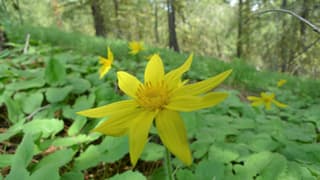
Heart-leaf arnica
Arnica cordifolia
Arnica cordifolia, or heart-leaf arnica, is a perennial herbaceous plant native to the coniferous forests and mountain meadows of western North America, found between 1,500 and 3,300 m in altitude. Recognizable by its opposite heart-shaped leaves and bright yellow flower heads, it spreads via creeping rhizomes and can live for about ten years. Moderately fire-resistant, it regrows from its rhizomes after a fire and serves as an important food source for mule deer and elk. Toxic if ingested (causing nausea and heart issues), it should be reserved for external use only and kept out of reach of children and pets.
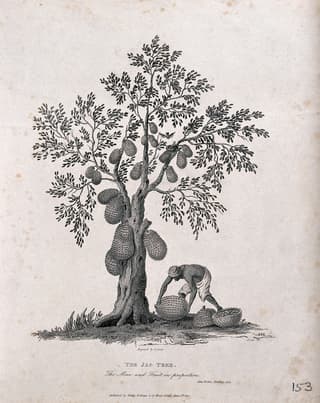
Breadfruit
Artocarpus
Artocarpus is a genus of approximately 60 species of tropical trees in the family Moraceae, native to Southeast Asia and the Pacific Islands. The most famous species are jackfruit (A. heterophyllus), which bears the largest fruit of any tree in the world, and breadfruit (A. altilis), a staple food across the Pacific. All species produce milky latex sap and feature large, ornamental leaves.
Danish Arum
Arum cylindraceum
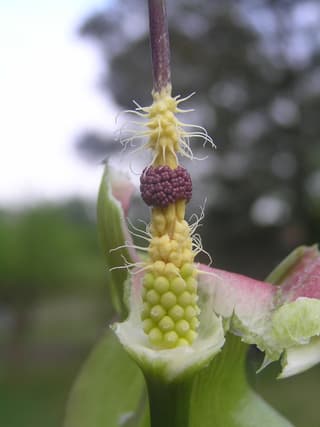
Danish Arum (Arum cylindraceum) is a perennial tuberous plant in the arum family (Araceae), and the only Arum species native to Denmark. It grows 25-40 cm tall with spear-shaped, unspotted leaves and a characteristic inflorescence consisting of a violet spadix surrounded by a pale green spathe, blooming in May-June. The plant is found here and there on the Danish islands and in eastern Jutland, where it grows in nutrient-rich, moist forest floors, thickets, and hedges. In autumn, it produces conspicuous, poisonous red berries. The entire plant – especially the berries and tuber – contains needle-shaped calcium oxalate crystals and is highly toxic if ingested.
Bamboo Orchid (genus)
Arundina
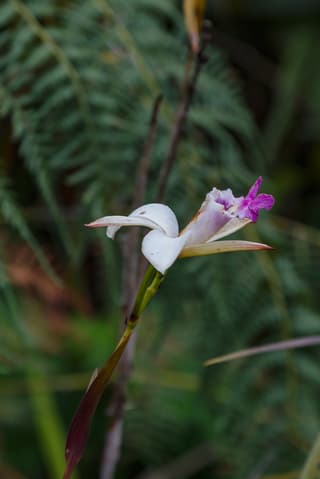
Arundina is a genus of terrestrial orchids in the family Orchidaceae, native to tropical and subtropical Asia. The dominant species, A. graminifolia, features slender bamboo-like stems and delicate flowers in white, pink, and purple hues. These orchids are among the most robust and beginner-friendly in the family.
Creeping Gloxinia
Asarina erubescens
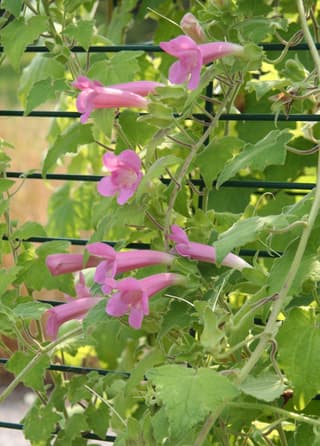
Asarina erubescens, commonly known as creeping gloxinia or climbing snapdragon, is a fast-growing evergreen perennial vine native to the oak forests and canyon walls of the Sierra Madre Oriental range in Mexico, at elevations between 1,000 and 2,200 meters. Rather than using tendrils, it climbs by twining its soft, velvety, triangular leaf-stalks around trellises, fences, and other supports, reaching lengths of up to 2.5 m (8 ft) in a single season. From summer through the first frost it produces a continuous show of tubular, trumpet-shaped flowers up to 7 cm long, rosy-pink with a paler throat (white in some cultivated forms), which attract hummingbirds and butterflies. Grown as a tender perennial in USDA zones 7b-11 and as a fast summer annual elsewhere, it is a popular choice for hanging baskets, trellises, and container gardens.
Ascocenda Orchid
Ascocenda
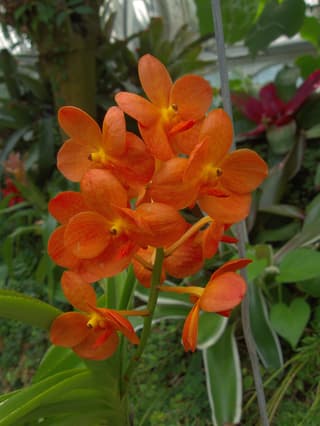
Ascocenda is an orchid nothogenus, a hybrid between Ascocentrum and Vanda within the family Orchidaceae. It combines the compact growth habit of Ascocentrum with the vibrant, large blooms of Vanda, producing jewel-like flowers in shades of purple, pink, orange, and yellow on upright spikes.
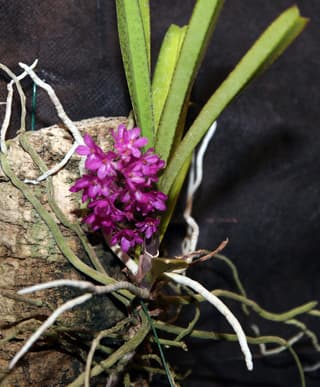
Ascocentrum orchid
Ascocentrum
Ascocentrum is a small genus of miniature epiphytic orchids from Southeast Asia and the eastern Himalayas, found from India and southern China through Thailand, Laos, Vietnam, Malaysia, Java and the Philippines. The plants are monopodial: a short upright stem carries two rows of stiff, strap-shaped or channelled leaves and thick aerial roots, usually staying under 25 cm tall. In bloom they produce dense, upright spikes packed with small, waxy flowers about 2 cm across in vivid orange, yellow, red, pink or magenta. Botanists now usually treat Ascocentrum as part of Vanda (for example Ascocentrum miniatum is Vanda miniata, A. ampullaceum is Vanda ampullacea and A. curvifolium is Vanda curvifolia), but growers and labels still widely use the name Ascocentrum. It is a parent of the Ascocenda hybrids (Ascocentrum x Vanda).
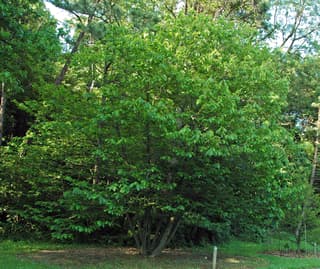
Pawpaw
Asimina triloba
The pawpaw (Asimina triloba) is a deciduous tree in the Annonaceae family, native to the eastern United States and Canada. It is the largest edible fruit tree native to North America. The species naturally grows as an understory tree in forests and produces striking, cup-shaped purple-brown flowers in the spring before the leaves emerge. The large, greenish-yellow fruits have a creamy texture with a flavor reminiscent of a blend of banana, mango, and vanilla.
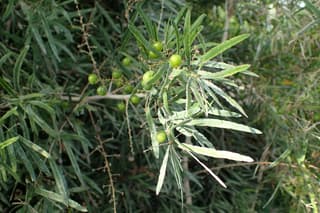
Sicklethorn
Asparagus falcatus
Asparagus falcatus, commonly known as Sicklethorn, is a vigorous climbing perennial native to South Africa, Sri Lanka, and the Himalayas. Its sickle-shaped cladodes and arching thorny stems make it a striking ornamental plant for both indoor and outdoor settings. It can reach up to 8 feet (240 cm) tall when grown indoors with support.
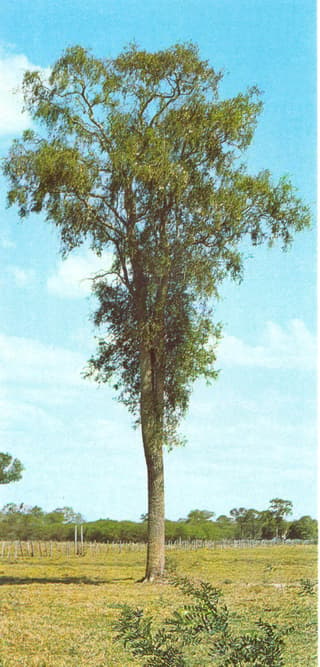
Aspidosperma (genus)
Aspidosperma
Aspidosperma is a genus of tropical and subtropical trees in the family Apocynaceae, native to South America, Central America, and the Caribbean. It includes notable species such as peroba-rosa (A. polyneuron), white quebracho (A. quebracho-blanco), and A. macrocarpon. These slow-growing, large-canopy trees produce extremely hard and durable timber. The bark contains valuable medicinal alkaloids used in traditional medicine across the Neotropics.
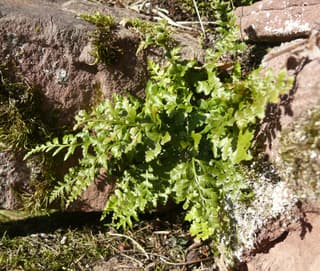
Black Spleenwort
Asplenium adiantum-nigrum
Asplenium adiantum-nigrum, known as black spleenwort, is a small evergreen fern in the Aspleniaceae family. It forms a loose tuft of glossy, triangular, finely divided fronds on dark, almost black stems, growing from a short creeping rhizome. It is native to Europe, northern and southern Africa, western Asia, Macaronesia, southwestern North America and Hawaii, where it grows in rock crevices, old walls, hedgebanks and shady rocky woods. Fronds usually reach 15-40 cm, longer in deep shade and much shorter on exposed rock.
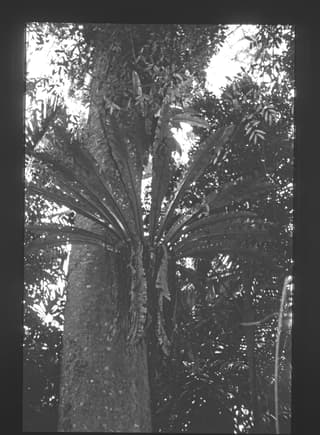
Birds Nest Fern
Asplenium australasicum
Asplenium australasicum, commonly known as the birds nest fern, is an epiphytic fern native to the rainforests of eastern Australia. Its broad, wavy fronds grow in a rosette, forming a bowl shape that collects fallen leaves and rainwater in the wild.
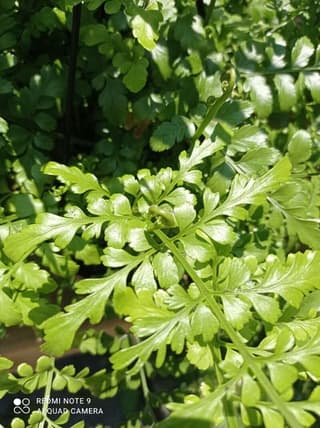
Balearic Spleenwort
Asplenium balearicum
Asplenium balearicum, commonly known as the Balearic Spleenwort, is a small and elegant fern endemic to the Balearic Islands and the Western Mediterranean. It grows naturally in limestone rock crevices and shaded slopes, forming dense clumps of dark green fronds. Well-suited to indoor environments with good humidity, it is an adaptable plant that brings a Mediterranean touch to any space.
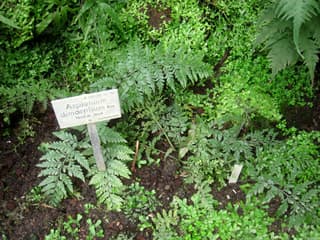
Norfolk Island Spleenwort
Asplenium dimorphum
Norfolk Island spleenwort (Asplenium dimorphum) is a fern endemic to Norfolk Island in the South Pacific. It forms a clump of glossy, dark green, finely divided fronds with a lacy look. The name dimorphum refers to its two frond types: broader sterile fronds and narrower, more finely cut fertile fronds. Its closest relative is Asplenium difforme, and the two are the parents of the popular houseplant hybrid 'Parvati'.
Single-sorus Spleenwort
Asplenium monanthes
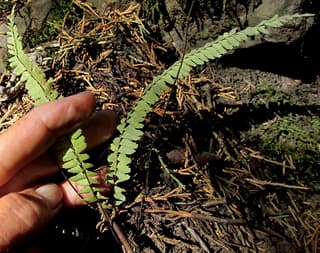
Asplenium monanthes is a small evergreen fern with erect, once-divided fronds on shiny, dark reddish-brown to blackish stalks. Each fertile leaflet carries a single sorus, which gives the species its name. It grows in tropical and subtropical regions of the Americas, Africa and Atlantic islands, usually on shaded, humid forest floors and moist rock faces. Fronds are typically around 15 to 30 cm long.
Bird's Nest Fern
Asplenium nidus
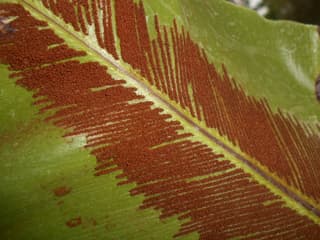
The Bird's Nest Fern (Asplenium nidus) is an elegant tropical epiphytic fern known for its rosette of bright green, lance-shaped fronds that unfurl from a central nest-like crown. Native to Southeast Asia, Australia, and the Pacific Islands, this slow-growing beauty thrives in humid environments and makes an excellent houseplant for bathrooms and shaded spaces.
What are Medium Plants?
Medium Plants require a bit more attention and basic gardening knowledge. These plants thrive with regular care and some cultivation experience. Ideal for those who already master the basics.
Tips for Growing Medium Plants
medium plants need a balance between attention and freedom. Keep a regular care routine, watch leaves to identify problems early, and adjust watering by season.