244 Hard Plants | 2026 Guide - Page 5
Discover 244 hard plants for your garden. Complete care guide.
244 Hard Plants
Showing 145-180 of 244

Stiff clubmoss
Lycopodium annotinum
Stiff clubmoss (Lycopodium annotinum) is an evergreen, spore-bearing lycopod in the family Lycopodiaceae. It forms creeping mats on the forest floor in coniferous forests and wetlands across the colder regions of the Northern Hemisphere—from North America and Greenland to most of Europe and northern Asia. Each year's growth is visible as a distinct 'interrupted' constriction on the stem, which has given the species its common names. The species belongs to a very ancient plant lineage and spreads naturally via spores formed in strobili (spore cones) at the tips of the shoots.
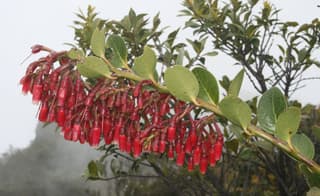
Andean Blueberry
Macleania rupestris
The Andean blueberry is a woody shrub in the Ericaceae family, native to cloud forests and the Andean páramo at altitudes between 2,000 and 4,100 m, ranging from Venezuela and Colombia to Ecuador and northern Peru. It grows as an epiphyte on trees or directly on exposed rocky outcrops, with branches that can reach up to 2.5 m (occasionally 6 m when climbing). Its leaves are small, rigid, and thick, adapted to nutrient-poor soils. It produces tubular magenta flowers pollinated by hummingbirds, followed by rounded edible berries with sweet and juicy pulp.
Parasol mushroom
Macrolepiota procera
Macrolepiota procera, commonly known as the parasol mushroom, is one of the most delicious and highly valued edible mushrooms. It is characterized by a large, spreading cap with a distinct central bump (umbo) and brown scales, as well as a long, slender stem with a movable ring. It occurs naturally on forest edges, clearings, and in parks. Home cultivation is extremely difficult and is usually limited to inoculating mycelium in a garden setting.
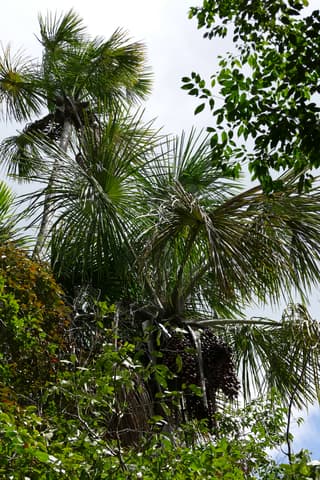
Moriche Palm
Mauritia flexuosa
The Moriche Palm (Mauritia flexuosa) is a majestic palm native to South America, particularly abundant in the wetland gallery forests (veredas) of the Brazilian Cerrado and throughout the Amazon basin. Known as the "Tree of Life" for its extraordinary utility, it can reach up to 25 meters in height and produces large, reddish-brown scaly fruits rich in beta-carotene. It is one of the most ecologically and culturally important palms of South America.
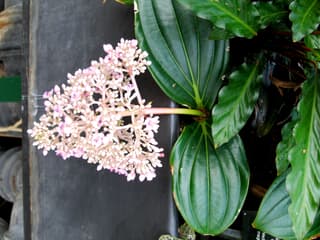
Rose Grape
Medinilla magnifica
Medinilla magnifica is a stunning tropical epiphytic shrub native to the Philippines. Known for its dramatic cascading clusters of pink flowers surrounded by large pink bracts, it is one of the most spectacular flowering houseplants. Its thick, leathery dark green leaves with prominent veins add to its ornamental appeal even when not in bloom.
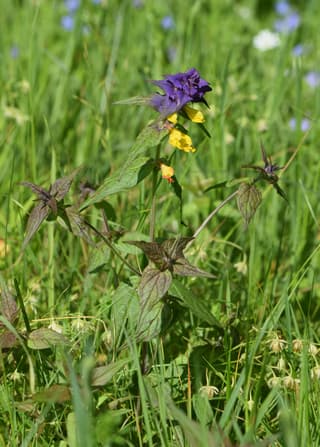
Wood Cow-wheat
Melampyrum nemorosum
Melampyrum nemorosum is a striking annual hemiparasitic wildflower native to European woodlands and their edges, from Central to Eastern Europe. It is instantly recognisable by its dramatic two-tone display: tubular golden-yellow flowers nestled among vivid purple-blue upper bracts — a combination so distinctive it earned it the folk name "Night and Day" across many European languages. As a facultative root hemiparasite in the family Orobanchaceae, it obtains supplementary water and minerals from neighbouring host plants (typically grasses, sedges, or herbaceous woodland species) via haustoria, while still performing photosynthesis. In Slavic tradition the plant is known as 'Ivan-da-Marya', a symbol of the union of opposites: the yellow flowers representing the masculine (Ivan) and the purple bracts the feminine (Maria). It typically grows 15–50 cm tall, preferring moist, humus-rich, slightly acidic soils in semi-shaded habitats such as woodland margins, scrubby meadows, and calcareous grassland edges.
Warty Knight
Melanoleuca verrucipes
Melanoleuca verrucipes, commonly known as the Warty Knight, is a distinctive mushroom characterized by its white cap and a stem covered in dark, warty scales or granules. It typically appears in gardens, parks, and compost-rich areas. Unlike many other Melanoleuca species, its stem texture makes it easily identifiable to mycologists.
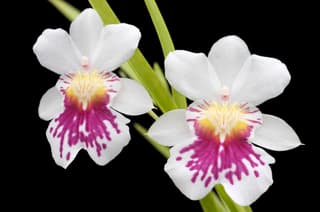
Pansy Orchid
Miltoniopsis phalaenopsis
Miltoniopsis phalaenopsis, commonly known as the Pansy Orchid, is a cool-growing epiphytic orchid native to the cloud forests of the Colombian Andes. Its large, flat blooms closely resemble garden pansies and come in shades of white, yellow, pink, red and purple with distinctive waterfall patterning. It is considered one of the most beautiful orchids in cultivation but requires cool temperatures and high humidity.
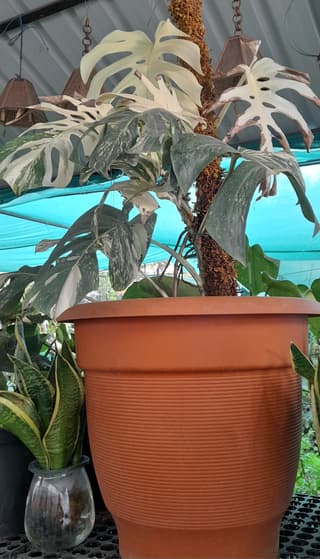
Monstera Albo
Monstera deliciosa 'Albo Borsigiana'
Monstera deliciosa 'Albo Borsigiana' is a highly coveted variegated cultivar of the classic Swiss cheese plant, prized for the irregular white patches (variegation) that cover portions of its iconic fenestrated leaves. This unstable variegation results from a lack of chlorophyll in affected leaf sectors, making every plant one-of-a-kind — and also more delicate, since the white tissue cannot photosynthesize, grows more slowly, and burns easily under strong direct light. A climbing aroid in the Araceae family, it is one of the most sought-after houseplants among collectors for its rarity and striking ornamental value.
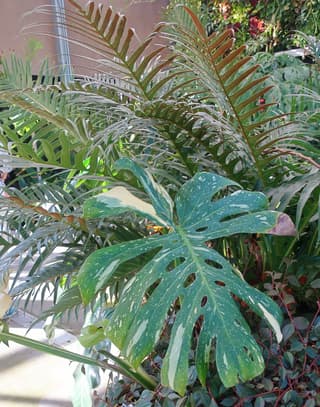
Monstera Thai Constellation
Monstera deliciosa 'Thai Constellation'
Monstera deliciosa 'Thai Constellation' is a rare, lab-developed variegated cultivar of the Swiss cheese plant, prized for its dark green leaves splashed with creamy-white to yellow marbling that resembles a starry night sky. Unlike naturally occurring variegated Monsteras, the Thai Constellation was produced through tissue culture (reportedly involving controlled mutagenesis) at a Thai laboratory, which makes its variegation pattern genetically stable and far less prone to reverting to solid green than chimeric variegated forms. Because the white sections of its leaves contain little to no chlorophyll, the plant photosynthesizes less efficiently and grows noticeably slower than the standard green Monstera deliciosa, making it a more demanding, higher-maintenance collector's plant.
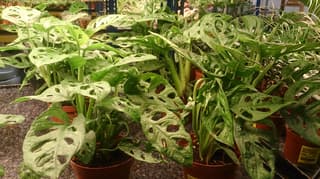
Swiss Cheese Vine
Monstera obliqua
Monstera obliqua is one of the rarest and most extraordinary plants in the Monstera genus, native to the rainforests of Central and South America. Its leaves are famous for being almost entirely holes — up to 90% fenestration — making them appear nearly transparent, with just thin strips of leaf tissue connecting the margins. This radical fenestration makes true M. obliqua unlike any other houseplant. It is extremely rare in cultivation; the vast majority of plants sold under this name are actually Monstera adansonii, a much more robust species. True M. obliqua is a collector's plant, demanding high humidity, warm temperatures, and expert-level care.
Landscaping Black Morel
Morchella importuna
Morchella importuna is an edible mushroom species from the Morchellaceae family, known as the garden morel. It often appears in landscaped areas with bark mulch, gardens, and recently disturbed urban areas. It has a distinctive cap with deep pits and parallel vertical ridges, ranging from grayish-brown to black when mature. It is a saprophytic species, but its fruiting behavior is often unpredictable.
Porcelain Fungus
Mucidula mucida
Mucidula mucida, commonly known as the Porcelain Fungus, is a striking white mushroom found primarily on dead beech wood. It is characterized by its translucent, slimy (mucilaginous) cap that glows when backlit. While technically edible after washing off the slime, it is mostly valued for its ethereal beauty and its role in forest decomposition.
Bonnet mushroom
Mycena galericulata
Mycena galericulata, commonly known as the bonnet mushroom, is a common gilled mushroom belonging to the Mycenaceae family. It is characterized by a conical to bell-shaped cap with radial grooves and a typically stiff, hollow stipe. It usually grows in clusters on decaying hardwood, especially oak and beech. Its color varies from grayish-brown to whitish depending on humidity.
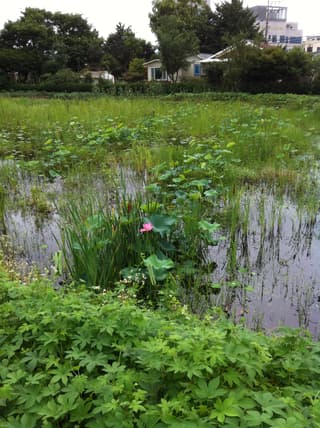
Sacred Lotus
Nelumbo nucifera
The Sacred Lotus is an iconic perennial aquatic plant native to Asia, cultivated in ponds for its large, fragrant flowers (8 to 12 inches in diameter) held above broad, water-repellent round leaves. Hardy up to USDA zone 4 as long as the rhizomes do not freeze underwater, it enters winter dormancy (deciduous foliage) before regrowing vigorously in the spring. Sacred in Buddhism and Hinduism, it symbolizes the ability to bloom pure despite a muddy environment.
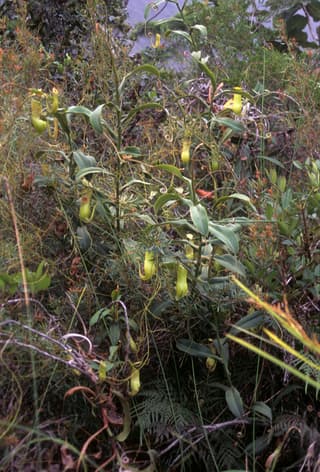
New Caledonia Pitcher Plant
Nepenthes vieillardii
Nepenthes vieillardii, the New Caledonia pitcher plant, is a climbing carnivorous shrub endemic to the island of New Caledonia in the southwest Pacific — the easternmost native range of any Nepenthes species. It grows in shrublands, dry thicket-forest, and open ground from the coastal plain up to about 900 m altitude, often on nutrient-poor ultramafic soils. Like all pitcher plants, it produces modified leaf tips that form fluid-filled traps: lower pitchers are squat and egg-shaped with fringed wings, while upper pitchers are slimmer and funnel-shaped, both ranging from yellowish to reddish in color. The trapped insects supplement the poor mineral nutrition of its native soils. It is a slow grower and considered a challenging species in cultivation, requiring very well-drained substrate and consistently high humidity.
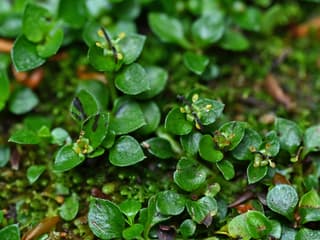
Bead plant
Nertera granadensis
The bead plant (Nertera granadensis) is a low-growing, carpet-forming perennial from the Rubiaceae family, native to the mountainous, cool-climate regions of South America, New Zealand, and the Pacific. Its tiny, round leaves form a dense, moss-like cushion, producing pale greenish-white flowers in spring, which are replaced by spectacular, coral-colored spherical berries by late summer—giving the plant its name.
clam lichen
Normandina pulchella
Normandina pulchella, commonly known as the clam lichen, is a small, squamulose lichen characterized by its distinctive shell-shaped or ear-shaped lobes. It typically displays a pale sea-green to bluish-gray color and often features soredia (asexual reproductive structures) along the margins. It grows epiphytically on mossy tree trunks or rocks in humid, temperate environments.
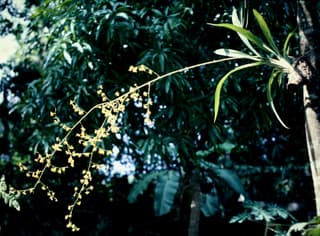
Bauer's Dancing Lady Orchid
Oncidium baueri
Oncidium baueri is an epiphytic orchid native to South America, celebrated for its graceful sprays of yellow and brown dancing-lady flowers that sway gently in the breeze. First described by Lindley in 1833, it is widely prized in orchid collections worldwide for its reliable flowering and elegant form.
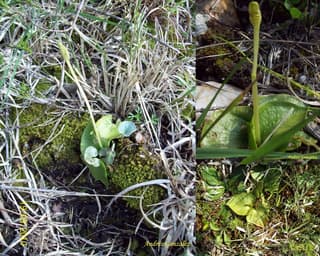
Bulbous Adder's-tongue
Ophioglossum crotalophoroides
Ophioglossum crotalophoroides is a tiny primitive fern (2 to 10 cm tall), with a single oval sterile leaf and a bulbous underground base (rather than a common cylindrical rhizome). It produces an elongated fertile spike resembling a rattlesnake's rattle, the origin of the epithet "crotalophoroides". It is ephemeral, appearing in spring (sporulating from March to June in the Northern Hemisphere) and disappearing shortly after. It occurs in disturbed lawns, open fields, and sandy soils of the southeastern United States. Like the entire Ophioglossaceae family, it depends closely on soil mycorrhizal fungi to germinate and develop, making it virtually impossible to cultivate outside its natural habitat.
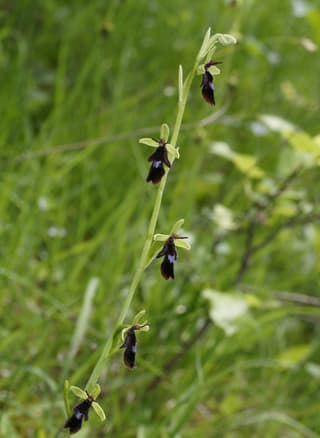
Fly Orchid
Ophrys insectifera
Ophrys insectifera, commonly known as the fly orchid, is a European terrestrial species notable for its pollination strategy. Its flowers have evolved to visually and chemically mimic the females of certain wasp and fly species, tricking males into performing pseudocopulation, which ensures pollen transfer. It is a small plant with a rosette of basal leaves and a slender inflorescence.
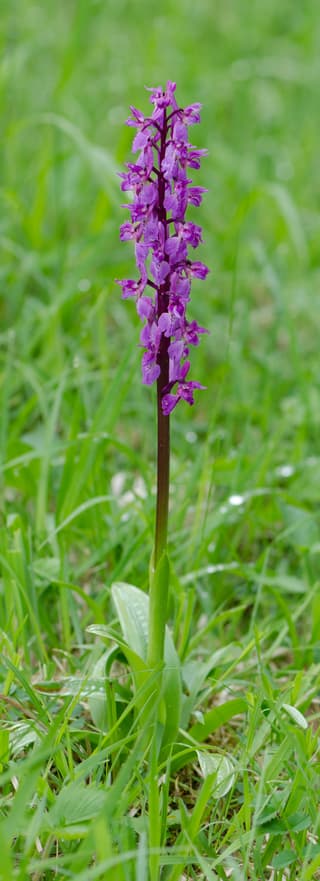
Early-purple orchid
Orchis mascula
Orchis mascula is a tuberous terrestrial orchid native to Europe, North Africa, and parts of Asia. It produces dense spikes of purple to pinkish flowers in the spring, rising above a rosette of leaves that are often spotted with dark purple. Unlike tropical orchids grown as houseplants, this is a wild species of woodlands and meadows that relies on a symbiotic soil fungus (mycorrhiza) to survive, making it notoriously difficult to cultivate outside its natural habitat. In many European countries, it is a protected wildflower and should never be removed from the wild.
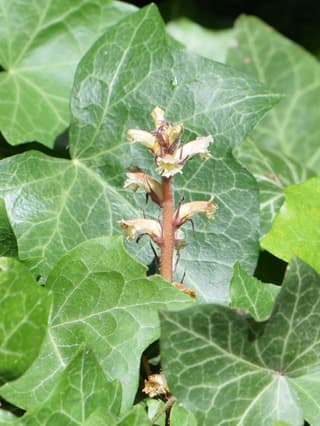
Ivy Broomrape
Orobanche hederae
Ivy broomrape (Orobanche hederae) is a holoparasitic plant that lacks chlorophyll. It grows exclusively on the roots of ivies (Hedera spp.), from which it absorbs all its necessary water, nutrients, and carbohydrates. The stem ranges from yellowish to purple in color, reaching up to 60 cm in height, and the flowers are cream-colored with reddish-brown veins. The plant blooms from spring to summer and produces a vast number of tiny seeds. It is native to Central and Northern Europe as well as parts of Asia.
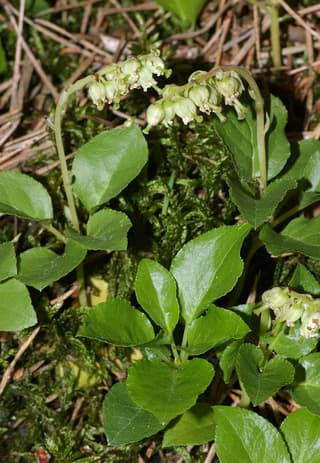
sidebells wintergreen
Orthilia secunda
Sidebells wintergreen (Orthilia secunda) is the only species in its genus within the heath family (Ericaceae), occurring widely across the coniferous and mixed forests of the Northern Hemisphere from Europe to Asia and North America. It is a low-growing, evergreen, rosette-forming forest floor plant with serrated leaves that remain green year-round. In July and August, it produces a curved flower stalk 10–20 cm high, featuring small, greenish-white, bell-shaped flowers that hang from only one side of the stem—a characteristic reflected in both its common and scientific names. Sidebells wintergreen is a partial mycoheterotroph (mixotroph), obtaining part of its carbon from tree roots via a mycorrhizal fungal network, which makes it extremely demanding and slow-growing to cultivate outside its natural habitat.
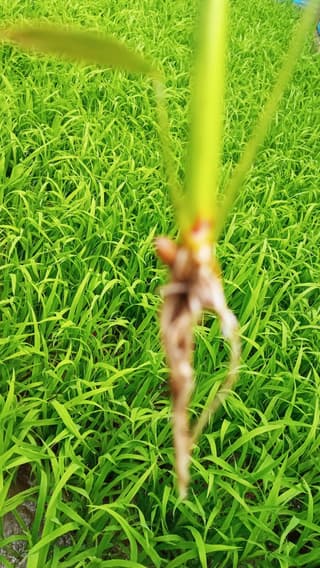
Rice
Oryza sativa
Rice (Oryza sativa) is an annual grass in the Poaceae family, native to Asia, where it has been cultivated for thousands of years as the dietary staple for more than half of the world's population. The plant forms clumps of slender stalks and long, narrow leaves, producing panicles with hundreds of small flowers that give rise to the grains. It is traditionally grown in flooded fields (paddies), where the water level controls weeds and maintains the constant moisture required by the species.

Korean Ginseng
Panax ginseng
Panax ginseng is a perennial herbaceous plant in the Araliaceae family, native to the shady forests of East Asia (Russia, China, Korea). It reaches a height of approximately 80 cm, featuring whorled palmate compound leaves and small, greenish-white flowers that transform into clusters of bright red berries in autumn. Its fleshy root, typically harvested after 6-7 years of growth, has been used for over 5,000 years in traditional Asian medicine for its adaptogenic properties.
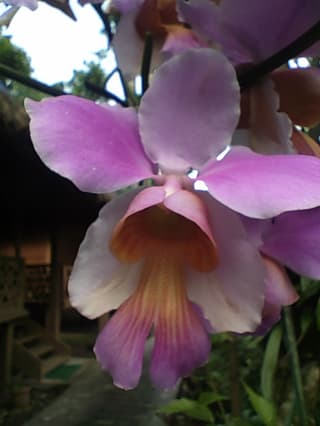
Terete Vanda
Papilionanthe teres
Terete Vanda (Papilionanthe teres) is a giant epiphytic orchid native to the eastern Himalayas, India, Myanmar, Thailand, Laos and Vietnam. It has a branching monopodial stem with long cylindrical (terete) leaves, the feature that gives the plant its common name. Large, fragrant magenta-pink flowers with a white-and-yellow lip appear mostly in late spring and early summer.
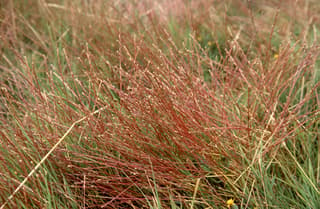
Sea Hard-grass
Parapholis strigosa
Parapholis strigosa (Sea Hard-grass) is an annual grass in the Poaceae family, native to the Atlantic and Mediterranean coasts of Europe and Libya. It is a salt-tolerant (halophytic) plant that grows in coastal salt marshes, tidal soils, and disturbed, open ground. It is a low-growing, typically 10-30 cm tall, tufted grass that blooms in summer with small, inconspicuous green inflorescences. Outside of Europe, it has appeared as an introduced species in California, British Columbia, Chile, Australia, and New Zealand.

Stink bean
Parkia speciosa
Parkia speciosa, commonly known as the stink bean, is a large tropical tree in the Fabaceae family, native to the low-altitude rainforests of Southeast Asia. It can reach up to 40 meters in height at maturity and produces long pods containing green seeds that are highly prized in Malaysian, Indonesian, and Thai cuisines, despite their characteristic sulfurous odor.
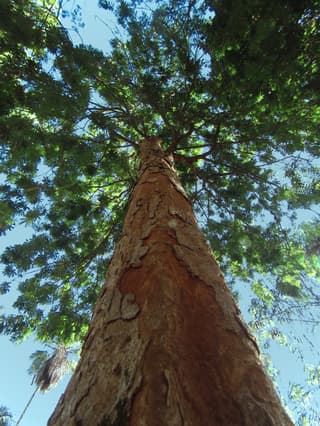
Brazilwood
Paubrasilia echinata
Brazilwood (Paubrasilia echinata) is a medium to large-sized tree, native to the Brazilian Atlantic Forest, belonging to the Fabaceae family and the monotypic genus Paubrasilia. It can reach between 10 and 20 meters in height, with a straight trunk covered in prickles and grayish bark that peels off in plates, revealing the reddish heartwood that gave rise to the country's name. Its leaves are bipinnate, and its broad, semi-deciduous canopy produces very fragrant yellow flowers with a central red petal, blooming between spring and summer. It is the national tree of Brazil, officially declared in 1978, and is currently critically endangered due to the historical exploitation of its wood.
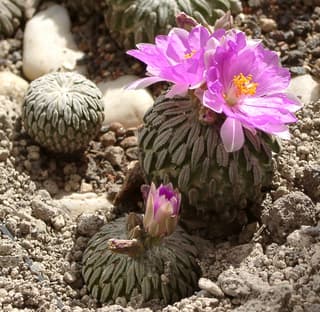
Hatchet Cactus
Pelecyphora
Pelecyphora is a genus of small, slow-growing Mexican cacti in the family Cactaceae, prized by collectors worldwide. Characterized by distinctive flattened tubercles resembling axe heads or woodlice, the most well-known species P. aselliformis (peyotillo) is native to San Luis Potosí, Mexico, and produces violet-red flowers in spring and summer. Both P. aselliformis and P. strobiliformis are listed on CITES Appendix I, making international trade strictly regulated.
felt lichen
Peltigera
Peltigera, commonly known as felt lichen, is a genus of approximately 100 species of foliose lichens. They are characterized by large, leaf-like thalli that often have a fuzzy or 'felt-like' lower surface. These lichens form a symbiotic relationship between a fungus and a cyanobacterium (usually Nostoc), which allows them to fix nitrogen from the atmosphere, making them vital for forest ecosystem health.
Common Stinkhorn
Phallus impudicus
The common stinkhorn is a striking and unusual fungus, best known for its pervasive, carrion-like odor. Its development begins with the 'witch's egg' stage, from which a porous, white stalk emerges remarkably fast, often within hours. The cap is covered in a dark green, slimy gleba containing the spores, which attracts flies to aid in dispersal.
Phellinidium ferrugineofuscum
Phellinidium ferrugineofuscum
Phellinidium ferrugineofuscum is a polypore fungus specialized in wood decomposition, found primarily in boreal and temperate forests. It is characterized by its resupinate (adhering to the surface) fruiting bodies, with a velvety texture and a deep rusty-brown coloration. It is a saprophytic species that plays a vital role in nutrient recycling in conifer ecosystems, growing almost exclusively on fallen spruce and pine logs.
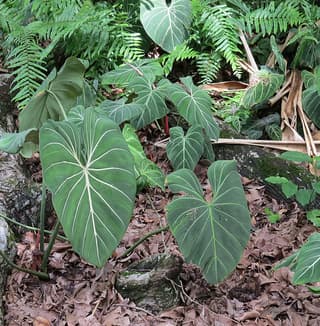
Philodendron Gloriosum
Philodendron gloriosum
Philodendron gloriosum is a terrestrial plant from the Araceae family, native to the tropical rainforests of Colombia and other regions of South America. It is distinguished by its massive, velvety dark green leaves adorned with prominent white, fishbone-patterned veins. Its crawling habit makes it unique among collector philodendrons, as the rhizome grows horizontally along the ground. It is considered one of the most coveted indoor plants by tropical plant collectors worldwide.
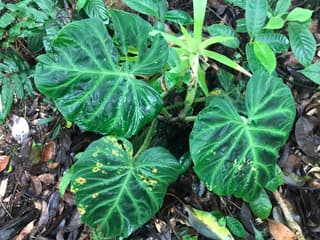
Ecuador Philodendron
Philodendron verrucosum
Philodendron verrucosum is a prized hemiepiphytic aroid native to the cloud forests of Ecuador and Colombia, celebrated for its heart-shaped, velvety leaves marked with iridescent silver-green veining. Its hairy, reddish-brown petioles covered in wart-like protrusions (verrucae) give the species its name and set it apart as one of the most sought-after collector philodendrons.
What are Hard Plants?
Hard Plants are challenging and reward experienced gardeners. They require specific light, humidity, and temperature conditions, plus constant attention. Perfect for enthusiasts seeking a challenge.
Tips for Growing Hard Plants
For hard plants, success is in the details. Monitor air humidity, use filtered water when needed, maintain stable temperature, and be ready to adjust care as the plant responds.