280 Easy Succulents | 2026 Guide - Page 4
Find 280 easy succulents. Complete guide for your garden.
280 Succulents with easy level
Showing 109-144 of 280
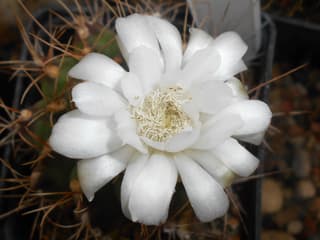
Chin Cactus
Gymnocalycium anisitsii
Gymnocalycium anisitsii, commonly known as the Chin Cactus, is a small globular cactus native to southern Brazil, Paraguay, and Bolivia. It features a grayish-green body with 8 to 11 prominent ribs, yellowish or brownish spines, and funnel-shaped white to pinkish flowers. It is an easy-to-grow species, ideal for beginners and collectors.
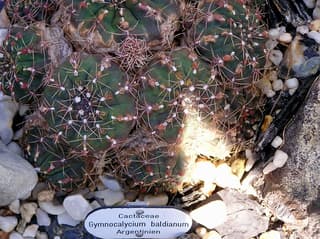
Dwarf Chin Cactus
Gymnocalycium baldianum
Gymnocalycium baldianum, commonly known as the Dwarf Chin Cactus, is a compact globular cactus native to the Catamarca and Salta provinces of Argentina. It is celebrated for its striking crimson to pink-purple flowers that bloom readily even on young plants, making it one of the most floriferous cacti for home cultivation.
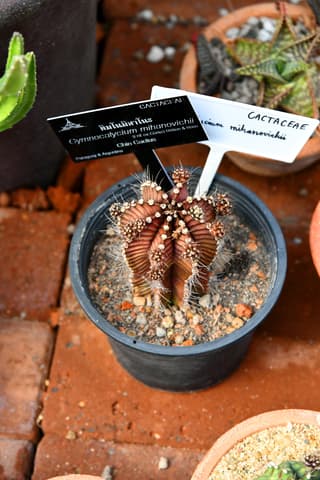
Moon Cactus
Gymnocalycium mihanovichii
Gymnocalycium mihanovichii is a small globular cactus native to Paraguay and Argentina. It is famous for its brightly colored varieties (red, orange, yellow, pink) that lack chlorophyll and must be grafted onto another cactus to survive. Natural green forms can grow on their own and produce beautiful flowers in spring and summer.
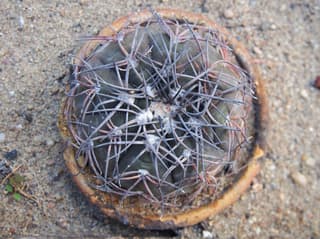
Pflanz's Chin Cactus
Gymnocalycium pflanzii
Gymnocalycium pflanzii is a slow-growing, globular cactus native to Bolivia and Paraguay, belonging to the Cactaceae family. It reaches approximately 15 cm in diameter and produces attractive pink, white, and orange flowers atop the plant during spring and summer. It is highly drought-tolerant and well-adapted to arid environments.
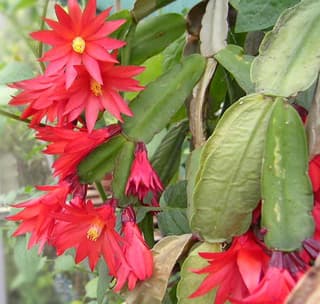
Easter Cactus
Hatiora gaertneri
The Easter Cactus (Hatiora gaertneri) is an epiphytic cactus native to the subtropical forests of southern Brazil, found in the states of Paraná, Santa Catarina, and Rio Grande do Sul. Unlike desert cacti, it grows on trees and moist rocks within the Atlantic Forest, thriving in filtered shade and high humidity. Its stunning red, pink, or orange flowers appear in spring, typically around Easter time, giving it its common name. It is widely appreciated as an ornamental houseplant and is non-toxic to pets and humans.
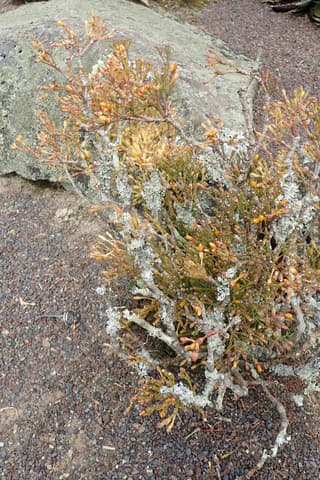
Dancing bones cactus
Hatiora salicornioides
Hatiora salicornioides, commonly known as the Dancing Bones Cactus, is a unique epiphytic cactus native to the Brazilian rainforests. It is characterized by its unusual, many-branched stems made of small, bottle-shaped segments that resemble tiny bones or joints. Unlike desert cacti, it lacks spines and produces delicate, bell-shaped yellow or orange flowers at the tips of its branches during late winter and early spring.
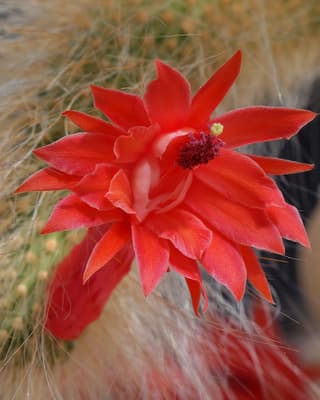
Monkey's Tail Cactus
Hildewintera colademononis
Hildewintera colademononis, also classified as Cleistocactus colademononis, is an epiphytic and pendulous cactus native to the moist rocky slopes of Florida province in the Santa Cruz department of Bolivia, where it grows hanging from cliffs at altitudes of up to 1,500 meters. Its cylindrical stems, 3 to 7 cm in diameter, can reach up to 2.5 meters in length and are covered by dozens of white, thin, and hair-like soft spines that resemble a monkey's furry tail—the origin of its popular nickname. Between spring and summer, it produces vibrant red flowers up to 8 cm long that bloom almost horizontally along the stems. It is a relatively fast-growing species, ideal for hanging baskets, and has received the prestigious Award of Garden Merit from the Royal Horticultural Society.
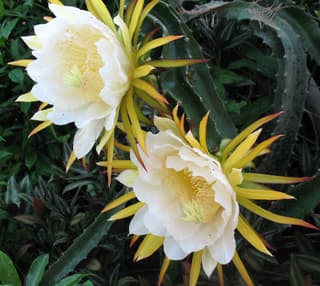
Red Pitaya
Hylocereus costaricensis
Red Pitaya (Hylocereus costaricensis) is a climbing cactus native to Costa Rica and Central America, prized for its intensely red, sweeter-tasting flesh compared to the white-fleshed variety. This succulent vine has triangular, fleshy stems that climb using aerial roots and needs a trellis or support to thrive. It produces enormous white flowers that bloom only at night and wilt by morning, followed by pink-skinned fruit covered in leathery scales that reveal a vivid ruby pulp dotted with tiny edible black seeds.

Dragon Fruit
Hylocereus undatus
The dragon fruit (Hylocereus undatus) is an epiphytic climbing cactus native to Central America and Mexico, now widely cultivated in tropical and subtropical regions for its exotic fruits with pink skin and white pulp speckled with black seeds. Its green, triangular, and succulent stems grow like vines, clinging to trees, walls, or trellises via aerial roots. At night, it produces massive, fragrant white flowers that open for only a few hours, earning it the nickname 'Queen of the Night'.
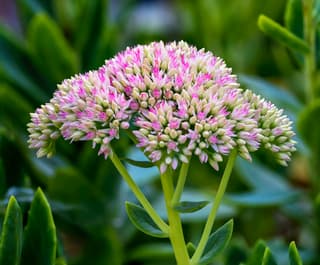
Autumn Joy Sedum
Hylotelephium
Hylotelephium is a genus of succulent perennial plants in the family Crassulaceae, formerly classified under Sedum. Commonly known as Autumn Joy Sedum or showy stonecrop, these plants are beloved for their fleshy, blue-green leaves and large, dome-shaped flower heads that emerge in late summer and persist through fall, providing late-season interest in the garden. Native to Asia and Europe, they are exceptionally hardy, drought-tolerant, and attract butterflies, bees, and other pollinators in abundance.
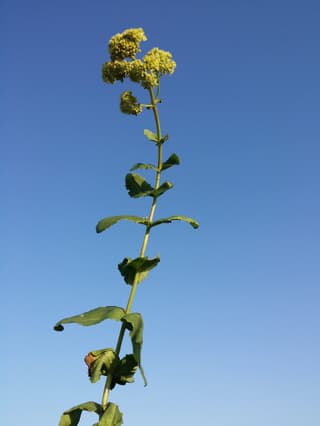
Great Stonecrop
Hylotelephium maximum
Hylotelephium maximum, commonly known as great stonecrop or orpine, is a robust, clump-forming succulent perennial in the Crassulaceae family native to Europe, the Caucasus, and western Siberia. It forms upright, fleshy stems 30-80 cm tall arising from a tuberous rootstock, with broad, opposite, grey-green succulent leaves. In late summer and autumn (September-October) it produces dense, flattened clusters of small creamy-white to pale pink flowers that attract bees and butterflies. Long treated as a subspecies of Hylotelephium telephium (as Sedum maximum), it thrives on dry, stony, calcareous slopes and forest edges at elevations up to 2,500 m, and is prized in gardens for its drought tolerance and low-maintenance nature.
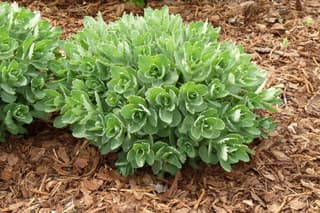
Showy Stonecrop
Hylotelephium spectabile
Hylotelephium spectabile, commonly known as Showy Stonecrop or Ice Plant, is a hardy succulent perennial native to China and Korea. It forms upright, clumping mounds of fleshy, blue-green leaves topped with flat-topped clusters of star-shaped pink flowers in late summer and fall — a magnet for butterflies and bees.
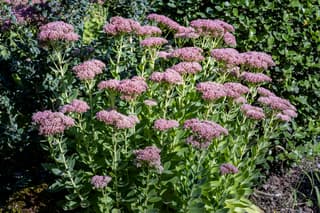
Orpine
Hylotelephium telephium
Orpine (Hylotelephium telephium) is a hardy Eurasian succulent perennial celebrated for its fleshy blue-green foliage and dense clusters of star-shaped flowers in shades of pink and purple from midsummer to autumn. Exceptionally drought-tolerant and cold-hardy to USDA zone 3, it thrives in sunny borders, rock gardens, and dry landscapes.
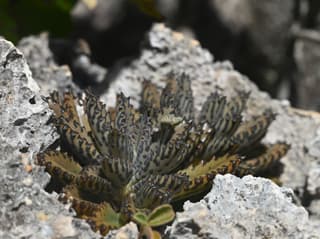
Mother of Millions Hybrid
Kalanchoe × houghtonii
Kalanchoe × houghtonii is a succulent hybrid between Kalanchoe daigremontiana and K. delagoensis, both native to Madagascar. Commonly called Mother of Millions Hybrid, it produces scores of tiny plantlets along its leaf margins that readily root wherever they land. A fast-growing, eye-catching ornamental, though severely toxic to pets and humans and potentially invasive in warm climates.
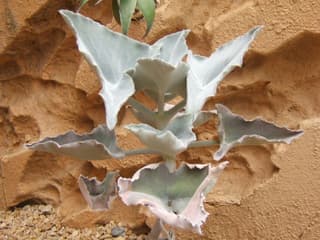
Velvet Elephant Ear
Kalanchoe beharensis
Kalanchoe beharensis is a striking succulent native to southern Madagascar, known for its large, velvety, triangular leaves covered in soft brown or silver hairs. In its natural habitat, it can grow into a tree-like shrub reaching up to 3 meters tall. The thick, felted leaves give this plant an almost otherworldly appearance, making it a favorite among succulent collectors. Despite its exotic looks, it is remarkably easy to care for, thriving on neglect and requiring minimal watering.

Flaming Katy
Kalanchoe blossfeldiana
Kalanchoe blossfeldiana is a flowering succulent native to Madagascar, known for its vibrant, long-lasting blooms that appear in fall and winter. It is an easy-care plant, perfect for beginners.
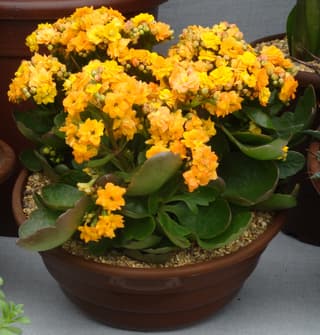
Calandiva
Kalanchoe calandiva
Calandiva is a double-flowered cultivar series of Kalanchoe blossfeldiana, native to Madagascar. Its lush, rose-like blooms with at least 8 petals make it one of the most decorative succulent houseplants available. Hardy and low-maintenance, it thrives with minimal care.

Horned-leaf Kalanchoe
Kalanchoe ceratophylla
Kalanchoe ceratophylla is a perennial succulent native to tropical Asia, ranging from the Indian subcontinent through southern China, Indochina, Taiwan to the Philippines. A member of the Crassulaceae family, it produces small yellow-green bell-shaped flowers in winter and spring. It is valued as an ornamental plant and for its traditional medicinal uses, being drought-tolerant and easy to grow.
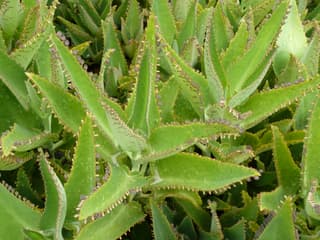
Mother of Thousands
Kalanchoe daigremontiana
Kalanchoe daigremontiana, known as Mother of Thousands, is a fascinating succulent native to Madagascar. It is famous for producing tiny plantlets along the margins of its fleshy, lance-shaped leaves — each one capable of falling off and rooting on its own. A resilient, low-maintenance plant that thrives with neglect, it is mildly toxic and can become invasive outdoors in warm climates.
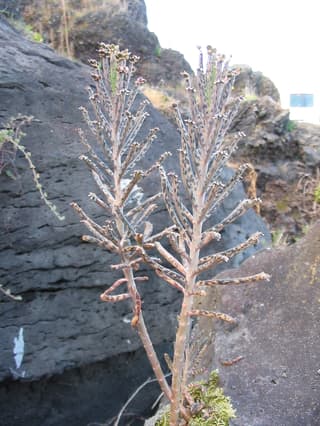
Mother of Millions
Kalanchoe delagoensis
Kalanchoe delagoensis, commonly known as Mother of Millions or Chandelier Plant, is a striking succulent native to Madagascar. Also known by its synonym Bryophyllum delagoense, this fast-growing plant is famous for producing tiny plantlets along the edges of its tubular, mottled leaves — a form of vegetative reproduction that makes it incredibly prolific. Upright stems can reach 120 cm, topped in winter and spring with clusters of pendant, tubular orange-red flowers. Because of its aggressive spread via these plantlets, it is classified as an invasive weed in Australia, Florida, South Africa, and several Pacific Islands.
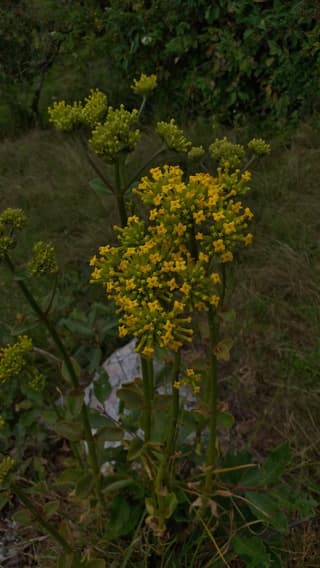
Dense-flowered Kalanchoe
Kalanchoe densiflora
Kalanchoe densiflora, commonly known as the dense-flowered kalanchoe, is an evergreen succulent native to southern Africa. It forms an upright, glabrous perennial with thick, fleshy oblong leaves and produces tall, densely packed clusters of tubular yellow-to-orange flowers in winter and spring. Valued for its drought tolerance and low-maintenance nature, it thrives in bright light and well-draining soil, making it a popular choice for sunny windowsills, rock gardens, and warm-climate landscaping.
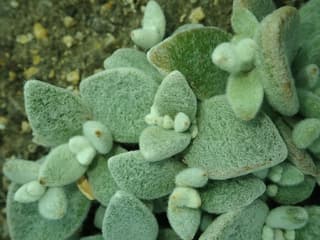
Snow white panda plant
Kalanchoe eriophylla
Kalanchoe eriophylla, known as the snow white panda plant, is a dwarf, densely branched succulent in the Crassulaceae family, native to Madagascar. Every part is cloaked in a thick coat of white, silvery hairs that shield the leaves from strong sun and water loss, forming a compact mat. In the cool season it bears small pink to violet flowers.
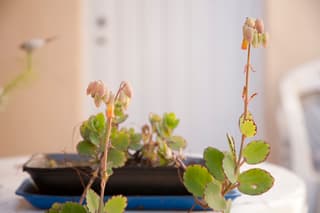
Lavender Scallops
Kalanchoe fedtschenkoi
A perennial shrubby succulent native to Madagascar, famous for its fleshy blue-gray leaves with scalloped edges that turn pink under intense sunlight. In winter, it produces beautiful clusters of bell-shaped, drooping flowers.
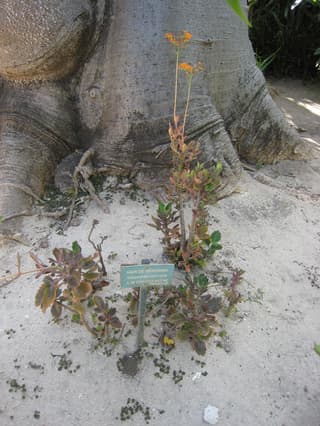
Christmas Tree Plant
Kalanchoe laciniata
Kalanchoe laciniata, commonly known as the Christmas Tree Plant, is a striking succulent native to tropical Africa and the Arabian Peninsula. It produces deeply dissected, fern-like green leaves that give it a tree-like silhouette, earning its festive common name. In spring and summer, it bears clusters of tubular yellow to orange flowers that attract pollinators.
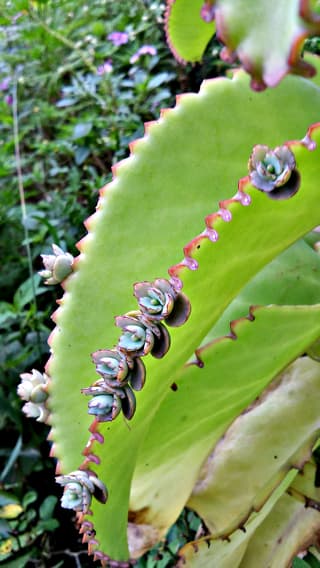
Big Mama Kalanchoe
Kalanchoe laetivirens
Kalanchoe laetivirens, commonly known as Big Mama or Mother of Thousands, is a succulent native to Madagascar in the family Crassulaceae. Its glossy green leaves produce countless tiny plantlets along their margins, which drop off and root readily — giving rise to its common name. It blooms in winter and early spring with small flowers in shades of pink, red, or orange.
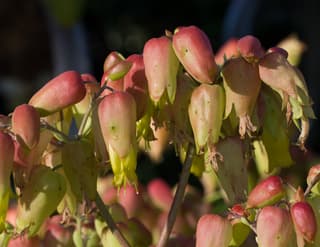
Milky Widow's Thrill
Kalanchoe laxiflora
Kalanchoe laxiflora, commonly known as Milky Widow's Thrill or Bell Kalanchoe, is a charming perennial succulent shrub native to central Madagascar. It produces clusters of delicate, pendulous bell-shaped flowers in shades of pink, coral, and orange on slender, arching stems. The fleshy blue-green leaves are often edged in red, and the plant freely produces tiny plantlets (bulbils) along leaf margins — a trait called vivipary — making it easy to propagate. This compact succulent thrives in bright light and dry conditions, making it an excellent choice for sunny windowsills, rock gardens, and xeriscaping.
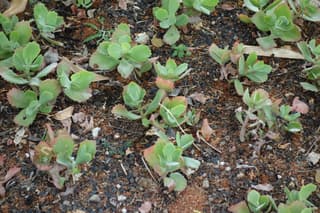
Tugela cliff-kalanchoe
Kalanchoe longiflora
Kalanchoe longiflora is a compact succulent shrublet from the Crassulaceae family, native to rocky cliffs and shale slopes of the Tugela River basin in KwaZulu-Natal, South Africa. It grows to about 40 cm tall, with sprawling, four-angled fleshy stems and limpet-shaped, bluish grey-green leaves that often blush pink to crimson-red in strong sun. From autumn into winter it produces clusters of tubular yellow flowers. As a cliff-dwelling (cremnophyte) species, its brittle stems readily snap and re-root from broken pieces, an adaptation to rockfall and erosion. It is drought and heat tolerant but sensitive to frost and overwatering.
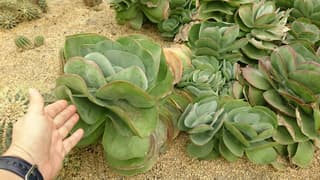
Flapjack Plant
Kalanchoe luciae
Kalanchoe luciae, commonly known as the Flapjack Plant or Paddle Plant, is a striking succulent native to Southern Africa. It produces large, flat, round leaves arranged in a rosette pattern — like a stack of pancakes. The leaves are pale silvery-green but develop vivid red or pink margins when exposed to bright sunlight or cool winter temperatures, making it a highly ornamental specimen.

Chandelier Plant
Kalanchoe manginii
Kalanchoe manginii, commonly known as the Chandelier Plant or Beach Bells, is a trailing succulent native to Madagascar. It produces charming pendant tubular flowers in shades of orange-red during winter and spring, making it an excellent choice for hanging baskets and elevated planters. It belongs to the Crassulaceae family and is prized as an ornamental houseplant.
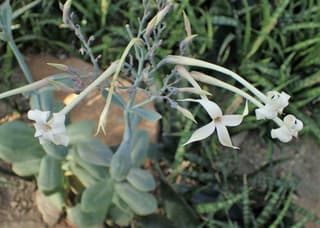
Penwiper Plant
Kalanchoe marmorata
The Penwiper Plant (Kalanchoe marmorata) is an easy-care succulent from Madagascar and East Africa, prized for its broad, scalloped, blue-green leaves marked with irregular purple-brown blotches that resemble a marble pattern. In late winter to early spring it sends up tall stems topped with clusters of white or pinkish tubular flowers.
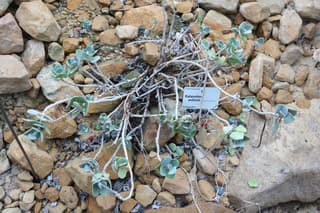
Millot Kalanchoe
Kalanchoe millotii
Shrubby succulent native to Madagascar with scalloped, grey-green leaves covered in soft felt-like hairs. Reaches about 30 cm and bears yellow-green flowers in loose clusters.

Copper Spoons
Kalanchoe orgyalis
Kalanchoe orgyalis, commonly known as Copper Spoons, is a striking succulent shrub native to Madagascar. Its thick, spoon-shaped leaves are covered in fine hairs and shift from silvery-green to a rich coppery-bronze as they mature and receive more sun. Left to grow, it forms a woody, multi-stemmed shrub up to 1.8 m (6 ft) tall, topped with clusters of small yellow flowers in spring.
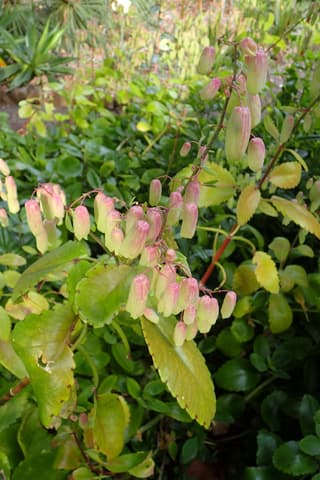
Cathedral Bells
Kalanchoe pinnata
Kalanchoe pinnata, also known as Cathedral Bells, Air Plant, or Miracle Leaf, is a succulent perennial native to Madagascar and naturalized throughout the tropics worldwide. Its botanical synonym is Bryophyllum pinnatum. The plant is celebrated for its remarkable ability to produce tiny plantlets along the serrated edges of its leaves — a phenomenon known as vivipary. Pendant red-orange flowers appear in late winter and spring. Kalanchoe pinnata has a long history of use in traditional medicine across tropical cultures, most notably for the treatment of kidney stones.
Pearl Bells
Kalanchoe porphyrocalyx
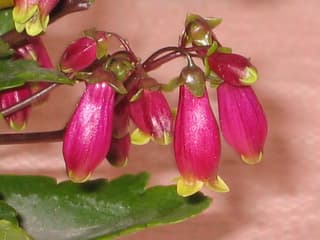
Kalanchoe porphyrocalyx, commonly called Pearl Bells or the pendent kalanchoe, is a succulent species in the family Crassulaceae native to the rainforests of central and north-eastern Madagascar, where it often grows epiphytically. It forms slender, upright stems bearing blue-grey, rectangular leaves with gently serrated edges. In late winter through spring it produces pendent, bell-shaped flowers with a tube in shades of red, rose-pink or pale yellow topped by yellow-green to orange petals, all held within a distinctive purple calyx -- the source of its species name porphyrocalyx ("purple calyx").

Paddle Plant
Kalanchoe thyrsiflora
Kalanchoe thyrsiflora is a striking succulent native to South Africa, prized for its large, flat, paddle-shaped leaves that form a neat basal rosette. The fleshy grey-green leaves develop vivid red margins when exposed to full sun and cool temperatures. A monocarpic species, it produces a tall flowering stalk with sweetly scented yellow-white tubular flowers in late winter to spring, after which the main rosette dies but produces offsets.
Panda Plant
Kalanchoe tomentosa
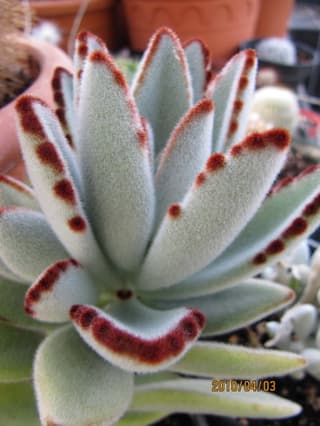
The Panda Plant (Kalanchoe tomentosa) is an ornamental succulent native to Madagascar, celebrated for its oval leaves densely covered in soft silver-white felt with distinctive brown or reddish tips — giving it an unmistakable panda-like appearance. Belonging to the Crassulaceae family, it grows slowly and compactly, reaching up to 45 cm in height. The tiny hairs (trichomes) coating its leaves are not merely decorative: they act as thermal insulation and dramatically reduce water loss, making this plant exceptionally drought-tolerant and resilient.
Easy Care Succulents
Our selection of 280 easy succulents combines the characteristics of this category with reduced care needs. Perfect for beginners who love this category.
Why Choose Easy Succulents?
Combining the beauty of succulents with easy difficulty level lets you enjoy this category without excessive maintenance worries. Each plant was selected to offer the best characteristics of the category at the care level you are looking for.