1424 Easy Pet Safe | 2026 Guide - Page 35
Find 1424 easy pet safe. Complete guide for your garden.
1424 Pet Safe with easy level
Showing 1225-1260 of 1424
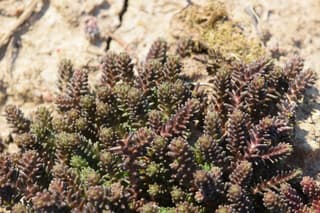
tasteless stonecrop
Sedum sexangulare
Sedum sexangulare, commonly called tasteless stonecrop, is a mat-forming evergreen succulent groundcover native to Europe and western Asia. Its cylindrical, densely packed leaves spiral around each stem in six distinctive rows, giving rise to the epithet "sexangulare" (six-angled). Unlike the related Sedum acre, its foliage lacks a peppery taste, hence the common name. From June to August it bears abundant star-shaped, bright yellow flowers that attract bees and other pollinators. Extremely cold-hardy (USDA zones 3-9) and drought-tolerant, it forms a dense, fast-spreading, moss-like mat prized for rock gardens, green roofs and erosion control.
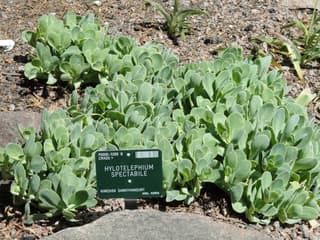
Showy Stonecrop
Sedum spectabile
Sedum spectabile, commonly known as Showy Stonecrop or Ice Plant, is a hardy succulent perennial native to China and Korea. It produces clusters of star-shaped pink to red flowers from late summer through fall, making it one of the most ornamental sedums available. The fleshy blue-green leaves store water, enabling the plant to tolerate drought conditions with ease. It is particularly valued as a pollinator magnet, attracting butterflies, bees, and other beneficial insects when little else is in bloom.

Two-row Stonecrop
Sedum spurium
Sedum spurium (now botanically accepted as Phedimus spurius) is a low-growing, mat-forming succulent perennial in the Crassulaceae family, native to the rocky subalpine meadows of the Caucasus region (Georgia, northern Iran, and northeastern Turkey). Its trailing stems root as they spread, forming dense, evergreen mats of fleshy, opposite leaves that shift from green to deep burgundy in cooler months. Star-shaped flowers ranging from white to crimson appear in summer. Extremely drought-tolerant and low-maintenance, it is one of the most popular ground-cover sedums for rock gardens, green roofs, and sunny borders.
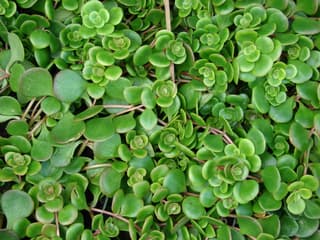
Chinese Stonecrop
Sedum tetractinum
Sedum tetractinum is a low-growing, mat-forming succulent native to southeastern China, prized as a groundcover for its round, fleshy blue-green leaves that blush coppery-pink in strong sun. Small star-shaped white to pale pink flowers appear in summer above the dense foliage mat.
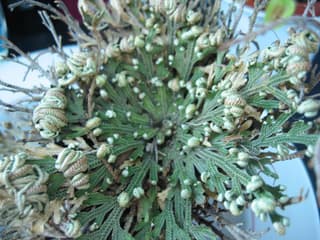
Resurrection plant
Selaginella lepidophylla
Selaginella lepidophylla is an extraordinary desert plant of the Selaginellaceae family, native to the Chihuahuan Desert region spanning the United States and Mexico. This small, fern-like plant reaches a maximum height of just 5 cm, featuring delicate green stems covered with tiny scale-like leaves arranged in spirals. The most remarkable characteristic of this resurrection plant is its extreme desiccation tolerance - it can lose up to 95% of its water content and remain dormant for years, reviving completely when exposed to moisture. During drought periods, the stems curl tightly into a compact grey-brown sphere; upon rehydration, the plant unfurls its fronds within hours, returning to vibrant green life. Multiple common names reflect its unique survival mechanism: Resurrection Plant, False Rose of Jericho, Stone Flower, and Dinosaur Plant. Unlike true ferns, it reproduces via spores rather than seeds. This ancient plant has captured human imagination for centuries as a living demonstration of nature's remarkable adaptability.

Night-blooming Cereus
Selenicereus
Selenicereus is a genus of epiphytic and climbing cacti native to Mexico, Central America, the Caribbean, and northern South America. Its flattened or angled stems climb trees and rocks using aerial roots, producing enormous, intensely fragrant flowers that bloom for a single night before wilting by dawn. Several species in the genus produce the fruit known as pitaya or dragon fruit.
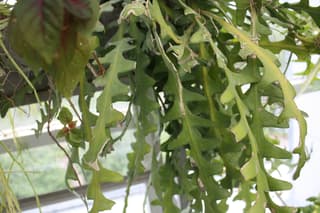
Ric Rac Cactus
Selenicereus anthonyanus
The ric rac cactus (Selenicereus anthonyanus) is an epiphytic jungle cactus native to the tropical forests of Chiapas, Mexico. Its flattened, deeply lobed stems zigzag like a fish skeleton -- earning it the nickname "fishbone cactus" -- making it a striking trailing or climbing houseplant. Unlike desert cacti, it thrives in humid, shaded conditions and produces large, fragrant flowers that open for a single night.
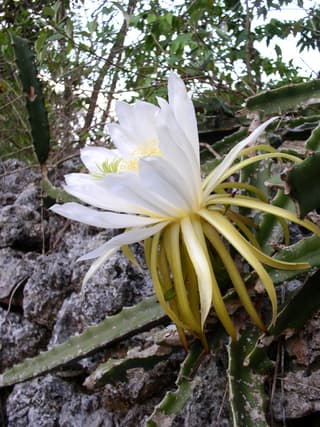
Strawberry Pear
Selenicereus triangularis
Selenicereus triangularis, commonly known as Strawberry Pear or Triangle Cactus, is a vigorous climbing cactus native to the Caribbean islands including Cuba, Haiti, Dominican Republic, and Puerto Rico. Its triangular stems can reach over 10 meters in length and produce spectacular large white flowers that bloom only at night during summer and fall. The edible red fruits, 2–5 cm long, are sweet, vitamin-rich, and resemble dragonfruit.
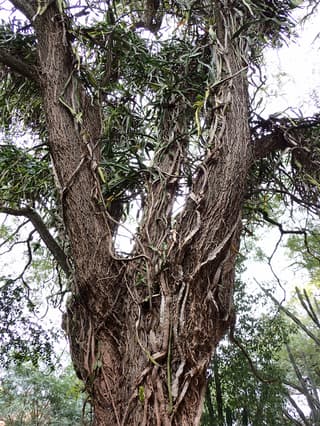
Dragon Fruit
Selenicereus undatus
Selenicereus undatus, popularly known as White Pitaya or Dragon Fruit, is a fast-growing epiphytic cactus native to Central and South America. It is characterized by its triangular, succulent stems that climb trees or supports. Its flowers are spectacular, large, and white, opening only at night, which earns it the name 'Queen of the Night'. The fruit is oval, with vibrant pink skin and green scales, containing a sweet white pulp dotted with small edible black seeds.
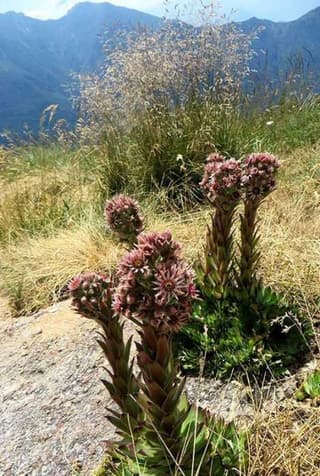
Hens and Chicks
Sempervivum
Sempervivum is a genus of approximately 40 species of hardy alpine succulents in the family Crassulaceae, native to the mountains of Europe and parts of Asia. They form tight, fleshy rosettes that continuously produce offsets ("chicks") around the mother plant ("hen"), creating dense spreading mats. Exceptionally cold-hardy, they tolerate temperatures as low as -34°C (-29°F) and survive in rocky, nutrient-poor soils.
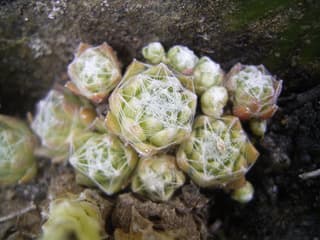
Cobweb Houseleek
Sempervivum arachnoideum
Sempervivum arachnoideum, the cobweb houseleek, is a compact alpine succulent whose tight rosettes are laced with fine white webbing, giving each cluster a spiderweb-like appearance. Native to the mountains of Europe, it is remarkably cold-hardy and spreads into dense mats via offsets ("chicks").
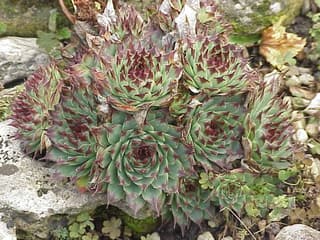
Limestone Houseleek
Sempervivum calcareum
Sempervivum calcareum is a perennial alpine succulent, highly cold-hardy. It forms compact rosettes of fleshy leaves, often featuring distinct reddish-purple tips. Native to the limestone regions of Southern Europe, it is extremely drought-tolerant and thrives in poor, well-drained soils. Its intense colors stand out in rock gardens and arid landscapes. It is an excellent choice for beginners.
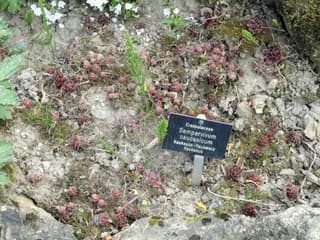
Caucasian Houseleek
Sempervivum caucasicum
Sempervivum caucasicum is a rosette-forming alpine succulent native to the Caucasus mountains of Georgia, Armenia, and Russia. It produces dense clusters of fleshy, pointed leaves arranged in tight rosettes, spreading via offsets to form low-growing mats. Extremely cold-hardy, it survives temperatures down to -34°C and thrives in rocky, well-draining soils with minimal care.
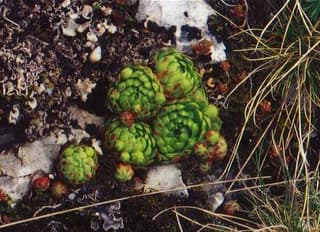
Globe Houseleek
Sempervivum globiferum
Sempervivum globiferum, commonly known as Globe Houseleek or Rolling Hen and Chicks, is a charming alpine succulent native to the mountains of Central and Eastern Europe. It forms tight, globe-shaped rosettes of fleshy green leaves that often blush red under stress. Unlike most sempervivums, its offsets naturally detach and roll away to root independently — giving rise to the delightful common name "Rollers". A monocarpic plant, each rosette dies after flowering but is quickly replaced by its many chicks.
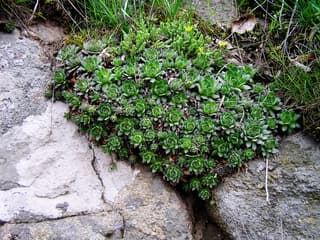
Russian Houseleek
Sempervivum ruthenicum
Sempervivum ruthenicum, the Russian houseleek, is a hardy evergreen succulent from the Crassulaceae family native to the rocky mountains and stony terrain of Eastern Europe and the Caucasus region. It forms low, mat-like rosettes of slightly hairy, pale green fleshy leaves tipped in pink, and sends up unusual yellow flower spikes in summer. Extremely drought- and cold-tolerant, it thrives on neglect in rock gardens, alpine troughs, and shallow containers.
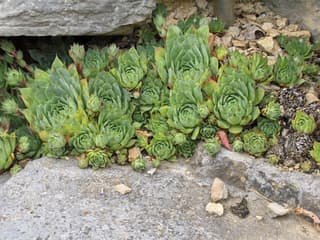
Common Houseleek
Sempervivum tectorum
Sempervivum tectorum is a hardy, evergreen succulent forming attractive rosettes of fleshy, blue-green leaves with reddish-purple tips. Native to European mountain regions including the Alps and Pyrenees, this resilient plant has been cultivated for centuries. The name "Sempervivum" means "live forever" in Latin, referring to its ability to produce numerous offsets. The species name "tectorum" means "of roofs," as Romans traditionally planted it on rooftops believing it protected buildings from lightning.
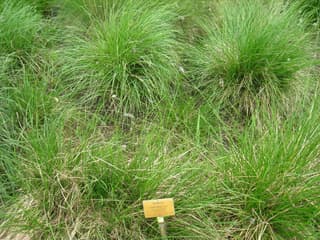
Blue moor grass
Sesleria caerulea
Blue moor grass is a low, tufted evergreen ornamental grass native to Europe, including the limestone grasslands and pavements of Great Britain and Ireland. It forms dense, neat clumps of narrow, arching leaves that are blue-green above and glossy dark green beneath, giving the plant its characteristic blue-grey cast. In spring, short purplish flower spikes rise just above the foliage, fading to a pale buff colour as they mature. A tough, low-maintenance calcicole grass, it is prized in gardens for its compact habit, year-round structure and tolerance of poor, stony, alkaline soils.
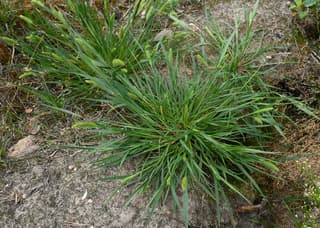
Green Foxtail
Setaria viridis
Setaria viridis, known as green foxtail or green bristlegrass, is a fast-growing annual grass native to Eurasia and now naturalized worldwide. It forms leafy tufts with slender, arching stems topped by soft, bristly, cylindrical seed heads that resemble a fox's tail. Highly adaptable, it thrives in disturbed soils, roadsides, and open fields, and is recognized by botanists as the wild ancestor of foxtail millet. Because of its short life cycle and ease of cultivation, it has also become an important model species for studying C4 photosynthesis in bioenergy grasses.
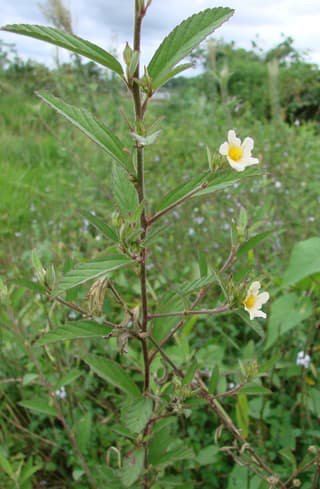
Fanpetals
Sida sp
Fanpetals (Sida sp) is a genus of herbs and subshrubs in the Malvaceae family, encompassing over 170 species native to tropical and subtropical regions of the Americas. Plants grow up to 2 meters tall with hairy, felt-like stems and small five-petaled flowers in shades of yellow, orange, or white. Several species have a long history of use in traditional medicine across Brazil, India, and Africa.
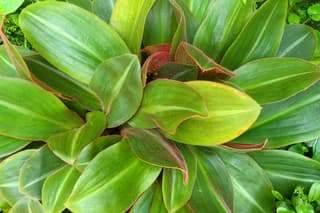
Brown Spiderwort
Siderasis fuscata
Siderasis fuscata, commonly known as Brown Spiderwort, is a perennial herbaceous plant native to the tropical rainforests of Brazil. It features broad, velvety dark green leaves with distinctive purple undersides, forming a compact rosette. Small violet-purple flowers emerge directly from the foliage during summer. An excellent low-light houseplant for those seeking exotic tropical beauty with minimal care.
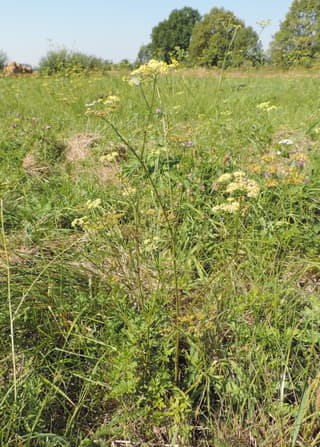
Silaum silaus
Silaum silaus
Pepper-saxifrage (Silaum silaus) is a perennial plant from the Apiaceae family, the only species of the genus Silaum. It is widespread throughout Europe to western Siberia and also grows in Croatia, in moist, unmanaged meadows and pastures on clayey, neutral to slightly alkaline soils. Its stem grows up to 100 cm, and small yellowish flowers are gathered in umbellate inflorescences that bloom from June to August. Crushed parts of the plant emit an unpleasant hydrogen sulfide odor. It is considered an indicator species of old, traditionally maintained meadows.
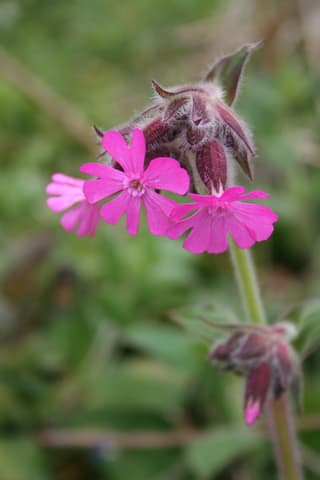
Campion
Silene
Silene is the largest genus in the Caryophyllaceae family, encompassing approximately 500–900 species of annual, biennial, and perennial flowering plants known as campions and catchflies. Native to temperate regions of the Northern Hemisphere, they are celebrated for their delicate tubular flowers in shades of pink, red, white, and purple, often with notched petals and an inflated calyx. Many species attract butterflies, hummingbirds, and other pollinators, making them valuable additions to wildflower gardens, meadows, and rock gardens.
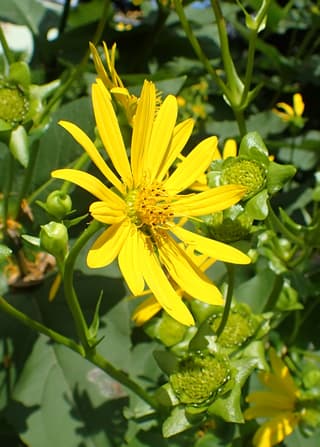
Silphium
Silphium
Silphium is a genus of robust, perennial prairie plants from North America, belonging to the sunflower family (Asteraceae). The genus comprises approximately 17–18 species, including the well-known Cup Plant (Silphium perfoliatum), Compass Plant (Silphium laciniatum), and Wholeleaf Rosinweed (Silphium integrifolium). These impressive perennials can reach up to 3 meters in height and bear bright yellow, sunflower-like flower heads in summer and autumn. The leaves of the Compass Plant orient themselves north-south to minimize water loss in the intense midday sun, while the Cup Plant's perfoliate leaves form natural "cups" that collect rainwater for birds and insects. Silphium species are essential for prairie biodiversity and attract a wide variety of pollinators, birds, and insects.
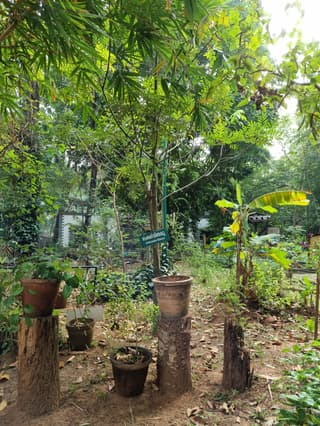
Bitterwood
Simarouba glauca
Bitterwood (Simarouba glauca) is a fast-growing evergreen tree native to Central America, the Caribbean, and southern Florida, belonging to the Simaroubaceae family. It features glossy, pinnately compound leaves that emerge reddish-orange before maturing to deep green, and clusters of small yellow-to-creamy-white flowers that bloom from late winter into spring, followed by dark purple, olive-shaped drupes. Highly adaptable, it tolerates a wide range of soils, drought, salt spray, and poor conditions once established, making it a popular shade and street tree in warm climates. Its bark and leaves have a long history of traditional medicinal use, particularly for fevers and dysentery.
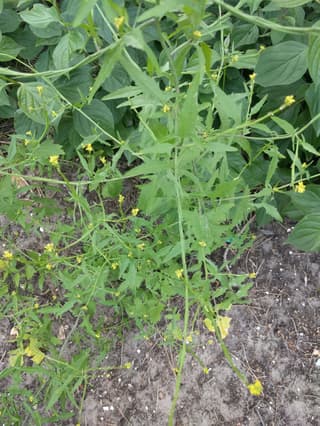
Hedge mustard
Sisymbrium
Sisymbrium is a genus of around 40 species of annual and biennial herbs in the mustard family (Brassicaceae), commonly known as hedge mustards. The most widespread species, Sisymbrium officinale, is a weedy plant of disturbed ground, roadsides and hedgerows across Europe and naturalized worldwide, bearing small yellow four-petaled flowers and slender seed pods. Historically nicknamed "the singer's plant", it was used by opera singers and orators to soothe hoarseness and protect the voice.

Sarsaparilla
Smilax aspera
Smilax aspera, commonly known as sarsaparilla or rough bindweed, is an evergreen, thorny climbing vine native to the Mediterranean Basin, southern Europe and North Africa. Using tendrils, it scrambles over shrubs, walls and trellises, reaching 1 to 4 metres in length. Its wiry, zigzagging stems and leathery, heart-shaped leaves are armed with small spines, and from September to November it produces clusters of tiny, strongly fragrant greenish-white flowers followed by red berries that ripen to black.
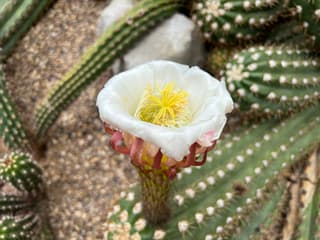
Argentine White Torch Cactus
Soehrensia candicans
The Argentine White Torch Cactus (Soehrensia candicans) is a columnar cactus native to northern Argentina, renowned for its spectacular large white fragrant flowers that bloom at night. It forms sprawling clumps up to 3 m (10 ft) wide, with individual stems reaching 60 cm (24 in) tall. Hardy, drought-tolerant, and cold-resistant to -6°C (21°F), it thrives in xeriscapes and rock gardens.
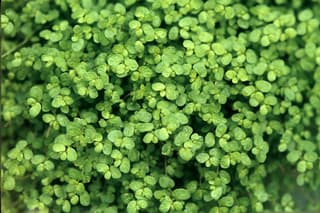
Baby's Tears
Soleirolia soleirolii
Soleirolia soleirolii, commonly known as Baby's Tears, is a low-growing, mat-forming perennial native to the western Mediterranean islands of Corsica and Sardinia. It produces a dense carpet of tiny, rounded leaves on delicate, thread-like stems, creating a lush, moss-like appearance. Its dainty white flowers appear in spring and summer. Popular as a ground cover, terrarium plant, and houseplant, it thrives in high humidity and consistent moisture.
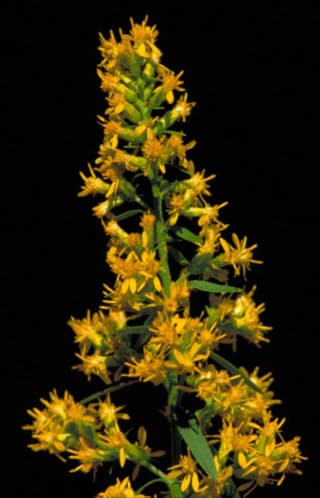
Goldenrod
Solidago
Solidago, commonly known as goldenrod, is a genus of herbaceous perennial plants in the daisy family (Asteraceae), native mainly to North America. It forms upright clumps with stiff stems and dense golden-yellow flower clusters that bloom in late summer through fall, making it a favorite of bees, butterflies, and other pollinators.
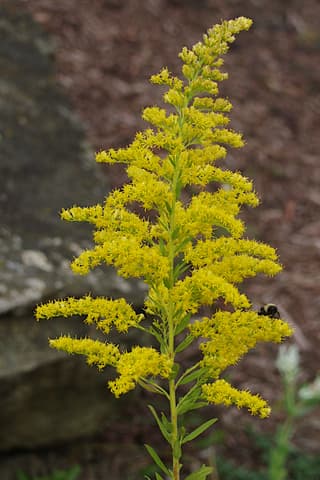
Tall Goldenrod
Solidago altissima
Tall Goldenrod (Solidago altissima) is a vigorous, rhizomatous perennial wildflower native to North America and a member of the aster family (Asteraceae). From late summer into autumn it produces dense, plume-like clusters of small golden-yellow flowers atop upright, downy stems reaching 60-180 cm tall. Highly attractive to bees, butterflies, and other pollinators, it spreads readily by creeping rhizomes and self-seeding, forming bold colonies in meadows, borders, and naturalized gardens. Despite its reputation, it is not the culprit behind hay fever - its heavy, sticky pollen is carried by insects, not wind.
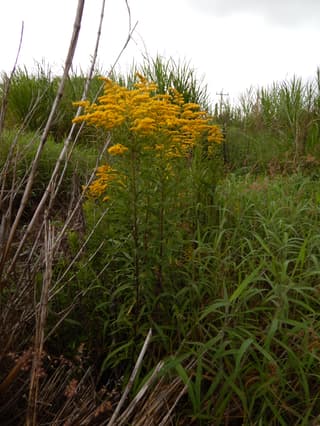
Canada Goldenrod
Solidago canadensis
Solidago canadensis, commonly known as Canada Goldenrod, is a robust native North American perennial wildflower belonging to the Asteraceae family. It produces striking arching plumes of bright yellow flowers from late summer through fall, creating a spectacular display in meadows, prairies, and naturalized gardens. Fast-spreading via rhizomes and self-seeding, it is beloved by pollinators including bees, butterflies, and birds.
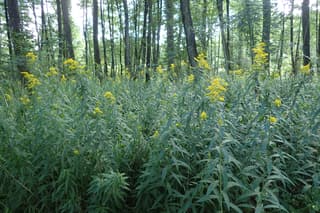
giant goldenrod
Solidago gigantea
Giant goldenrod (Solidago gigantea) is a vigorous herbaceous perennial in the Asteraceae family, native to North America. It grows up to 7 feet tall and produces large plumes of tiny golden-yellow flowers from late summer through fall. Widely cultivated as an ornamental and valued for its medicinal properties, it is also known as an aggressive spreader outside its native range.
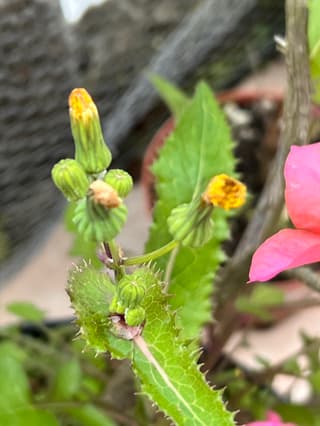
Sow Thistle
Sonchus
Sonchus is a genus of fast-growing annual, biennial and occasionally perennial herbs in the daisy family (Asteraceae), commonly called sow thistles. They form a basal rosette of soft, deeply lobed, spiny-edged leaves and send up hollow, milky-sapped stems topped with small, dandelion-like yellow flowerheads. Widespread as a garden and field weed on every continent, sow thistles are edible, fast to establish, and remarkably tolerant of poor soil and disturbance.
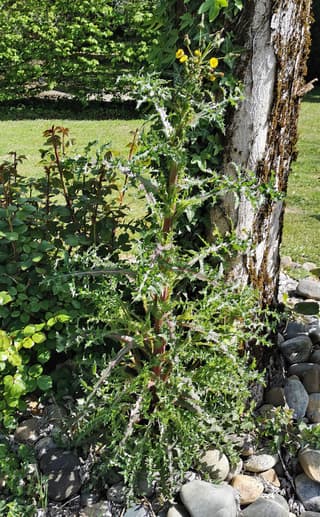
Spiny Sowthistle
Sonchus asper
Annual to biennial herbaceous plant in the Asteraceae family, native to the Mediterranean region and naturalized throughout Europe, Asia, and Africa. Sonchus asper is a common edible weed with considerable nutritional and medicinal value. It grows 30-150 cm tall with erect, hollow stems, deeply lobed leaves with prickly spiny margins, and yellow flowers resembling dandelions. Young tender leaves and shoot tips are edible raw or cooked, providing fiber, proteins, vitamins (niacin, ascorbic acid, thiamine, riboflavin), and minerals (calcium, iron, zinc, potassium, magnesium).
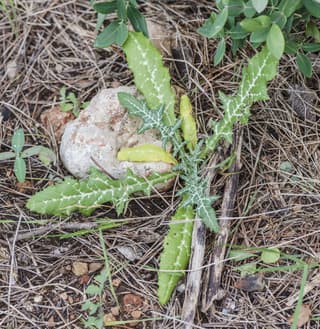
Common Sowthistle
Sonchus oleraceus
Common sowthistle (Sonchus oleraceus) is a fast-growing annual herb in the Asteraceae family, native to Europe and Western Asia and now naturalized worldwide. It thrives in disturbed soils, roadsides, and gardens, reaching up to 1.4 m tall. Its yellow daisy-like flowers attract bees and flies, and its young leaves are edible and rich in vitamin C.
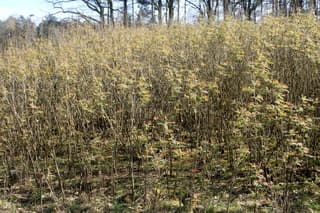
Ural False Spirea
Sorbaria sorbifolia
Sorbaria sorbifolia is a vigorous, suckering deciduous shrub in the rose family (Rosaceae), native to the temperate forests of Siberia, the Russian Far East, northern China, Korea, and Japan. It forms an upright, multi-stemmed mound of fern-like, pinnately compound leaves that resemble mountain ash foliage, topped in early-to-mid summer by dense, pyramidal panicles of small white flowers that attract bees and other pollinators. Extremely cold-hardy and adaptable, it is prized in northern gardens for erosion control, mass plantings, and informal hedges, though its spreading root suckers mean it needs room to roam or regular edging.
Easy Care Pet Safe
Our selection of 1424 easy pet safe combines the characteristics of this category with reduced care needs. Perfect for beginners who love this category.
Why Choose Easy Pet Safe?
Combining the beauty of pet safe with easy difficulty level lets you enjoy this category without excessive maintenance worries. Each plant was selected to offer the best characteristics of the category at the care level you are looking for.