2307 Easy Easy Care | 2026 Guide - Page 63
Find 2307 easy easy care. Complete guide for your garden.
2307 Easy Care with easy level
Showing 2233-2268 of 2307
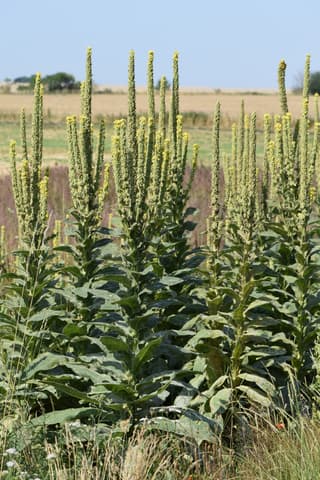
Common Mullein
Verbascum thapsus
Common mullein (Verbascum thapsus) is a biennial herbaceous plant in the Scrophulariaceae family, native to Europe, North Africa, and Asia. In its first year, the plant forms a flat rosette of large, velvety, gray-green leaves covered in dense, white hairs. In the second year, a sturdy, erect flower stalk emerges, reaching heights of 2 meters or more, crowned by a dense spike of bright yellow flowers. The plant is famous for its medicinal properties and has historically been used to treat respiratory ailments, inflammation, and wounds. It thrives in full sun on dry, well-drained soils and is very hardy, resistant to drought and frost down to -34°C (-30°F).
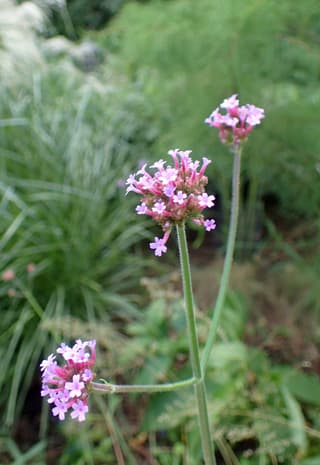
Purpletop Vervain
Verbena bonariensis
Verbena bonariensis, commonly known as purpletop vervain or tall verbena, is a perennial herbaceous plant native to South America. It is prized for its tall, slender, nearly leafless stems topped with clusters of small purple-lilac flowers. It grows in upright clumps and is widely used in naturalistic garden design, attracting butterflies and other pollinators.
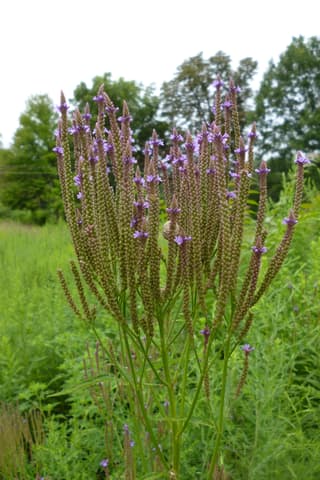
Blue Vervain
Verbena hastata
Blue vervain (Verbena hastata) is a native North American wildflower found in wet meadows, prairies, and along stream banks. This upright perennial produces slender, candelabra-like spikes of tiny violet-blue flowers from midsummer through early fall, attracting bees, butterflies, and other pollinators. Historically used by Indigenous peoples and early settlers as a medicinal herb, it remains a popular choice for rain gardens, pollinator borders, and naturalized wet areas.
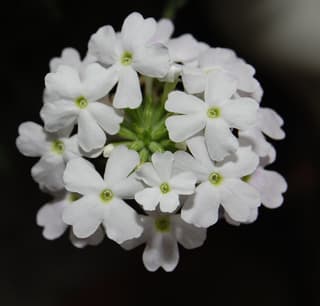
Garden Verbena
Verbena hybrida
Verbena hybrida, commonly known as Garden Verbena, is a semi-evergreen flowering plant originating from South America. It produces clusters of small, vividly colored flowers in shades of purple, red, pink, white, lavender, and coral. Widely grown as an annual in temperate climates, it thrives in full sun and is popular for hanging baskets, window boxes, and garden borders.

Common Vervain
Verbena officinalis
Common vervain (Verbena officinalis) is a herbaceous perennial in the Verbenaceae family, native to Europe and now naturalized across temperate regions worldwide. It forms upright clumps 60-90 cm tall with opposite, deeply lobed and toothed leaves, and produces slender, wiry flower spikes bearing small tubular lilac to pale purple flowers from summer into early fall. A tough, easy-to-grow plant, it has been prized as a medicinal herb since ancient Roman times.
Slender Vervain
Verbena rigida
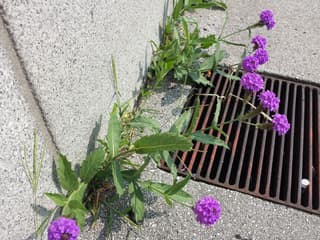
Verbena rigida is a low-growing, spreading perennial native to Argentina, Brazil, Uruguay, and Paraguay, prized for its rough, sandpaper-textured leaves and dense clusters of vivid purple-magenta flowers. It forms a mat-like groundcover via underground rhizomes and blooms continuously from late spring through fall, making it a favorite for sunny borders, rock gardens, and pollinator plantings.
Golden Crownbeard
Verbesina encelioides
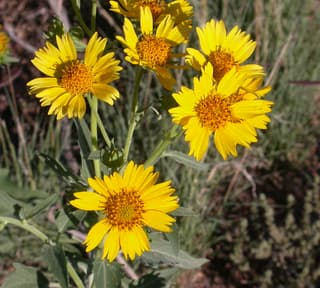
Verbesina encelioides, commonly known as Golden Crownbeard or Cowpen Daisy, is a hardy annual herb in the sunflower family. It is recognized by its grayish-green, triangular leaves and vibrant yellow daisy-like flowers with notched petals. It is highly adaptable to disturbed soils and arid environments, often forming dense colonies.
Brazilian Ironweed
Vernonanthura polyanthes
A shrub or small tree native to Brazil, reaching 2.5 to 3 meters in height, with a woody stem and simple, alternate, lanceolate leaves. Small white, off-white, or pinkish flowers in terminal heads. Native to the Cerrado and disturbed areas, distributed across Minas Gerais, São Paulo, Paraná, Rio Grande do Sul, and Santa Catarina. An aggressive colonizing species of roadsides and forest edges, it resprouts well after cutting and fire. A hardy and vigorous plant with rapid growth.
Speedwell
Veronica
Veronica, commonly known as Speedwell, is a large genus of flowering plants in the family Plantaginaceae, comprising over 500 species. Native mainly to Europe, these cheerful perennials produce tall, slender spikes of small four-petaled flowers in shades of blue, purple, pink, and white from spring through fall. Their upright, wand-like flower spikes make them stand out in cottage gardens, borders, and naturalistic plantings. Groundcover types spread low and are excellent for rock gardens and erosion control.
Franciscan Hebe
Veronica × franciscana
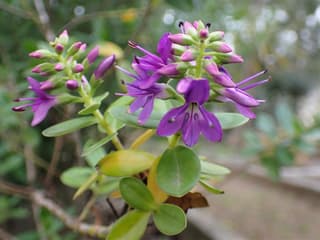
Franciscan Hebe (Veronica × franciscana) is a dense, rounded evergreen shrub prized for its glossy oval leaves and short spikes of purple summer flowers. A garden hybrid between Veronica elliptica and V. speciosa, it thrives in coastal and mild-winter gardens, tolerating salt spray, wind and drought once established.
Germander Speedwell
Veronica chamaedrys
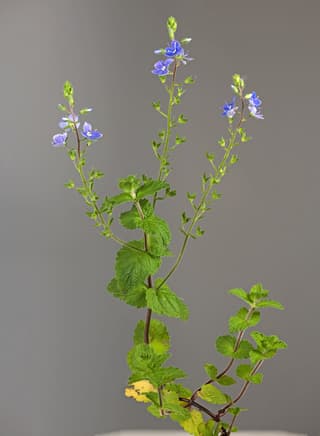
Veronica chamaedrys is a low-growing herbaceous perennial native to Europe, belonging to the family Plantaginaceae. This hardy wildflower features creeping stems that form dense mats up to 50 cm wide, producing striking deep blue flowers with white centers from spring through early summer. The leaves are opposite, triangular, and finely toothed. Highly adaptable and low-maintenance, it excels as a ground cover in wildlife gardens, wildflower meadows, and natural lawns. Extremely cold-hardy and recognized with the RHS Award of Garden Merit.
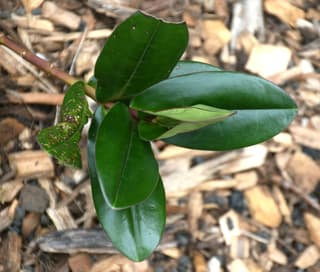
New Zealand Hebe
Veronica speciosa
Veronica speciosa, commonly known as the New Zealand Hebe or showy hebe, is a dense evergreen shrub native to the coastal cliffs of New Zealand's North Island. Prized for its glossy, leathery leaves and striking spikes of deep pink to purple flowers that bloom through summer, it forms a compact, rounded mound perfect for coastal and city gardens. Highly salt-tolerant, it thrives in exposed seaside positions while also making an excellent low-maintenance ornamental shrub inland.
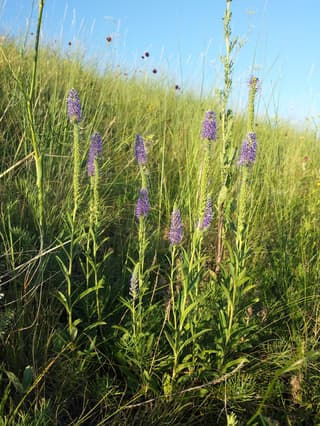
Spiked Speedwell
Veronica spicata
Veronica spicata, commonly known as Spiked Speedwell, is a hardy perennial flowering plant native to Europe and Asia. It produces striking upright spikes of tiny blue, purple, pink, or white flowers in summer, making it a favourite in cottage gardens and pollinator-friendly borders. A vigorous, low-maintenance plant that thrives in full sun with well-drained soil.
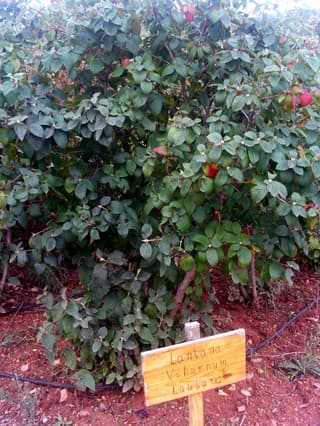
Wayfaring Tree
Viburnum lantana
Viburnum lantana, commonly known as the wayfaring tree, is a robust deciduous shrub native to Europe, North Africa and western Asia. It forms a broad, multi-stemmed mound of felty, grey-green leaves that turn deep red-purple in autumn. Flat clusters of small creamy-white flowers open in late spring, followed by berries that ripen from green to red and finally glossy black, often showing several colors on the same cluster at once. Traditionally planted along hedgerows and footpaths, it earned its common name for marking the way for travelers across the English countryside.
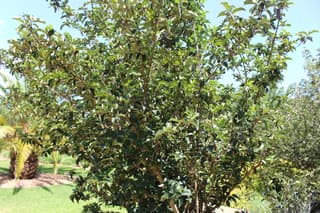
Chinese Snowball Viburnum
Viburnum macrocephalum
Viburnum macrocephalum, known as the Chinese snowball viburnum, is a rounded, vase-shaped deciduous to semi-evergreen shrub native to mainland China. It is prized for its enormous spherical flower clusters, which open lime-green and mature to pure white, resembling giant snowballs held above dark green, serrated leaves.
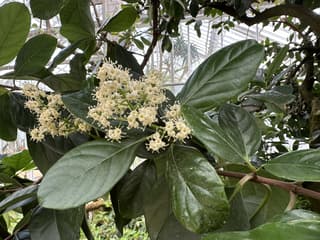
Sweet Viburnum
Viburnum odoratissimum
Sweet Viburnum (Viburnum odoratissimum) is a large, fast-growing evergreen shrub prized across warm climates for its dense, glossy foliage and its ability to form an impenetrable privacy hedge in just a few seasons. Native to East and Southeast Asia, it produces broad, leathery, deep-green leaves and, in late spring to early summer, showy conical clusters of small white flowers with a sweet, honey-like fragrance that gives the plant its name. The flowers are followed by small red fruits that ripen to black. Left unpruned, Sweet Viburnum can reach 4-6 m tall and wide, but it takes shearing extremely well and is one of the most popular screening and hedging shrubs in subtropical and warm-temperate landscapes.
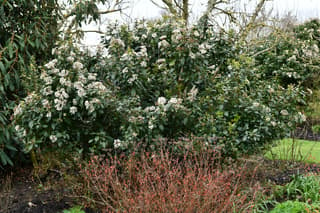
Laurustinus
Viburnum tinus
Laurustinus is a dense, evergreen Mediterranean shrub prized for its leathery dark-green leaves and clusters of pink-budded white flowers that open through the winter months. Following the blooms, it produces small, metallic blue-black berries that add extra seasonal interest and attract birds. Hardy and low-maintenance, it is widely used as a hedge, screen or specimen shrub in mild-winter gardens.
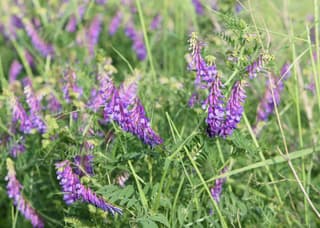
Vetch
Vicia
Vicia is a large genus of climbing and scrambling legumes commonly called vetches, native to Europe, Asia, Africa, and the Americas. With over 240 species, vetches are best known as nitrogen-fixing cover crops and livestock forage, though some species have been cultivated as food for thousands of years. Their slender, trailing stems climb via tendrils, bearing pea-like flowers in shades of purple, pink, blue, and white from spring through summer.
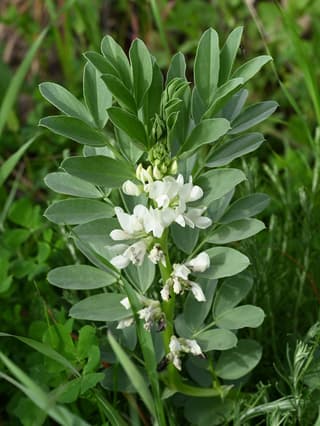
Broad Bean
Vicia faba
The broad bean (Vicia faba) is an annual legume in the Fabaceae family, featuring erect stems with a square cross-section that reach 1.5 to 6 feet in height. Its white flowers with black spots are fragrant and attract bees. It has been cultivated since antiquity in the Mediterranean region for its edible seeds.
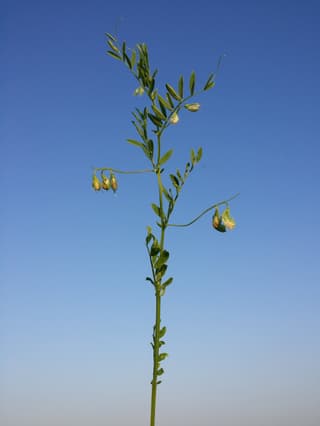
Lentil
Vicia lens
The lentil (Vicia lens) is an annual legume native to Southwest Asia and the Mediterranean, cultivated for over 9,000 years. A short-cycle crop producing small protein- and fiber-rich seeds, it is one of the oldest food plants in human history.
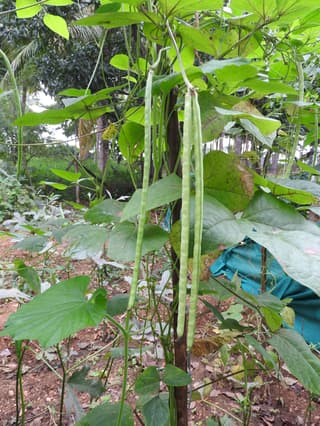
Black-eyed pea
Vigna unguiculata
The black-eyed pea (Vigna unguiculata) is an annual legume native to West Africa, widely grown across tropical and subtropical regions worldwide. Recognized by its distinctive black spot around the hilum, it is one of humanity's oldest and most nutritious food crops, rich in protein, fiber, and micronutrients. It also plays a vital role in soil health by fixing atmospheric nitrogen.
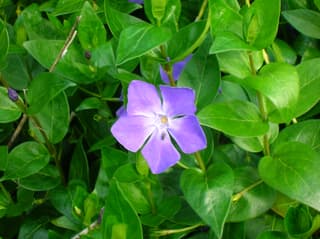
Greater Periwinkle
Vinca major
Vinca major, commonly known as Greater Periwinkle, is a vigorous evergreen ground cover native to the Mediterranean region of Europe. It produces glossy dark green leaves and charming five-petaled violet-blue flowers from spring through summer. Fast-spreading and highly adaptable, it thrives in partial shade and is widely used to cover slopes, suppress weeds, and fill shaded garden areas. Despite its ornamental appeal, it can become invasive outside its native range.
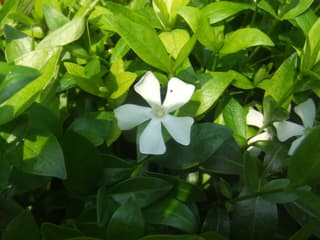
Lesser Periwinkle
Vinca minor
Lesser periwinkle (Vinca minor) is a low-growing, evergreen perennial ground cover native to central and southern Europe. It produces charming star-shaped flowers in shades of violet-blue, lavender, or white atop a dense mat of glossy dark-green leaves. Thriving in shaded spots where few other plants succeed, it is a staple of woodland gardens, slopes, and areas under trees. The plant contains vinca alkaloids (including vincamine) that are toxic if ingested by humans, cats, or dogs, though it is generally safe to handle.

Variegated Lesser Periwinkle
Vinca minor 'Variegata'
Variegated lesser periwinkle is a low, trailing evergreen subshrub in the Apocynaceae family, native to central and southern Europe, prized for its grey-green oval leaves edged in creamy white. Its wiry stems root at the nodes wherever they touch soil, quickly forming a dense mat, and it produces solitary violet-blue, five-lobed flowers mainly in spring. It is exceptionally tough, tolerating anything from full sun to deep shade.
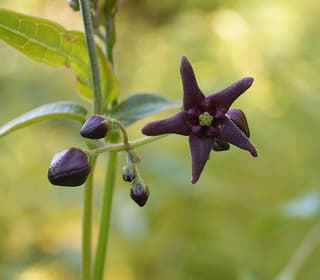
Black Swallow-wort
Vincetoxicum nigrum
Black Swallow-wort (Vincetoxicum nigrum) is a perennial herbaceous twining vine native to Mediterranean Europe. It produces small star-shaped flowers in deep black to dark purple hues during late spring and summer. Highly invasive in North America, it forms dense colonies that crowd out native vegetation. All plant parts are severely toxic.
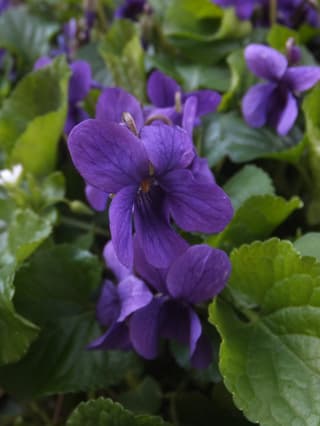
Sweet Violet
Viola
Sweet Violet (Viola) is a low, spreading perennial prized for its heart-shaped leaves and small, deeply fragrant purple, blue, or white flowers that open in early spring. Native to Europe and temperate Asia, it forms neat rosettes that creep gently by runners, making it a classic choice for shaded borders, woodland gardens, and containers. Both flowers and leaves are edible and have been used since antiquity for perfume, confectionery, and folk medicine.
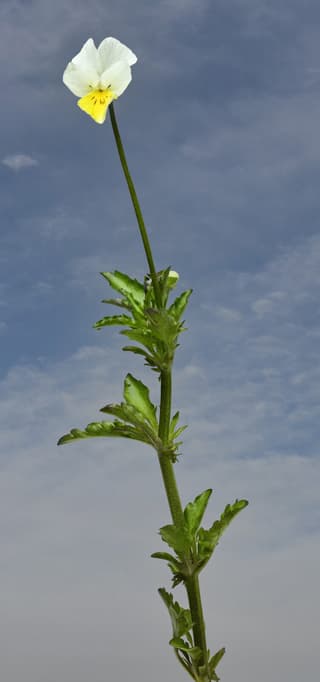
Field Pansy
Viola arvensis
Viola arvensis, the field pansy, is a low-growing annual to biennial wildflower native to Europe, Western Asia, and North Africa. It forms a basal rosette of spoon-shaped leaves with bluntly toothed edges and produces small, five-petaled flowers usually creamy white to pale yellow with a purple-flecked lower petal, though color can vary. Widely naturalized, it thrives in disturbed soils, meadows, and cultivated fields, flowering from early spring through fall.

Sweet Violet
Viola odorata
Sweet violet is a low-growing, hardy herbaceous perennial native to Europe and western Asia, prized for its sweetly fragrant purple or white flowers and heart-shaped leaves. It spreads via stolons to form a dense flowering mat, making it a popular ground cover for shaded borders and woodland gardens.
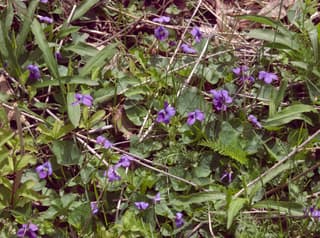
Common Blue Violet
Viola sororia
Viola sororia, commonly known as the Common Blue Violet or Wood Violet, is a native North American herbaceous perennial celebrated for its charming blue-purple spring flowers. It thrives in moist, shaded woodland edges, meadows, and naturalistic gardens. Hardy from zones 3a to 7b, it self-seeds freely and spreads via rhizomes, making it an excellent low-maintenance ground cover for shaded areas.
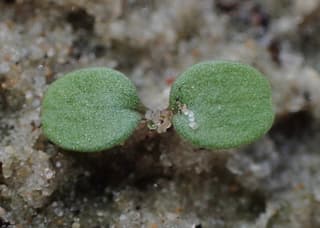
Wild Pansy
Viola tricolor
Wild Pansy (Viola tricolor) is a small herbaceous plant native to Europe and Western Asia, considered the wild ancestor of modern cultivated pansies. It produces charming tricolor flowers in shades of purple, yellow, and white, blooming from winter through summer.
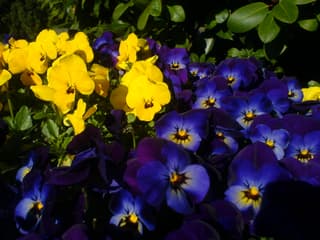
Pansy
Viola x wittrockiana
Viola x wittrockiana, commonly known as Pansy, is a hybrid flowering plant developed from European wild violets. One of the most beloved cool-season bedding plants, pansies produce cheerful, velvety blooms with distinctive "face-like" markings in a wide range of colors. They thrive in cool temperatures and are commonly planted in spring and fall gardens.
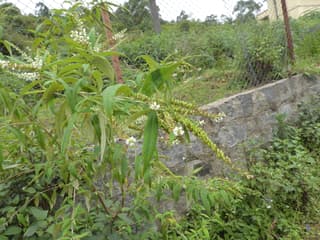
Chaste tree
Vitex
Vitex is a genus of aromatic, sun-loving shrubs and small trees, best known from the cultivated chaste tree (Vitex agnus-castus). These deciduous plants grow to about 3-6 m and produce showy summer spikes of fragrant purple, blue, pink or white flowers above palmate, grey-green foliage.
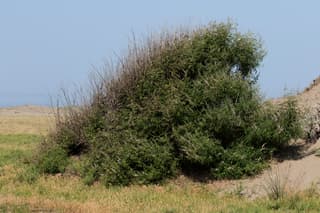
Chaste Tree
Vitex agnus-castus
Vitex agnus-castus, commonly known as chaste tree or monk's pepper, is a deciduous Mediterranean shrub in the Lamiaceae family. It produces fragrant spikes of lavender-blue flowers throughout summer and fall, attracting butterflies and pollinators. Highly drought-tolerant and adaptable, it has centuries of history as a medicinal herb.
Puriri
Vitex lucens
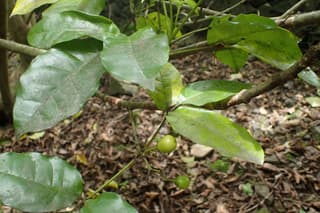
Puriri (Vitex lucens) is a majestic evergreen tree endemic to northern New Zealand. It can reach up to 20 metres tall with a massive spreading canopy, glossy palmate leaves, and tubular pink-to-red flowers that bloom year-round. It is one of New Zealand's most iconic native trees, providing critical food and habitat for native birds such as the kererū (native pigeon).
Riverbank Grape
Vitis riparia
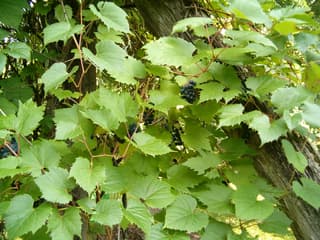
Vitis riparia, commonly known as Riverbank Grape or Frost Grape, is a vigorous deciduous climbing vine native to North America, ranging from Canada through the central United States. It thrives along riverbanks, forest edges, and rocky slopes, climbing trees and structures to heights exceeding 20 metres. In autumn, its heart-shaped lobed leaves turn golden-yellow, while its clusters of small, dark-blue berries — sweetened after the first frost — provide vital food for wildlife and are used by foragers for juices, jellies, and wine.
Tubular Knapweed
Volutaria tubuliflora
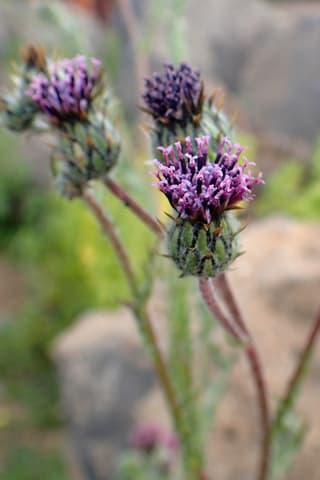
Tubular Knapweed (Volutaria tubuliflora) is an annual herb in the Asteraceae family, native to North Africa and the Mediterranean Basin. Recognized by its pink-purple tubular flowers and deeply lobed hairy leaves, it thrives in sandy, arid to semi-arid environments. It is considered an invasive species in California, USA, where it poses a threat to native desert ecosystems, producing up to 2,500 seeds per plant.
Easy Care Easy Care
Our selection of 2307 easy easy care combines the characteristics of this category with reduced care needs. Perfect for beginners who love this category.
Why Choose Easy Easy Care?
Combining the beauty of easy care with easy difficulty level lets you enjoy this category without excessive maintenance worries. Each plant was selected to offer the best characteristics of the category at the care level you are looking for.