2332 Easy Easy Care | 2026 Guide - Page 49
Find 2332 easy easy care. Complete guide for your garden.
2332 Easy Care with easy level
Showing 1729-1764 of 2332
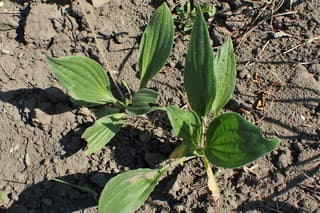
Asian Plantain
Plantago asiatica
Asian Plantain (Plantago asiatica) is a perennial herb of the Plantaginaceae family, native to East Asia — China, Japan, and Korea. It forms a basal rosette of broadly ovate to elliptic leaves measuring 4–12 cm, deep green with prominent veins. It produces erect flower spikes of 20–45 cm bearing numerous small white flowers. Exceptionally resilient, it colonizes disturbed habitats such as roadsides and vacant lots. Revered in Traditional Chinese Medicine for millennia as Cheqiancao (车前草), it possesses well-documented diuretic, anti-inflammatory, and expectorant properties.
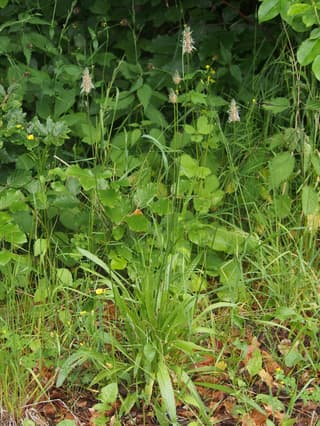
Ribwort Plantain
Plantago lanceolata
Ribwort plantain is a low-growing perennial herb native to Europe and western Asia, now naturalized worldwide. It forms a basal rosette of lance-shaped, ribbed leaves and sends up slender, leafless flower stalks topped with small brownish flower spikes from spring through summer. Extremely hardy and adaptable, it thrives in meadows, lawns, and disturbed ground, and has a long history of use as a medicinal herb.
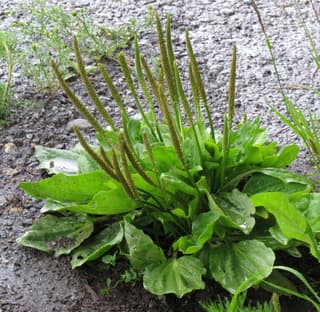
Broadleaf Plantain
Plantago major
Broadleaf Plantain (Plantago major) is a robust, perennial wild plant from the Plantain family (Plantaginaceae). It forms a flat rosette of broad, oval leaves with characteristic parallel veins and grows in meadows, pastures, roadsides, and compacted soil worldwide. From May to September, narrow, upright flower spikes appear with small, inconspicuous yellowish-green flowers. As one of the best-known medicinal herbs in folk medicine, it has been used for centuries for skin wounds, insect bites, coughs, and respiratory complaints. The young leaves are edible and rich in silicic acid, mucilage, tannins, and flavonoids.
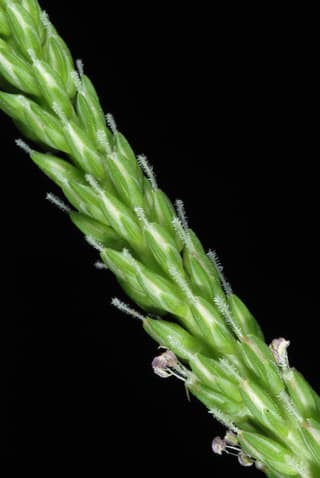
Blackseed Plantain
Plantago rugelii
Blackseed plantain (Plantago rugelii) is a hardy native perennial herb of eastern and central North America. It forms a compact basal rosette of broad, oval leaves with distinctive reddish-purple petiole bases. Often found in lawns, roadsides, and disturbed habitats, it is both a common "weed" and a valued medicinal and edible plant with a long history of traditional use.
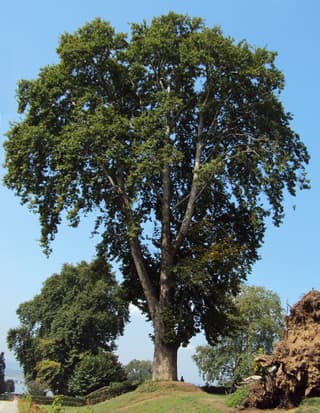
Plane Tree
Platanus
Platanus is a genus of approximately 10 species of large, deciduous trees comprising the sole living genus of the family Platanaceae. Native to the Northern Hemisphere — spanning North America, Mexico, southeastern Europe, and Asia — plane trees are instantly recognizable by their distinctive exfoliating bark that peels away in irregular patches to reveal a mosaic of cream, green, and grey tones. The broadly palmate leaves and spherical seed balls that hang on the branches through winter are equally distinctive. The London plane (Platanus × hispanica), a hybrid between the Oriental and American planes, has become one of the most widely planted ornamental trees in the world, renowned for its exceptional tolerance of urban pollution, soil compaction, and drought.
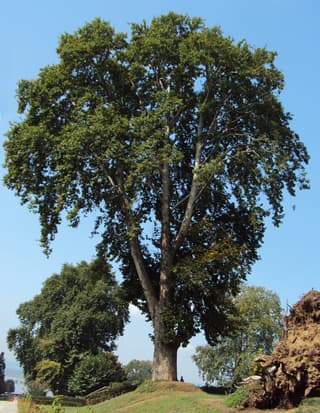
Oriental Plane
Platanus orientalis
The Oriental plane (Platanus orientalis) is a large deciduous tree native to southeastern Europe and southwestern Asia, prized for its flaking, cream-and-gray bark and deeply lobed, maple-like leaves. Long-lived and fast-growing, it can exceed 30 m in height and is historically linked to Hippocrates, who reportedly taught medicine beneath a specimen on the island of Kos.
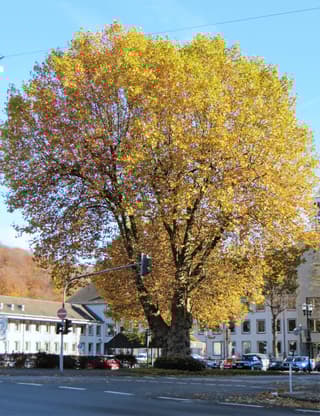
London Plane Tree
Platanus x hispanica
The London Plane Tree (Platanus x hispanica) is a magnificent hybrid deciduous tree believed to be a cross between the Oriental Plane (Platanus orientalis) and the American Sycamore (Platanus occidentalis). Originating in Europe, it has become one of the most widely planted urban trees in the world, celebrated for its extraordinary tolerance of pollution, compacted soils, and drought. Its striking exfoliating bark—revealing creamy, olive, and tan patches—makes it a year-round ornamental standout. It can grow up to 30 meters tall with a wide canopy reaching 24 meters across, providing abundant shade in parks, avenues, and urban squares.
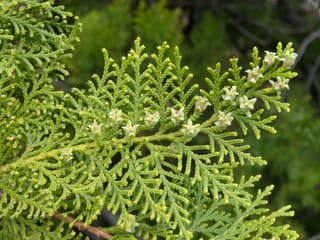
Oriental Arborvitae
Platycladus orientalis
Platycladus orientalis, commonly known as Oriental Arborvitae or Chinese Arborvitae, is an evergreen conifer in the Cupressaceae family, native to China and Korea. It grows slowly with a columnar to conical form, reaching up to 10 meters tall. Its scale-like leaves form flattened, vertical sprays of yellow-green foliage that bronze in winter. Widely used as hedges, privacy screens, and ornamental specimens. WARNING: contains thujone in leaves and seeds — toxic to pets and humans if ingested.
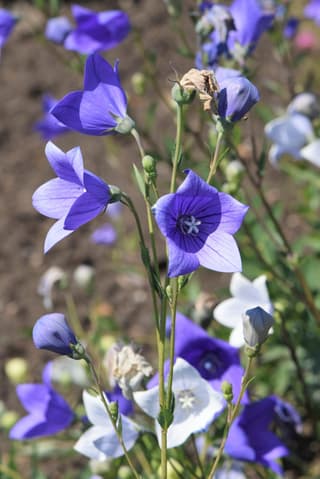
Balloon flower
Platycodon grandiflorus
The balloon flower (Platycodon grandiflorus) is a perennial herb in the bellflower family (Campanulaceae), native to East Asia—China, Korea, Japan, and Siberia. It is famous for its swollen flower buds that resemble balloons, which puff up before opening into bell-shaped, five-pointed flowers in shades of blue, purple, pink, or white. The plant grows to a height of 30–60 cm, blooms from July to October, and is popular in flower beds, rock gardens, and containers.
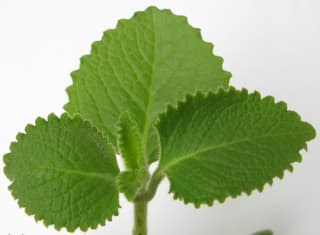
Cuban Oregano
Plectranthus amboinicus
Plectranthus amboinicus, commonly known as Cuban oregano or Indian borage, is an aromatic semi-succulent herb in the Lamiaceae family. Native to tropical Africa and widely naturalized across the tropics, it features thick, fleshy, velvety leaves with a bold oregano-mint fragrance. Widely grown as a culinary herb and medicinal plant.
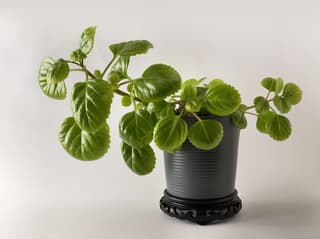
Swedish Ivy
Plectranthus australis
Swedish Ivy (Plectranthus australis) is a fast-growing, trailing houseplant native to South Africa and Australia. Beloved for its lush, round, glossy leaves and cascading stems, it is an ideal plant for hanging baskets, window sills, and outdoor ground cover in frost-free climates. Its ability to thrive with minimal care makes it a popular choice for both beginners and experienced gardeners.
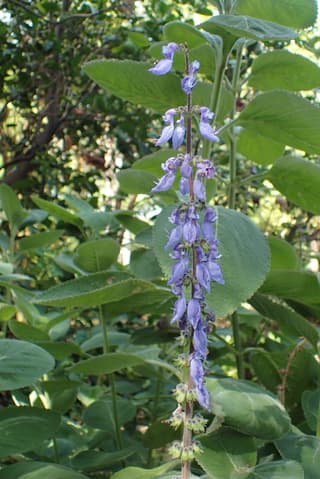
Indian Coleus
Plectranthus barbatus
Indian Coleus (Plectranthus barbatus) is a perennial shrub of the Lamiaceae family, native to the paleotropical regions of Africa and India. It is widely cultivated for its aromatic, slightly fuzzy leaves and striking blue-purple flower spikes. A fast-growing and drought-tolerant plant, it thrives in warm climates and is prized both as an ornamental and for its medicinal roots, which contain the bioactive compound forskolin.
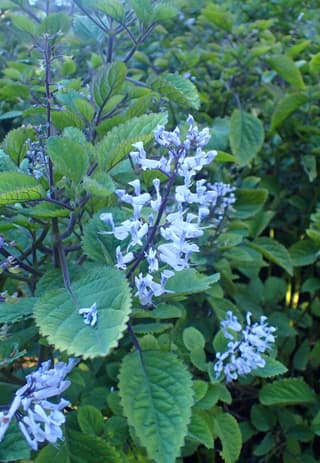
Speckled Spur-Flower
Plectranthus ciliatus
The Speckled Spur-Flower (Plectranthus ciliatus) is a trailing, semi-succulent perennial in the mint family (Lamiaceae), native to the moist forests and shaded slopes of South Africa's Western Cape, KwaZulu-Natal, and Eswatini. Its broadly oval, scalloped leaves are edged with fine hairs that give an eyelash-like fringe (hence "ciliatus", Latin for "fringed with hairs"), and the undersides often flush deep purple. From late summer into winter it sends up slender spikes of small white to lilac-pink flowers above the foliage. In its native habitat it forms dense, shade-loving carpets under trees, which makes it a natural fit for hanging baskets, window boxes, and groundcover plantings in frost-free gardens.
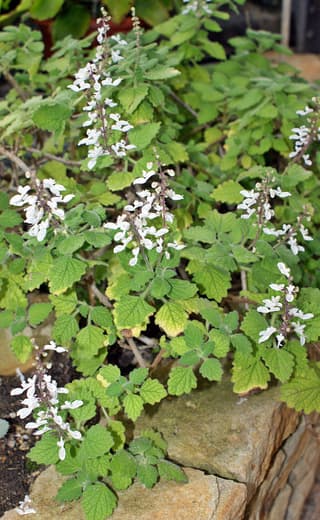
Mintleaf
Plectranthus madagascariensis
Mintleaf (Plectranthus madagascariensis) is a popular trailing houseplant native to Madagascar and South Africa. It features aromatic, slightly fuzzy leaves with white or cream margins in its variegated form, releasing a mild mint-like scent when touched. It is prized for its easy care, fast growth, and adaptability to indoor conditions.
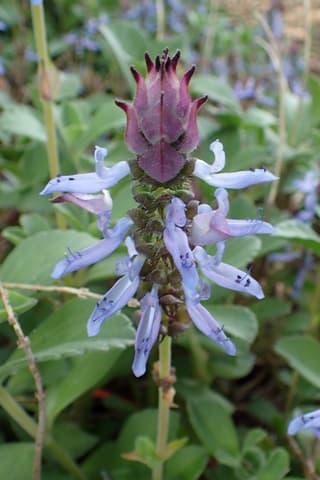
Lobster Flower
Plectranthus neochilus
Plectranthus neochilus is an aromatic groundcover native to South Africa, known for its pungent skunky scent that repels insects, cats, and snakes. It produces attractive blue-purple flowers in spring and summer and is prized for both ornamental and medicinal uses.
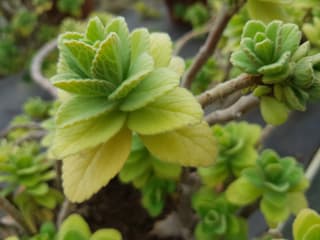
Vicks Plant
Plectranthus ornatus
Plectranthus ornatus, commonly known as the Vicks Plant, is a fast-growing aromatic groundcover native to East Africa (Ethiopia and Tanzania). Belonging to the Lamiaceae family, it is widely grown as both a medicinal herb and ornamental plant, prized for its menthol-like fragrance and digestive health benefits.
Purple Swedish Ivy
Plectranthus purpuratus
Plectranthus purpuratus, commonly known as Purple Swedish Ivy, is a trailing evergreen perennial in the mint family (Lamiaceae), native to eastern South Africa. It is prized for its soft, fleshy, aromatic dark green leaves with a purple-tinted underside, and its freely branching, spreading habit makes it a popular choice for hanging baskets. Tiny bluish-white tubular flowers appear in summer and intermittently throughout the year.
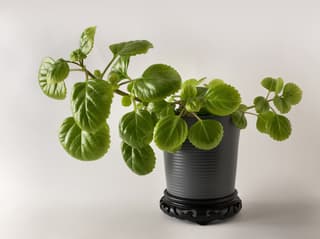
Plectranthus
Plectranthus sp
Plectranthus is a diverse genus in the Lamiaceae family, native to Africa and Asia. With over 350 species, many are cultivated as ornamental, aromatic, and medicinal plants. Their textured leaves and tubular flowers in shades of purple, lilac, or white make them a favorite for gardens and balconies. They adapt well to indoor containers as well as outdoor planting in tropical and subtropical climates.
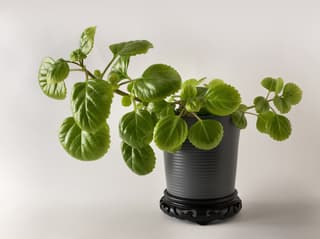
Swedish Ivy
Plectranthus verticillatus
Plectranthus verticillatus, commonly known as Swedish Ivy or Money Plant, is a fast-growing trailing perennial native to South Africa. It features oval, glossy green leaves with slightly serrated edges and a pleasant aromatic scent when touched. Widely grown as a houseplant, it thrives in hanging baskets and on shelves where its cascading stems create a lush, decorative display.
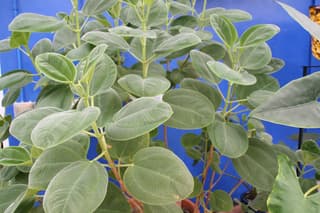
Pink Princess Flower
Pleroma granulosum
Pleroma granulosum (syn. Tibouchina granulosa), commonly known as Pink Princess Flower or Purple Glory Tree, is a fast-growing flowering tree native to Brazil's Atlantic Forest, belonging to the family Melastomataceae. It produces spectacular clusters of large violet-purple to magenta blooms mainly in late summer through autumn. Widely planted as a street tree and garden ornamental in tropical and subtropical regions worldwide.
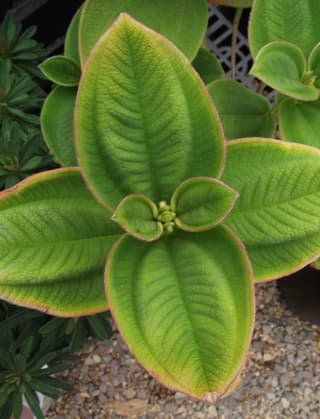
Silver-leaved Princess Flower
Pleroma heteromalla
Pleroma heteromalla, commonly known as Silver-leaved Princess Flower, is a shrub native to the Brazilian Cerrado, belonging to the family Melastomataceae. Previously classified as Tibouchina heteromalla, this species is prized for its velvety silver-gray foliage and vibrant purple flowers. Well-adapted to the challenging conditions of the Cerrado savanna, it is a resilient and ornamentally striking plant.
Oyster mushroom
Pleurotus ostreatus
The oyster mushroom is an edible, wood-decaying fungus that grows in clusters. It has oyster-shaped caps, ranging in color from light gray to dark brown. It is highly valued for its meaty texture and its ability to grow on various cellulose-rich substrates, such as straw or wood.
Camphor Weed
Pluchea
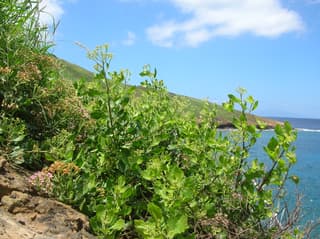
Pluchea is a genus of aromatic shrubs in the Asteraceae family, commonly known as camphor weeds or marsh fleabanes. Native to tropical and subtropical regions of the Americas, these robust plants are widely used in traditional medicine for their anti-inflammatory, antioxidant, and antimicrobial properties. Leaves emit a characteristic camphor-like aroma and produce clusters of small pink or lilac flower heads.
Cure-for-all
Pluchea carolinensis
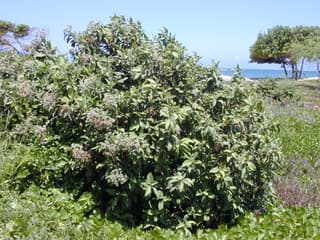
Cure-for-all (Pluchea carolinensis) is an aromatic, fast-growing perennial shrub native to the Caribbean, Florida, and Central and South America. Its velvety, camphor-scented leaves and delicate pink-lavender flowers make it both ornamentally attractive and medicinally prized. Widely used in Caribbean and Brazilian folk medicine for centuries, it is traditionally employed to treat colds, fever, bronchitis, sore throats, and rheumatic pain. It thrives in full sun and well-drained soils, reaching up to 2.5 m in height.
Wingstem Camphorweed
Pluchea sagittalis
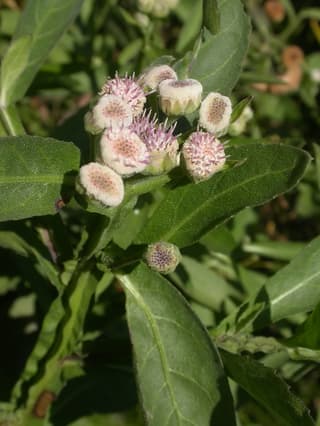
Wingstem Camphorweed (Pluchea sagittalis) is an aromatic medicinal herb native to South America, notable for its winged stems and small pink to white flowers. It thrives in warm, humid environments and has a long history of use in traditional medicine across the continent.
Cape Leadwort
Plumbago auriculata
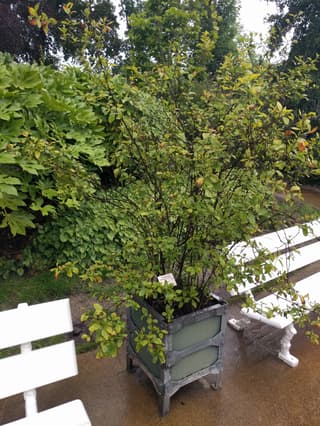
Cape Leadwort (Plumbago auriculata) is an evergreen or semi-evergreen shrub native to South Africa, prized for its clusters of sky-blue, trumpet-shaped flowers that appear almost continuously from spring through fall. A vigorous grower, it can behave as a climber when supported by walls and trellises or form hedges and groundcover. It tolerates a wide variety of soils and is drought-resistant once established, though it is sensitive to waterlogging and frost.

Frangipani
Plumeria
Plumeria is a genus of about a dozen species of deciduous flowering trees and shrubs native to tropical and subtropical parts of the Americas, prized worldwide for their fragrant, waxy flowers and smooth gray bark. Grown as a landscape tree in frost-free climates and as a container plant elsewhere, frangipani produces clusters of five-petaled blooms in white, yellow, pink, and red from late spring through fall, followed by a leafless winter dormancy in cooler regions.
Singapore Graveyard Flower
Plumeria obtusa
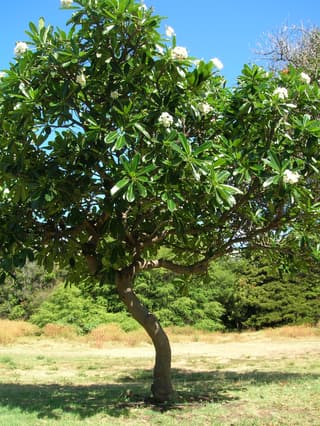
Plumeria obtusa, commonly known as the Singapore graveyard flower or white frangipani, is a tropical tree in the family Apocynaceae native to the Caribbean and Central America. It is widely cultivated across Southeast Asia, Hawaii, and tropical regions worldwide for its intensely fragrant white flowers with yellow centers. The species is semi-evergreen in tropical climates and is a staple of temple gardens throughout Asia.
Frangipani
Plumeria rubra
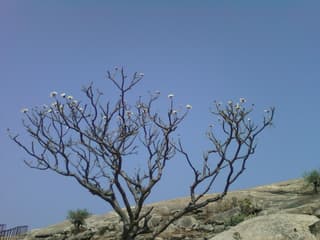
Frangipani (Plumeria rubra) is a deciduous shrub or small tree native to Mexico and Central America, celebrated worldwide for its intensely fragrant, waxy flowers in shades of white, yellow, orange, pink, and red. It thrives in hot, sunny climates, tolerates drought once established, and is among the most iconic tropical ornamental plants in the world. It grows rapidly and can reach 2–8 meters in height.
Annual Meadow Grass
Poa annua
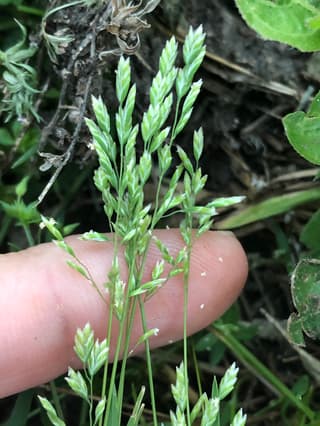
Poa annua, commonly known as Annual Meadow Grass or Annual Bluegrass, is a small, tufted annual or short-lived perennial grass native to temperate Europe and Asia but now found worldwide. It forms dense low mats of fine-textured, bright yellow-green blades with characteristic boat-shaped leaf tips. Despite often being considered a lawn weed, it is also cultivated on golf-course putting greens and used as a ground cover in low-maintenance areas. It germinates in cool weather, flowers in spring, and dies back as summer heat arrives.
Bulbous Bluegrass
Poa bulbosa
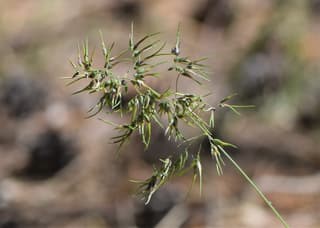
Bulbous Bluegrass (Poa bulbosa) is a perennial grass native to Europe and the Mediterranean, now widespread globally. It forms dense clumps up to 70 cm tall with distinctive bulbous stem bases that store water reserves, making it extremely drought and cold tolerant. In spring it produces small spikelets that develop into bulbils for vegetative reproduction.
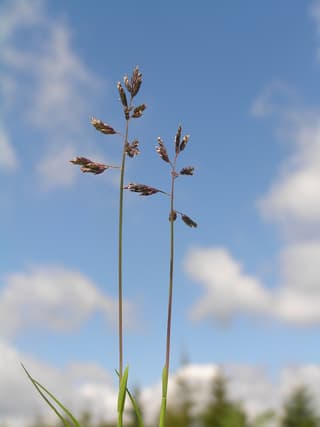
Supine bluegrass
Poa supina
Supine bluegrass (Poa supina) is a low-growing perennial grass native to the alpine and subalpine regions of Europe. It is distinguished by its smooth, soft, bright green leaves and its creeping habit, which forms a dense turf through stolon propagation. It is one of the few grasses capable of thriving in conditions of intense shade, up to 90% shade, making it ideal for difficult areas such as under dense trees, walkways, and sports fields in shady environments. In spring, it produces seed heads with characteristic purplish coverings.
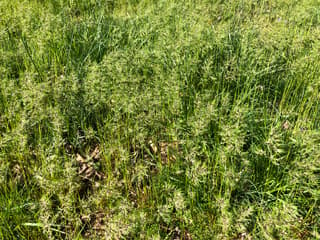
Lawn grass
Poaceae
Poaceae, the grass family, is one of the world's most widespread and species-rich plant families, forming the foundation for most lawns, pastures, and sports fields. Lawn grass is characterized by narrow, elongated leaves and a dense, fibrous root system that, along with runners (rhizomes and stolons), creates a cohesive, durable green carpet. Depending on the species, a distinction is made between cool-season grasses (e.g., Kentucky bluegrass and perennial ryegrass), which thrive best in temperate climates, and warm-season grasses (e.g., Bermuda grass), which prefer warmer regions. Grass is extremely hardy, tolerates mowing and foot traffic well, and is a central component of gardens, parks, and public spaces worldwide.
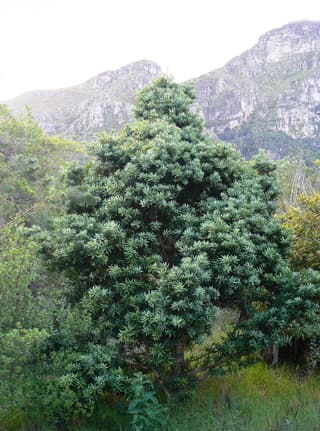
Real Yellowwood
Podocarpus latifolius
Podocarpus latifolius, the real yellowwood, is a slow-growing evergreen conifer of the Podocarpaceae family and the national tree of South Africa. It grows naturally in the afromontane forests of southern and eastern South Africa, from the Western Cape to KwaZulu-Natal and Limpopo, and in Eswatini and Lesotho, from sea level to over 1,800 m. In the forest it can reach 20-35 m, but in the open and in gardens it stays much smaller, with a dense, rounded crown. The strap-shaped leaves are 25-40 mm long on adult trees (up to 100 mm on young plants), dark green and leathery, while new growth is soft and pale, contrasting with the older foliage. Trees are male or female: female trees carry round, grey-blue seeds on a fleshy receptacle that ripens purple and is eaten by birds and monkeys.
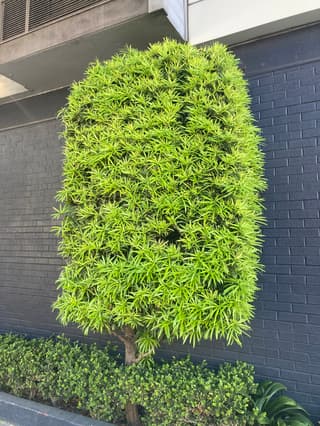
Buddhist Pine
Podocarpus macrophyllus
Podocarpus macrophyllus is an elegant evergreen conifer native to Japan and China. It features narrow, leathery, deep green leaves that resemble flattened needles. It is widely used in landscaping to create dense hedges, green columns, or as a standalone specimen, and is also a popular choice for the art of bonsai due to its malleability and controlled growth.
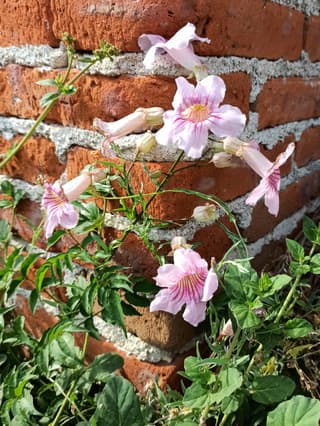
Pink Trumpet Vine
Podranea ricasoliana
Podranea ricasoliana, commonly known as Pink Trumpet Vine or Port St. Johns Creeper, is a vigorous woody climber in the family Bignoniaceae, native to South Africa. It produces spectacular lilac-pink, trumpet-shaped flowers with violet veining that bloom profusely from summer through fall. A fast grower capable of reaching 5 metres (16 ft), it is prized for covering pergolas, walls, and fences with a lush tropical floral display.
Easy Care Easy Care
Our selection of 2332 easy easy care combines the characteristics of this category with reduced care needs. Perfect for beginners who love this category.
Why Choose Easy Easy Care?
Combining the beauty of easy care with easy difficulty level lets you enjoy this category without excessive maintenance worries. Each plant was selected to offer the best characteristics of the category at the care level you are looking for.