Dryopteridaceae
Leatherleaf fern: Pet-Safe Plant
Rumohra adiantiformis
An easy-to-maintain fern that prefers humid environments, indirect light, and soil rich in organic matter.
Every 6 days
Partial shade
15° - 24°C
50% - 80%
Categories
What is Leatherleaf fern?
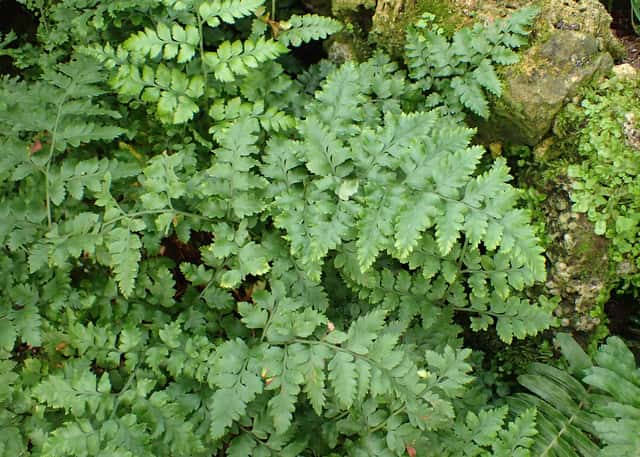
Leatherleaf fern (Rumohra adiantiformis) is a easy-care plant from the Dryopteridaceae family. Rumohra adiantiformis, commonly known as the leatherleaf fern, is a robust and perennial species prized for its triangular, leathery, deep green fronds. It is extremely popular in the floral industry due to the incredible durability of its leaves after being cut, remaining fresh in arrangements for...
Leatherleaf fern grows up to 90cm, spread of 90cm, watering every 6 days, 15°C – 24°C, 50–80% humidity. It is suitable for indoor environments and safe for pets.
Unlike many tropical plants, Leatherleaf fern tolerates watering mistakes. Best for beginners. Unlike many popular species, Leatherleaf fern is safe to keep around pets. Without adequate drainage, root rot can develop within 12 days.
How to Care for Leatherleaf fern?
TLDR: Leatherleaf fern needs Partial shade, watering every 6 days, and temperatures between 15-24°C with 50-80% humidity.
How Often Should You Water Leatherleaf fern?
Keep the soil consistently moist, but never waterlogged. Reduce watering slightly during the winter.
How Much Light Does Leatherleaf fern Need?
Prefers filtered light or partial shade. Avoid direct exposure to strong sunlight, which can burn and yellow the fronds.
What Is the Best Soil for Leatherleaf fern?
Use a well-draining soil mix that is rich in humus or peat moss to retain the necessary moisture.
What Pot Should You Use for Leatherleaf fern?
Plastic or glazed ceramic pots that help retain substrate moisture.
Care Schedule
Fertilize
Every 35 days
Misting
Every 3 days
Repot
Every 730 days
What Is Leatherleaf fern and Where Does It Come From?
Rumohra adiantiformis, commonly known as the leatherleaf fern, is a robust and perennial species prized for its triangular, leathery, deep green fronds. It is extremely popular in the floral industry due to the incredible durability of its leaves after being cut, remaining fresh in arrangements for several weeks. In nature, it grows both as an epiphyte and on the forest floor.
How to Propagate Leatherleaf fern?
Rhizome Division
- Maintain high humidity by covering the plant with a plastic bag for the first few days
- Do not bury the rhizome too deeply
- 1 Removal
Carefully remove the plant from the pot, clearing excess soil from the roots.
- 2 Division
Cut the rhizome into sections using a sharp, sterilized knife, ensuring each part has at least two or three fronds and healthy roots.
- 3 Replanting
Plant the divisions in new pots with substrate rich in organic matter and keep in a shaded, humid location.
Materials needed:
Spore Propagation
- Soil sterilization is essential to prevent the growth of fungi and moss
- This process requires a lot of patience
- 1 Collection
Scrape mature spores (dark spots) from the underside of the leaves onto a clean piece of paper.
- 2 Sowing
Spread the spores over a surface of sterile, moist peat moss.
- 3 Incubation
Keep the container closed to maintain humidity in a warm, bright spot until the small prothalli appear.
Materials needed:
How Big Does Leatherleaf fern Grow?
TLDR: Leatherleaf fern can reach up to 90cm tall with Slow growth rate.
Max height
90cm
Spread
90cm
Growth rate
Slow
Foliage
Evergreen
Plant Uses
Ornamental
Great for decoration
Is your plant showing symptoms?
Click on the symptom to discover possible causes:
What Diseases Commonly Affect Leatherleaf fern?
TLDR: Leatherleaf fern is susceptible to 7 known diseases. Monitor regularly for early detection.
Root Rot
Root rot is a serious fungal disease that affects the root system of plants, causing them to decay and die. It is primarily caused by overwatering, poor drainage, or soil-borne fungi such as Pythium, Phytophthora, Rhizoctonia, and Fusarium. The disease thrives in waterlogged conditions where roots are deprived of oxygen, making them susceptible to fungal infection.
Anthracnose
Anthracnose is a fungal disease caused by fungi in the genus Colletotrichum that affects many plants, including vegetables, fruits, and trees. The disease thrives in cool, wet conditions, causing dark, sunken lesions on leaves, stems, flowers, and fruits.
Leaf Spot
Leaf spot is a common fungal disease caused by various pathogens including Alternaria, Ascochyta, Colletotrichum, Septoria, and Venturia. It primarily affects leaves, causing discolored spots that can lead to premature leaf drop if left untreated.
Pythium Root Rot
Pythium root rot is a serious fungal disease caused by various Pythium species including P. aphanidermatum, P. ultimum, and P. irregulare. These water molds are present in practically all cultivated soils and attack plant roots under wet conditions, causing rapid wet rot that can extend into the stem. The disease is favored by poor drainage, overwatering, and specific temperatures depending on the species.
Meaning & Symbolism
Symbolizes resilience, sincerity, and protection.
Compare with similar plants
| Attribute | Difficulty | Light | Watering | Pet Safe |
|---|---|---|---|---|
| Field Maple | Easy | Bright indirect | 14d | ✓ |
| Silver Birch | Easy | Direct sun | 14d | ✓ |
| Common Blanketflower | Easy | Direct sun | 10d | ✓ |
| Cushion Bush | Easy | Direct sun | 14d | ✓ |





