Araceae
Lady Valentine Chinese Evergreen (Aglaonema 'Lady Valentine')
Aglaonema 'Lady Valentine'
An easy houseplant: medium to bright indirect light, no direct sun, and water when half the soil has dried. It likes warmth (18 to 27 °C) and suffers below 15 °C and in cold drafts. Feed in spring and summer. Turn the pot now and then so the clump grows evenly. Keep it away from children and pets.
Every 7 days
Partial shade
15° - 27°C
% - %
Categories
What is Lady Valentine Chinese Evergreen?
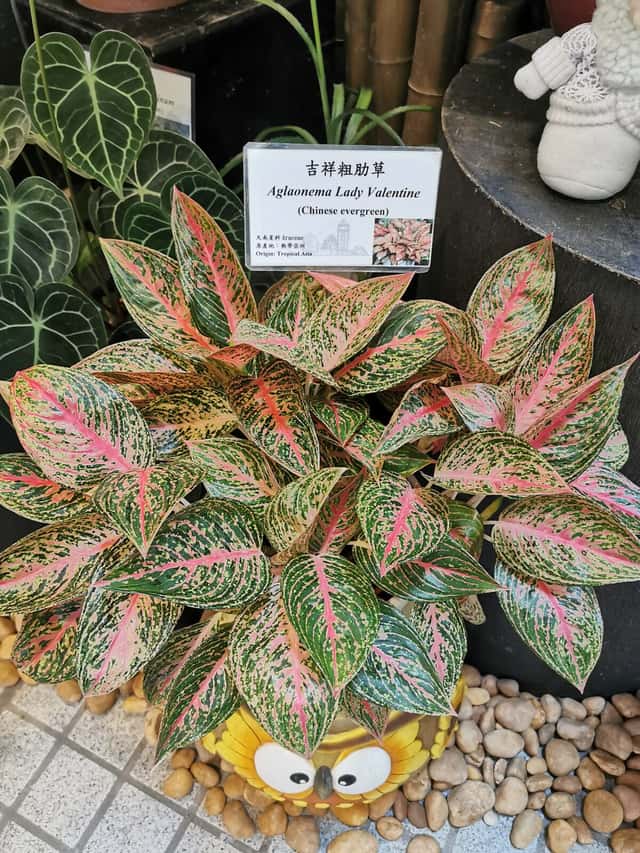
Lady Valentine Chinese Evergreen (Aglaonema 'Lady Valentine') is a easy-care plant from the Araceae family. Aglaonema 'Lady Valentine' is a foliage cultivar in the arum family (Araceae), in the same genus as the Chinese evergreens native to tropical Asian forests. Its leaves are glossy, elongated and pointed, mostly pink, with green midsections and veins and a few cream specks. How pink they are depends o...
Lady Valentine Chinese Evergreen grows up to 60cm, spread of 60cm, watering every 7 days, 15°C – 27°C. It is suitable for indoor environments and not safe for pets.
Unlike many tropical plants, Lady Valentine Chinese Evergreen tolerates watering mistakes. Best for beginners. Without precautions, ingestion can cause irritation in pets. Keep out of reach of cats and dogs. Without adequate drainage, root rot can develop within 14 days.
How to Care for Lady Valentine Chinese Evergreen?
TLDR: Lady Valentine Chinese Evergreen needs Partial shade, watering every 7 days, and temperatures between 15-27°C with 40-70% humidity.
How Often Should You Water Lady Valentine Chinese Evergreen?
Water thoroughly, until it drains from the pot, once the top 3 to 5 cm of soil are dry. In warm months that is usually about once a week; in winter, every 10 to 14 days. Do not let the soil stay soggy or water sit in the saucer, or the roots will rot.
How Much Light Does Lady Valentine Chinese Evergreen Need?
Medium to bright indirect light, near a bright window but out of direct sun, which scorches the leaves. The more light it gets, the deeper the pink. In low light it loses colour, grows less and makes smaller leaves.
What Is the Best Soil for Lady Valentine Chinese Evergreen?
A well-draining indoor potting mix with perlite or pumice added (for example 3 parts potting soil to 1 part pumice). A little coco coir and compost help hold moisture without waterlogging.
What Pot Should You Use for Lady Valentine Chinese Evergreen?
A pot with a drainage hole, just one size up from the old one. Repot every 2 to 5 years in spring or summer, or sooner if roots come out of the drainage hole.
Care Schedule
Fertilize
Every 30 days
Rotate
Every 60 days
What Is Lady Valentine Chinese Evergreen and Where Does It Come From?
Aglaonema 'Lady Valentine' is a foliage cultivar in the arum family (Araceae), in the same genus as the Chinese evergreens native to tropical Asian forests. Its leaves are glossy, elongated and pointed, mostly pink, with green midsections and veins and a few cream specks. How pink they are depends on light: brighter indirect light gives deeper pink, while shade turns them greener. It forms a clump about 30 to 60 cm tall and grows slowly. It occasionally produces a small pale green spathe with a white spadix, but it is grown for the leaves. Like other aroids, it contains calcium oxalate crystals and is toxic if eaten.
How to Propagate Lady Valentine Chinese Evergreen?
Division
Do it in spring or early summer. Wear gloves, as the sap irritates skin.
- 1 Take the plant out of its pot when repotting
- 2 Gently loosen the soil from the roots
- 3 Separate a section with a few stems and its own roots
- 4 Pot each section in moist mix
- 5 Keep in indirect light and water moderately for the first weeks
Materials needed:
Stem cuttings
In water, change it weekly. Rooting is slow, so be patient.
- 1 Cut a 10 to 25 cm stem with a few leaves
- 2 Place it in water or in light, moist mix
- 3 Keep it somewhere warm, around 21 °C, in indirect light
- 4 Pot it up once the roots are a few centimetres long
Materials needed:
How Big Does Lady Valentine Chinese Evergreen Grow?
TLDR: Lady Valentine Chinese Evergreen can reach up to 60cm tall with Slow growth rate.
Max height
60cm
Spread
60cm
Growth rate
Slow
Foliage
Evergreen
Warning: Toxic Plant
This plant can be toxic if ingested. Keep out of reach of:
Plant Uses
Ornamental
Great for decoration
Is your plant showing symptoms?
Click on the symptom to discover possible causes:
What Diseases Commonly Affect Lady Valentine Chinese Evergreen?
TLDR: Lady Valentine Chinese Evergreen is susceptible to 7 known diseases. Monitor regularly for early detection.
Mealybugs
Mealybugs are small, soft-bodied insects covered with a white, waxy, cottony material. They are common pests of houseplants and outdoor plants in mild climates. These sap-sucking insects feed on plant tissue, causing damage, stunted growth, and can lead to plant death if left untreated. They produce sticky honeydew which attracts sooty mold.
Spider Mites
Spider mites are tiny arachnids (less than 1/20 inch long) related to spiders and ticks that feed on plant sap. They thrive in hot, dry conditions and can cause significant damage to ornamental and vegetable plants. During severe infestations, crop losses can reach 14% or higher as these pests disrupt vital plant processes including photosynthesis, carbon dioxide absorption, and transpiration.
Scale Insects
Scale insects are small sap-sucking pests that appear as brown, shell-like bumps on plant stems and leaves. There are over 25 species, divided into armored (hard) and unarmored (soft) scales. They feed by piercing plant tissue and extracting sap, which weakens the plant and can lead to yellowing, stunted growth, and even death if left untreated. They also excrete honeydew, which attracts ants and promotes sooty mold growth.
Aphids
Aphids are small, soft-bodied, pear-shaped insects (1/16 to 1/8 inch long) that feed by sucking nutrient-rich sap from plants. They reproduce rapidly and can quickly weaken plants, causing distorted growth and transmitting plant viruses. Aphids come in various colors including green, black, red, yellow, brown, and gray. They secrete honeydew, a sticky substance that attracts ants and encourages sooty mold growth.
Fun Facts
Each new leaf comes out with a slightly different pattern of pink and green
The shade of pink changes with how much light the plant gets
Frequently asked questions
Why is my Aglaonema 'Lady Valentine' losing its pink colour?
How often should I water Aglaonema 'Lady Valentine'?
Is Aglaonema 'Lady Valentine' toxic?
What pests attack Aglaonema 'Lady Valentine'?
Compare with similar plants
| Attribute | Difficulty | Light | Watering | Pet Safe |
|---|---|---|---|---|
| Field Maple | Easy | Bright indirect | 14d | ✓ |
| Iberian Houseleek | Easy | Direct sun | 14d | ✓ |
| Silver Birch | Easy | Direct sun | 14d | ✓ |
| Common Blanketflower | Easy | Direct sun | 10d | ✓ |





