Cactaceae
Jumping Cholla (Cylindropuntia fulgida)
Cylindropuntia fulgida
A very easy desert cactus: full direct sun, sandy, sharply drained soil and very little water. Handles intense heat and dry cold to about -15 °C. Always handle with gloves and tongs.
Every 17 days
Direct sun
-15° - °C
% - %
Categories
What is Jumping Cholla?
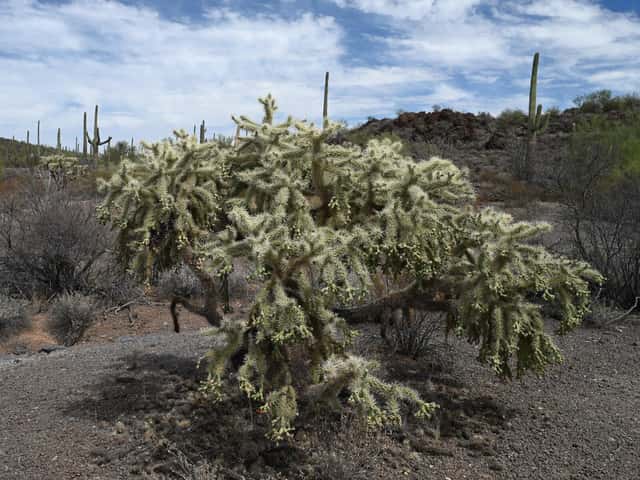
Jumping Cholla (Cylindropuntia fulgida) is a easy-care plant from the Cactaceae family. Jumping cholla (Cylindropuntia fulgida, formerly Opuntia fulgida) is a tree-like cactus from the Sonoran Desert of Arizona and northwestern Mexico. It has a short, low-branching trunk and grows 1.5 to 4 m tall. The branches are made of pale green cylindrical joints covered in spines with microscopic...
Jumping Cholla grows up to 4.0m, spread of 240cm, watering every 17 days. It is not suitable for indoor environments and safe for pets.
Unlike many tropical plants, Jumping Cholla tolerates watering mistakes. Best for beginners. Unlike many popular species, Jumping Cholla is safe to keep around pets.
How to Care for Jumping Cholla?
TLDR: Jumping Cholla needs Direct sun, watering every 17 days, and temperatures between -15-30°C with 40-70% humidity.
How Often Should You Water Jumping Cholla?
In spring and summer, water every 2-3 weeks, only once the soil is completely dry. In winter, once a month or less. Too much water rots the roots.
How Much Light Does Jumping Cholla Need?
Full sun, with at least 6 hours of direct sun a day.
What Is the Best Soil for Jumping Cholla?
Sandy or gravelly, very well-drained soil; in pots, cactus mix with sand or perlite. Tolerates acid to alkaline pH.
What Pot Should You Use for Jumping Cholla?
A wide, heavy clay pot with a drainage hole; in hot, dry climates it does best in the ground.
What Is Jumping Cholla and Where Does It Come From?
Jumping cholla (Cylindropuntia fulgida, formerly Opuntia fulgida) is a tree-like cactus from the Sonoran Desert of Arizona and northwestern Mexico. It has a short, low-branching trunk and grows 1.5 to 4 m tall. The branches are made of pale green cylindrical joints covered in spines with microscopic barbs and silvery sheaths, which give the plant a fuzzy, glowing look. The end joints break off at the lightest touch and cling to skin, clothes or fur as if they had jumped; that is how the plant spreads, since every fallen joint can root. Pink or white flowers streaked with lavender appear in summer at the tips of joints and old fruits. The green fruits stay on and flower again, forming hanging chains that last for years.
How to Propagate Jumping Cholla?
Joint (stem cutting)
Fallen joints root on their own in the wild; no rooting hormone needed.
- 1 Using long tongs and thick gloves, pick up a fallen joint or detach one from a tip
- 2 Let it dry in the shade for a few days until the cut calluses
- 3 Lay the joint on dry or barely moist cactus mix
- 4 Water sparingly until roots form
Materials needed:
How Big Does Jumping Cholla Grow?
TLDR: Jumping Cholla can reach up to 4.0m tall with Medium growth rate.
Max height
4.0m
Spread
2.4m
Growth rate
Medium
Foliage
Evergreen
Plant Uses
Ornamental
Great for decoration
Edible
Can be consumed
Medicinal
Medicinal properties
Medicinal Uses
- Indigenous peoples of the Sonoran Desert used parts of the plant as medicine (traditional use; not a substitute for medical advice).
Culinary Uses
- Cholla fruits and flower buds were eaten by Indigenous peoples once the spines were removed.
Is your plant showing symptoms?
Click on the symptom to discover possible causes:
What Diseases Commonly Affect Jumping Cholla?
TLDR: Jumping Cholla is susceptible to 2 known diseases. Monitor regularly for early detection.
Root Rot
Root rot is a serious fungal disease that affects the root system of plants, causing them to decay and die. It is primarily caused by overwatering, poor drainage, or soil-borne fungi such as Pythium, Phytophthora, Rhizoctonia, and Fusarium. The disease thrives in waterlogged conditions where roots are deprived of oxygen, making them susceptible to fungal infection.
Overwatering
Overwatering occurs when plants receive too much water, depriving roots of oxygen and causing root rot. This environmental stress is one of the most common causes of houseplant death, as waterlogged soil prevents roots from breathing and functioning properly.
Fun Facts
Its flowers open at about 3 p.m. solar time.
The fruits hang in chains that grow longer every year.
Cactus wrens nest among the spines for protection.
Frequently asked questions
Is jumping cholla poisonous?
Does the cactus really jump?
How do I remove a joint stuck to me?
Can I grow it indoors?
Compare with similar plants
| Attribute | Difficulty | Light | Watering | Pet Safe |
|---|---|---|---|---|
| Field Maple | Easy | Bright indirect | 14d | ✓ |
| Iberian Houseleek | Easy | Direct sun | 14d | ✓ |
| Silver Birch | Easy | Direct sun | 14d | ✓ |
| Common Blanketflower | Easy | Direct sun | 10d | ✓ |





