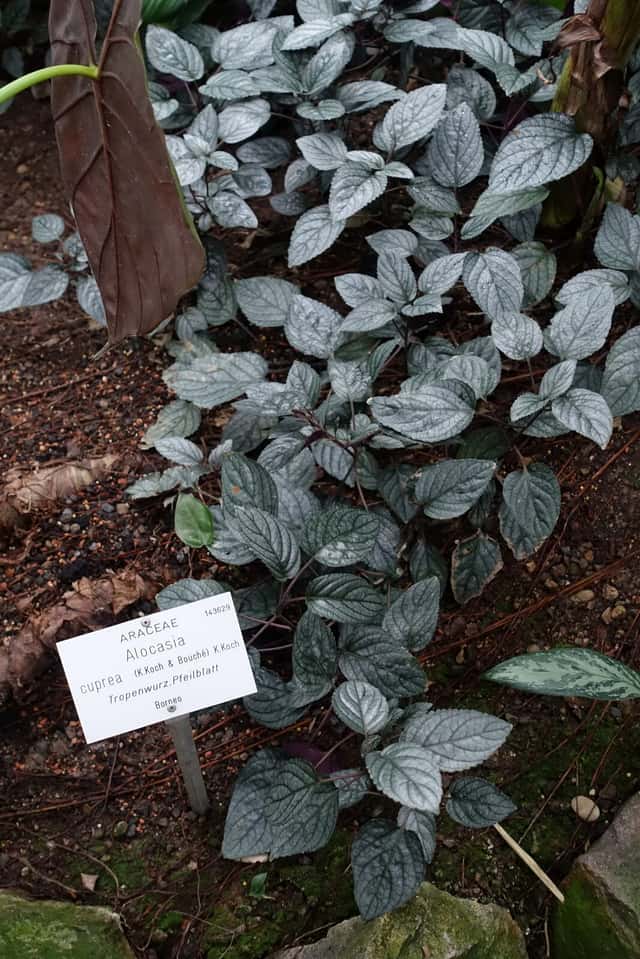
Araceae
Alocasia Cuprea (Jewel Alocasia): Complete Care Guide
Alocasia cuprea
Give the Jewel Alocasia bright, indirect light, water only once the top of the soil dries slightly, and keep humidity above 60% for glossy, unblemished leaves. It grows slowly, so stable warmth (15-27C) and consistent care matter far more than frequent feeding.
Every 7 days
Partial shade
15° - 27°C
60% - 80%
Categories
What is Jewel Alocasia?
Jewel Alocasia (Alocasia cuprea) is a medium-care plant from the Araceae family. Alocasia cuprea, known as the Jewel Alocasia or Mirror Plant, is a rhizomatous evergreen aroid prized for its thick, deeply quilted leaves with a metallic copper-purple sheen on top and a wine-red underside. Native to the lowland and hill rainforests of Borneo, it belongs to the Araceae family and i...
Jewel Alocasia grows up to 60cm, spread of 40cm, watering every 7 days, 15°C – 27°C, 60–80% humidity. It is suitable for indoor environments and not safe for pets.
Without precautions, ingestion can cause irritation in pets. Keep out of reach of cats and dogs. Without adequate drainage, root rot can develop within 14 days.
How to Care for Jewel Alocasia?
TLDR: Jewel Alocasia needs Partial shade, watering every 7 days, and temperatures between 15-27°C with 60-80% humidity.
How Often Should You Water Jewel Alocasia?
Water when the top 2-3cm of soil feels dry, using room-temperature distilled or rainwater. Never let the pot sit in standing water - soggy soil is the fastest route to root rot in this species.
How Much Light Does Jewel Alocasia Need?
Place in bright, indirect light such as an east- or west-facing window. Direct midday sun scorches the delicate leaves, while low light dulls their metallic sheen and slows growth.
What Is the Best Soil for Jewel Alocasia?
Use a loose, well-draining aroid mix - equal parts peat or coco coir, perlite, and orchid bark - to keep roots aerated and prevent the waterlogging that leads to root rot.
What Pot Should You Use for Jewel Alocasia?
A terracotta or unglazed nursery pot with generous drainage holes; the porous material wicks away excess moisture and helps guard against root rot.
Care Schedule
Fertilize
Every 35 days
Misting
Every 3 days
Rotate
Every 14 days
Repot
Every 730 days
What Is Jewel Alocasia and Where Does It Come From?
Alocasia cuprea, known as the Jewel Alocasia or Mirror Plant, is a rhizomatous evergreen aroid prized for its thick, deeply quilted leaves with a metallic copper-purple sheen on top and a wine-red underside. Native to the lowland and hill rainforests of Borneo, it belongs to the Araceae family and is a favorite among collectors for its lacquered, almost artificial-looking foliage.
How to Propagate Jewel Alocasia?
Division of Corms/Offsets
Keep newly divided corms warm and humid (a covered propagator or plastic bag helps) and avoid direct sun until established.
- 1 Unpot the plant during repotting and gently remove excess soil from the root ball.
- 2 Locate small corms or offset rhizomes growing at the base of the mother plant.
- 3 Separate each corm with a clean, sharp knife, keeping some roots attached where possible.
- 4 Let cut surfaces callus for a few hours, then place corms in water or moist sphagnum until roots emerge.
- 5 Pot the rooted corm into a small container with a well-draining aroid mix once roots reach 2-3cm.
Materials needed:
How Big Does Jewel Alocasia Grow?
TLDR: Jewel Alocasia can reach up to 60cm tall with Slow growth rate.
Max height
60cm
Spread
40cm
Growth rate
Slow
Foliage
Evergreen
Warning: Toxic Plant
This plant can be toxic if ingested. Keep out of reach of:
Plant Uses
Ornamental
Great for decoration
Is your plant showing symptoms?
Click on the symptom to discover possible causes:
What Diseases Commonly Affect Jewel Alocasia?
TLDR: Jewel Alocasia is susceptible to 11 known diseases. Monitor regularly for early detection.
Root Rot
Root rot is a serious fungal disease that affects the root system of plants, causing them to decay and die. It is primarily caused by overwatering, poor drainage, or soil-borne fungi such as Pythium, Phytophthora, Rhizoctonia, and Fusarium. The disease thrives in waterlogged conditions where roots are deprived of oxygen, making them susceptible to fungal infection.
Spider Mites
Spider mites are tiny arachnids (less than 1/20 inch long) related to spiders and ticks that feed on plant sap. They thrive in hot, dry conditions and can cause significant damage to ornamental and vegetable plants. During severe infestations, crop losses can reach 14% or higher as these pests disrupt vital plant processes including photosynthesis, carbon dioxide absorption, and transpiration.
Mealybugs
Mealybugs are small, soft-bodied insects covered with a white, waxy, cottony material. They are common pests of houseplants and outdoor plants in mild climates. These sap-sucking insects feed on plant tissue, causing damage, stunted growth, and can lead to plant death if left untreated. They produce sticky honeydew which attracts sooty mold.
Fungus Gnats
Fungus gnats are small, gray-to-black mosquito-like insects (1/8 to 1/10 inches long) commonly found in indoor plants. Adult gnats are mostly a nuisance, but their larvae feed on plant roots and organic matter in soil, potentially causing serious damage to young or vulnerable plants. The larvae are translucent white with distinctive black heads and can leave slime trails on the soil surface in heavy infestations.
Meaning & Symbolism
Like many aroids, the Jewel Alocasia is linked to protection and prosperity; its mirror-like leaves are said to reflect positive energy back into the home.
Fun Facts
Its leaves have such a metallic, lacquered look that many people assume they are fake or artificially coated.
The species name cuprea comes from the Latin for copper, referencing its coppery leaf sheen.
It is native only to the rainforests of Borneo, where it grows on the forest floor in deep shade.
Collectors often grow it in closed terrariums or cabinets to mimic its naturally humid, warm habitat.
Frequently asked questions
How often should I water my Alocasia cuprea?
Is Alocasia cuprea toxic to cats and dogs?
Why are the leaves of my Jewel Alocasia losing their shine?
What humidity does Alocasia cuprea need?
How do I propagate Alocasia cuprea?
Compare with similar plants
| Attribute | Difficulty | Light | Watering | Pet Safe |
|---|---|---|---|---|
| Dark Fieldcap | Medium | Low light | 2d | ⚠️ |
| Azalea | Medium | Partial shade | 3d | ⚠️ |
| Muriel's Bamboo | Medium | Partial shade | 3d | ✓ |
| Bougainvillea | Medium | Direct sun | 7d | ⚠️ |




